A panoramic view of Trevi Fountain in Rome

Vista panoramica della Fontana di Trevi a Roma con Palazzo Poli, statue barocche e acqua della fontana

A panoramic view of Trevi Fountain in Rome.
During a short day spent in the capital city, I found the time to stop at the Trevi Fountain in Rome, Lazio, Italy, and capture a panoramic photograph of one of the most famous landmarks in the world. Among the places to see in Rome, the Trevi Fountain is certainly one of the most recognizable views of the city, a monument that continues to attract visitors with its architecture and history.
I had arrived in Rome for a quick appointment and my schedule left very little free time, but I did not want to miss the chance to walk through the historic center with my camera. As often happens during my trips, even a short visit can become an opportunity to stop in front of famous places and search for a personal perspective.
This photograph was created with the idea of capturing the complete scenery of the fountain, including the façade of Palazzo Poli, the sculptures, and the movement of the water. I chose a wider perspective to show not only the details of the statues but also the relationship between the monument and the square surrounding it.
The Trevi Fountain is one of the greatest examples of Roman late Baroque architecture. It was commissioned by Pope Clement XII, and construction began in 1732 following the design of Nicola Salvi. The work was completed in 1762 by Giuseppe Pannini together with sculptors Pietro and Virginio Bracci, who created some of the most important figures of the composition, including the central statue of Oceanus.
The scene represents the marine world through horses, tritons, and allegorical figures that seem to emerge from the palace façade. A small curiosity concerns the name of the fountain: one of the most common interpretations is that it comes from “Tre Vie”, referring to the three streets that once met in this area.
One of the most famous traditions connected with this place is the coin toss, a gesture that according to legend guarantees a return to Rome. Every day thousands of visitors repeat this ritual, transforming a simple fountain into a place filled with personal memories and wishes.
This image naturally connects with other photographs I have shared about famous Italian landmarks and historic city walks, where I try to capture not only the monument itself but also the moment when I discovered it.
Rome is a city where even a short visit can leave a lasting impression. Sometimes a simple walk and a camera are enough to discover new details of places we already know.

Which famous landmark have you managed to photograph during a short visit? Add a comment or go to the bottom of the site to read what other visitors have written.
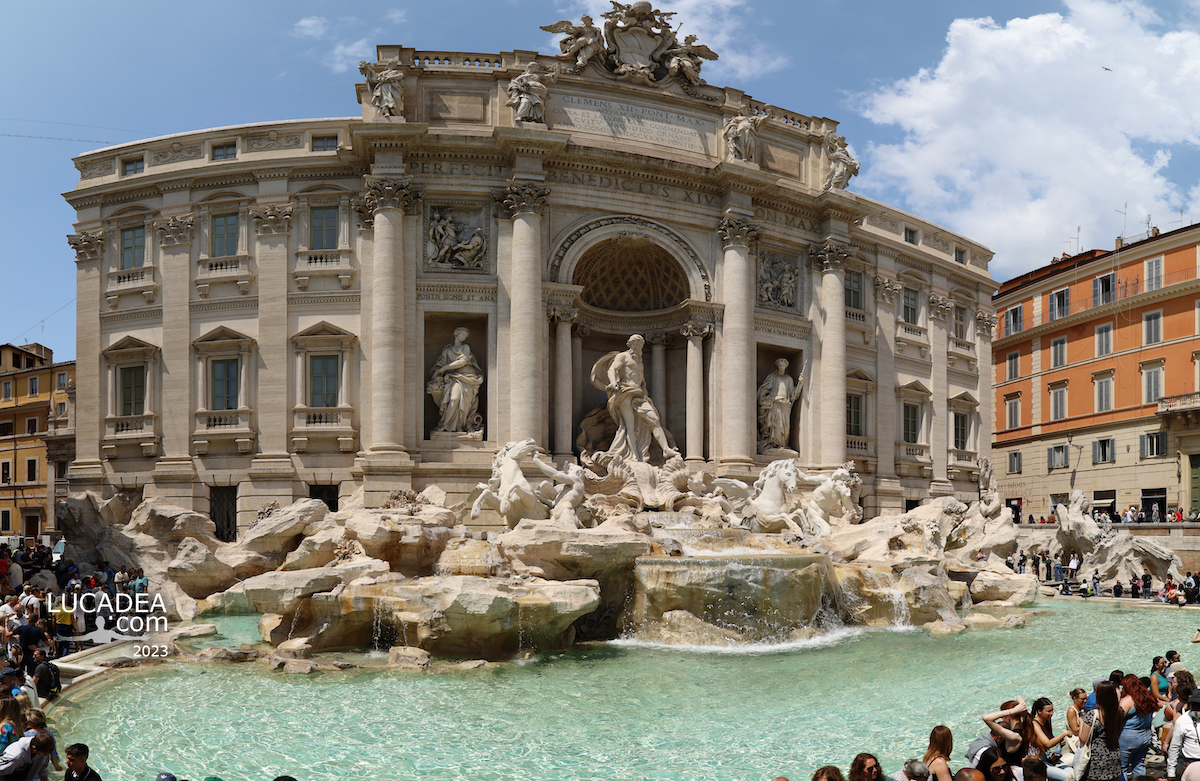
Panoramic view of Trevi Fountain in Rome with Palazzo Poli, baroque statues and flowing fountain water

Photo taken with Canon EOS RP and lens Canon RF 24-50.

Here is also a nice video of the fountain:

Video recorded with the GoPro Hero 10 Black.

Click here to see all the photos of Rome:
foto gallery

The Trevi Fountain is the largest and one of the most famous fountains in Rome. Built against the façade of Palazzo Poli by Nicola Salvi, the project—following a competition launched by Pope Clement XII in 1731—was initially awarded to the French sculptor Lambert-Sigisbert Adam, but the commission was subsequently transferred to Salvi.
Read more on Wikipedia

Add one  comment to this article or read  here what other visitors have written.
 
Adv
 
Disclamer

The rights on images, videos, choruses, text and all other material on the LUCADEA.com website are governed as per  Copyright page.


This page has been viewed 1 times today.
This month it has been viewed 1 times.
In total it has been viewed 1 times.
 

The archivolt leading to the central square of Trevi

L'archivolto che porta alla piazza centrale di Trevi

The archivolt leading to Trevi’s central square.
To reach Trevi’s central square (Piazza Mazzini), you must pass under this archivolt beneath the Town Hall.

Do you know or have you ever visited the village of Trevi? Add a comment or go to the bottom of the site to read what other visitors have written.

L'archivolto che porta alla piazza centrale di Trevi

Photo taken with Canon EOS RP and Canon RF 24-50 lens.

To see all the photos I took in the village, click here:

Here’s where the village is located:

During the late Middle Ages and the Renaissance, Trevi experienced its golden age, characterized by extraordinary trade that fostered its economic prosperity (it was called “the dry port”), evidenced even today by the numerous palaces in the historic center, worthy of being found in much larger cities. Economic growth was accompanied by lively cultural and social activity. As early as 1469, a Jewish banker, one of the few professions such men were authorized to practice, was called upon to facilitate the circulation of money. Despite this, he was persecuted and subsequently one of the very first pawnshops was established, followed by the Monte Frumentario and various other charitable and welfare institutions.
Continue and learn more at Wikipedia

The archivolt that leads to the central square of Trevi – L’archivolte qui mène à la place centrale de Trevi – La arquivolta que conduce a la plaza central de Trevi – A arquivolta que conduz à praça central de Trevi – Die Archivolte, die zum zentralen Platz von Trevi führt – Archivolt dẫn đến quảng trường trung tâm Trevi
Add one  comment to this article or read  here what other visitors have written.
 
Adv
 
Disclamer

The rights on images, videos, choruses, text and all other material on the LUCADEA.com website are governed as per  Copyright page.


This page has been viewed 1 times today.
This month it has been viewed 8 times.
In total it has been viewed 9 times.
 

Some slamming arches in the village of Trevi

Alcuni archi di sbatacchio nel borgo di Trevi in Umbria

Some slamming arches in the village of Trevi in ​​Umbria.
In the heart of the medieval village of Trevi, you can admire fascinating slamming arches, architectural structures that not only embellish the narrow streets of the historic center but also serve a fundamental role in earthquake-proofing.
Slamming arches, also known as counter-arches, were introduced as a preventative measure against seismic damage. These arches connect the facades of opposing buildings, creating a solid structure that counteracts horizontal thrust during earthquakes. Their presence is particularly evident in narrow alleys, where limited space precludes the use of traditional buttresses.
These arches are often constructed of brick and may feature one or more overlapping orders. Their segmented arch shape is designed to maximize compressive strength and prevent the facades from overturning. Furthermore, some arches are reinforced with metal chains embedded in the masonry, further increasing the structural stability of the connected buildings.
Strolling through Trevi, the sbatacchio arches offer evocative views and are a tangible example of how traditional architecture can be integrated with advanced technical solutions for building safety. Their preservation is essential not only to maintain the village’s aesthetics but also to preserve the historical memory of past construction techniques.

Do you know or have you ever visited the village of Trevi? Add a comment or go to the bottom of the site to read what other visitors have written.

Alcuni archi di sbatacchio nel borgo di Trevi in Umbria

Photo taken with Canon EOS RP and Canon RF 24-50 lens.

To see all the photos I took in the village, click here:

Here’s where the village is located:

During the late Middle Ages and the Renaissance, Trevi experienced its golden age, characterized by extraordinary trade that fostered its economic prosperity (it was called “the dry port”), evidenced even today by the numerous palaces in the historic center, worthy of being found in much larger cities. Economic growth was accompanied by lively cultural and social activity. As early as 1469, a Jewish banker, one of the few professions such men were authorized to practice, was called upon to facilitate the circulation of money. Despite this, he was persecuted and subsequently one of the very first pawnshops was established, followed by the Monte Frumentario and various other charitable and welfare institutions.
Continue and learn more at Wikipedia

Some slamming arches in the village of Trevi in ​​Umbria – Quelques arches cliquetantes dans le village de Trevi en Ombrie – Algunos arcos que suenan en el pueblo de Trevi en Umbría – Alguns arcos barulhentos na aldeia de Trevi, na Úmbria – Einige klappernde Bögen im Dorf Trevi in ​​Umbrien – Một số mái vòm lạch cạch ở làng Trevi ở Umbria

The text of this post was written with the help of Copilot, an artificial intelligence-based virtual assistant.
References:
– https://ilcapochiave.it/2017/11/14/gli-archetti-di-sbatacchio-presidi-antisismici-premoderni/

An enchanting corner of Trevi: where time turns to stone

Un angolo incantato di Trevi: dove il tempo si fa pietra

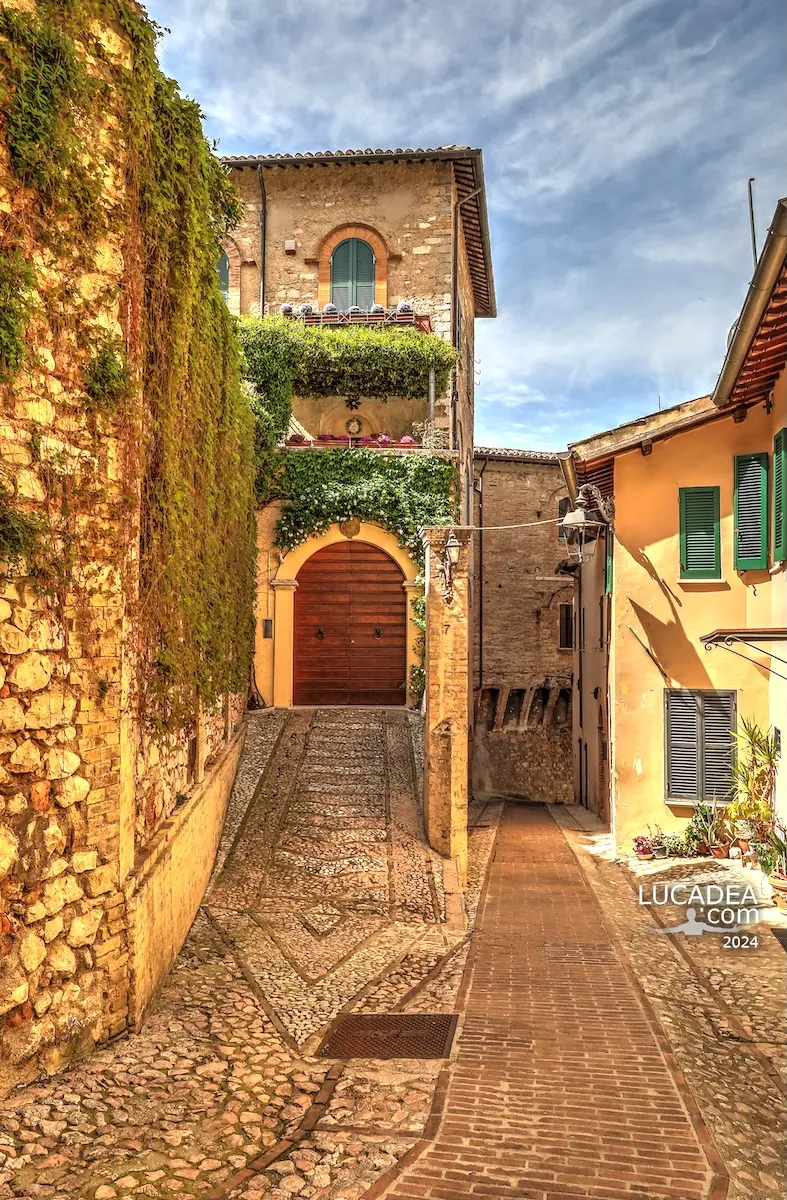
An enchanted corner of Trevi: where time turns to stone.
In the heart of Umbria, nestled among centuries-old olive trees and painted hills, the village of Trevi holds glimpses that tell silent stories. One of these reveals itself suddenly as you walk down one of its typical cobblestone streets: a narrow, winding lane that winds between ancient buildings with warm colors and weathered facades.
Above this street, like a suspended bridge between past and present, stands a stone archivolt connecting two buildings, one to the right and one to the left. It is a simple yet powerful architectural element: a passage that not only unites, but also frames. Crossing it, you feel like you’re crossing an invisible threshold, as if entering another era.
The archivolt, with its time-worn stones, speaks of a village that has managed to preserve its soul. It’s a sign of continuity, a dialogue between the houses, between the people who once lived there and still live there today. Beneath it, the light changes: it becomes softer, more intimate, as if the village wishes to whisper its secrets only to those who know how to observe.
This glimpse is one of the many reasons why Trevi enchants. It’s not just beauty: it’s identity, it’s memory, it’s the poetry of small things. Stopping here, even for just a moment, means being enveloped in an unforgettable atmosphere.

Do you know or have you ever visited the village of Trevi? Add a comment or go to the bottom of the site to read what other visitors have written.

Un angolo incantato di Trevi: dove il tempo si fa pietra

Photo taken with Canon EOS RP and Canon RF 24-50 lens.

To see all the photos I took in the village, click here:

Here’s where the village is located:

During the late Middle Ages and the Renaissance, Trevi experienced its golden age, characterized by extraordinary trade that fostered its economic prosperity (it was called “the dry port”), evidenced even today by the numerous palaces in the historic center, worthy of being found in much larger cities. Economic growth was accompanied by lively cultural and social activity. As early as 1469, a Jewish banker, one of the few professions such men were authorized to practice, was called upon to facilitate the circulation of money. Despite this, he was persecuted and subsequently one of the very first pawnshops was established, followed by the Monte Frumentario and various other charitable and welfare institutions.
Continue and learn more at Wikipedia

An enchanting corner of Trevi: where time turns to stone – Un coin enchanteur de Trevi : là où le temps se transforme en pierre – Un rincón encantador de Trevi: donde el tiempo se convierte en piedra – Um canto encantador de Trevi: onde o tempo se transforma em pedra – Eine bezaubernde Ecke von Trevi: wo die Zeit zu Stein wird

This post was written with the help of Copilot, an AI-powered virtual assistant.

The Voice of Stone: Trevi and Its Town Hall

La voce della pietra: Trevi e il suo Comune

The voice of stone: Trevi and its Municipality.
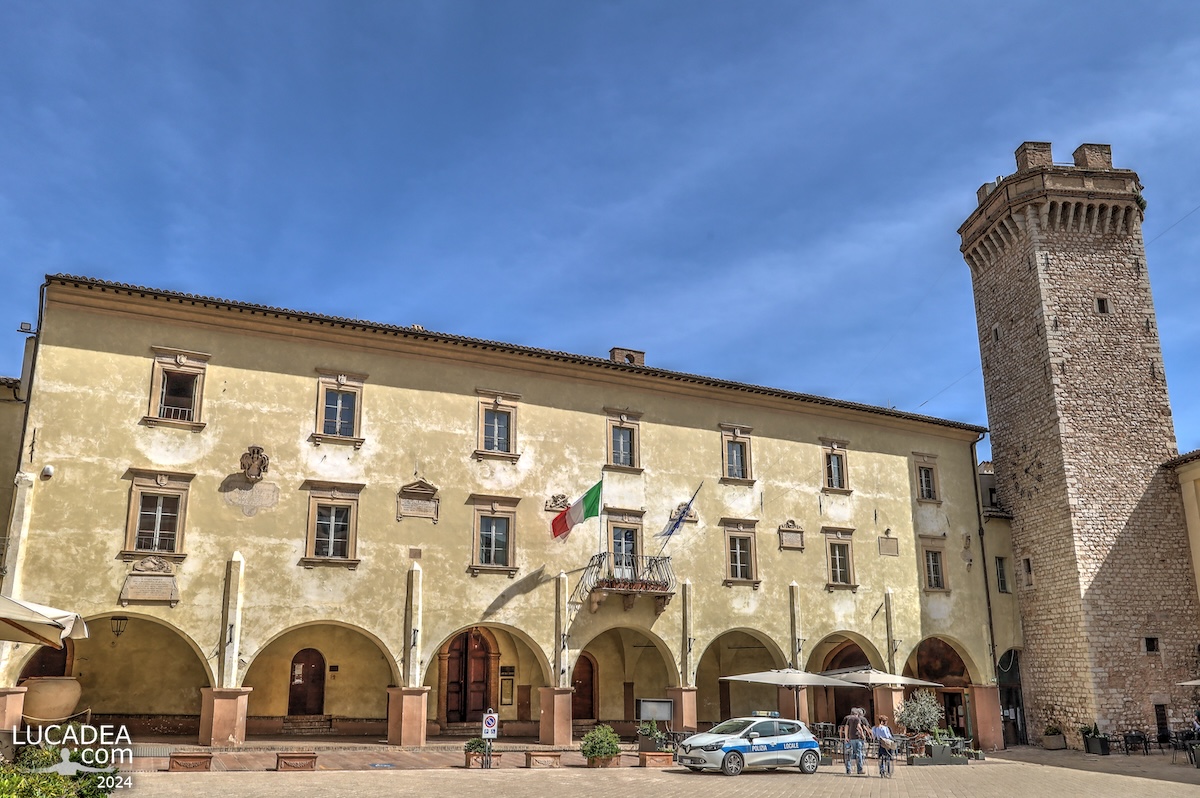
Walking through the alleys of Trevi, with the sun cutting through the fresh air and disrupting my thoughts, I found myself returning to Piazza Mazzini several times, as if it were the beating heart of this Umbrian village. Here, the Palazzo Comunale, with its austere yet welcoming façade, seems to breathe with the city. Every stone spoke to me of open-air assemblies, of markets, of festivals, and of civic disputes, as if those walls had preserved within them the whispers of the past.
I remember the first time I raised my eyes to the Civic Tower. It was one of those afternoons when the light wind carries the scent of olive trees and a profound sense of belonging to something ancient and alive. The tower stood proud, imposing, its battlements against the blue sky, and in that moment I felt a strong connection between my curiosity and the untold stories of this place. The stone seemed to speak of a slower pace of time, of defensive towers and bells that once called residents to the square, to the workday, or to the alarm.
Sitting on the steps of an old fountain, I imagined daily life in Trevi over the centuries: artisans stopping to discuss things under the portico of the Palazzo, city councilors appearing to announce important decisions, children playing, chasing each other between the columns. There was an invisible vitality, a thin thread connecting the past to the present, and, totally immersed in those thoughts, I felt a deep respect for the memory of this village growing within me.
The Civic Tower is not just an architectural feature to be admired: it is a symbol of community, of civic pride, of that tension between defense and openness that has shaped Trevi’s history. Every time I return there, I seem to still hear the distant sound of the bells, echoing across the Umbrian hills, as if time had never truly passed. It’s a sensation that envelops you, inviting you to stop and listen.

Have you ever wondered what a tower might whisper to you if it could speak of the people it has seen pass by over the centuries?
Add a comment or go to the bottom of the site to read what other visitors have written.

La voce della pietra: Trevi e il suo Comune

Photo taken with Canon EOS RP and Canon RF 24-50 lens.

To see all the photos I took in the village, click here:

Here’s where the palace is located:

During the late Middle Ages and the Renaissance, Trevi experienced its golden age, characterized by extraordinary trade that fostered its economic prosperity (it was called “the dry port”), evidenced even today by the numerous palaces in the historic center, worthy of being found in much larger cities. Economic growth was accompanied by lively cultural and social activity. As early as 1469, a Jewish banker was called in to facilitate the circulation of money, one of the few professions such men were authorized to practice. Despite this, he was persecuted and subsequently one of the very first pawnshops was established, followed by the Monte Frumentario and various other charitable and welfare institutions.
Continue and learn more at Wikipedia

The Voice of Stone: Trevi and Its Town Hall – La voix de la pierre : Trevi et son hôtel de ville – La voz de la piedra: Trevi y su ayuntamiento – A voz da pedra: Trevi e sua prefeitura – Die Stimme des Steins: Trevi und sein Rathaus – Giọng nói của đá: Trevi và Tòa thị chính – 石头的声音:特雷维及其市政厅 – 石の声:トレヴィとその市庁舎

The text of this post was written with the help of ChatGPT, a language model from OpenAI.

Trevi Fountain: baroque masterpiece in Rome

La Fontana di Trevi: meraviglia barocca di Roma

Trevi Fountain: baroque masterpiece in Rome.
In the heart of Rome, Lazio, Italy, among narrow streets and historic buildings, stands one of the most iconic and fascinating landmarks in the world: the Trevi Fountain. This baroque masterpiece is not just a fountain, but a symbol of art, history, and legend that attracts millions of visitors every year.
I took this photograph trying to capture not only the grandeur of the monument but also the atmosphere that surrounds it. Despite the constant presence of visitors, there is something unique in the sound of flowing water and the way light reflects on the marble, creating a striking contrast with the surrounding architecture.
The origins of the Trevi Fountain are deeply connected to ancient Roman history. The water that feeds it comes from the Acqua Vergine aqueduct, built in 19 BC by Marcus Agrippa to supply Roman baths. The current fountain was commissioned in the 18th century by Pope Clement XII, who organized a competition won by architect Nicola Salvi. Construction began in 1732 and was completed in 1762 under Giuseppe Pannini.
The name “Trevi” has uncertain but fascinating origins. It may derive from “Tre Vie” (three streets) that meet in the square, or from “Trebium”, an ancient place name. In any case, the name is now inseparable from one of the most famous places in the world.
The composition of the fountain is highly theatrical. At the center stands Oceanus, emerging on a shell-shaped chariot pulled by sea horses and guided by tritons. On the sides are statues representing Abundance and Health, while above, reliefs tell the story of the discovery of the water source. The entire structure is built against the façade of Palazzo Poli, creating a dramatic and unforgettable visual effect.
One of the most famous traditions associated with the fountain is the coin toss. According to legend, throwing a coin with the right hand over the left shoulder ensures a return to Rome. Every day, thousands of people take part in this ritual, contributing to a significant amount of money donated to charity. There is also a lesser-known feature called the “Lovers’ Fountain”, where couples drink together as a symbol of lasting love.
The Trevi Fountain has also become world-famous thanks to cinema. The iconic scene from Federico Fellini’s “La Dolce Vita”, where Anita Ekberg steps into the fountain and invites Marcello Mastroianni, turned this location into a symbol of Italian film culture.
Today, the Trevi Fountain is one of the most photographed landmarks in the world. Its timeless beauty, rich history, and magical atmosphere make it a must-see destination for anyone visiting Rome.

What is the monument that impressed you the most during your travels? Add a comment or go to the bottom of the site to read what other visitors have written.

Trevi Fountain in Rome with Oceanus statue and baroque sculptures with flowing water and marble details

Photo taken with Honor 20.

Here is also a nice video of the fountain:

Video registrato con Gopro Hero 10 Black.

Click here to see all the photos of Rome:
foto gallery

The Trevi Fountain is the largest and most famous fountain in Rome. Built on the facade of Palazzo Poli by Nicola Salvi, the competition announced by Pope Clement XII in 1731 was initially won by the French sculptor Lambert-Sigisbert Adam, but the commission was subsequently passed to Salvi.
Continue and learn more on Wikipedia

The famous Clock Tower in the village of Trevi

La celebre Torre dell'Orologio del borgo di Trevi

The famous Clock Tower in the village of Trevi.
In the heart of Trevi, a small Umbrian village, stands the majestic Clock Tower, a symbol of history and tradition that captivates visitors and locals alike. Located in the town’s main square, this tower is one of the city’s most iconic landmarks.
The Trevi Clock Tower dates back to the Middle Ages and has undergone several modifications over the centuries. Originally built as a watchtower, it was later transformed into a civic tower with the addition of the clock in the 18th century. The structure features a solid stone base and a lighter upper section, which houses the mechanical clock.
The tower’s clock is a masterpiece of mechanical engineering. Its mechanism, still in working order, has been restored several times to ensure its precision and durability. Every hour, the bells ring out through the streets of the village, marking the rhythm of daily life and keeping a centuries-old tradition alive.
The square overlooked by the Clock Tower is a lively meeting place for the local community. Cultural events, markets, and traditional festivals enliven the village year-round. The tower itself is often open to the public, allowing visitors to climb to the top for breathtaking panoramic views of the Umbrian valley.
To visit the Trevi Clock Tower, you can join guided tours organized by the municipality or local associations. During the tour, you can learn more about the tower’s history, how its clock works, and the village’s traditions. The tower is easily accessible on foot from Trevi’s city center, and the square offers numerous cafes and restaurants where you can relax after your visit.

Do you know or have you ever visited the village of Trevi?
Add a comment or go to the bottom of the site to read what other visitors have written.

La celebre Torre dell'Orologio del borgo di Trevi

Photo taken with Canon EOS RP and Canon RF 24-50 lens.

To see all the photos I took in the village, click here:

Here is where the tower is located:

During the late Middle Ages and the Renaissance, Trevi experienced its golden age, characterized by extraordinary trade that fostered its economic prosperity (it was called “the dry port”), evidenced even today by the numerous palaces in the historic center, worthy of being found in much larger cities. Economic growth was accompanied by lively cultural and social activity. As early as 1469, a Jewish banker was called in to facilitate the circulation of money, one of the few professions such men were authorized to practice. Despite this, he was persecuted and subsequently one of the very first pawnshops was established, followed by the Monte Frumentario and various other charitable and welfare institutions.
Continue and learn more at Wikipedia

The famous Clock Tower of the Trevi village – La célèbre Tour de l’Horloge du village de Trevi – La famosa Torre del Reloj del pueblo de Trevi – A famosa Torre do Relógio da aldeia de Trevi – Der berühmte Uhrturm des Dorfes Trevi – Tháp đồng hồ nổi tiếng của làng Trevi

This post was written with the help of Copilot, an AI-powered virtual assistant.

The village of Trevi seen from the meadows surrounding it

Il borgo di Trevi visto dai prati che lo circondano

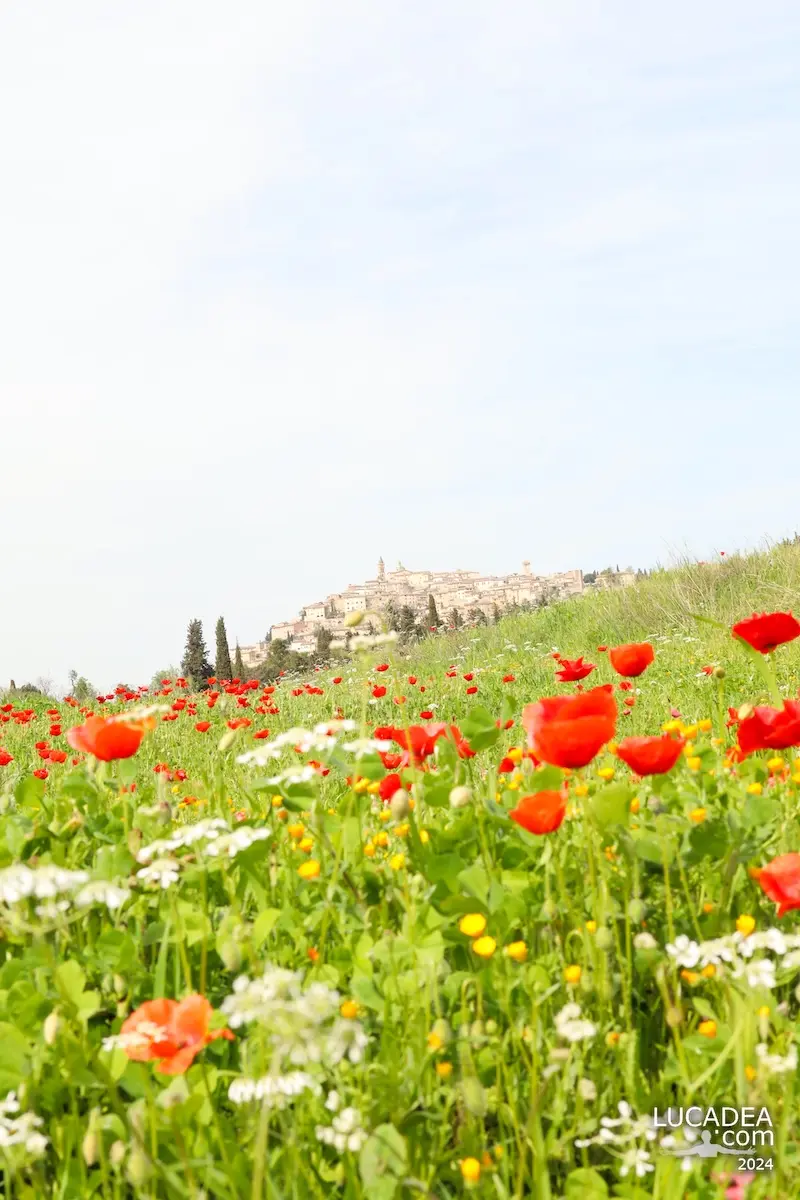
The village of Trevi seen from the surrounding meadows.
Nestled in the heart of Umbria, the village of Trevi stands majestically on a hill, surrounded by flowery meadows and olive groves that enhance its beauty. This small town, located between Foligno and Spoleto, is a true medieval gem offering breathtaking views and an atmosphere of times gone by.
Observing Trevi from the surrounding meadows, you can appreciate its spiral structure, with stone houses climbing the hill in concentric circles. This unique urban layout not only gives the village a unique charm, but also allows for spectacular views of the Umbrian Valley. The meadows surrounding Trevi are dotted with centuries-old olive trees, which produce such high-quality olive oil that the village has been awarded the title of City of Oil.
Trevi boasts an ancient history, with origins dating back to Roman times. The city walls, built in the 1st century BC, bear witness to the village’s glorious past, while medieval gates, such as Porta del Bruscito and Porta San Fabiano, invite visitors to explore the historic center. Strolling through the narrow, cobbled streets, you can admire ancient churches, noble palaces, and precious frescoes that recount centuries of history and culture.
Visiting Trevi is a unique sensory experience. The scents of the Umbrian countryside, the flavor of extra virgin olive oil, and the view of green meadows stretching as far as the eye can see create a perfect blend of nature and culture. The village also offers numerous opportunities for excursions and walks, allowing visitors to explore the surroundings and enjoy the tranquility and beauty of the Umbrian landscape.
Trevi is also a place rich in traditions and cultural events. Throughout the year, the village hosts numerous events celebrating local culture, such as the Festa dell’Olio Nuovo (New Olive Oil Festival), which attracts visitors from all over Italy to taste freshly produced olive oil and participate in food and wine and folklore events.

Do you know or have you ever visited the village of Trevi?
Add a comment or go to the bottom of the site to read what other visitors have written.

Photos taken with Canon EOS RP and Canon RF 24-50 lens.

To see all the photos I took in the village, click here:

Here’s where the village is located:

During the late Middle Ages and the Renaissance, Trevi experienced its golden age, characterized by extraordinary trade that fostered its economic prosperity (it was called “the dry port”), evidenced even today by the numerous palaces in the historic center, worthy of being found in much larger cities. Economic growth was accompanied by lively cultural and social activity. As early as 1469, a Jewish banker was called in to facilitate the circulation of money, one of the few professions such men were authorized to practice. Despite this, he was persecuted and subsequently one of the very first pawnshops was established, followed by the Monte Frumentario and various other charitable and welfare institutions.
Continue and learn more at Wikipedia

The village of Trevi seen from the meadows surrounding it – Le village de Trevi vu depuis les prairies qui l’entourent – El pueblo de Trevi visto desde los prados que lo rodean – A aldeia de Trevi vista dos prados que a rodeiam – Das Dorf Trevi von den Wiesen aus gesehen, die es umgeben – Ngôi làng Trevi nhìn từ đồng cỏ bao quanh

This post was written with the help of Copilot, an artificial intelligence-based virtual assistant.

A couple of glimpses of the village of Trevi in ​​Umbria

Un paio di scorci del borgo di Trevi in Umbria

A couple of glimpses of the village of Trevi in ​​Umbria.
Last spring, my wife and I spent a few days visiting the beautiful Umbria region.
We settled in the Perugia area and visited many of the surrounding villages.
These two shots are of the alleys of the beautiful village of Trevi, one of the most beautiful villages in Italy.

Do you know or have you ever visited the village of Trevi?
Add a comment or go to the bottom of the site to read what other visitors have written.

Photos taken with Canon EOS RP camera and Canon RF 24-50 lens.

To see all the photos I took in the village, click here:

Here’s where the village is located:

During the late Middle Ages and the Renaissance, Trevi experienced its golden age, characterized by extraordinary trade that fostered its economic prosperity (it was called “the dry port”), evidenced even today by the numerous palaces in the historic center, worthy of being found in much larger cities. Economic growth was accompanied by lively cultural and social activity. As early as 1469, a Jewish banker was called in to facilitate the circulation of money, one of the few professions such men were authorized to practice. Despite this, he was persecuted and subsequently one of the very first pawnshops was established, followed by the Monte Frumentario and various other charitable and welfare institutions.
Continue and learn more at Wikipedia

A couple of glimpses of the village of Trevi in ​​Umbria – Quelques aperçus du village de Trevi en Ombrie – Un par de vistazos al pueblo de Trevi en Umbría – Alguns vislumbres da aldeia de Trevi, na Úmbria – Ein paar Einblicke in das Dorf Trevi in ​​Umbrien – Một vài cái nhìn thoáng qua về ngôi làng Trevi ở Umbria
🏠
  • Italiano