
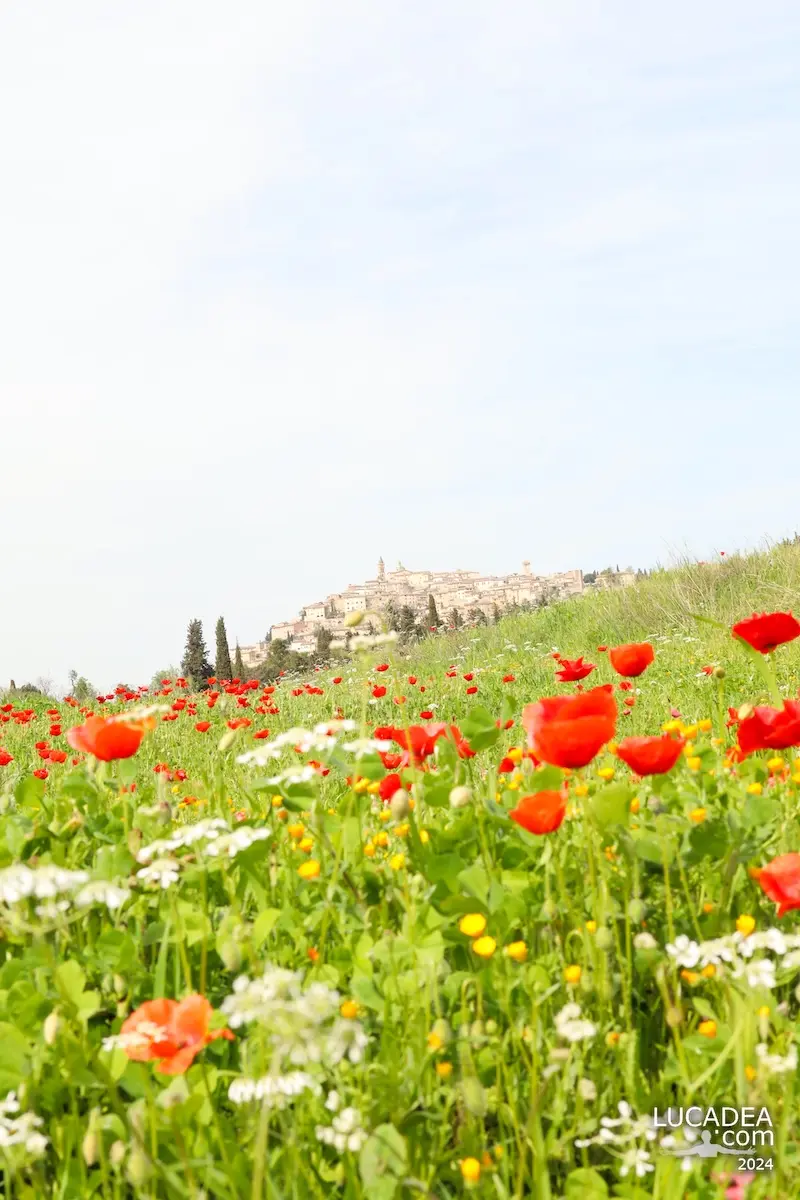

The village of Trevi seen from the meadows surrounding it
The village of Trevi seen from the surrounding meadows.
Nestled in the heart of Umbria, the village of Trevi stands majestically on a hill, surrounded by flowery meadows and olive groves that enhance its beauty. This small town, located between Foligno and Spoleto, is a true medieval gem offering breathtaking views and an atmosphere of times gone by.
Observing Trevi from the surrounding meadows, you can appreciate its spiral structure, with stone houses climbing the hill in concentric circles. This unique urban layout not only gives the village a unique charm, but also allows for spectacular views of the Umbrian Valley. The meadows surrounding Trevi are dotted with centuries-old olive trees, which produce such high-quality olive oil that the village has been awarded the title of City of Oil.
Trevi boasts an ancient history, with origins dating back to Roman times. The city walls, built in the 1st century BC, bear witness to the village’s glorious past, while medieval gates, such as Porta del Bruscito and Porta San Fabiano, invite visitors to explore the historic center. Strolling through the narrow, cobbled streets, you can admire ancient churches, noble palaces, and precious frescoes that recount centuries of history and culture.
Visiting Trevi is a unique sensory experience. The scents of the Umbrian countryside, the flavor of extra virgin olive oil, and the view of green meadows stretching as far as the eye can see create a perfect blend of nature and culture. The village also offers numerous opportunities for excursions and walks, allowing visitors to explore the surroundings and enjoy the tranquility and beauty of the Umbrian landscape.
Trevi is also a place rich in traditions and cultural events. Throughout the year, the village hosts numerous events celebrating local culture, such as the Festa dell’Olio Nuovo (New Olive Oil Festival), which attracts visitors from all over Italy to taste freshly produced olive oil and participate in food and wine and folklore events.
Do you know or have you ever visited the village of Trevi?
Add a comment or go to the bottom of the site to read what other visitors have written.


Photos taken with Canon EOS RP and Canon RF 24-50 lens.
To see all the photos I took in the village, click here:

Here’s where the village is located:
During the late Middle Ages and the Renaissance, Trevi experienced its golden age, characterized by extraordinary trade that fostered its economic prosperity (it was called “the dry port”), evidenced even today by the numerous palaces in the historic center, worthy of being found in much larger cities. Economic growth was accompanied by lively cultural and social activity. As early as 1469, a Jewish banker was called in to facilitate the circulation of money, one of the few professions such men were authorized to practice. Despite this, he was persecuted and subsequently one of the very first pawnshops was established, followed by the Monte Frumentario and various other charitable and welfare institutions.
Continue and learn more at Wikipedia
The village of Trevi seen from the meadows surrounding it – Le village de Trevi vu depuis les prairies qui l’entourent – El pueblo de Trevi visto desde los prados que lo rodean – A aldeia de Trevi vista dos prados que a rodeiam – Das Dorf Trevi von den Wiesen aus gesehen, die es umgeben – Ngôi làng Trevi nhìn từ đồng cỏ bao quanh
This post was written with the help of Copilot, an artificial intelligence-based virtual assistant.
More articles on this topic:
The rights on images, videos, choruses, text and all other material on the LUCADEA.com website are governed as per Copyright page.
