The Magrini Altarpiece in Lucca’s San Michele

Pala Magrini nella Chiesa di San Michele in Foro a Lucca con opera d’arte religiosa storica

The Magrini Altarpiece in Lucca’s San Michele.
During a visit to San Michele in Foro Church in Lucca, Tuscany, Italy, I photographed the Magrini Altarpiece, a beautiful artwork to see in the historic center of the city and a precious detail preserved inside one of Lucca’s most famous churches. Among the many decorations that attract attention inside the building, this altarpiece is one of those details that deserves a slower and more careful look.
After sharing the Romanesque facade of San Michele in Foro, this photograph takes me inside the church, where the atmosphere is completely different from the lively square outside. I wanted to capture this detail with my camera because smaller artworks often reveal the history and character of a place just as much as its most famous architectural features.
The Magrini Altarpiece is located inside the church and takes its name from the family connected with its commission. The artwork is part of the rich artistic heritage preserved in San Michele in Foro, a church that has collected paintings, sculptures, and decorations connected with the religious life of the Lucca community over the centuries.
A small curiosity is related to the history of the church itself: San Michele in Foro stands on the site where the ancient Roman forum of Lucca once existed. Today the square still remains one of the most important meeting places in the historic center. Entering the church means moving through different layers of history, from Roman origins to the medieval period and later centuries.
If you are visiting Lucca, there is much more to discover than panoramic views and famous facades. The interiors of historic churches preserve countless details that tell stories of art, faith, and local traditions, just like this altarpiece I found while exploring the city.
This photograph continues my visual journey through Lucca, following the stories I shared about the facade of San Michele in Foro, San Martino Cathedral, and the other historic corners I discovered while walking through the old town.
Whenever I enter an ancient church, I always try to pay attention to the smaller details because they are often the ones that create the strongest memories.

Have you ever visited the interior of San Michele in Foro Church and discovered a less-known artwork? Add a comment or go to the bottom of the site to read what other visitors have written.

Magrini Altarpiece inside San Michele in Foro Church in Lucca with historic religious artwork

Photo taken with a Canon EOS M100 camera and a Canon EF-S 10-18 lens.

This is the parish website: luccatranoi.it.

To see all the photos I took in Lucca over a couple of visits, click here:
foto gallery

The altarpiece, dating from the artist’s early period in Botticelli’s workshop, depicts four saints standing in a row against the backdrop of a small wood, the foliage of which is visible against a blue sky. From left to right, they are Saint Roch, Saint Sebastian, Saint Jerome, and Saint Helena the Empress.
Read more on Wikipedia

Add one  comment to this article or read  here what other visitors have written.
 
Adv
 
Disclamer

The rights on images, videos, choruses, text and all other material on the LUCADEA.com website are governed as per  Copyright page.


This page has been viewed 1 times today.
This month it has been viewed 1 times.
In total it has been viewed 1 times.
 

San Martino Cathedral in the heart of Lucca

Cattedrale di San Martino a Lucca con facciata in marmo e campanile nel centro storico

San Martino Cathedral in the heart of Lucca.
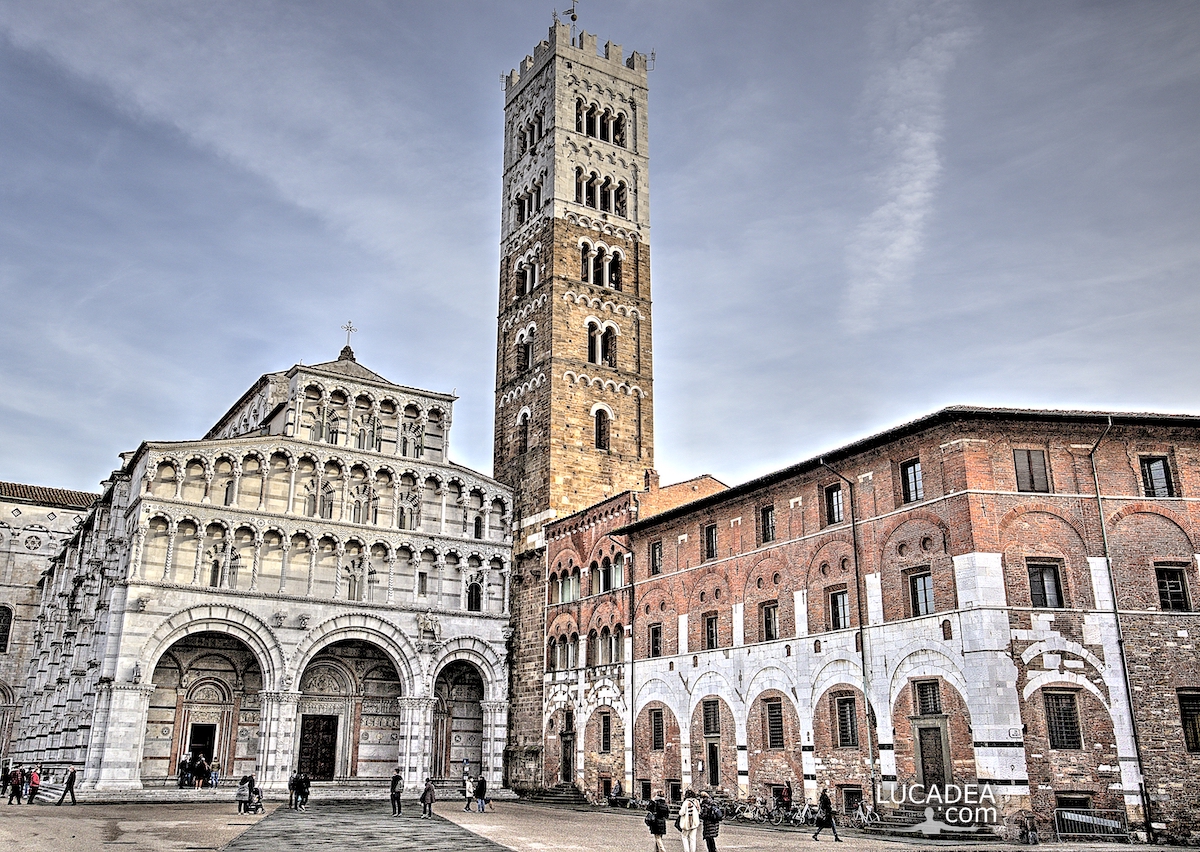
During one of my visits to Lucca, Tuscany, Italy, I photographed San Martino Cathedral, the city’s Duomo and one of the most important places to see in the historic center. Its marble facade, bell tower, and architectural details reveal centuries of history and show a side of Lucca that, I have to admit, I discovered only after visiting the city several times.
When I first visited Lucca, I paid more attention to the beautiful San Michele in Foro Church, thinking it was the main religious landmark of the city. Later, after watching the Italian television program Meraviglie – La penisola dei tesori hosted by Alberto Angela, I learned more about the importance and beauty of San Martino Cathedral and decided to return and explore it with a different perspective.
I wanted to capture this building with my camera because it is a perfect example of how a place can surprise even those who believe they already know it. The facade of the cathedral, with its columns, carved decorations, and the particular asymmetry created by the bell tower, offers countless details that deserve a closer look.
San Martino Cathedral is the main religious building of Lucca and preserves important works of art, including the famous funeral monument to Ilaria del Carretto created by Jacopo della Quercia. A small curiosity concerns the bell tower: built with brick and stone, it is one of the elements that define Lucca’s skyline and blends naturally with the other historic buildings rising above the city roofs.
If you are visiting Lucca, San Martino Cathedral is definitely a place worth seeing because it combines art, architecture, and history in a compact area that can easily be explored while walking through the old town. Its location near the city walls and the main streets also makes it a perfect stop during a visit to the historic center.
This photograph continues my visual journey through Lucca, following the views I shared of San Frediano Basilica, San Michele in Foro Church, and the panoramic view from the Saints John and Reparata bell tower.
Sometimes a place only needs a second look or a deeper story to reveal details that were hidden before.

Have you ever visited San Martino Cathedral while exploring the historic center of Lucca? Add a comment or go to the bottom of the site to read what other visitors have written.

<San Martino Cathedral in Lucca with marble facade and bell tower in the historic city center

Photo taken with a Canon EOS M100 camera and Canon EF-M 11-22 lens.

To see all the photos I took of the Duomo, click here:

Adjoining the west-facing main façade is a portico-narthex that opens onto the square through three large arches—one of which is narrower due to the proximity of the pre-existing bell tower. Guidetto and his assistants installed bas-reliefs depicting the martyrdom of Saint Regulus (shown in the lunette above the entrance to the right aisle), a cycle of the months, and scenes from the life of Saint Martin.
Read more on Wikipedia

Add one  comment to this article or read  here what other visitors have written.
 
Adv
 
Disclamer

The rights on images, videos, choruses, text and all other material on the LUCADEA.com website are governed as per  Copyright page.

This page has been viewed 0 times today.
This month it has been viewed 0 times.
In total it has been viewed 0 times.
 

Lucca from above among roofs and bell towers

Vista panoramica di Lucca dal campanile dei Santi Giovanni e Reparata con tetti rossi e torri storiche

Lucca from above among roofs and bell towers.
From the top of the bell tower of Saints John and Reparata Church, I photographed Lucca, Tuscany, Italy, looking over the historic center with its terracotta roofs, ancient towers, and many bell towers that create one of the most beautiful views to see in the city. This panoramic view of Lucca reveals the harmony of the urban landscape, where historic buildings seem to blend together following the shape of the ancient town.
The last time I visited Lucca, I decided to climb the bell tower of Saints John and Reparata Church and reach the highest point accessible to visitors. From there, I wanted to capture a different perspective with my camera, moving away from the usual close-up views of monuments and focusing instead on the many small details that make the city unique.
Looking down from above, the regular lines of the streets become clearer, hidden squares appear between the buildings, and the historic center is covered by a beautiful landscape of red tiled roofs. Among them, some of Lucca’s most recognizable landmarks rise above the city, including Guinigi Tower with its famous trees on the top and several other bell towers marking the skyline.
Saints John and Reparata Church is one of the most historic places in Lucca. The building preserves evidence of different periods of the city’s history, from its early Christian origins to medieval transformations and later changes. A small curiosity is that archaeological remains can be visited beneath the church, showing traces of previous buildings that once occupied the same area.
If you are visiting Lucca, climbing a bell tower or reaching a panoramic viewpoint is one of the best ways to understand the structure of the city. From above, the relationship between the walls, churches, towers, and historic houses becomes much easier to appreciate.
This photograph continues my visual story of Lucca, following the views I shared of San Frediano Basilica from the city walls and San Michele in Foro Church, two other places that reveal different sides of this Tuscan city.
When I look at this image again, I like thinking that every roof, tower, and bell tower is a small piece of Lucca’s long history, seen from a privileged perspective.

Have you ever admired Lucca from above and discovered details that were impossible to notice from the streets? Add a comment or go to the bottom of the site to read what other visitors have written.

Panoramic view of Lucca from Saints John and Reparata bell tower with red roofs and historic towers

Photo taken with a Canon EOS M100 camera and Canon EF-M 11-22 lens.

Click here to see all the photos of Lucca:

San Frediano bell tower seen from Lucca walls

Campanile della Basilica di San Frediano visto dalle mura di Lucca tra alberi e scorci del centro storico

San Frediano bell tower seen from Lucca walls.
While walking along the city walls of Lucca, Tuscany, Italy, I found this view of San Frediano Basilica, one of the places worth seeing in the historic center, with its bell tower appearing between the leaves of the trees and the rooftops of the old town. This view from Lucca walls shows one of the most interesting ways to discover the city, looking at it from a different perspective than the usual streets below.
During my walk along the ancient fortifications, I photographed the back of the basilica and its bell tower, allowing the trees to naturally frame the scene. I wanted to capture this detail with my camera because sometimes the less obvious viewpoints are the ones that reveal the most authentic images of a place.
The walls of Lucca are one of the features that make the city unique. Unlike many other defensive structures, today they no longer serve a military purpose but have become a panoramic route where people can walk, cycle, or simply enjoy views over the historic center. Along the path, every turn offers a different perspective of towers, churches, gardens, and ancient buildings.
San Frediano Basilica is one of the oldest and most important churches in Lucca. Its most recognizable feature is the large golden mosaic on the facade, but the Romanesque bell tower is also an essential part of the city skyline. The church is dedicated to Saint Frediano, a sixth-century bishop of Lucca, and preserves a long connection with the religious history of the city.
If you are visiting Lucca, walking along the walls is one of the most rewarding experiences to understand the character of the city. It combines history, architecture, and photography without feeling like a simple sightseeing route. Sometimes the most memorable images come from small discoveries, such as a bell tower seen through branches or a hidden view that appears while walking.
This photograph continues my visual story of Lucca, following the images I have shared of its squares and churches, including San Michele in Foro Church, another historic treasure of the city center.
Looking back at this photo, I still think the walls are one of the best places to appreciate the shape and atmosphere of Lucca, finding views that are often impossible to notice from the streets.

Have you ever walked along Lucca walls and discovered a hidden view like this? Add a comment or go to the bottom of the site to read what other visitors have written.

San Frediano Basilica bell tower seen from Lucca walls among trees and historic city center views

Photo taken with a Canon EOS M100 camera and Canon EF-S 10-18 lens.

Click here to see all the photos of Lucca:
foto gallery

The bell tower, located near the apse, was built in several stages: the dark stone base predates the 12th century, while the upper section—made of light-colored stone—was rebuilt in the 13th century and features single-light, two-light, and two tiers each of three-light and four-light windows (the latter doubled on two sides) on every face.
Read more and find out more details on Wikipedia.

San Michele in Foro, Romanesque jewel of Lucca

Chiesa di San Michele in Foro a Lucca con facciata romanica pisana e statua alata di San Michele

San Michele in Foro, Romanesque jewel of Lucca.
I photographed San Michele in Foro Church in Lucca, Tuscany, Italy, one of the most interesting churches to see in the historic center of the city, with its Pisan Romanesque facade standing above the square built on the site of the ancient Roman forum. Among Lucca’s historic monuments, this church immediately attracts attention for its elegant decorations and for the large winged statue of Saint Michael overlooking the square.
Walking through the streets of Lucca’s historic center, I found myself in front of this richly decorated facade, where every column, small arch, and carved detail invites a closer look. I wanted to capture this view with my camera because San Michele in Foro is one of those places where even a single photograph can tell the story of the different historical layers that define many Italian cities.
The church stands in the square that carries the same name, a place that still preserves the memory of its Roman origins. This was once the forum of the ancient city, the center of public life during the Roman period. Over the centuries, the area changed its appearance, but it remained an important meeting point in the heart of Lucca.
The construction of the church began during the Middle Ages, and its facade represents one of the finest examples of Pisan Romanesque architecture. The upper section, completed later than the main structure, is decorated with numerous columns and sculpted elements that create an almost embroidered effect on the stone. A small curiosity concerns the statue of the archangel Saint Michael placed at the top: according to tradition, it represents the protector of the church and appears almost suspended above the square when viewed from below.
For anyone looking for what to see in Lucca, San Michele in Foro Church is certainly an important stop, not only for its artistic value but also because it allows visitors to understand the transition from Roman city to medieval town through a single building.
This photograph naturally connects with the other stories I have shared about Lucca and Italian historic cities, where ancient squares and buildings often reveal the most authentic character of a place.
Whenever I look again at photographs like this, I think about how fascinating it is to observe the details of historic facades: small elements that can easily be missed during a simple walk.

Have you ever visited San Michele in Foro Church while exploring the historic center of Lucca? Add a comment or go to the bottom of the site to read what other visitors have written.

San Michele in Foro Church in Lucca with Pisan Romanesque facade and winged Saint Michael statue

Photo taken with a Canon EOS M100 camera and Canon EF-M 22 lens.

Click here to view all photos of the Tuscan city of Lucca:
foto gallery

Where the church is located:

A legend from Lucca tells that, under specific lighting conditions, it is possible to catch a glimpse of a green sparkle coming from the statue; according to the legend, this is an emerald that was set there in ancient times and never recovered. Some sources—mostly elderly residents of the city—confirm having seen this elusive sparkle, but it has never been proven that an emerald is embedded in the work—something that is, in any case, highly unlikely.
Read more on Wikipedia

Amphitheater Square in the heart of Lucca

Piazza dell'Anfiteatro a Lucca con gli edifici storici che circondano l'antica piazza toscana

Amphitheater Square in the heart of Lucca.
I photographed Amphitheater Square in Lucca, Tuscany, Italy, while walking through the historic center of the city, one of the most interesting places to see in Lucca because of its unusual shape and its connection with Roman history. Among Tuscany’s historic squares, this place still stands out thanks to its intimate atmosphere and the unique structure created around an ancient Roman amphitheater.
While wandering through the streets of Lucca without a specific destination, I suddenly found this beautiful square and immediately wanted to stop and take a photograph. Unfortunately, I did not have a wide-angle lens with me at that moment, so the image cannot fully show the characteristic elliptical shape of the square. You will have to trust me that behind this closer view there is one of the most unusual urban spaces in Italy.
This photograph comes from the curiosity of discovering unexpected corners while exploring a city. Lucca is a place that encourages slow walks: between the historic walls, narrow streets, and hidden views, it is easy to find details that reveal centuries of history. I wanted to capture this moment with my camera, focusing more on the atmosphere of the square than on showing its complete geometry.
The uniqueness of Amphitheater Square comes from the fact that it follows the shape of the ancient Roman amphitheater built around the 2nd century AD. The buildings surrounding the square incorporated parts of the original structure over the centuries, preserving its distinctive oval layout. The area changed function throughout history, becoming a market place and later one of the most recognizable symbols of Lucca.
For anyone looking for what to see in Lucca, this square is certainly one of the places worth visiting, not only because of its history but also because of the way the surrounding buildings embrace the central space. It is a place where Roman origins, medieval architecture, and everyday life still coexist.
This image connects naturally with other stories I have shared on my photoblog about Italian towns and historic places, where unexpected discoveries during a walk often become the most memorable photographs.
Sometimes a photograph does not need to show everything to tell a story: a detail, a viewpoint, and the memory of being there can be enough.

Have you ever visited Lucca and seen the unique circular shape of Amphitheater Square? Add a comment or go to the bottom of the site to read what other visitors have written.

Amphitheater Square in Lucca with historic buildings surrounding the ancient Roman square in Tuscany

Photo taken with a Canon EOS M100 camera and Canon EF-M 22 lens.

Click here to see all the photos of Lucca:
foto gallery

Here is where the square is located:

Piazza dell’Anfiteatro is a square in the city of Lucca, built upon the remains of the ancient Roman amphitheater (2nd century AD), which dictated its enclosed elliptical shape.
The square originated in the Middle Ages; at that time, it was known as “parlascio”—a corruption of the Latin *paralisium* (“amphitheater”). Due to the influence of the Italian verb *parlare* (“to speak”), it was popularly believed to denote the place where citizens held their meetings. Over time, the space was gradually filled with structures serving various purposes, such as a salt depot, a gunpowder magazine, and a prison.

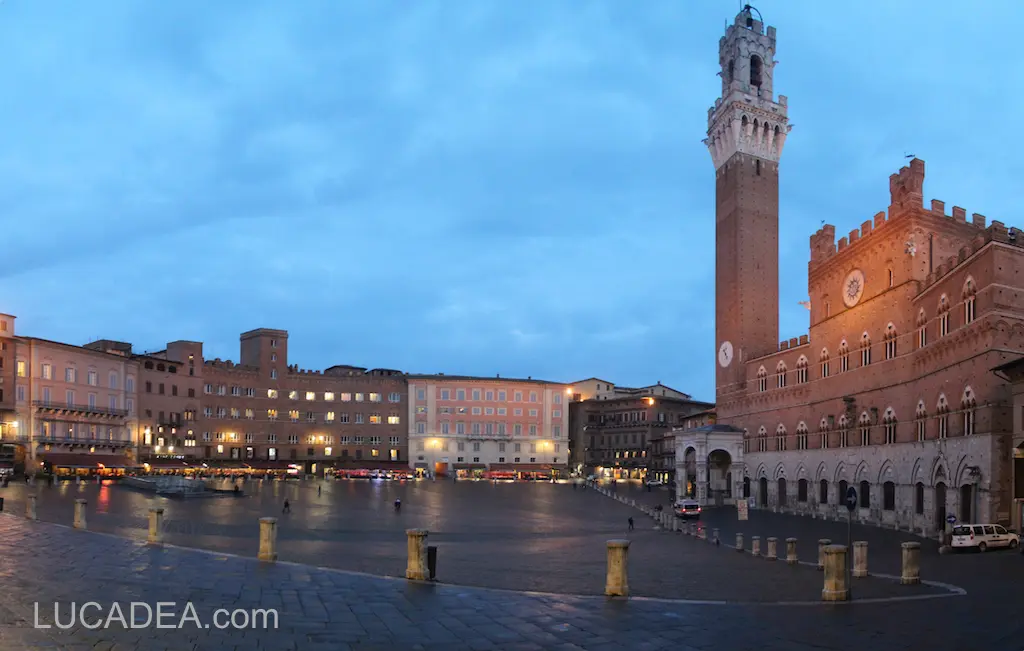
Campo Square in Siena at dusk

Piazza del Campo a Siena illuminata dalla sera con la Torre del Mangia nel centro storico toscano

Campo Square in Siena at dusk.
I photographed Campo Square in Siena, Tuscany, Italy, during the moment when daylight was slowly fading into evening, giving this famous Palio square a quieter and more intimate atmosphere. Among the places to see in Siena, this is certainly one of the most recognizable, a historic space where architecture, traditions, and everyday city life still meet.
Walking through the historic center of Siena, it is almost impossible not to arrive at this unique square with its characteristic shell shape. What attracted my attention in this image was the entire composition: the elegant buildings surrounding the square, the silhouette of Torre del Mangia, and that suspended moment between day and night when the city takes on a different appearance.
This photograph was born from my desire to capture a less usual view of one of Italy’s most famous landmarks. Campo Square is often photographed during the day or crowded during the Palio, but in the quieter hours it reveals a more intimate side. I wanted to capture this atmosphere with my camera and preserve a personal memory of my visit to Siena.
The square is famous all over the world for the Palio di Siena, the historic horse race held every year on July 2 and August 16. The event has ancient origins and still involves the city’s contrade, the historic districts of Siena, which compete with great passion. The particular shape and slope of Campo Square create the perfect setting for this centuries-old tradition.
A small curiosity about Campo Square is the division of its pavement into nine sections, a reference to the Government of the Nine, which ruled Siena during the 14th century and contributed to an important period of cultural and artistic development.
This photograph connects naturally with other stories I have shared on my photoblog about Italian historic towns and cities, because each place offers details that can tell centuries of history through a simple image.
Looking again at this photograph, I think about how Campo Square is much more than a beautiful square to visit. It is a living part of Siena, a place where residents and visitors continue to meet every day.

Have you ever visited Siena and experienced the unique atmosphere of Campo Square in the evening? Add a comment or go to the bottom of the site to read what other visitors have written.

Campo Square in Siena at evening with Torre del Mangia in the historic center of Tuscany

To see all the photos of the square, click here:
foto gallery

Piazza del Campo (or simply “il Campo”) is the main square of the city of Siena. Unique for its distinctive and highly original shell-like shape, it is renowned worldwide for its beauty and architectural integrity, as well as for being the site where the Palio di Siena takes place twice a year.
Read more on Wikipedia

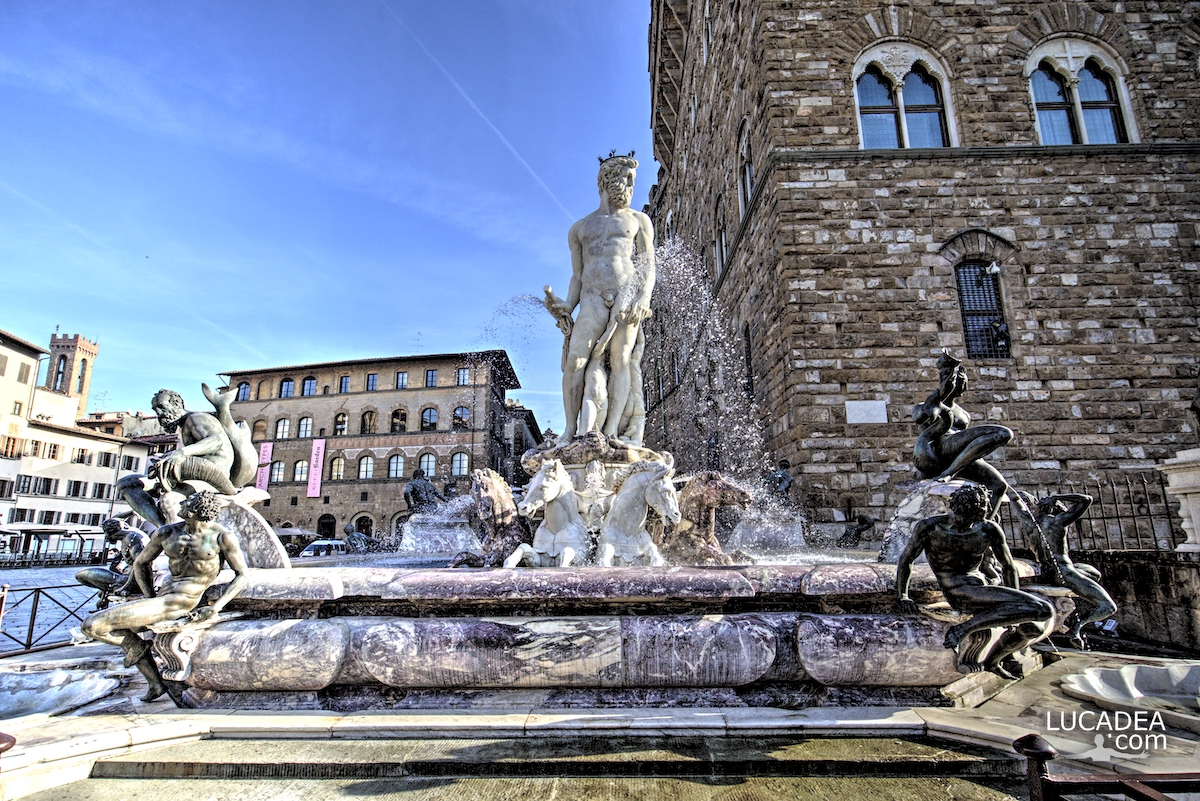
Neptune Fountain in Signoria Square, Florence

Fontana del Nettuno in piazza della Signoria a Firenze con statue in marmo e pietra

Neptune Fountain in Signoria Square, Florence.
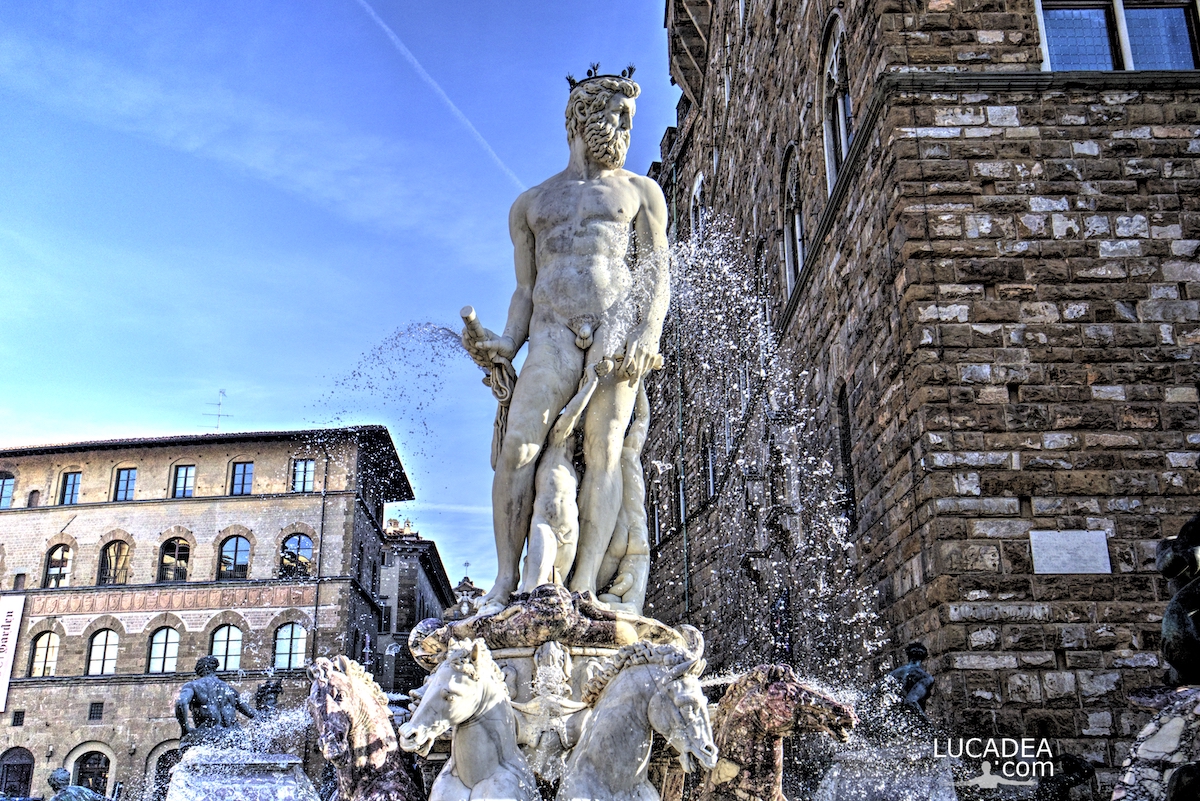
During a walk through the heart of Florence, I wanted to dedicate a photograph to one of the city’s best-known monuments: the Neptune Fountain, standing in the open space of Signoria Square beside Palazzo Vecchio. In this image, I focused especially on the materials and small details of the fountain, elements that are often overlooked because of its fame.
The Neptune Fountain in Signoria Square, Florence, Tuscany, Italy, is one of the artworks that best represents the connection between art and history in the Renaissance city. I photographed this monument while observing the contrast between the different types of stone and marble used to create a rich composition, where every surface contributes to the final appearance of the work.
When you arrive in this area of Florence, your attention is immediately drawn to the historic buildings surrounding the square, but by stopping in front of the fountain for a while, many interesting details appear: the sculptures, the decorations, the natural colours of the materials and the way light changes the perception of the surfaces.
My photograph comes from this attention to details. Even a very famous monument can be told in a different way, choosing not only to photograph it as a symbol of the city but also to search for the elements that make it unique. In this case, the variety of stones and marbles captured my attention because it creates a balance between sculptural strength and elegance.
If you are visiting Florence, Signoria Square is one of the most interesting places to see in the historic centre. Here you can find some of the city’s most representative artworks, and every corner tells the story of the relationship between political power, art and culture that shaped Florence over the centuries.
A historical curiosity about the fountain is that it was created by Bartolomeo Ammannati in the sixteenth century after being commissioned by Cosimo I de’ Medici. The figure of Neptune, carved in Carrara marble, also had a symbolic meaning connected with Florence’s ambitions at sea and the power of the Medici family.
I wanted to capture this detail with my camera because materials, textures and small differences in surfaces are often what make an artwork truly interesting. Photography allows me to get closer to details that can easily be missed during a quick visit.
This image connects with other stories on my blog dedicated to artistic details of Italian cities, where I often try to tell famous places through less obvious elements.

Have you ever stopped to observe the different materials used in historic Italian fountains? Add a comment or go to the bottom of the site to read what other visitors have written.

Neptune Fountain in Signoria Square Florence with marble statues and stone details

Neptune Fountain in Signoria Square Florence with marble statues and stone details

Photos taken with a Canon EOS M100 camera and Canon EF-M 11-22 lens.

To see all the photos I took in the beautiful Tuscan town, click here:

Numerous sculptors participated, adopting an approach characterized by the use of materials differing in nature and color—a style favored by the patron. However, the result drew harsh criticism immediately upon its completion; today, it is viewed as an emblematic example of the renewal of Mannerist sculpture in the mid-16th century, standing in opposition to the prevailing Michelangelesque academicism.
Read more on Wikipedia

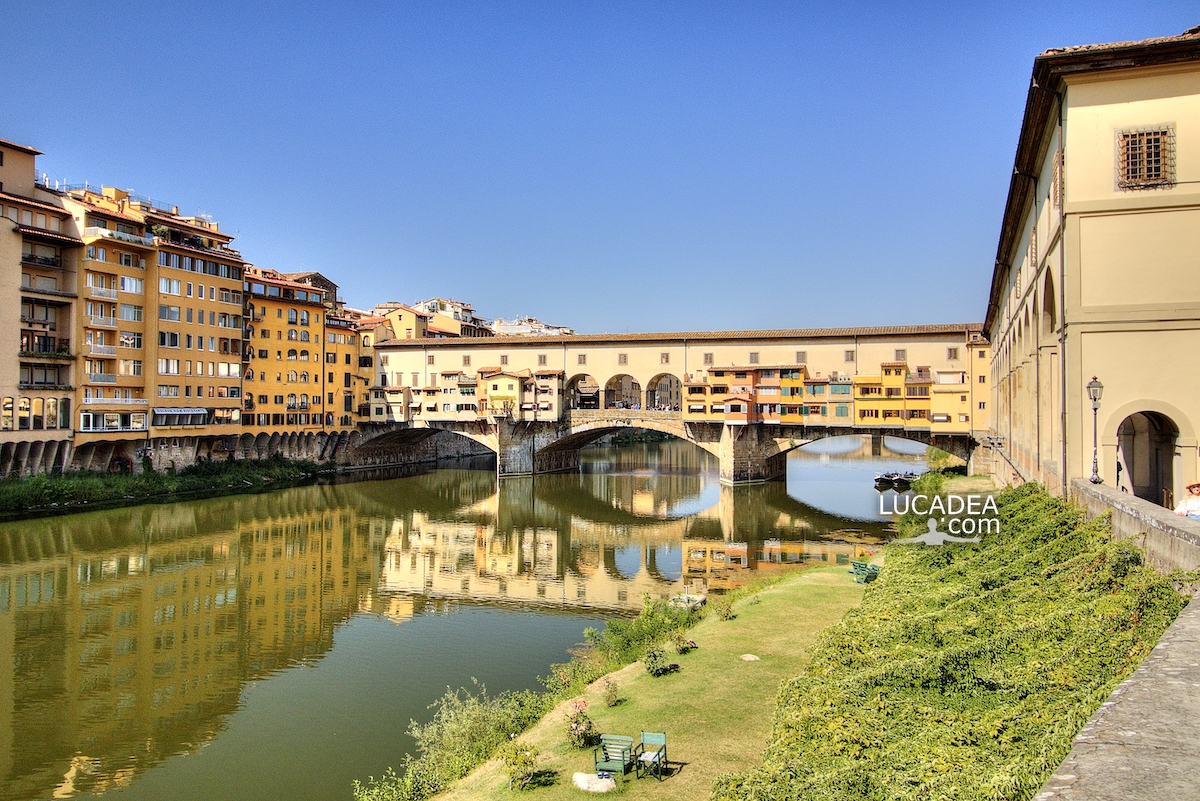
Ponte Vecchio from Lungarno degli Archibusieri

Ponte Vecchio a Firenze visto dal Lungarno degli Archibusieri con le arcate sull’Arno

Ponte Vecchio from Lungarno degli Archibusieri.
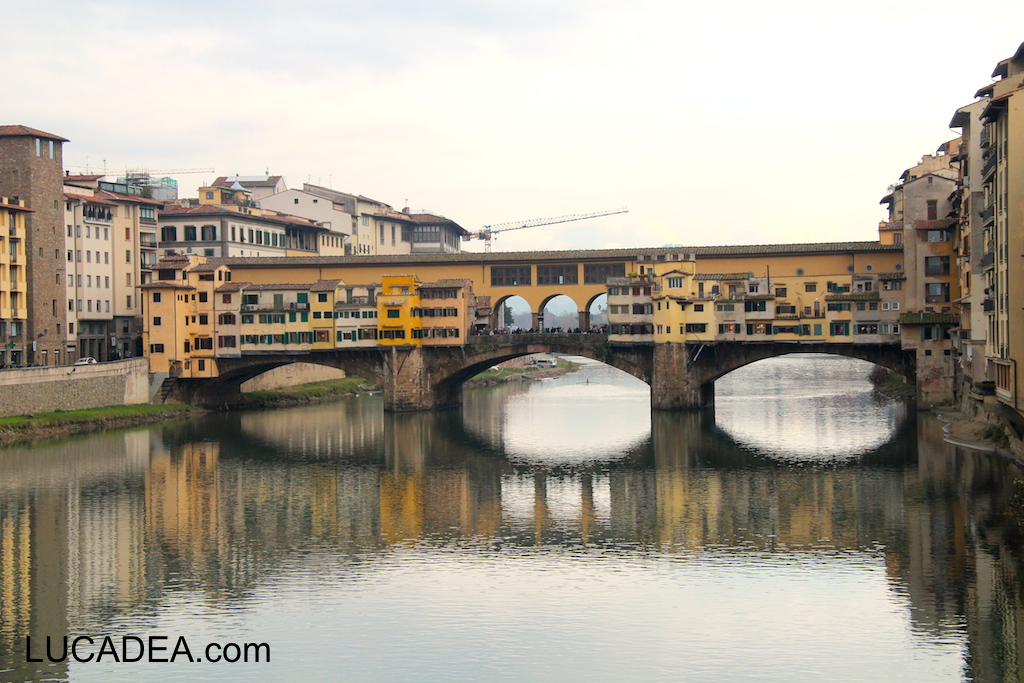
When I looked for a different viewpoint to photograph one of Florence’s most famous symbols, I decided to walk along the Arno River until reaching the end of Lungarno degli Archibusieri. From this position, Ponte Vecchio appears with its three arches and with the small covered passage on the right side leading towards the Uffizi area.
Ponte Vecchio from Lungarno degli Archibusieri in Florence, Tuscany, Italy, offers a different perspective compared with the most common views of this historic bridge. I took this photograph while searching for a composition that could show the connection between the bridge, the Arno River and the historic buildings surrounding it.
Photographing such a famous place is always a challenge. Ponte Vecchio has been captured countless times and is one of the strongest symbols of Florence, but this is exactly what makes it interesting to photograph. Looking for a new angle allows me to notice details that can easily be missed. In this image, I was attracted by the way the bridge fits into the urban landscape, with its arches supporting a part of the city above the water.
Lungarno degli Archibusieri is a particularly fascinating area because it creates a connection between Ponte Vecchio and the Uffizi through a covered walkway. Walking here helps you understand the relationship between Florence’s historic buildings and the river, which has always played an important role in the development of the city.
If you are visiting Florence, Ponte Vecchio is one of the most interesting places to see, but observing it from different viewpoints can reveal details beyond the classic image. The bridge is not only famous for its shops and the Vasari Corridor; its structure, arches and relationship with the Arno are also part of its identity.
A historical curiosity about Ponte Vecchio is that it was the only bridge in Florence not destroyed during the Second World War. In 1944, retreating German forces destroyed the other bridges of the city, while Ponte Vecchio was spared, probably because of its historical and symbolic importance.
I wanted to capture this view with my camera because even a very famous landmark can still offer new perspectives. For me, travel photography is not only about recording places, but also about finding a personal way to see them.
This photograph connects with other stories on my blog dedicated to Florence and its most representative landmarks, because I often return to famous locations looking for different details and viewpoints.

Have you ever photographed a famous place by choosing a less common perspective? Add a comment or go to the bottom of the site to read what other visitors have written.

Ponte Vecchio in Florence seen from Lungarno degli Archibusieri with arches over the Arno River

Photo taken with a Canon EOS M100 camera and a Canon EF-S 10-18 lens.

To see all the photos I took in this beautiful Tuscan town, click here:

The Ponte Vecchio is a bridge spanning the Arno River in Florence, located approximately 150 meters downstream from the point where the river’s channel is naturally at its narrowest within the city, in the stretch upstream of the Cascine.
Read more on Wikipedia

Ponte Vecchio in Florence over the Arno River

Ponte Vecchio a Firenze attraversa il fiume Arno con le sue caratteristiche costruzioni storiche

Ponte Vecchio in Florence over the Arno River.
In 2014 I photographed one of the most famous landmarks of the city, the bridge crossing the Arno River that has represented Florence for centuries. This photograph was created with the desire to add an image of such an iconic place to my blog, while still telling the story through my personal photographic perspective.
Ponte Vecchio in Florence, Tuscany, Italy, is probably one of the most recognisable historic bridges in the world. Looking through my camera, I wanted to capture not only its architecture but also the unique atmosphere that makes it instantly identifiable: the buildings standing above the bridge, the relationship with the river and the historic profile of the city around it.
Whenever I photograph a very famous place, I try not to create only a postcard image. Even a location photographed millions of times can reveal something interesting through a different viewpoint, a small detail or a particular moment. This photograph from 2014 represents my way of observing Florence through its symbols while still looking for an image that reflects my own experience of the place.
If you are visiting Florence, Ponte Vecchio is one of the most interesting places to see and one of the first landmarks many visitors want to discover. The bridge is not simply a connection between the two sides of the Arno, but a real part of the city built above the water, with historic shops, unique architecture and centuries of stories.
A historical curiosity about Ponte Vecchio is that the current structure dates back to the fourteenth century and is traditionally associated with the architect Taddeo Gaddi. Over time, the bridge changed its commercial identity: it originally hosted different types of shops, including butchers, while today it is famous mainly for its jewellery workshops.
I wanted to capture this view with my camera because Ponte Vecchio still represents the connection between past and present. Standing near the Arno, it becomes clear that this bridge is not only a historic monument, but also a living place crossed every day by thousands of people.
This photograph connects with other stories on my blog dedicated to Florence and its architectural details, because describing a city also means returning to its most famous symbols and trying to see them from a fresh perspective.

Have you ever photographed Ponte Vecchio from a viewpoint different from the classic river view? Add a comment or go to the bottom of the site to read what other visitors have written.

Ponte Vecchio in Florence crossing the Arno River with its historic buildings and famous structure

To see all the photos I took in the beautiful Tuscan town, click here:

The Ponte Vecchio is a bridge spanning the Arno River in Florence, located approximately 150 meters downstream from the point where the river’s channel is naturally at its narrowest within the city, in the stretch upstream of the Cascine.
Read more on Wikipedia

🏠
  • Italiano