Fieschi street in the heart of modern Genoa

Via Fieschi a Genova nel cuore moderno tra Via XX Settembre e salita verso Carignano e la basilica

Fieschi street in the heart of modern Genoa.
Walking through this part of the city, I found myself looking at a very different side of Genoa from the one usually associated with narrow medieval alleys, historic palaces and the waterfront. This photograph shows Fieschi street, an elegant urban road in central Genoa where another side of the city becomes visible through its buildings, shops and everyday activity.
I took this photograph myself while walking through Genoa, stopping to look at the perspective created by the street and its architecture. What caught my attention was the contrast between this part of the city and the older historic centre. A short walk can completely change the atmosphere, taking you from narrow alleys to wider streets and a more contemporary urban landscape.
Fieschi street is in central Genoa, Liguria, Italy, connecting the area around Dante square with the central streets leading towards Paolo da Novi square and XX Settembre avenue. If you are visiting Genoa and wondering what to see beyond the best-known landmarks, this is an interesting street to encounter while walking through the central districts, especially because it connects several important areas of the city.
In the photograph, what interests me most is the perspective. The buildings guide the eye forward and create a sequence of façades in which homes, businesses and offices share the same urban space. There is no single monument dominating the composition. Instead, the photograph is about the city itself and the ordinary rhythm of a central Genoese street.
The name Fieschi street refers to one of the most influential noble families in Genoese history. The Fieschi were a powerful aristocratic family from Liguria, connected with the history of nearby Lavagna and deeply involved in the political life of the Republic of Genoa. Among the family’s most important figures was Sinibaldo Fieschi, who became Pope Innocent IV in the thirteenth century. It is only a small historical detail, but it shows how the names of powerful families from the past remain present throughout the streets of Genoa and the surrounding region.
This connection between the present city and its older history is one of the things I enjoy noticing while walking through Genoa. A street can look completely contemporary, yet its name may refer to people and events from centuries ago. The city is full of these layers, and photography often gives me a reason to stop and pay attention to them.
The area is also close to XX Settembre avenue, one of Genoa’s main commercial streets. From here, it is possible to continue towards De Ferrari square and the historic centre or explore other central neighbourhoods. For anyone interested in discovering Genoa on foot, routes like this make it possible to move naturally between modern streets, historic buildings and older alleys without following a rigid itinerary.
I have photographed several other parts of Genoa for my photoblog, and I like connecting these stories because the city changes dramatically from one neighbourhood to another. Some of my photographs focus on the historic centre and its narrow alleys, creating a very different visual atmosphere from this image. Together, however, they show the same city from different perspectives.
When I photograph Genoa, I am often interested in this contrast. On one side are the medieval alleys, the historic palaces and the narrow streets that made the old centre famous. On the other are streets such as Fieschi street, where traffic, shops and more recent buildings show a city that has continued to evolve.
The movement of people and changing light can completely alter the feeling of a street, but for this photograph I preferred to concentrate on the urban structure itself. The lines of the buildings, the depth of the road and the succession of façades were enough to recreate the impression I had while walking here.
If you are wondering where Fieschi street is in Genoa, it is centrally located and easy to include in a wider walk through the city. I would not necessarily consider it a destination on its own, but rather an interesting part of an urban route while exploring central Genoa.
This is also why I continue photographing streets that might initially seem ordinary. A photoblog does not have to show only famous monuments. Sometimes an image of a normal city street can say more about a place, particularly when it shows architecture, commerce and everyday life sharing the same space.
Looking at this photograph again, I think about a side of Genoa that can remain hidden behind the more traditional images of the city. It is the Genoa of daily journeys, streets crossed every day and buildings that people may pass without stopping to look at them. Photographing these places is also a way of preserving small fragments of the city before they become simply part of memory.
Fieschi street therefore seemed like a good place from which to photograph this particular side of Genoa: modern without being completely detached from history, central without having the monumental appearance of the city’s most famous squares.

When you walk around Genoa, do you prefer the historic alleys, or do you enjoy discovering the city’s more modern central streets as well? Add a comment or go to the bottom of the site to read what other visitors have written.

Fieschi street in central Genoa, with historic buildings, shops and the urban perspective of the road

Photo taken with Canon EOS RP camera and Canon RF 24-50 lens.

Here’s where I took the shot:

Add one  comment to this article or read  here what other visitors have written.
 
Adv
 
Disclamer

The rights on images, videos, choruses, text and all other material on the LUCADEA.com website are governed as per  Copyright page.


This page has been viewed 0 times today.
This month it has been viewed 0 times.
In total it has been viewed 0 times.
 

Buildings over Venti Settembre Street in Genoa

Palazzi sopra via Venti Settembre a Genova visti dal basso vicino al Ponte Monumentale

Buildings over Venti Settembre Street in Genoa.
I was walking along Venti Settembre Street in the center of Genoa, Liguria, Italy, noticing once again how this city reveals its most interesting layers only when you stop looking straight ahead and start observing what rises above you. In a place like Genoa, it’s almost natural to wonder what to see beyond the street level, because so much of the city exists vertically.
The scene is taken near the Ponte Monumentale, where the perspective suddenly opens upward and the buildings over Venti Settembre Street start to define the space from above. Salita Salvatore Viale, although not visible in the frame, is one of the access routes that lead to the higher levels where this kind of viewpoint becomes possible. It’s a typical Genoese connection between different layers of the city.
From below, the facades create a dense vertical composition. Windows, balconies, and walls overlap in a way that feels almost structured like a stack of urban fragments. Light moved unevenly between the buildings, breaking the continuity of the street and giving depth to the scene.
What strikes me every time is how Genoa is never just one level. Even a central street like Venti Settembre Street hides this vertical complexity, where everyday movement happens beneath a system of hidden connections and elevation changes.
One interesting detail is that many of Genoa’s historical salite, including Salita Salvatore Viale, were originally built as practical links between the 19th-century city center and the surrounding hills, and they still shape how the city is experienced today.
If you are visiting Genoa, this is one of those places worth seeing not only for what is at eye level, but for what stands above it. I was reminded of another moment near the Ponte Monumentale where a slight change in position completely transformed the view. That’s the essence of photographing this city.

When you walk through a city like this, do you ever find yourself looking up instead of forward? Add a comment or go to the bottom of the site to read what other visitors have written.

Update: I mistakenly wrote Vitale but couldn’t find a match. As many people pointed out, there was a spelling mistake: the correct name is Salvatore Viale, about which I found a lot of information!

Palazzi sopra via Venti Settembre a Genova visti dal basso vicino al Ponte Monumentale

Photo taken with Canon EOS RP and Canon RF 24-50 lens.

Where I took the photo:

Salvatore Viale (Bastia, September 6, 1787 – Bastia, November 23, 1861) was a Corsican writer, poet, and magistrate. He was the first author to use the Corsican language in a major literary work, Dionomachia (1817). Educated by liberal ideas, he played a significant role in the recovery of the cultural tradition of the Corsican people and defended the role of Italian as the island’s cultured language.
A street in Genoa near the central Via XX Settembre (previously named after Antoine Christophe Saliceti) is named after Viale.
Continue and learn more at Wikipedia

Buildings above Via Venti Settembre in Genoa – Bâtiments au-dessus de la Via Venti Settembre à Gênes – Edificios sobre Via Venti Settembre en Génova – Edifícios acima da Via Venti Settembre em Gênova – Gebäude über der Via Venti Settembre in Genua – Các tòa nhà phía trên Via Venti Settembre ở Genoa – 热那亚二十世纪大街上方的建筑 – ジェノヴァのヴェンティ・セッテンブレ通り上の建物

The text of this post was written with the help of ChatGPT, a language model from OpenAI.

Add one  comment to this article or read  here what other visitors have written.
 
Adv
 
Disclamer

The rights on images, videos, choruses, text and all other material on the LUCADEA.com website are governed as per  Copyright page.


This page has been viewed 1 times today.
This month it has been viewed 1 times.
In total it has been viewed 1 times.
 

Nazionale Street in Sestri Levante between two sides

Via Nazionale a Sestri Levante lunga e dritta tra zona moderna e centro storico della cittadina ligure

Nazionale Street in Sestri Levante between two sides.
Nazionale Street in Sestri Levante stretches straight ahead, almost like a clear line cutting through the town, and this main road immediately reveals its dual nature. This street connecting the highway exit to the center of Sestri Levante feels like both a boundary and a bridge between two different parts of the same place.
Walking along Nazionale Street in Sestri Levante, I start noticing how clearly this transition unfolds. In front of me, the more modern and peripheral area opens up with wider spaces and a faster pace; behind me, the older and more central part begins, where streets become narrower and the atmosphere feels more intimate. It’s a subtle shift, but once you see it, you can’t ignore it.
Sestri Levante, Liguria, Italy, reveals itself through this simple stretch of road. If you are visiting and wondering what to see in Sestri Levante beyond the coastline, this is one of those places that quietly explains how the town is structured, without needing any signs or explanations.
I pause for a moment, watching cars and people moving along the road, trying to frame that sense of transition. It’s not a scenic viewpoint, not a postcard location, but it feels real. Here you find a more everyday perspective that completes the story of the town.
What strikes me most is the straightness of the road, its almost uninterrupted direction. A small but meaningful detail is that this layout makes it one of the main connecting arteries of the town, used daily to cross Sestri Levante from one side to the other.
I keep walking without rushing, letting the street guide my pace instead of the other way around.

Have you ever stood in a place that seemed to explain an entire city at a glance? Add a comment or go to the bottom of the site to read what other visitors have written.

Via Nazionale a Sestri Levante lunga e dritta tra zona moderna e centro storico della cittadina ligure

Photo taken with Canon EOS M100 camera and Canon EF-S 10-18 lens.

Where is the shooting spot?

Via Nazionale a Sestri Levante tra due anime – Via Nazionale in Sestri Levante between two sides – Via Nazionale à Sestri Levante entre deux visages – Via Nazionale en Sestri Levante entre dos almas – Via Nazionale em Sestri Levante entre duas faces – Via Nazionale in Sestri Levante zwischen zwei Seiten – Via Nazionale ở Sestri Levante giữa hai mặt – 塞斯特里莱万特的国道在两种面貌之间 – セストリ・レヴァンテのヴィア・ナツィオナーレ、二つの顔

The text of this post was written with the help of ChatGPT, a language model from OpenAI.

The small Tommaso Reggio Street in Genoa

La piccola via Tommaso Reggio a Genova

The small Tommaso Reggio Street in Genoa.
A small alley in Genoa located in a key area of the city between the cathedral and the courthouse.
It currently hosts the State Archives.

Do you know this street in Genoa? Add a comment or go to the bottom of the site to read what other visitors have written.

La piccola via Tommaso Reggio a Genova

Photo taken with Canon EOS M100 and Canon EF-S 10-18 lens.

Here’s where the alley is:

The strategic street named after Tommaso Reggio, bishop of Ventimiglia and then of Genoa from 1892 to 1901, is home to important buildings linked to the power and intrigues of medieval Genoa. Here, you’ll find the 16th-century Palazzetto Criminale, the small bridge connecting the Palazzetto itself to the Cathedral of San Lorenzo, the Torre del Popolo, the Loggia degli Abati, a perimeter wall of the Palazzo Ducale, and the Diocesan Museum.
Continue and learn more at amezena.net

The small street called Tommaso Reggio in Genoa – La petite rue appelée Tommaso Reggio à Gênes – La pequeña calle llamada Tommaso Reggio en Génova – A pequena rua chamada Tommaso Reggio em Génova – Die kleine Straße namens Tommaso Reggio in Genua – Con phố nhỏ mang tên Tommaso Reggio ở Genoa

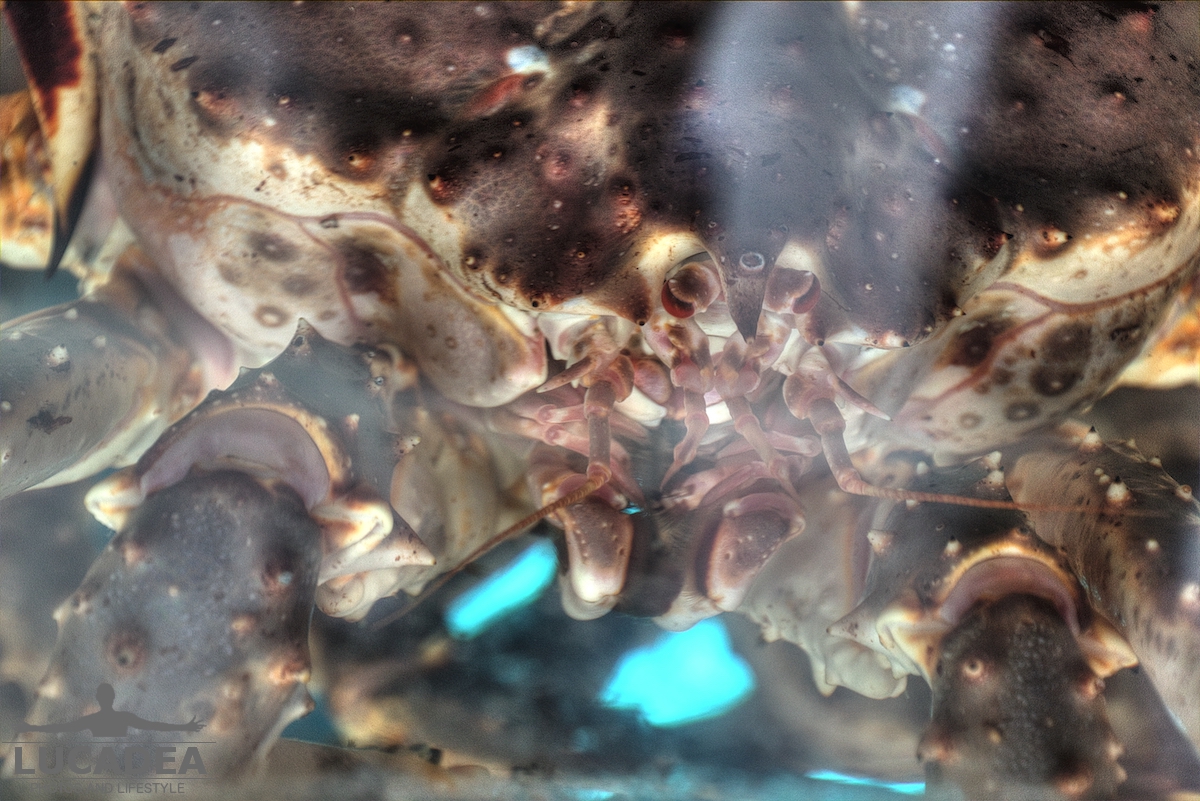
Crabs in Hong Kong behind the glass

Granchi a Hong Kong dietro la vetrina di un acquario con crostacei vivi in un ristorante asiatico illuminato

Crabs in Hong Kong behind the glass.
I find myself standing still longer than expected, watching crabs in Hong Kong moving slowly inside a glass tank that separates two worlds: the street outside and the quiet, almost suspended life inside. The crabs in Hong Kong become a hypnotic focal point, framed by reflections that blur reality and make the scene feel like a layered memory.
Walking through the city of Hong Kong, Hong Kong Special Administrative Region, China, I notice how deeply the sea is integrated into everyday life. In many restaurants and markets, live seafood is not an exception but a norm, and these crabs in Hong Kong reflect a culinary culture built on freshness and immediacy. The idea of “sea to table” here is not a slogan but a visible reality, especially when you pass aquariums placed directly at the entrance of eateries.
These crabs, which remind me of Japanese spider crabs in their form and structure, move with a slow, almost deliberate rhythm. A small but fascinating fact is that spider crabs are among the largest arthropods in the world, capable of growing extremely long limbs that make them look almost alien compared to typical crustaceans.
The photograph was taken through a shop window, and that layer of glass adds a subtle distortion that becomes part of the story. I recall similar visual moments from other posts on the site, where urban details and street life merge into quiet photographic observations.
If you are visiting Hong Kong, one of the most interesting things to see is not only the skyline or the harbor, but also these small everyday scenes that reveal cultural habits through food and display. It makes me wonder how many similar moments go unnoticed in a fast-moving city.

Have you ever stopped to observe something so simple that it stayed with you longer than expected? Add a comment or go to the bottom of the site to read what other visitors have written.

Granchi a Hong Kong dietro la vetrina di un acquario con crostacei vivi in un ristorante asiatico illuminato

Granchi a Hong Kong dietro la vetrina di un acquario con crostacei vivi in un ristorante asiatico illuminato

Photos taken with Canon EOS M100 and lens Tamron 16-300.

Granchi a Hong Kong dietro la vetrina – Crabs in Hong Kong behind the glass – Les crabes à Hong Kong derrière la vitrine – Cangrejos en Hong Kong detrás del cristal – Krebse in Hongkong hinter der Scheibe – Cua ở Hồng Kông sau tủ kính – 香港橱窗后的螃蟹 – 香港のショーケースの後ろのカニ

The text of this post was written with the help of ChatGPT, a language model from OpenAI.

Modern arcades along Chiavari old streets

Portici moderni nei vicoli di Chiavari con arcate in ardesia e facciata bicroma nel centro cittadino ligure

Modern arcades along Chiavari old streets.
There are small details that immediately define a place, and these modern arcades in Chiavari made me reflect on what to see in Chiavari beyond the usual highlights. Walking through the alleys of Chiavari, among narrow streets and covered walkways, you quickly notice how the city blends old and new without creating a break. The feeling is subtle but clear: even recent architecture respects the rhythm of the past.
As I moved through this part of Chiavari, Liguria, Italy, I realized how naturally this building fits into its surroundings. It’s not historical, yet it doesn’t feel out of place. The shapes are simpler, more contemporary, but the materials speak the same language. Slate surfaces, soft color contrasts, and the repeating arches create a visual continuity that feels almost instinctive.
This photo came from that exact impression. I didn’t need to search for something extraordinary. The way the light filtered under the arcades, the repetition of columns, the quiet balance of shadows—it was enough. In Chiavari’s streets, even modern structures seem to follow an unspoken rule, something that ties everything together.
One interesting fact is that Chiavari is well known for its long and continuous medieval arcades, originally built to shelter merchants and pedestrians from weather conditions. This newer building, now hosting the local Municipal Police, clearly draws inspiration from that tradition while adapting it to modern needs.
It reminded me of other photos I shared on the site, taken in similar alleys where the atmosphere remains consistent even when architecture changes. There’s a kind of visual coherence that makes Chiavari unique.
If you are visiting Chiavari and wondering what to see in Chiavari, this is one of those places worth noticing. It may not be ancient, but it still tells a meaningful story about the city.

Do you appreciate when a town evolves while still keeping its original character? Add a comment or go to the bottom of the site to read what other visitors have written.

Portici moderni nei vicoli di Chiavari con arcate in ardesia e facciata bicroma nel centro cittadino ligure

Photo taken with Canon EOS M100 and lens Canon EF-M 22.

<

Modern arcades in the alleys of Chiavari – Arcades modernes dans les ruelles de Chiavari – Pórticos modernos en los callejones de Chiavari – Pórticos modernos nos becos de Chiavari – Moderne Arkaden in den Gassen von Chiavari – Các mái vòm hiện đại trong ngõ nhỏ Chiavari – 基亚瓦里小巷中的现代拱廊 – キアーヴァリの路地にある現代的なアーケード

The text of this post was written with the help of ChatGPT, a language model from OpenAI.

The colorful primary school in Lombardia Street

La scuola primaria Giovanni Paolo XXIII colorata in via Lombardia a Sestri Levante tra edifici e strada urbana

The colorful primary school in Lombardia Street.
While walking along Antica Romana Occidentale Street, I stopped almost instinctively in front of Giovanni Paolo XXIII primary school, one of the elementary schools in Sestri Levante that has changed its appearance in recent years. When looking for what to see in Sestri Levante or simply exploring Liguria, sometimes the most ordinary places are the ones that catch the eye, and this renovated school is a perfect example.
I remembered it differently, more anonymous and almost unnoticed among the daily traffic of the street. Today, however, the colourful facades make it much more visible and lively, almost as if the walls could still reflect the voices of children even when the classrooms are quiet. I stopped there for a while, looking for the right perspective for my photograph, as often happens when I find a place that has changed and deserves to be captured.
We are in Sestri Levante, Liguria, Italy, and even a simple primary school can tell something about the area where it stands. It is not a historical monument or a famous attraction, but it is part of everyday life and shows how urban spaces can evolve while remaining connected to the local community.
This photograph was created from the curiosity of noticing a small detail that many people probably pass by without stopping. The bright colours reminded me of other images I have taken in Sestri Levante, especially in the historic centre, where different shades on buildings and houses are an important part of the local character.
The school is named after Giovanni Paolo XXIII, the pope known for his role in promoting renewal and openness within the Catholic Church. This small detail adds another layer of meaning to a building that represents education, growth and the future.
While taking this photo, I thought about other less famous places I have shared on Lucadea, because often the most interesting stories are hidden in everyday corners rather than in the most photographed locations.
This is not a typical postcard view, and perhaps that is exactly why it attracted me. A school, a street and a few colours can become a small visual memory of how a town changes over time.

Would you ever stop to photograph a school like this? Add a comment or go to the bottom of the site to read what other visitors have written.

Colorful Giovanni Paolo XXIII primary school in Lombardia Street in Sestri Levante with urban surroundings

Colorful Giovanni Paolo XXIII primary school in Lombardia Street in Sestri Levante with urban surroundings

Photos taken with Canon EOS M100 and lens Canon EF-S 10-18.

The central Dante Avenue in Sestri Levante

Il centrale Viale Dante a Sestri Levante

The central Dante Avenue in Sestri Levante.
The straight road that starts from the historic center and extends until it reaches the Gromolo stream.
In this section, on the left side of the photo, there are the town’s primary schools.
The paving was recently (a few years ago) renewed and renovated; it now hosts both a short bike lane (not very functional) and these small trees.

Do you know this street in Sestri? Add a comment or go to the bottom of the site to read what other visitors have written.

Il centrale Viale Dante a Sestri Levante

Photo taken with Canon EOS RP camera and Canon RF 24-50 lens.

Here’s where I took the shot:

The central avenue dedicated to Dante in Sestri Levante – L’avenue centrale dédiée à Dante à Sestri Levante – La avenida central dedicada a Dante en Sestri Levante – A avenida central dedicada a Dante em Sestri Levante – Die zentrale Allee, die Dante in Sestri Levante gewidmet ist – Đại lộ trung tâm dành riêng cho Dante ở Sestri Levante

The Matitone of Genoa seen from afar

Il Matitone di Genova visto da lontano

Genoa’s Matitone seen from afar.
In the photograph, the Matitone doesn’t dominate the scene, but rather cuts through it. It’s there, recognizable even from afar, with that thin, vertical shape that juts out between the port and the city like a bold sign drawn against the sky. I photographed it without getting close, letting the distance tell its story. From afar, the skyscraper loses all its technical detail and becomes, above all, a presence, almost a visual landmark that helps orient oneself when viewing Genoa from an external, lateral perspective, perhaps from an elevated road or a hill.
Seen from this perspective, the Matitone appears less imposing and more elegant. Its height doesn’t overwhelm, but rather guides the gaze upward, following a clean line that contrasts with the more irregular profile of the surrounding buildings. In the photo, it fits well into the urban landscape, as if it were a sort of hinge between the port-side Genoa, full of work and movement, and the more compact city that climbs inland. From afar, it’s not a building that imposes its presence, but one that is easily recognized.
Photographing it from a distance made me reflect on how certain buildings function better when you don’t look too closely. Seen from this perspective, the Matitone conveys an idea of ​​modernity that needs no explanation. It’s a beacon, almost a fixed point in the Genoese skyline, emerging without shouting. Its slender silhouette interacts with the sky and the sea, especially when the light is soft and the edges are less sharp.
The skyscraper is also known as the site of the World Trade Center of Genoa, and was conceived with the idea of ​​representing a link between the city and its international role, especially related to the port. But this information remains in the background. In photography, what really matters is how it fits into its context: a vertical element in a historically horizontal and layered city, made up of alleys, climbs, and broken perspectives.
From afar, the Matitone almost becomes a personal reference point, one of those details that, once noticed, always return in subsequent shots. A different way to look at Genoa, letting a building suggest a direction, rather than imposing itself as a protagonist.

Do you also have a building that you immediately recognize, especially when viewed from afar? Add a comment or go to the bottom of the site to read what other visitors have written.

Photos taken with Oppo Reno 12.

Where is the skyscraper located?

The Matitone of Genoa seen from afar – Le Matitone de Gênes vu de loin – El Matitone de Génova visto de lejos – O Matitone de Génova visto de longe – Der Matitone von Genua aus der Ferne – Tòa nhà Matitone ở Genova nhìn từ xa – 远眺热那亚的马蒂托内大楼 – 遠くから見たジェノヴァのマティトーネ

The text of this post was written with the help of ChatGPT, a language model from OpenAI.

🏠
  • Italiano