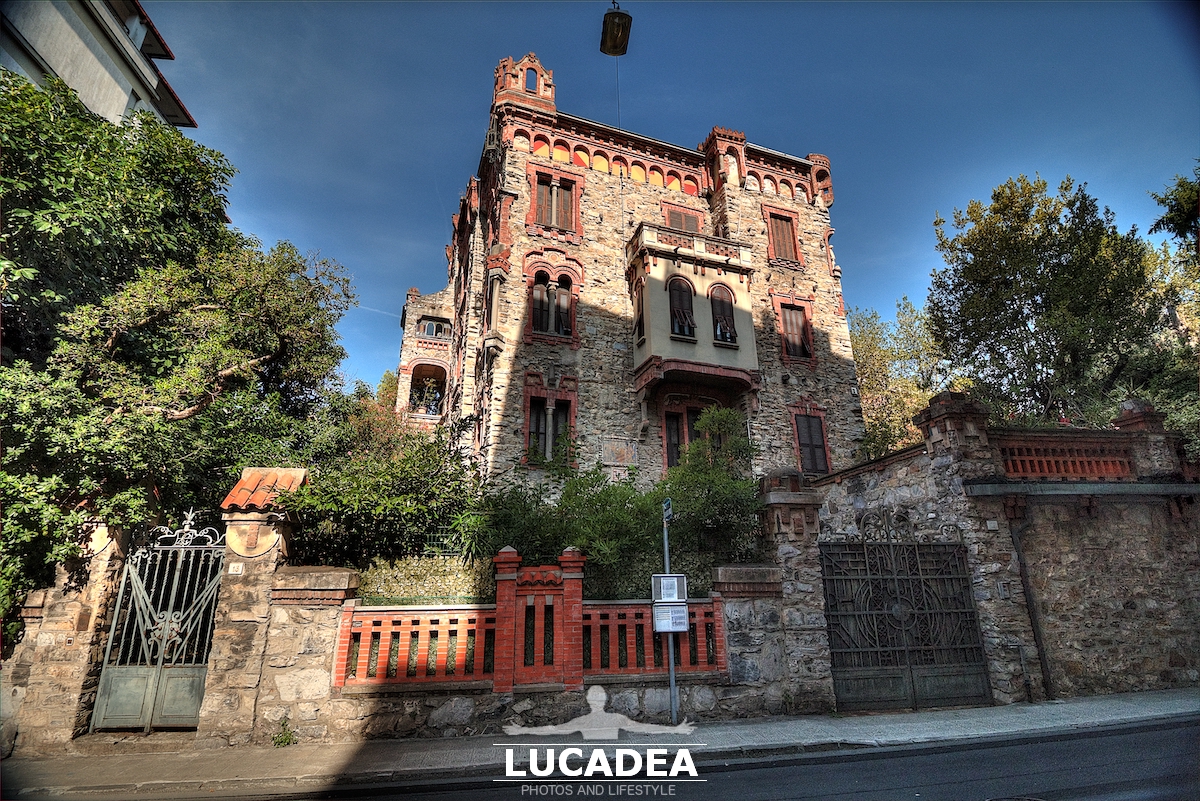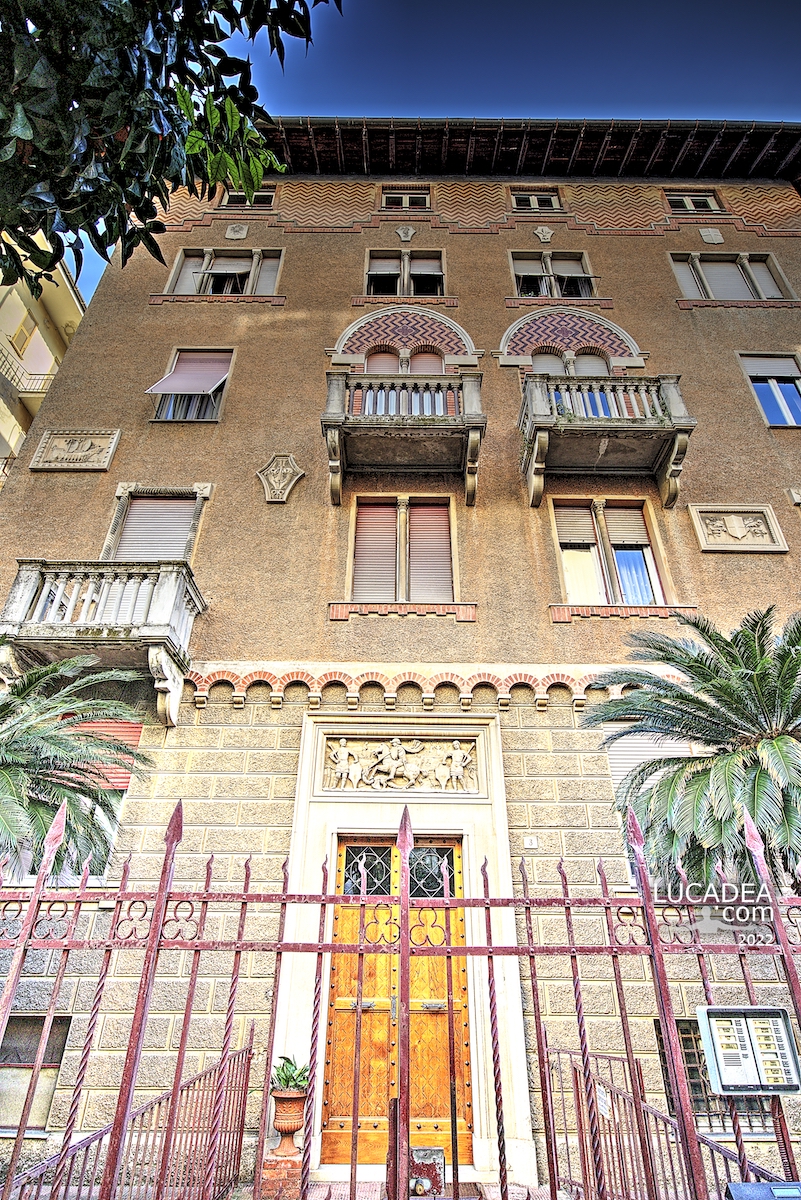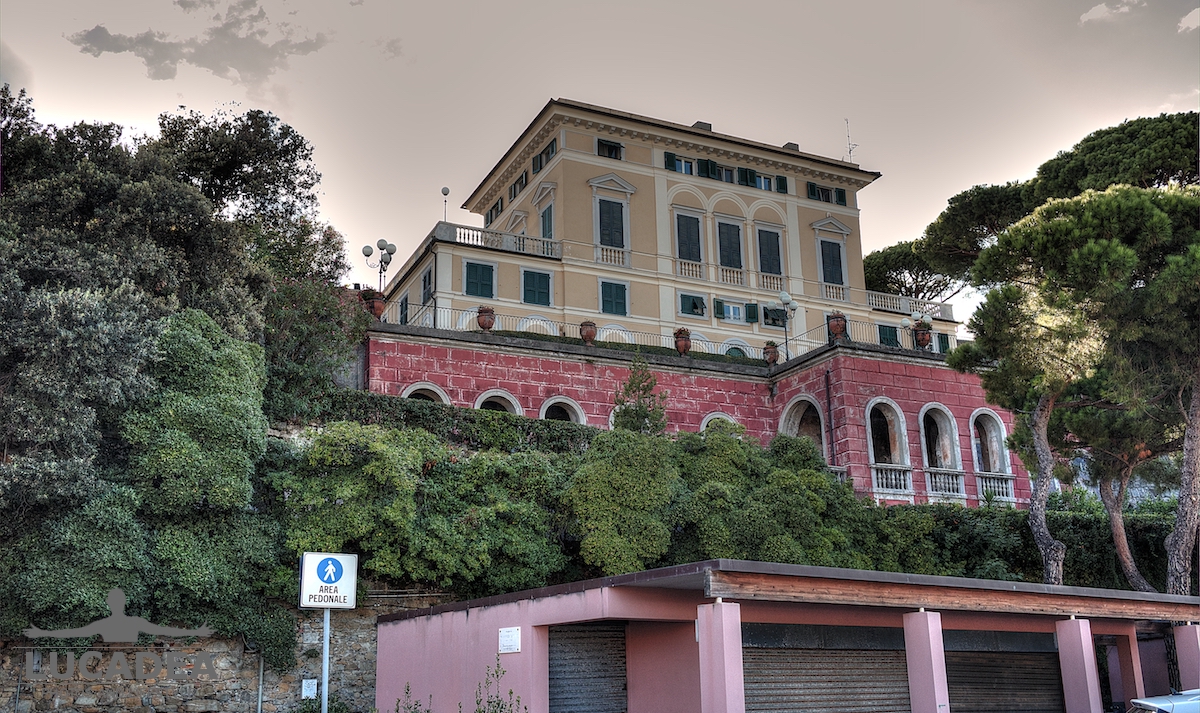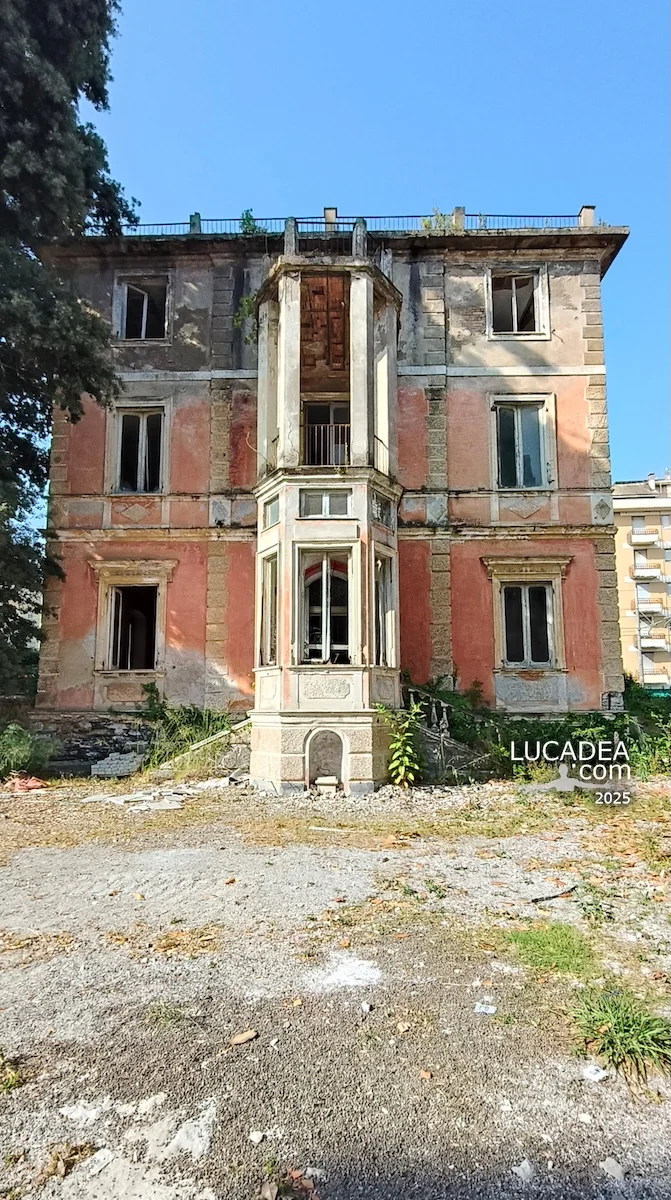
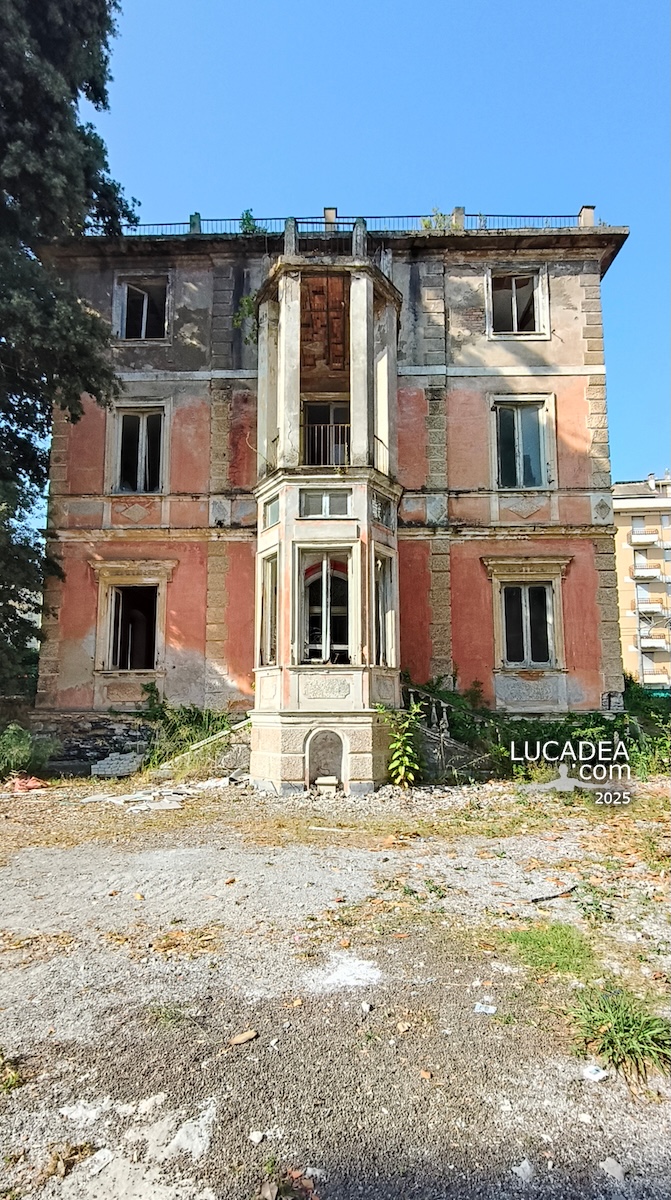
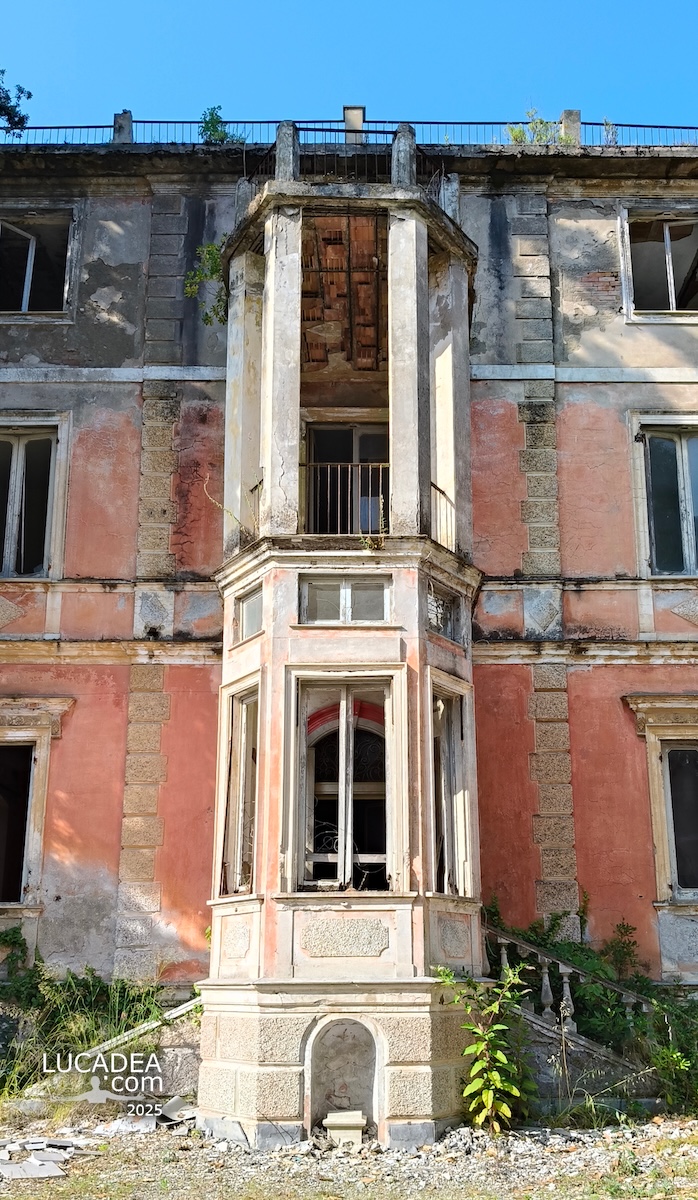
Abandoned villa on Dei Devoto street in Lavagna

Villa abbandonata in via Devoto a Lavagna con facciata storica rovinata e dettagli architettonici ancora visibili.

Abandoned villa on Dei Devoto street in Lavagna.
Standing in front of this abandoned villa, I found a quiet scene shaped by years of silence, where worn walls, empty windows and faded architectural details still preserve the feeling of a forgotten story. This forgotten building in Liguria represents the charm of abandoned places in Italy, locations where the traces of past lives remain visible through the surfaces and structures left behind.
When I photographed the facade, I wanted to capture more than the simple appearance of the building. I focused on the small details that reveal the passage of time: damaged decorations, aged surfaces and elegant shapes that continue to survive despite neglect. An abandoned villa can create a unique connection between architecture and memory, allowing the observer to imagine the voices, movements and everyday moments that once filled those rooms.
The photograph was taken in Lavagna, Liguria, Italy, along Dei Devoto street, where this abandoned villa remains as a distinctive element within the urban landscape. For anyone wondering what to see in Lavagna beyond the most familiar views, places like this can offer another way to understand the identity of a town and the transformations that happen quietly over decades.
Looking at this building, I imagined the period when it was still a living home, with occupied rooms, personal objects and families creating memories inside. A small historical curiosity is that many villas built between the nineteenth and twentieth centuries were designed not only as residences but also as symbols of style, social position and architectural taste.
Through my photographic stories about forgotten buildings and hidden corners of the area, I often search for places where time has created a different kind of beauty. This abandoned villa is interesting because it shows how a place can lose its original function while still keeping a strong visual identity.
If you are visiting this part of Liguria, discovering locations like this can reveal a quieter side of the landscape, where everyday streets may hide unexpected stories. The value of this place is not only in its appearance but also in the questions it creates about the people who lived there and the changes that followed.
I have explored similar subjects in other posts about forgotten architecture and overlooked details of the territory, because these places often contain stories that deserve attention before they disappear completely.
Photography allows me to preserve these fragile moments, capturing buildings that exist between their past and their uncertain future.

Have you ever walked past an abandoned building and wondered about the lives that once happened behind its walls? Add a comment or go to the bottom of the site to read what other visitors have written.
Photos taken with Honor 20.

Where is the palace:

Add one  comment to this article or read  here what other visitors have written.
 
Adv
 
Disclamer

The rights on images, videos, choruses, text and all other material on the LUCADEA.com website are governed as per  Copyright page.


This page has been viewed 2 times today.
This month it has been viewed 2 times.
In total it has been viewed 3 times.
 

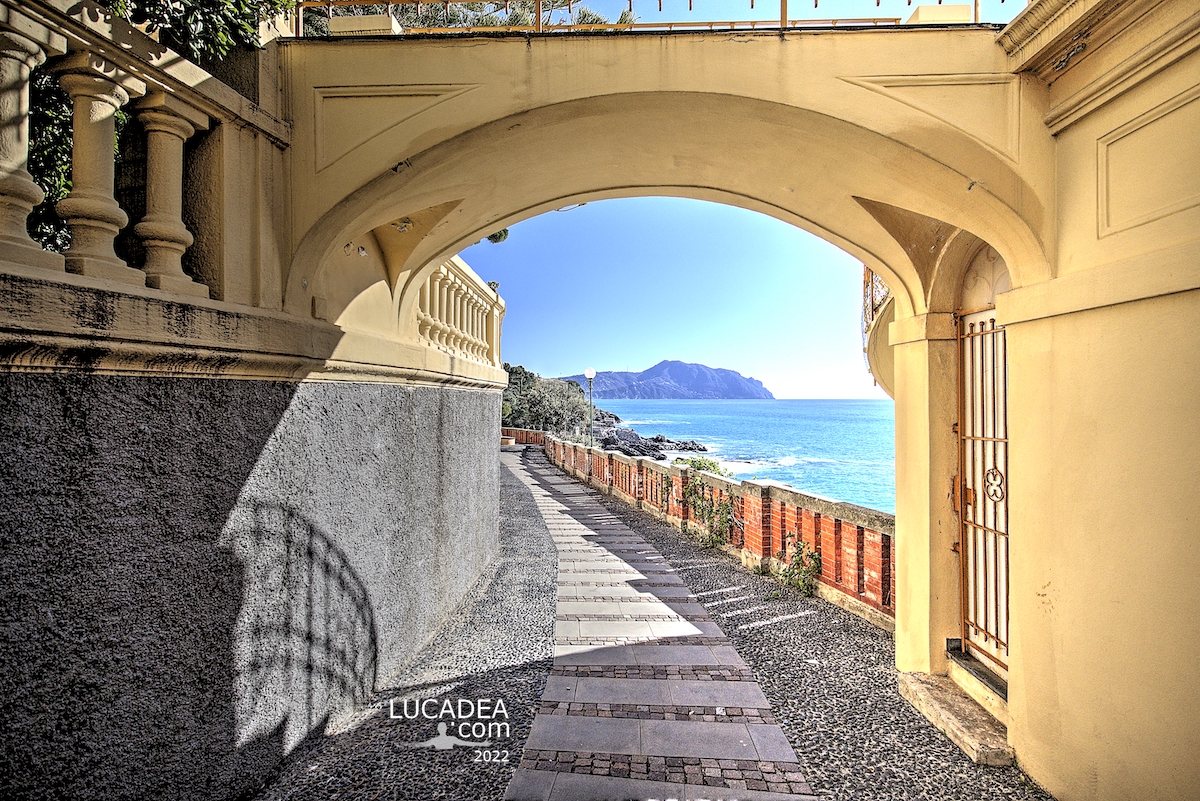
A seaside creuza in Bogliasco

Creuza sul mare a Bogliasco con piccolo ponte verso una villa affacciata sulla costa ligure

A seaside creuza in Bogliasco.
While walking east of the small harbor in Bogliasco, Liguria, Italy, I stopped to photograph this typical Ligurian creuza running close to the sea and connecting the coastal houses with the road. It is one of those corners of Bogliasco that immediately shows how closely the village is tied to the landscape between the hills and the water.
I took this photograph quite some time ago during a walk along this path. What caught my attention was the small bridge, almost suspended between the villa overlooking the sea and the route leading back toward the road. It is a simple detail, but I think it says a lot about the way Bogliasco has adapted to a landscape where space is limited and the coast drops quickly toward the water.
When I think about what to see in Bogliasco, I do not think only of the harbor or the beach. I am also interested in the quieter passages found just a few steps away from the places most people recognize. A seaside creuza is already a distinctive feature, but here the bridge and the villa make the scene even more unusual.
Creuze are among the features I immediately associate with Ligurian seaside villages. They are often narrow, steep paths that developed to connect houses, farmland and the sea. Their paving can vary from one place to another, but they generally retain an intimate character that separates them from ordinary roads.
In Bogliasco, this relationship with the sea is particularly clear. The village lies along the coast east of Genoa, where built-up areas and the shoreline are often very close together. Because of this, even a simple pedestrian path can become an interesting viewpoint.
There is no major monument in this photograph. The subject is the relationship between the different elements: the creuza, the little bridge, the villa and the sea just beyond them. I wanted to capture this detail because it seemed representative of a part of Liguria where houses appear to make use of every possible opening toward the water.
There is also a small linguistic curiosity connected with the word creuza. The term is strongly associated with Ligurian and Genoese culture and traditionally refers to a path or lane, often narrow and steep, shaped by the local terrain. It is therefore more than simply another word for alleyway: it describes a particular type of route deeply connected with the landscape.
Photographing these places also requires some attention to perspective. A narrow creuza can look completely different depending on where you stand. In this image, I was especially interested in the little bridge because it creates continuity between the different parts of the scene and makes the relationship between the villa and the path easier to read.
If you are wondering where Bogliasco is or what to see near Genoa, the village is one of those places where it is worth looking beyond the main streets. A side path can quickly reveal quieter corners and architectural details that sometimes tell the everyday story of a place better than a panoramic view.
This is also the kind of photograph I like to place alongside my other stories about villages along the Ligurian coast. In several posts I have focused on small architectural details: an archway, a staircase, an old lane or a path leading toward the sea. They are different subjects, but they all belong to the same landscape.
Seen through this creuza, Bogliasco feels more interesting to me than it would through a simple photograph of the harbor. Part of its identity lies in the succession of paths, houses, bridges and small passages following a coastline that leaves little room for large, straight routes.
Looking at this photograph again today, I like the fact that it does not necessarily show the most famous side of Bogliasco. Instead, it preserves a small fragment of the village, one of those places you can discover simply by walking without having planned to find it.

Have you ever walked along a creuza in Bogliasco or in another Ligurian seaside village? Add a comment or go to the bottom of the site to read what other visitors have written.

Seaside creuza in Bogliasco with a small bridge leading toward a villa overlooking the Ligurian coast

Photo taken with a Canon EOS M100 camera and Canon EF-M 11-22 lens.

To see all the photos I took in the village, click here:
foto gallery

And here are some videos I’ve made:

Videos recorded with Gopro Hero 10 Black.

Add one  comment to this article or read  here what other visitors have written.
 
Adv
 
Disclamer

The rights on images, videos, choruses, text and all other material on the LUCADEA.com website are governed as per  Copyright page.

This page has been viewed 1 times today.
This month it has been viewed 1 times.
In total it has been viewed 1 times.
 

A castle-like villa on Fiume street in Chiavari

Villa dall’aspetto signorile in via Fiume a Chiavari, con elementi architettonici che ricordano un antico castello

A castle-like villa on Fiume street in Chiavari.
Walking along Fiume street in Chiavari, coming from the roundabout leading towards the motorway entrance, I noticed this large villa with a rather unusual appearance. I could not identify its name with certainty, which is part of what makes the photograph interesting to me: the building looks almost like a small castle, but I do not have enough reliable information to say exactly what it is.
The façade immediately stands out from the more ordinary buildings along this part of the town. It is the kind of place I might easily have walked past without paying much attention, but carrying my camera made me stop and look more carefully at its architecture.
I took this photograph simply because the building caught my eye. I did not have a detailed historical description or a confirmed name to accompany it. I was just walking through Chiavari and came across a villa that seemed unusual enough to deserve a place in my photographic archive.
Chiavari, Liguria, Italy, is a town where more familiar landmarks coexist with many residential buildings that reveal different architectural styles and periods. This is one of the reasons I enjoy walking through its streets rather than concentrating only on the best-known parts of the historic centre.
Fiume street is also an interesting route through the town. Coming from the roundabout towards the motorway entrance, the villa appears along the road and immediately catches the eye because of its rather imposing and elegant character.
At first glance, some of its architectural features can give the impression of a castle. There are elements that suggest a fortified building, at least visually, but I do not want to turn that first impression into a historical claim. I have not found sufficiently reliable information about the building to confirm that it was actually a castle or to identify its original purpose.
That uncertainty is part of the reason I decided to publish the photograph anyway. Urban photography does not always begin with a famous monument or a well-documented building. Sometimes I photograph something simply because it catches my attention while I am walking, and only afterwards do I realise that I know very little about it.
So the question remains open. What is the history of this villa? Was it actually designed with references to medieval architecture, or is its castle-like appearance simply the result of the architectural style chosen for a private residence?
Rather than inventing an answer, I prefer to leave the question open. The photograph is my own record of the building as I encountered it, while anyone familiar with Chiavari may perhaps know more about its history.
This is also one of the reasons I enjoy keeping a photographic blog. Not every image needs to provide a complete historical explanation. Sometimes a photograph can simply document a curiosity and invite further discussion.
I have photographed other villas, palaces and architectural details around Chiavari and the surrounding area, and over time these images have become a small personal collection of the buildings I encounter during my walks. Some are immediately recognisable, while others remain unidentified for a while.
This villa on Fiume street belongs to the second category. What attracted me was not necessarily a single architectural detail, but the overall impression created by the building. It has a presence that makes it different from the surrounding streetscape.
If you are interested in what to see in Chiavari beyond its best-known landmarks, these less obvious buildings can be worth noticing as well. They may not appear in a conventional itinerary, but they can reveal another side of the town, especially when you are simply walking rather than following a fixed route.
For me, the most interesting part is still the unanswered question behind the photograph. Who built the villa? When was it constructed? Was there a particular reason for its unusual appearance? Without reliable information, I would rather not turn guesses into facts.
That is also why I have kept the description deliberately close to what I actually saw. The building is there, on Fiume street in Chiavari, and its architecture certainly resembles that of a small historic castle. Everything beyond that deserves confirmation.
Perhaps someone who lives in the area or knows Chiavari’s architectural history will recognise it immediately. If so, I would be very interested in adding that information to the story of the photograph.
Until then, the image remains a record of one of those unexpected discoveries that make walking with a camera worthwhile. I was simply passing along Fiume street when this villa caught my attention, and now it has become one of those photographs that leaves me with a question rather than an answer.

Do you know the name of this villa or anything about its history? Add a comment or go to the bottom of the site to read what other visitors have written.

Castle-like villa on Fiume street in Chiavari, with elegant architecture resembling an old fortified residence

Photo taken with camera Canon EOS M100 and lens Canon EF-S 10-18.

A Fine Building on Angelo Gianelli Avenue

Palazzo signorile in Corso Angelo Gianelli a Chiavari, uno scorcio dell'architettura residenziale della città ligure

A Fine Building on Angelo Gianelli Avenue.
Walking along Angelo Gianelli Avenue in Chiavari, just beyond the railway station heading west, I stopped to look at the elegant buildings lining this part of the street. When I think about what to see in Chiavari, these quieter residential areas often catch my attention because they reveal a side of the town that is easy to overlook.
This is one of the buildings that made me stop and take a closer look. Its façade, proportions and carefully maintained appearance suggested that there might be an interesting story behind it, even though I could not find much precise information about its origins. That uncertainty was actually part of the reason I wanted to photograph it. Sometimes a photograph begins with a question rather than an answer.
I took this picture myself while walking along the avenue. I was not setting out to make a detailed architectural study of Chiavari; I simply noticed the building and wanted to keep the impression it gave me. Looking at the photograph afterwards made me even more curious about when it was built, who designed it and who may have lived there over the years.
The location provides an interesting starting point. Angelo Gianelli Avenue lies beyond Chiavari railway station as you head west, and several refined residential buildings can be seen along this stretch. Chiavari is in Liguria, Italy, in the Province of Genoa, and its architectural character is not limited to the best-known buildings of the historic center.
If you are visiting Chiavari and wondering what is worth seeing beyond the main landmarks, walking through these streets can reveal details that are easy to miss. The official tourism website gives considerable attention to the historic center, its arcades and its best-known historic buildings, including Ravaschieri Palace and the Black Porticoes Palace. I also looked at the official page about art and culture in Chiavari’s historic center while trying to place this building within the wider architectural context of the town.
The building in my photograph seems to belong to a less documented part of that story. That does not necessarily make it less interesting. Quite the opposite: individual residential buildings can be difficult to research because their history may be spread across archival documents, old cadastral maps, historic photographs or memories held by local residents.
There is a small historical detail that helps put the area into context. Chiavari railway station is listed in Italy’s national cultural heritage catalogue as a building from the first half of the twentieth century, within the context of Italian twentieth-century architecture. This does not establish the construction date of the building shown here, but it provides a useful reference point for the architectural development of this part of the town.
This is the kind of research I enjoy after taking a photograph. First comes the visual impression, and only afterwards does the curiosity begin. In this case, I would like to know whether the building originally had the same residential function, whether it was connected to a particular family in Chiavari, and whether there are archival documents that could tell us more about its construction.
I do not want to fill those gaps with assumptions, though. The photograph is more important than pretending to have an answer that I cannot verify. What interested me was the building itself, the way it appeared while I was walking along Angelo Gianelli Avenue, and the feeling that there was probably more to discover behind the façade.
This image also connects naturally with other photographs I have shared on the blog about Chiavari and its less obvious architectural details. In those posts, as here, I am interested in the parts of a town that can easily be passed without a second glance. A façade, a doorway or an entire residential building can become the subject of a photograph simply because something about it makes me stop.
There is also a useful connection with local archives. In 2025, the Municipality of Chiavari hosted an event focused on historic architecture and the city’s archives, highlighting how archival material can help reconstruct the history of buildings and the people connected with them. The municipality’s page about the historic architecture and archives event gives an indication of how much information may exist beyond what is immediately available through an ordinary online search.
For now, then, this photograph remains something of an open question. I would be very interested to hear from anyone who knows Chiavari well and can identify the building, its period, its architect or simply share a memory connected with this part of town. That would add another layer to a photograph that began as a simple observation during a walk.

Do you know anything about the history of this building on Angelo Gianelli Avenue? Add a comment or go to the bottom of the site to read what other visitors have written.

Elegant building on Angelo Gianelli Avenue in Chiavari, showing refined residential architecture in the Ligurian town

Photo taken with a Canon EOS M100 camera and Canon EF-M 11-22 lens.

Here is where the building is located:

Angelo Giannelli (Chiavari, December 16, 1910 – Collubi, August 21, 1936) was an Italian soldier who was posthumously awarded the Gold Medal of Military Valor during major colonial police operations in Italian East Africa.
Read more on Wikipedia

The Vine House on Chiusa Street

Casa delle Viti in Via della Chiusa a Sestri Levante con la grande pianta di vite sulla facciata

The Vine House on Chiusa Street.
Walking through the historic centre of Sestri Levante, it is difficult not to notice this distinctive house, which also appears frequently in photographs taken by tourists visiting my town.
It is located on Chiusa Street, one of the small side streets leading off the historic carruggio of Sestri Levante, and immediately stands out because of its vivid colours. But the feature that makes it truly unusual is the large grapevine climbing along the façade, starting at ground level and reaching all the way towards the upper part of the building.
It is precisely this vine that gave the house its name. The plant covers almost the entire façade and creates a particularly characteristic view, especially when seen from the narrow lane.
At the top there is a roofed structure and, judging from the appearance of the house, I imagine there may be a terrace with a beautiful pergola. These are exactly the kinds of details that attract me when I photograph buildings in historic centres. They are not necessarily monuments, but lived-in houses that have developed their own identity over time.
This Vine House is probably one of the best known and most photographed in Sestri Levante. You only have to walk through the carruggio to come across it and immediately understand why it attracts so much attention.
But it is not the only one.
I have photographed three Vine Houses in Sestri Levante. The second is in Bottone Lane, while the third is in Marina di Ponente Lane.
I like the idea that three buildings in the historic centre share such an unusual characteristic. They are different houses, but the vines growing across their façades make them immediately recognisable and create almost a small photographic trail through the lanes of Sestri Levante.
The grapevine is also an element deeply connected with the landscape and traditions of Liguria. Here, instead of seeing it only in vineyards and on the hillsides, we find it directly on the façade of a house in the historic centre, turning it into a kind of natural decoration.
This is exactly the sort of detail I enjoy looking for when I walk around Sestri Levante. My town is best known for its bays, sea and scenery, but you only have to turn into one of the smaller lanes to discover completely different and equally interesting details.
And I am convinced that these three are not necessarily the only Vine Houses in town. There may be others, perhaps less well known or hidden in a corner that I have not photographed yet.
If you know of another one, let me know. I would be very curious to discover it and add it to my small photographic collection.
This one, however, remains one of my favourites. Every time I walk along Chiusa Street I find myself looking at it and, whenever I have my camera with me, I almost always feel like taking another photograph.
These are precisely the small details that make a walk through a historic centre interesting. You do not always need to look for a famous monument. Sometimes a colourful façade, a vine growing across it and a characteristic little street are enough to tell us something about a place.

Have you ever seen this Vine House while walking through the carruggio of Sestri Levante? Add your comment or go to the bottom of the site to read what other visitors have written.

Vine House on Chiusa Street in Sestri Levante with a large grapevine covering the façade

Vine House on Chiusa Street in Sestri Levante with a large grapevine covering the façade

Photos taken with a Canon EOS M100 camera and a Canon EF-S 10-18 lens.

I also made a great video that I then uploaded to my YouTube channel:

Video recorded with GoPro Hero5.

Where this house is located:

Villa Sertorio in Sestri Levante by the sea

Villa Sertorio a Sestri Levante

Villa Sertorio in Sestri Levante by the sea.
My urban exploration of my hometown continues, even though I am currently far away from home. Through my photographs, I like to return to places I know, looking again at details that I may have seen before without stopping to discover their story.
Villa Sertorio in Sestri Levante, Liguria, Italy, is one of those buildings that attracts attention because of its particular position. This photograph shows the building facing the sea in the Pietra Calante area, a place where the villa and the coastal landscape are closely connected.
When I took this photograph, I started wondering about the real role of this building within the Villa Sertorio complex. From what I have been able to understand, the actual main residence should be located along National Street, in the area where old gardens are still present, while this building was probably an annex or another part connected with the main villa.
I wanted to capture this detail with my camera because the less famous buildings are often the ones that create the strongest curiosity. A photograph does not always begin with the most famous monument; sometimes it starts with a house along a street, an architectural detail or a special relationship between a building and its surroundings.
Pietra Calante is an area of Sestri Levante where the sea remains a central element and where some historic buildings still preserve a direct connection with the coastline. The position of this villa helps explain why many elegant Ligurian residences were built close to the water: the landscape was an important part of the living experience.
This photograph is directly connected with the previous article about Villa Sertorio, where I shared one of my first images of this building facing the sea. At that time, I thought it was probably an annex of the actual villa, which is located in the area of National Street. Later, I had the opportunity to photograph the main residence as well and tell its story in another article dedicated to this historic property.
Historic villas in Liguria are often less famous than villages or coastal views, but they are an important part of the identity of these places. Behind a facade there can be family stories, urban changes and memories that follow the growth of a town.
If you are visiting Sestri Levante, beyond the Bay of Silence and the most popular viewpoints, these quieter architectural details can offer another way to understand the town.
This image represents my way of photographing: observing, becoming curious and then trying to discover something more about the place in front of my lens.

Have you ever discovered the story of a building only after photographing it? Add a comment or go to the bottom of the site to read what other visitors have written.

Villa Sertorio in Sestri Levante facing the sea in the Pietra Calante area

Villa Sertorio in Sestri Levante facing the sea in the Pietra Calante area

Photos taken with a Canon EOS M100 camera and a Tamron 16-300 lens.

Villa Sertorio and its adjoining garden are located near the Sestri railway station, between the Gromolo stream and Via Nazionale. The Sertorio family was officially admitted to the Genoese patriciate in 1749—with the spelling changed from the original “Sartorio”—to avoid confusion with a family of the same name from the Riviera di Ponente.
Read more at trigoso.it

Historic Villa Sertorio in Sestri Levante

Villa Sertorio a Sestri Levante

Historic Villa Sertorio in Sestri Levante.
Some time ago I had already written about this noble villa in Sestri Levante, but while looking back at my old photographs I realised that the images published in that article probably did not show the actual main residence. They were most likely related to an annex or a building connected with the service areas of the property. With this new photograph, I finally captured the main house, the most representative part of the estate.
Villa Sertorio in Sestri Levante, Liguria, Italy, is a reminder of the town’s more elegant and residential past. Located along National Street, the villa is now part of a modern urban context, but its structure still suggests the importance that these noble residences once had.
I wanted to capture this building with my camera because these less famous places often attract my curiosity more than the well-known landmarks. I do not always search for the most photographed viewpoint; sometimes a simple building along a street can become an opportunity to discover a different side of a town and understand something about its history.
This photograph also represents a way to complete a story that I had started some years ago. As I mentioned in the previous post about Villa Sertorio, which can be found here, my first photographic approach to this place was probably incomplete. Returning with a different perspective allowed me to add another piece to the story of this residence.
Sestri Levante is mostly known for its coastline, beaches and beautiful bays, but walking away from the most popular areas reveals another side of the town. Historic villas, old buildings and residential streets tell the story of the people who lived here and of the changes that shaped the area over time.
A small historical detail about these villas is that many noble residences in Liguria were not only private homes but also places connected with estates and agricultural properties. Their architecture often combined practical functions with the desire to represent the social importance of the owners.
If you are visiting Sestri Levante, places like this can offer another interesting perspective beyond the famous coastal views. Sometimes the most curious discoveries are found simply by looking more carefully at the streets we walk through.
This image connects with other stories on my blog dedicated to hidden corners of Liguria, where I often try to describe places that are part of everyday life but still deserve attention.

Have you ever discovered a historic villa or building simply by walking along a street you had never really noticed before? Add a comment or go to the bottom of the site to read what other visitors have written.

Villa Sertorio in Sestri Levante seen from National Street with the facade of the historic residence

Villa Sertorio in Sestri Levante seen from National Street with the facade of the historic residence

Villa Sertorio in Sestri Levante seen from National Street with the facade of the historic residence

Photos taken with a Canon EOS M100 camera and Canon EF-S 10-18 lens.

Villa Sertorio and its adjoining garden are located near the Sestri railway station, between the Gromolo stream and Via Nazionale. The Sertorio family was officially admitted to the Genoese patriciate in 1749—with the spelling changed from the original “Sartorio”—to avoid confusion with a family of the same name from the Riviera di Ponente.
Read more at trigoso.it

Villa Cattaneo, a historic house in Sestri Levante

Villa Cattaneo della Volta a Sestri Levante con la storica facciata lungo via Nazionale

Villa Cattaneo, a historic house in Sestri Levante.
Walking along Nazionale Street in Sestri Levante, I stopped in front of one of the most interesting historic villas in the town, an elegant residence that still preserves the charm of the old Ligurian noble houses. Villa Cattaneo della Volta stands out for its refined details and its quiet presence along a road where ancient history and aristocratic architecture meet.
This photograph comes from my desire to look more carefully at a building that many people may pass without stopping. I wanted to capture some details of the villa with my camera because every architectural element, from the structure of the facade to the surrounding spaces, helps tell the story of a long and fascinating past.
Villa Cattaneo is located along Nazionale Street, an area of Sestri Levante that is also interesting because of the nearby Roman bridge, an even older testimony that recalls the ancient importance of this territory. In this part of the town, different historical periods come together, from Roman times to the age of the powerful Ligurian noble families.
Today known as Villa Cattaneo della Volta, the villa was built from the middle of the sixteenth century through several construction phases. Its origins are connected with the Doria family and later it became property of the Durazzo family, two important names in the history of the Republic of Genoa and Liguria.
One interesting historical detail about Ligurian villas is that they were not only private residences, but also places of representation and symbols of social status. Many of these buildings were designed to combine comfortable living spaces, prestige and a connection with the surrounding landscape.
Among the places worth seeing in Sestri Levante, beyond the famous Bay of Silence and Bay of Fables, historic villas like this one reveal a quieter and less obvious side of the town. On my blog I often share photographs of both famous and hidden corners of Liguria because these details are what give a place its true identity. Like other historic buildings I have photographed, Villa Cattaneo shows how much can be discovered by simply stopping in front of a facade.
I enjoyed taking several photographs of this villa, searching for different perspectives to highlight a residence that still remains an elegant presence in the urban landscape of Sestri Levante.

Have you ever noticed Villa Cattaneo while walking along Nazionale Street in Sestri Levante? Add a comment or go to the bottom of the site to read what other visitors have written.

Villa Cattaneo della Volta in Sestri Levante with its historic facade along Nazionale Street

Villa Cattaneo della Volta in Sestri Levante with its historic facade along Nazionale Street

Villa Cattaneo della Volta in Sestri Levante with its historic facade along Nazionale Street

Photos taken with a Canon EOS M100 camera and a Canon EF-S 10-18 lens.

To learn more, I invite you to visit these two sites, which describe the details (especially the second one): oltre.it and academia.edu.

Here is a video of the bridge as well:

Video recorded with Gopro Hero5.

Villa Matilde on the Sestri Levante Peninsula

Villa Matilde sulla Penisola di Sestri Levante vista dalla Baia delle Favole

Villa Matilde on the Sestri Levante Peninsula.
Walking along the Bay of Fables in Sestri Levante, Liguria, Italy, I photographed one of the most recognizable buildings that can be seen while looking toward the Peninsula: Villa Matilde. Among the things worth seeing in Sestri Levante there are not only the sea, the beaches, and the famous views, but also the historic villas that tell the story of the elegant past of this Ligurian coastal town.
This photograph comes from paying attention to a detail that often accompanies people during a walk along the waterfront but deserves a closer look. The villa stands on the part of Sestri Levante that was once a real island before being connected to the mainland, and its elevated position makes it one of the most distinctive elements of the landscape seen from the Bay of Fables.
I wanted to capture this building with my camera because it represents a side of Sestri Levante that goes beyond the most familiar images of beaches and the sea. When I photograph a place, I often look for details that can help understand its story: a facade, a villa overlooking the gulf, or a particular architectural element can reveal a lot about the surrounding area.
Villa Matilde, which according to some local references may have previously been known as Villa Pallavicini, is one of the most interesting historic buildings on the Peninsula. The villa overlooks the port area and stands above the newer fish market, in a privileged position where the relationship between architecture and the coastal landscape is easy to appreciate.
The historic villas of Sestri Levante are connected with the period when the town became a popular holiday destination. Many residences were built in panoramic locations, where the beauty of the buildings could combine with views over the sea and the Gulf of Tigullio.
I enjoy photographing places like this because they allow me to tell the story of a town from different perspectives. The most interesting subject is not always the most famous one: sometimes a building seen during an ordinary walk can suggest a new story waiting to be discovered. Other views of the Sestri Levante Peninsula that I have shared on the site come from the same curiosity toward less obvious details.
If you are visiting Sestri Levante, Villa Matilde is one of those architectural details worth noticing while walking along the Bay of Fables, because it adds another layer to the identity of the town.

Have you ever looked at Villa Matilde from the Bay of Fables, and do you know any stories or curiosities about this villa? Add a comment or go to the bottom of the site to read what other visitors have written.

Villa Matilde on the Sestri Levante Peninsula seen from the Bay of Fables

Photo taken with Canon EOS M100 and lens Canon EF-M 22.

Here is where this villa is located:

The climb named after Alessio Levaggi in Chiavari

La salita intitolata ad Alessio Levaggi a Chiavari

The climb named after Alessio Levaggi in Chiavari.
A beautiful little street in Chiavari, near the church of Rupinaro, dedicated to the esteemed physician Andrea Lavaggi (whom I previously wrote was a craftsman who, with his brothers, founded the company that produces the Sedia di Chiavarina) with this beautiful entrance portal to a lovely villa.
Unfortunately, I haven’t been able to find anything about this entrance online.

Update: As Gian wrote in comment, “Alessio Lavaggi was a physician who died in 1966. The portal belonged to the Falcone-Marana palace.”

Do you know this part of Chiavari? Add a comment or go to the bottom of the site to read what other visitors have written.

Photos taken with Honor 20.

Where I took the photo:

The climb named after Alessio Levaggi in Chiavari – L’ascension nommée d’après Alessio Levaggi à Chiavari – La subida que lleva el nombre de Alessio Levaggi en Chiavari – A subida que leva o nome de Alessio Levaggi em Chiavari – Der nach Alessio Levaggi benannte Aufstieg in Chiavari – Cuộc leo núi mang tên Alessio Levaggi ở Chiavari – 位于基亚瓦里的以 Alessio Levaggi 命名的攀登路线 – キアーヴァリのアレッシオ・レヴァッジにちなんで名付けられた登山道
🏠
  • Italiano