Fieschi street in the heart of modern Genoa.
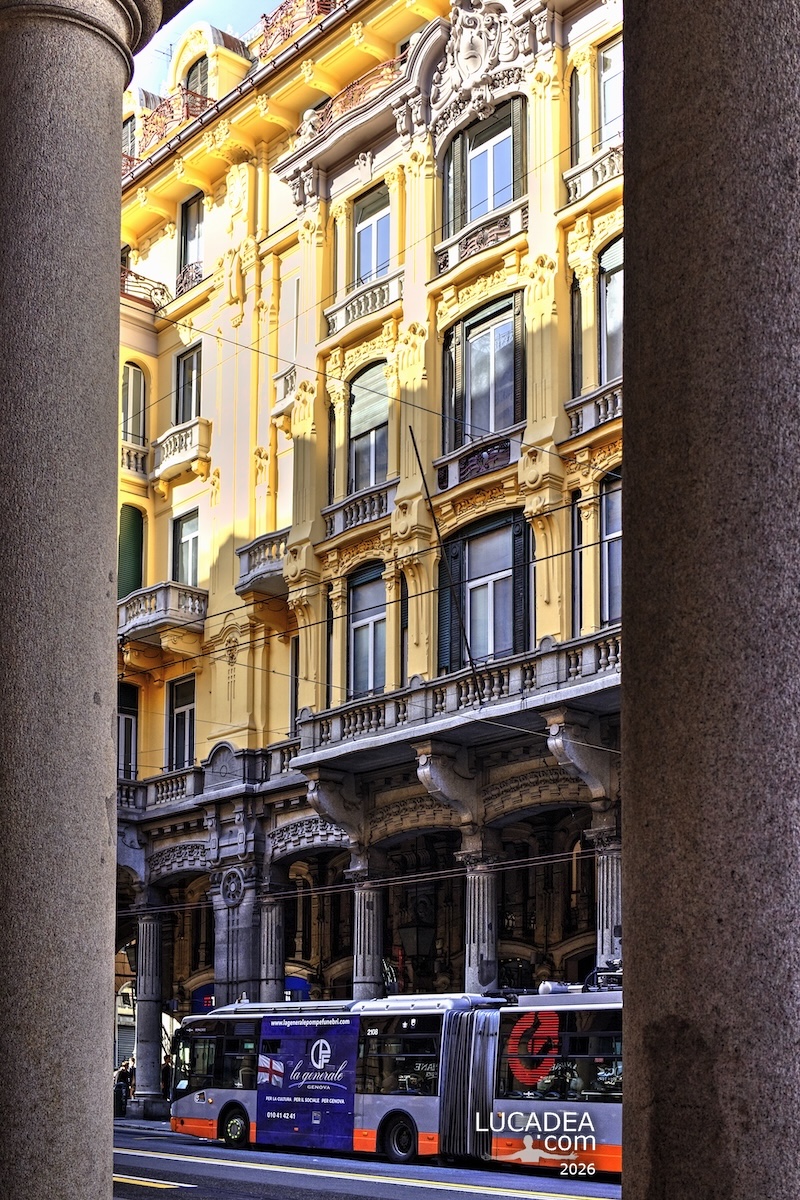
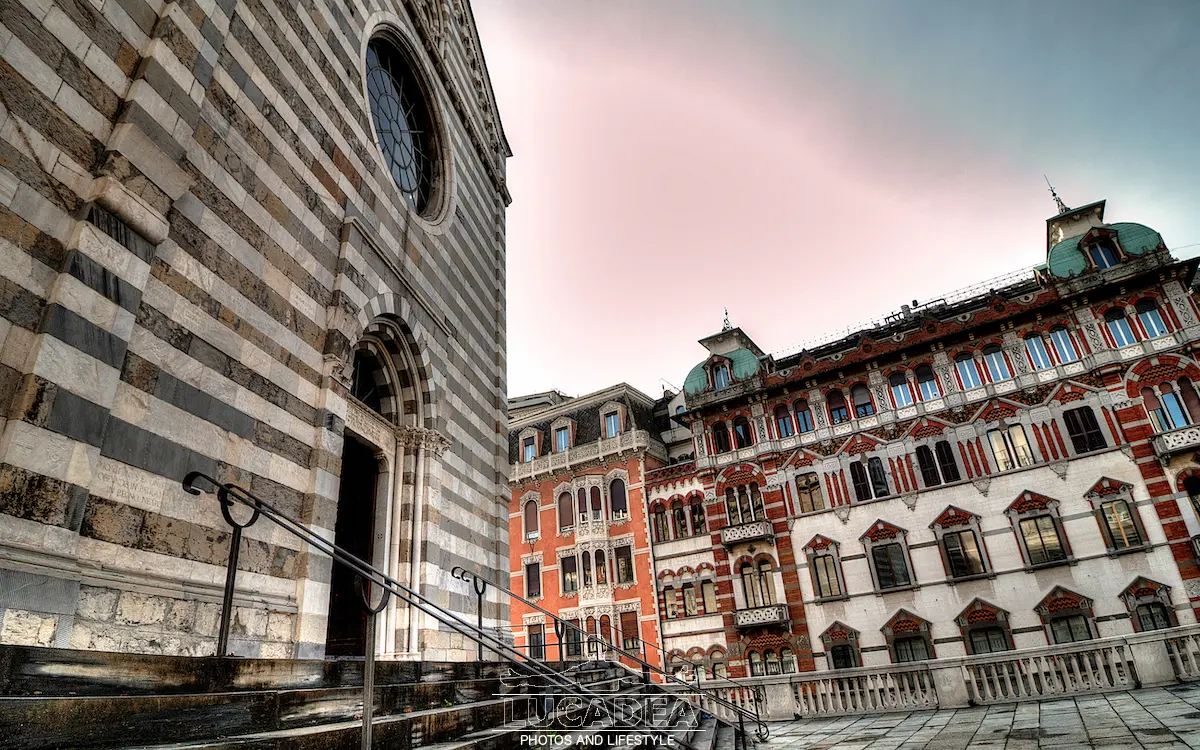
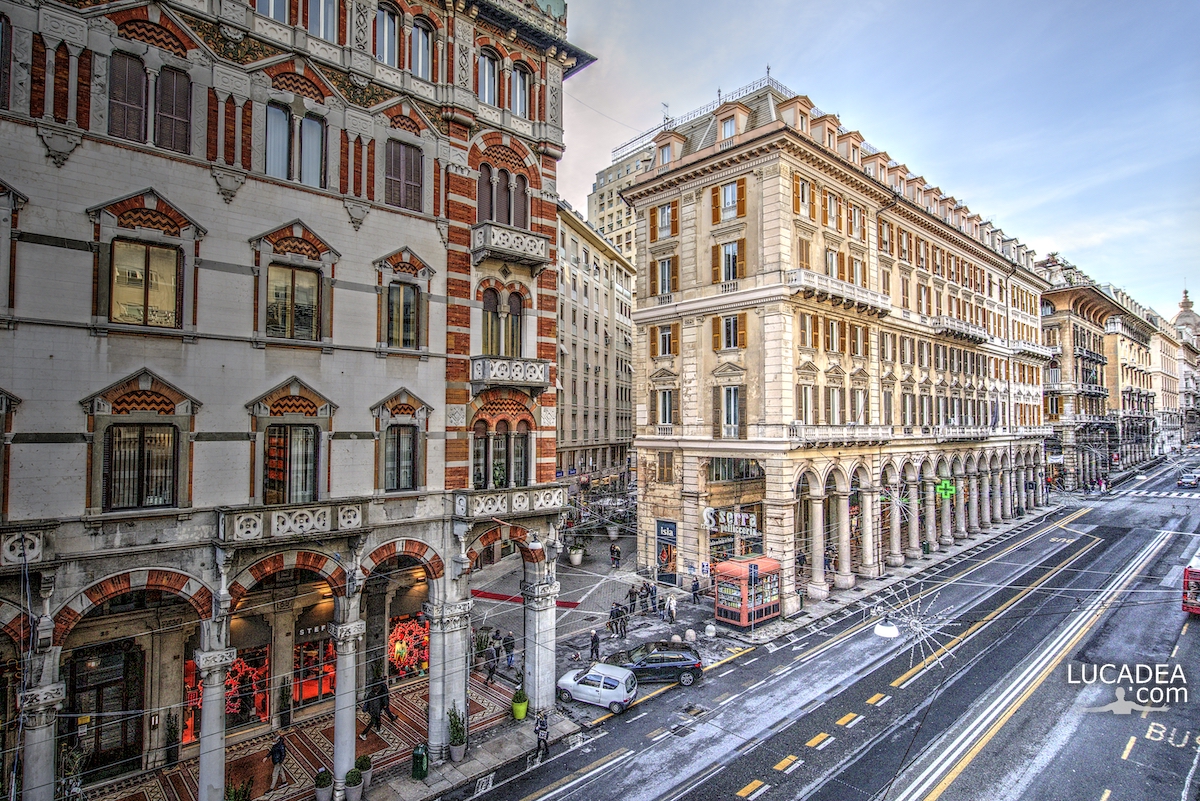
Walking through this part of the city, I found myself looking at a very different side of Genoa from the one usually associated with narrow medieval alleys, historic palaces and the waterfront. This photograph shows Fieschi street, an elegant urban road in central Genoa where another side of the city becomes visible through its buildings, shops and everyday activity.
I took this photograph myself while walking through Genoa, stopping to look at the perspective created by the street and its architecture. What caught my attention was the contrast between this part of the city and the older historic centre. A short walk can completely change the atmosphere, taking you from narrow alleys to wider streets and a more contemporary urban landscape.
Fieschi street is in central Genoa, Liguria, Italy, connecting the area around Dante square with the central streets leading towards Paolo da Novi square and XX Settembre avenue. If you are visiting Genoa and wondering what to see beyond the best-known landmarks, this is an interesting street to encounter while walking through the central districts, especially because it connects several important areas of the city.
In the photograph, what interests me most is the perspective. The buildings guide the eye forward and create a sequence of façades in which homes, businesses and offices share the same urban space. There is no single monument dominating the composition. Instead, the photograph is about the city itself and the ordinary rhythm of a central Genoese street.
The name Fieschi street refers to one of the most influential noble families in Genoese history. The Fieschi were a powerful aristocratic family from Liguria, connected with the history of nearby Lavagna and deeply involved in the political life of the Republic of Genoa. Among the family’s most important figures was Sinibaldo Fieschi, who became Pope Innocent IV in the thirteenth century. It is only a small historical detail, but it shows how the names of powerful families from the past remain present throughout the streets of Genoa and the surrounding region.
This connection between the present city and its older history is one of the things I enjoy noticing while walking through Genoa. A street can look completely contemporary, yet its name may refer to people and events from centuries ago. The city is full of these layers, and photography often gives me a reason to stop and pay attention to them.
The area is also close to XX Settembre avenue, one of Genoa’s main commercial streets. From here, it is possible to continue towards De Ferrari square and the historic centre or explore other central neighbourhoods. For anyone interested in discovering Genoa on foot, routes like this make it possible to move naturally between modern streets, historic buildings and older alleys without following a rigid itinerary.
I have photographed several other parts of Genoa for my photoblog, and I like connecting these stories because the city changes dramatically from one neighbourhood to another. Some of my photographs focus on the historic centre and its narrow alleys, creating a very different visual atmosphere from this image. Together, however, they show the same city from different perspectives.
When I photograph Genoa, I am often interested in this contrast. On one side are the medieval alleys, the historic palaces and the narrow streets that made the old centre famous. On the other are streets such as Fieschi street, where traffic, shops and more recent buildings show a city that has continued to evolve.
The movement of people and changing light can completely alter the feeling of a street, but for this photograph I preferred to concentrate on the urban structure itself. The lines of the buildings, the depth of the road and the succession of façades were enough to recreate the impression I had while walking here.
If you are wondering where Fieschi street is in Genoa, it is centrally located and easy to include in a wider walk through the city. I would not necessarily consider it a destination on its own, but rather an interesting part of an urban route while exploring central Genoa.
This is also why I continue photographing streets that might initially seem ordinary. A photoblog does not have to show only famous monuments. Sometimes an image of a normal city street can say more about a place, particularly when it shows architecture, commerce and everyday life sharing the same space.
Looking at this photograph again, I think about a side of Genoa that can remain hidden behind the more traditional images of the city. It is the Genoa of daily journeys, streets crossed every day and buildings that people may pass without stopping to look at them. Photographing these places is also a way of preserving small fragments of the city before they become simply part of memory.
Fieschi street therefore seemed like a good place from which to photograph this particular side of Genoa: modern without being completely detached from history, central without having the monumental appearance of the city’s most famous squares.
When you walk around Genoa, do you prefer the historic alleys, or do you enjoy discovering the city’s more modern central streets as well? Add a comment or go to the bottom of the site to read what other visitors have written.

Photo taken with Canon EOS RP camera and Canon RF 24-50 lens.
Here’s where I took the shot: