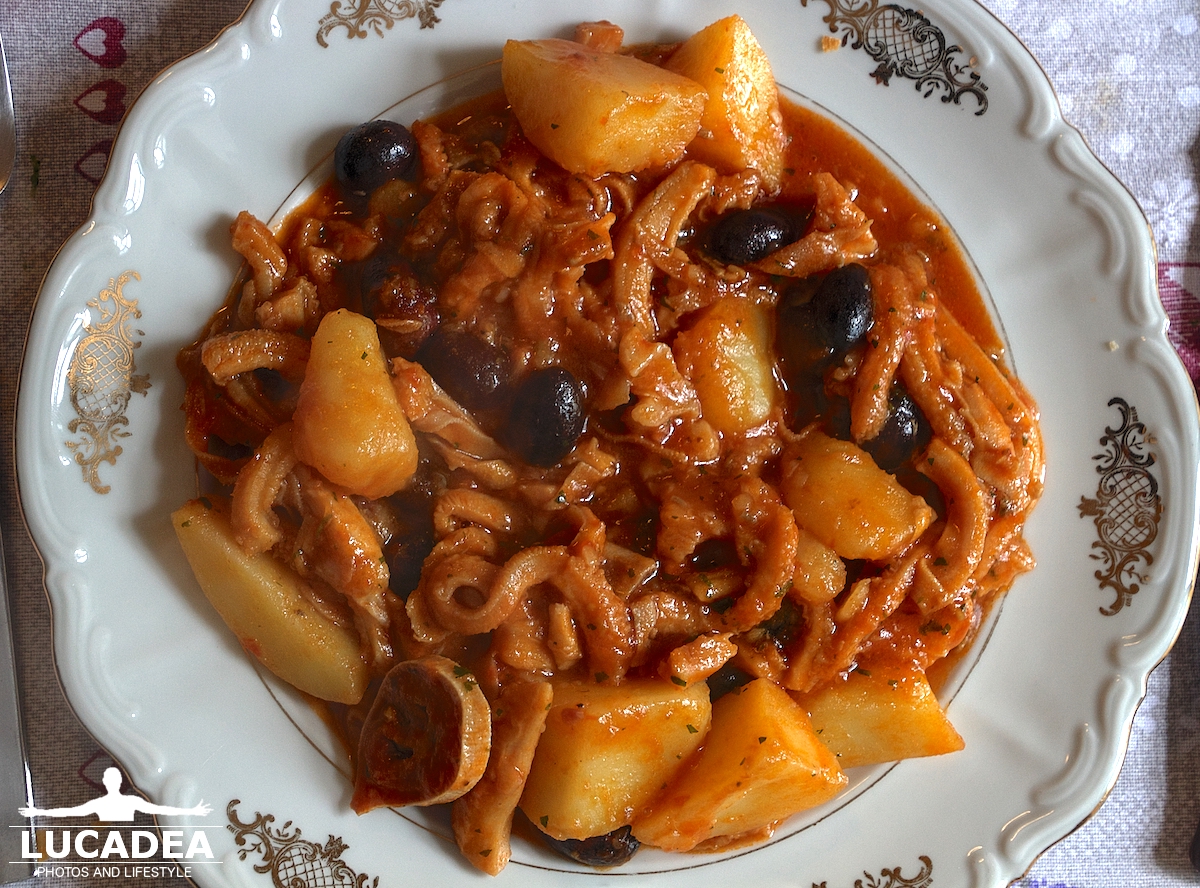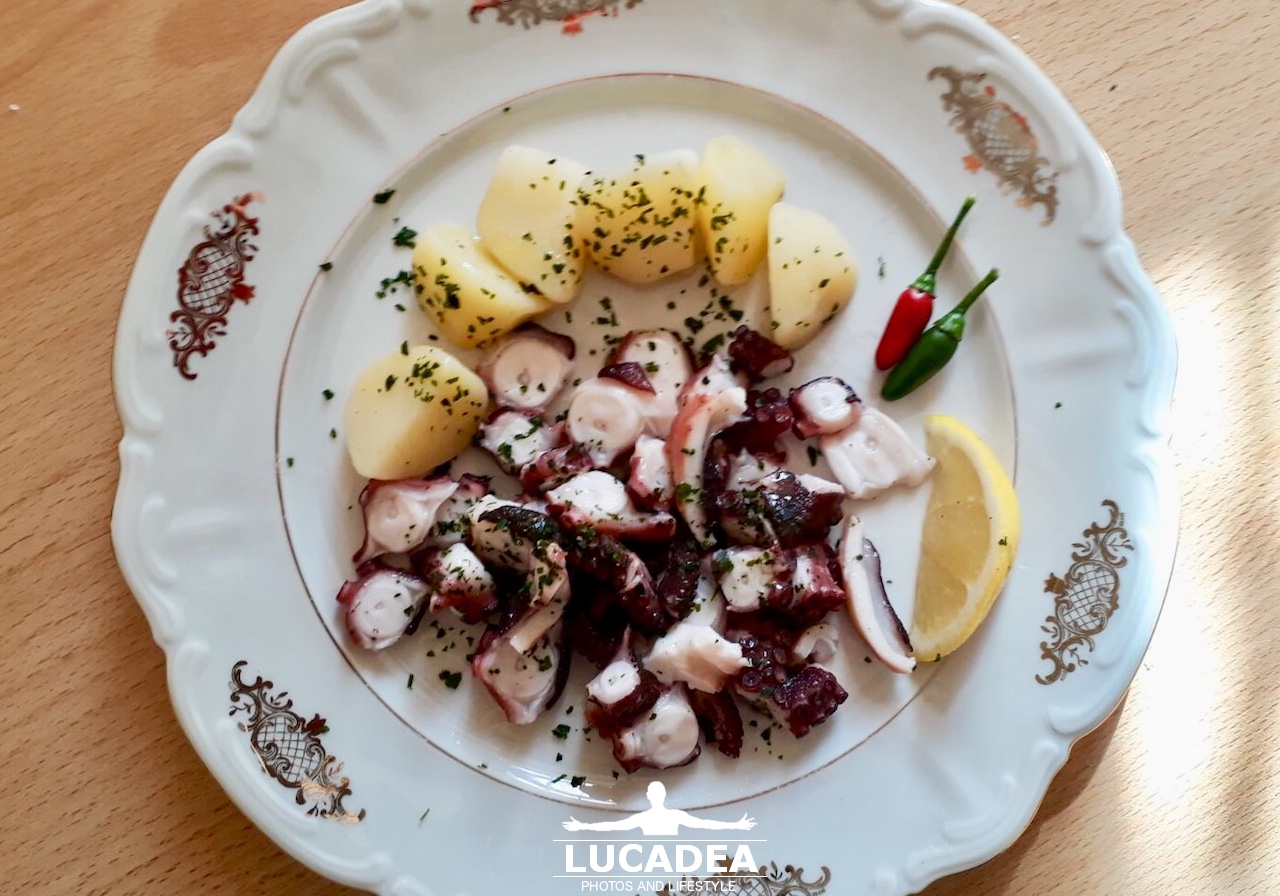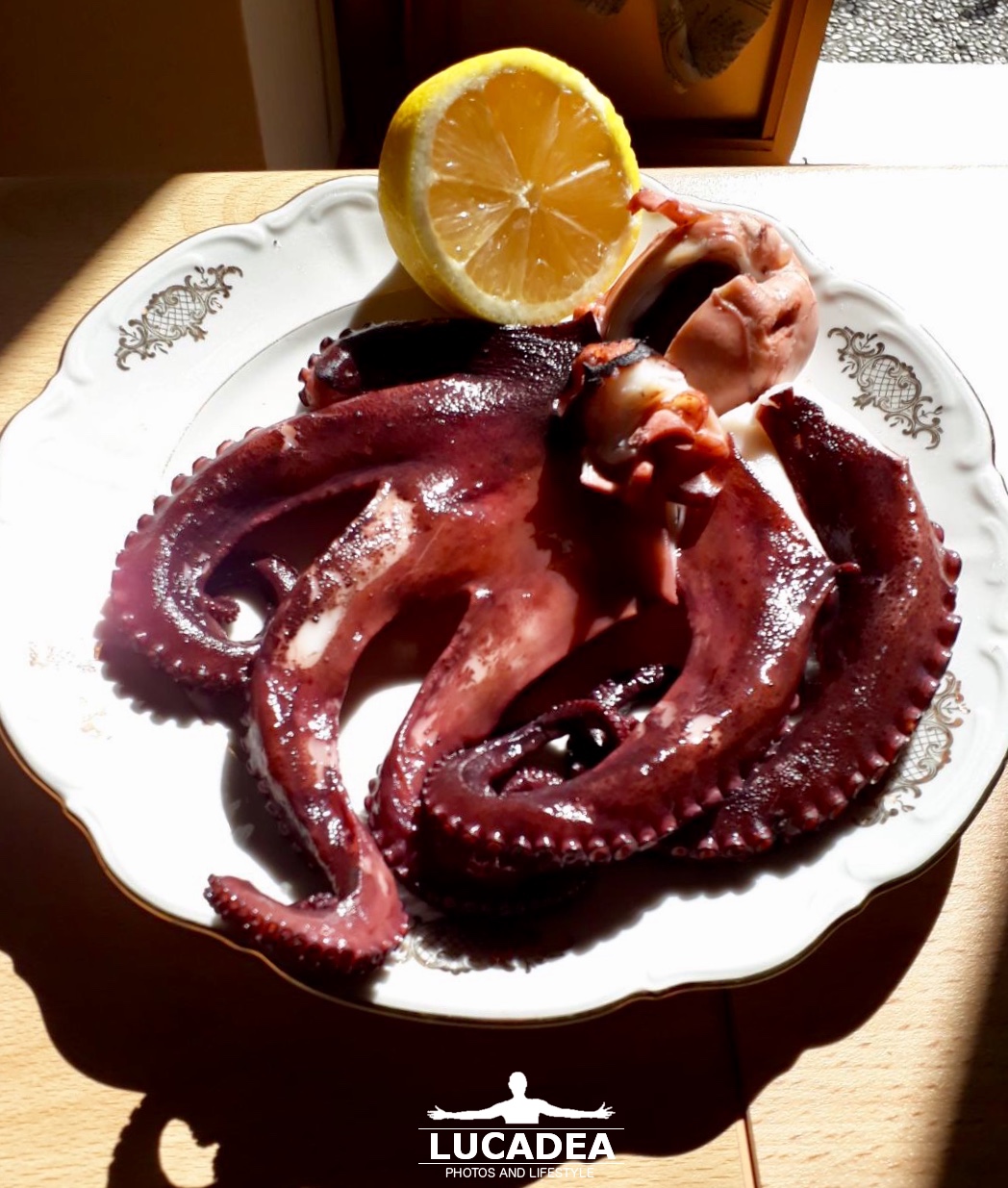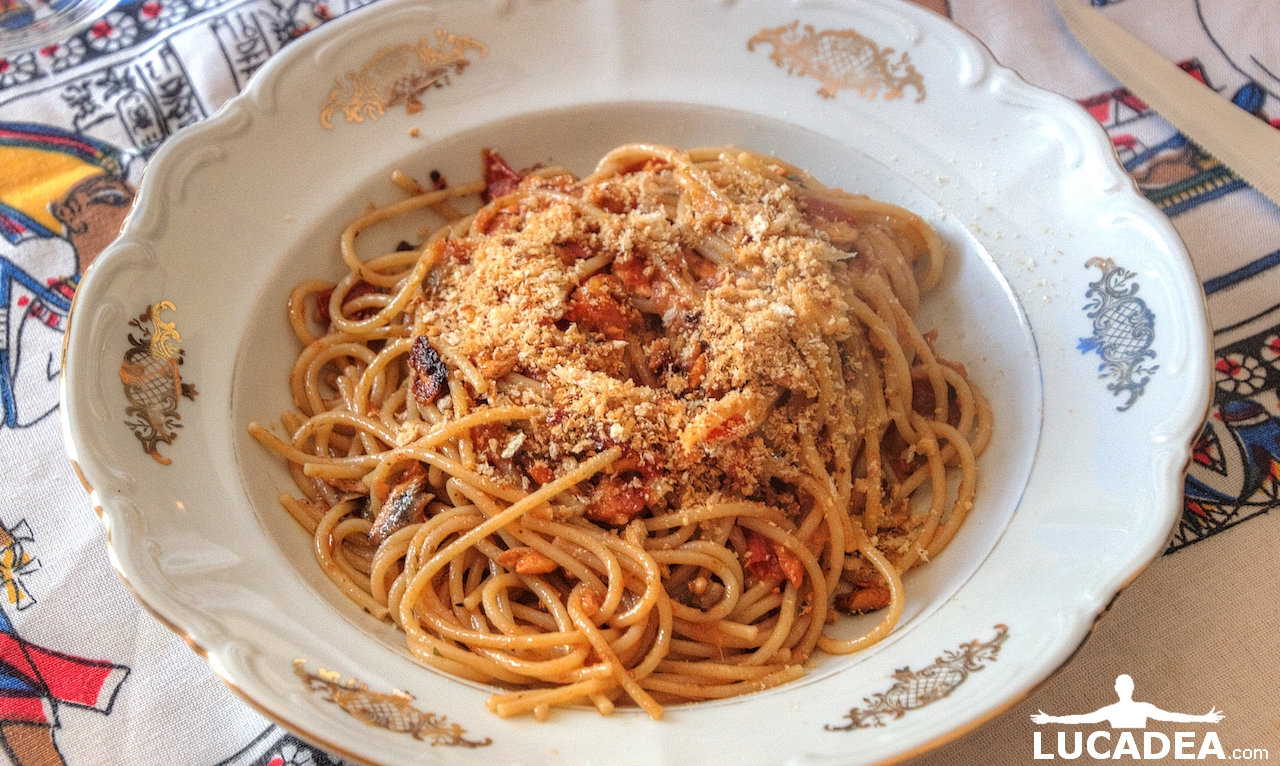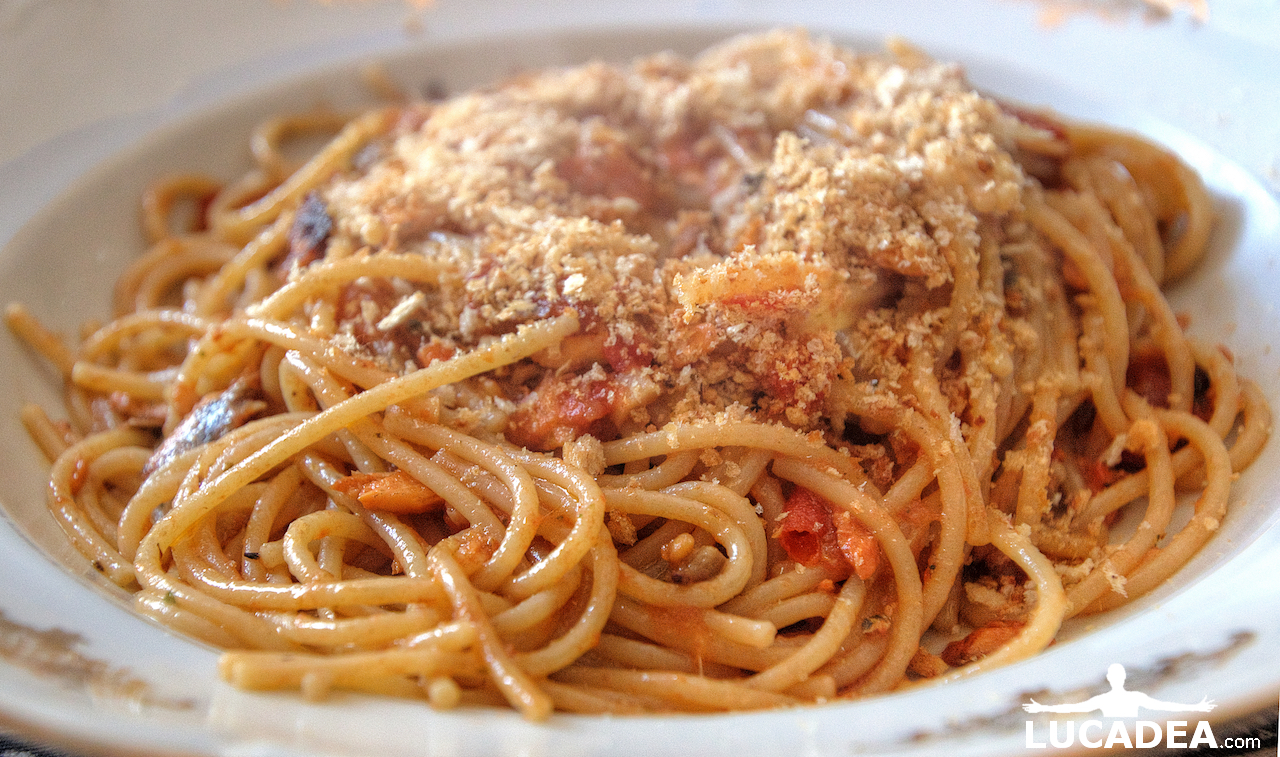
Octopus sauce, a family recipe

Il sugo di polpo

Octopus sauce, the recipe.
A few days ago my son prepared a plate of pasta with this sauce, and it immediately brought back memories connected to my family. It is a simple dish, yet full of meaning, one of those recipes that are not only delicious but also tell a story.
Octopus sauce is a traditional preparation that, in my family, was closely linked to my grandfather Mario, who was an excellent fish cook. With an octopus weighing less than one kilogram, he could make enough sauce to feed the whole family, which at the time included seven or eight people. He was the kind of cook who knew how to make the most of every ingredient.
One thing that always impressed me was his connection with the sea. He knew that octopuses tend to stay in the same area, so whenever he needed one, he would go and catch it himself, always knowing where to find it. This connection made the dish even more special.
The sauce is quite easy to prepare and requires only a few ingredients: extra virgin olive oil, salt, onion, tomato purée (or fresh tomatoes, depending on your preference), and of course the octopus, either fresh or frozen.
For best results, the octopus should be briefly blanched in a small amount of water to make it tender. It is then cut into small pieces and added to the sauce. An important detail is to keep the skin, as it plays a key role in the final flavour of the dish.
Start with a light sauté of olive oil and onion, then add the tomato. Once the base is ready, add the chopped octopus and adjust the salt. Let everything cook for about forty minutes so that the flavours blend and the sauce reaches the right consistency.
If the sauce becomes too thick during cooking, you can add some of the water used to blanch the octopus to keep it smooth and flavourful.
This dish shows how traditional cooking can be simple yet deeply connected to memories. Every time I prepare it, it is not just a recipe, but a way to relive moments and remember important people.

Do you have a family recipe that brings back memories? Add a comment or go to the bottom of the site to read what other visitors have written.
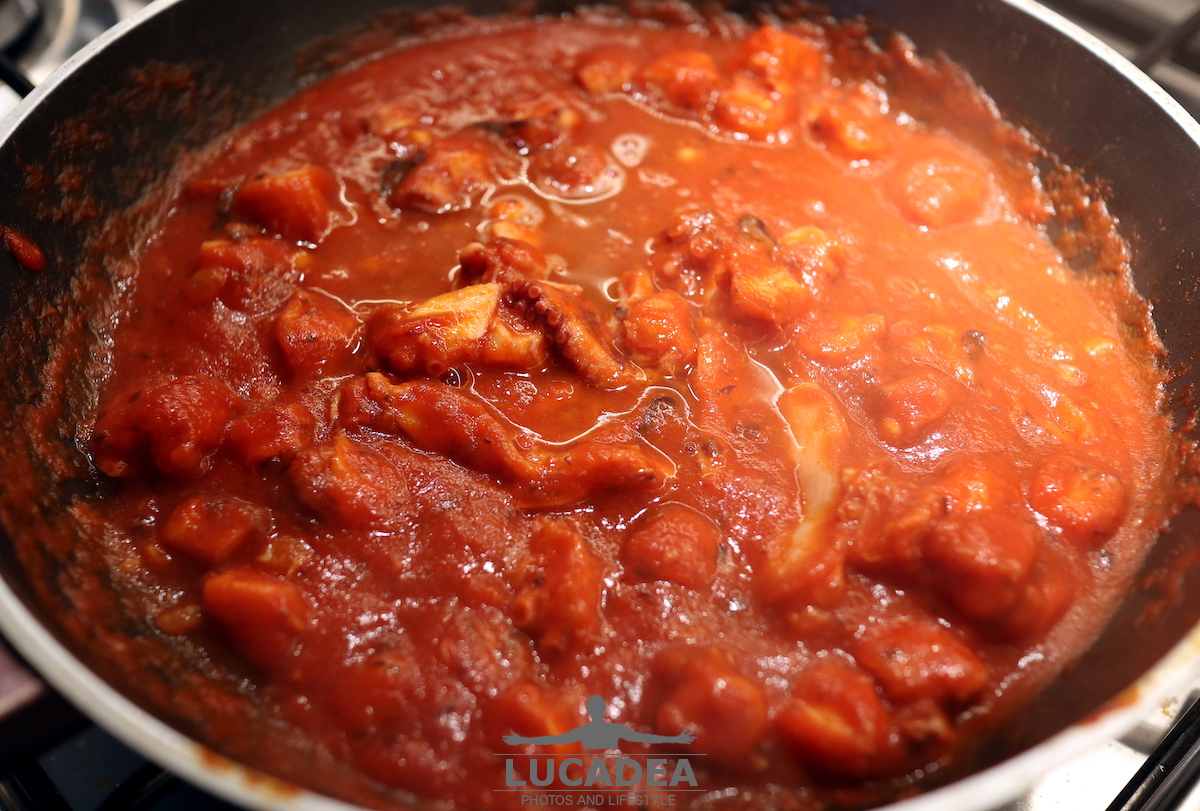
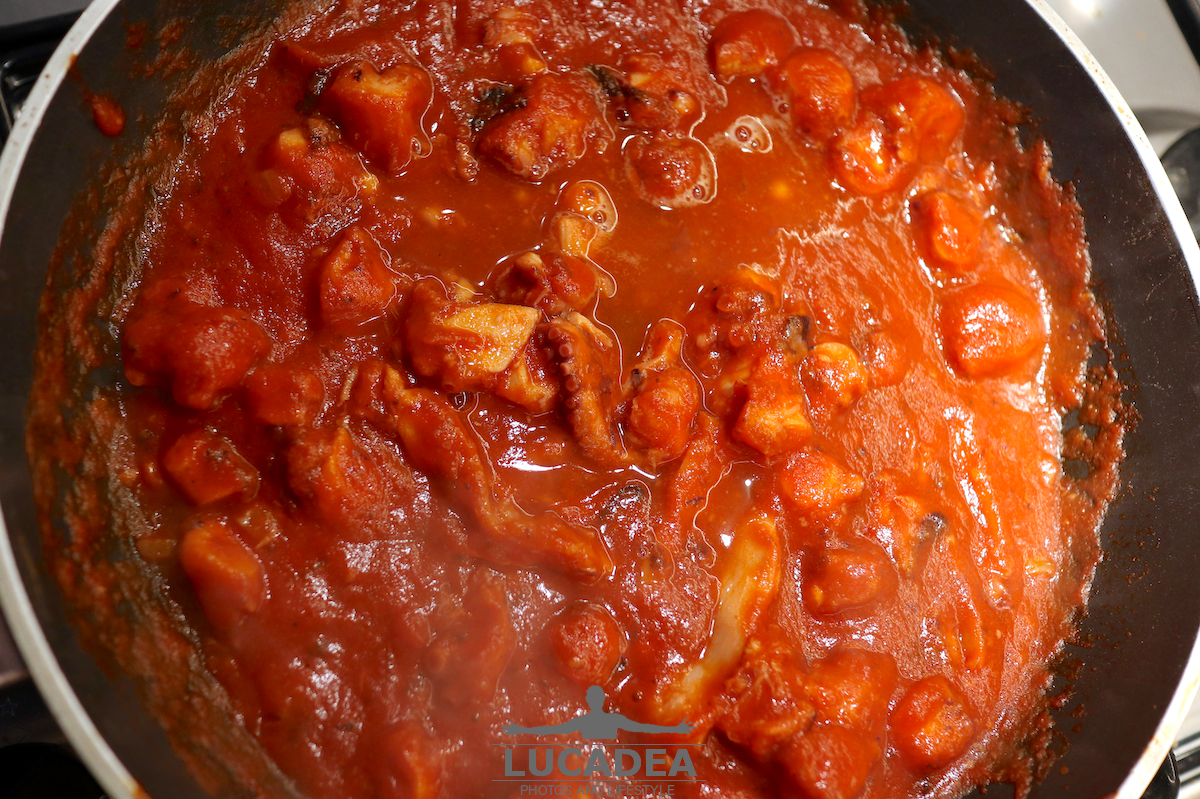
Octopus sauce cooking with tomato and chopped octopus pieces ready for pasta

Octopus sauce cooking with tomato and chopped octopus pieces ready for pasta

Photos taken with Canon EOS M100 and lens Canon EF-M 22.

Add one  comment to this article or read  here what other visitors have written.
 
Adv
 
Disclamer

The rights on images, videos, choruses, text and all other material on the LUCADEA.com website are governed as per  Copyright page.


This page has been viewed 1 times today.
This month it has been viewed 1 times.
In total it has been viewed 22 times.
 

Liver aggiadda-style, the recipe

Fegato all'agiadda

Liver aggiadda-style, the recipe.
Today I’m going to show you a delicious liver dish my grandmother used to make, which I believe is called “lives all’Agiadda.”
First of all, you should use veal liver, which is less sinewy and more tender than beef liver. The secret lies in the sauce, which is made with breadcrumbs soaked in vinegar and milk and practically mashed.
Then I place the soaked bread in the blender and add garlic and salt.
Now I cook the liver in butter, leaving the slices whole, and finally add the sauce: the dish is ready!

Please note: this dish, being very strong in flavor, is subject to subjective taste. I, for example, really like vinegar and garlic, and I use a lot of both. Obviously, you can reduce the amount of vinegar or even replace part of it with white wine.
The important thing is that the sauce dissolves well with the liquid and then coats the liver well, leaving it rare. Serve it piping hot because the sauce is cold and only needs to be left in the pan for a few seconds.

Do you like this recipe?
Add a comment or go to the bottom of the site to read what other visitors have written.

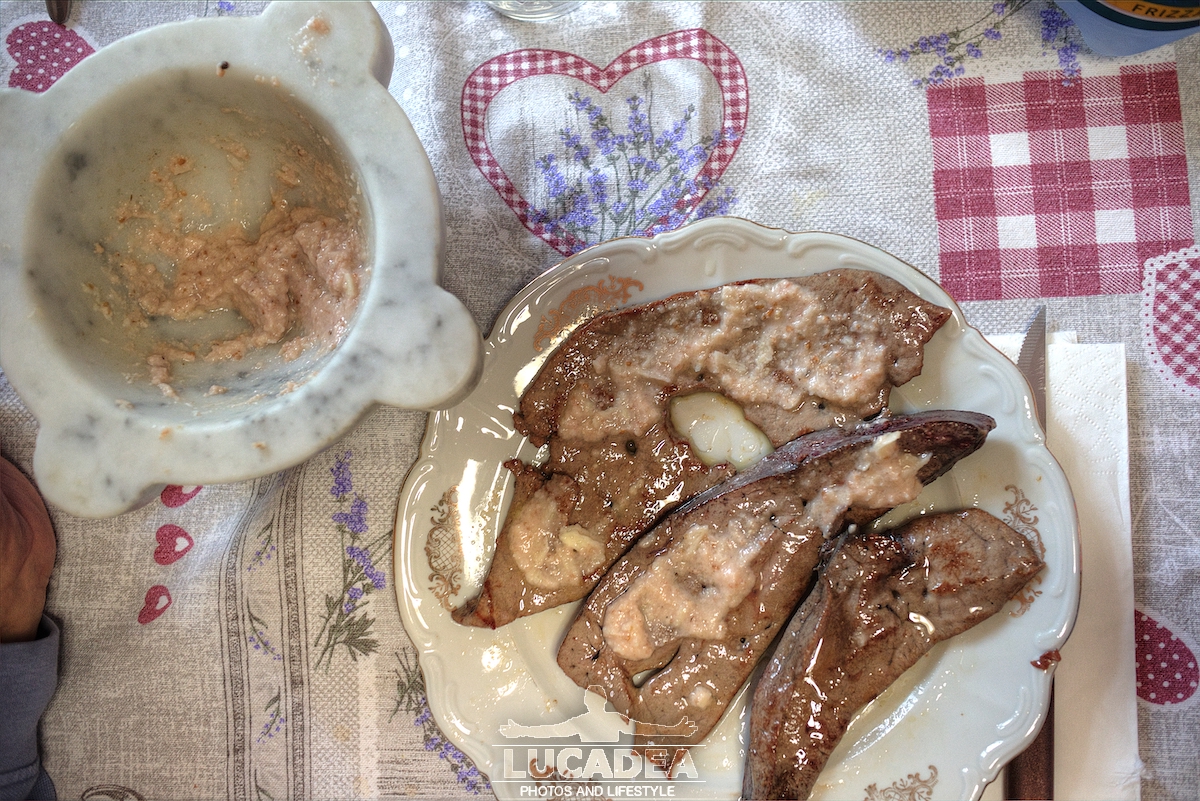
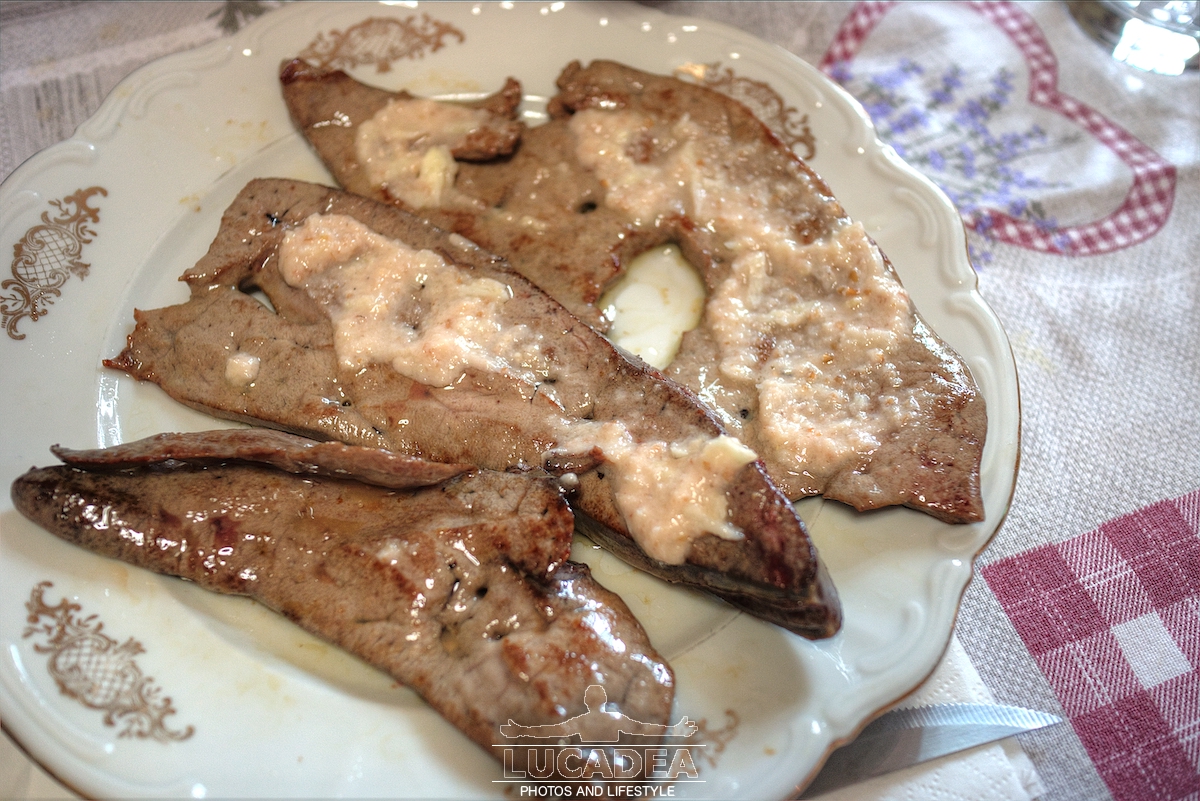
Here are a couple of photos taken by my son Luca:

Fegato all'agiadda

Fegato all'agiadda

Photo taken with Canon EOS M100 camera and Canon EF-M 22.

A liver dish cooked with agiadda, the recipe – Un plat de foie cuisiné avec de l’agiadda, la recette – Un plato de hígado cocinado con agiadda, la receta – Prato de fígado cozido com agiadda, a receita – Ein mit Agiadda gekochtes Lebergericht, das Rezept – Công thức món gan nấu với agiadda – 用 agiadda 烹制的肝菜,食谱 – アギアッダで調理したレバー料理、レシピ
Add one  comment to this article or read  here what other visitors have written.
 
Adv
 
Disclamer

The rights on images, videos, choruses, text and all other material on the LUCADEA.com website are governed as per  Copyright page.

This page has been viewed 1 times today.
This month it has been viewed 1 times.
In total it has been viewed 38 times.
 

Soused or pickled fish, the recipe

Pesce in carpione dell'Osteria da Sergio

Soused fish or scabeccio, the recipe.
Fishermen have never been rich, especially in the past, when there weren’t the refrigerators and equipment of today, and they tried to preserve the fish they couldn’t sell.
After the prime and second-quality catches, there was still fish that was too small, too poor, or perhaps broken in the net.
To recover this fish, fishermen invented various methods, and one of these is carpione, which, depending on the area, changes name and is used throughout the Mediterranean.
Now I’ll tell you how I prepare this dish.
Obviously, I don’t look for spoiled or very low-quality fish, and I mainly use bogue or small fish that are too large for frying, and often sardines, which in the Trieste area are called “sarde in saor.”
I clean the fish thoroughly, removing the scales, fins, and innards, but leaving the head on. I flour it well and fry it. Separately, in another pan, I sauté onion, garlic, and all the seasonings in fresh oil, along with vinegar and white wine, until the onion is cooked but not fried.
When the fish is well-fried and cold, I salt it and cover it completely with this mixture, leaving it to soak for at least two days.
It’s now ready to eat, but if you can resist, the longer it soaks, the better, because the bones and head become soft and can be eaten.
Please note: the percentages of oil and vinegar can vary depending on your taste, as can the flavors and white wine.
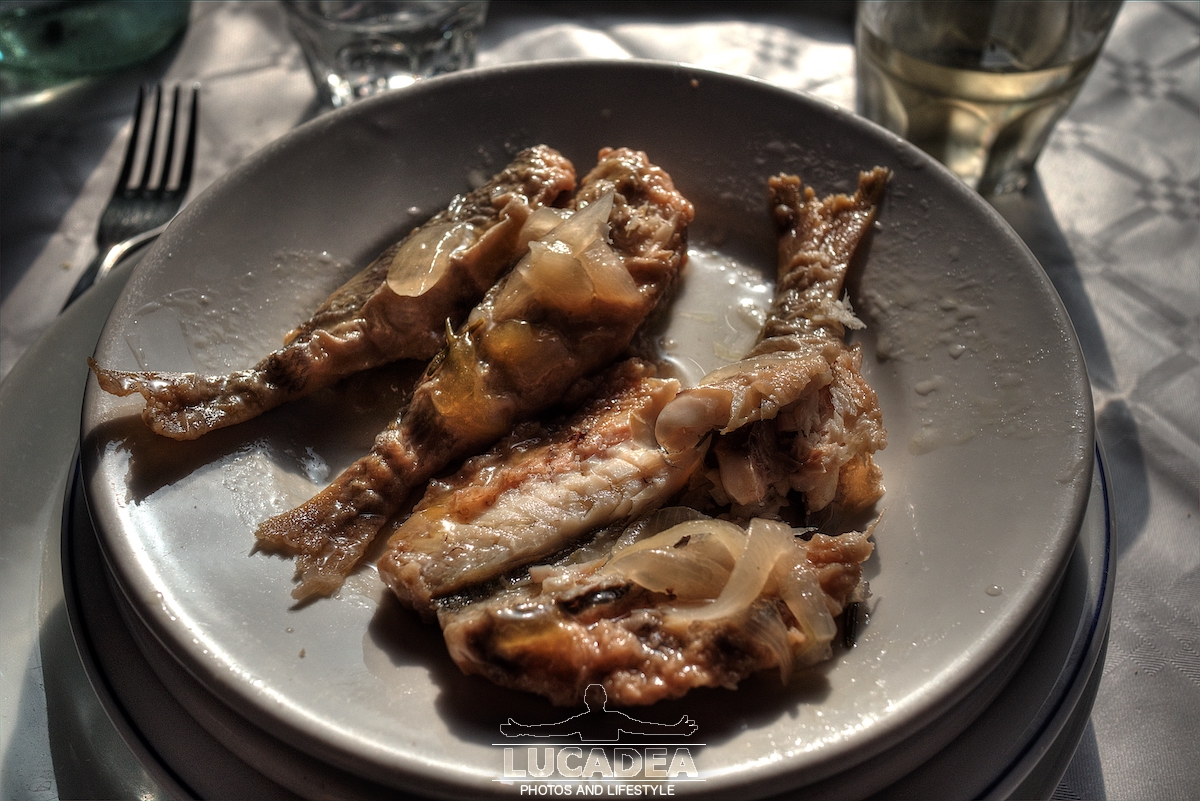
Here are a couple of photos, taken by my son Luca, of the dish served at Osteria da Sergio in Sestri Levante:

Pesce in carpione dell'Osteria da Sergio

Pesce in carpione dell'Osteria da Sergio

Photos taken with Canon EOS M100 and lens Canon EF-M 22.

The Ligurian tocco sauce of my home, the recipe

ravioli al ragu di Marchin

A touch of home.
Today I’ll briefly explain the recipe for Genoese meat ragù, just as I know how to make it.

In plenty of olive oil, sauté chopped onion with a clove of garlic.
Add a good piece of beef and a medium sausage and brown everything well.
Deglaze with red wine and, once it has evaporated, add a few pieces of dried mushrooms and some pureed tomatoes.
Cook slowly for an hour.
Remove the meat, mince it, and return it to the sauce to cook for another hour.

At this point, the touch is ready!

How do you prepare it at home? Add a comment or go to the bottom of the site to read what other visitors have written.

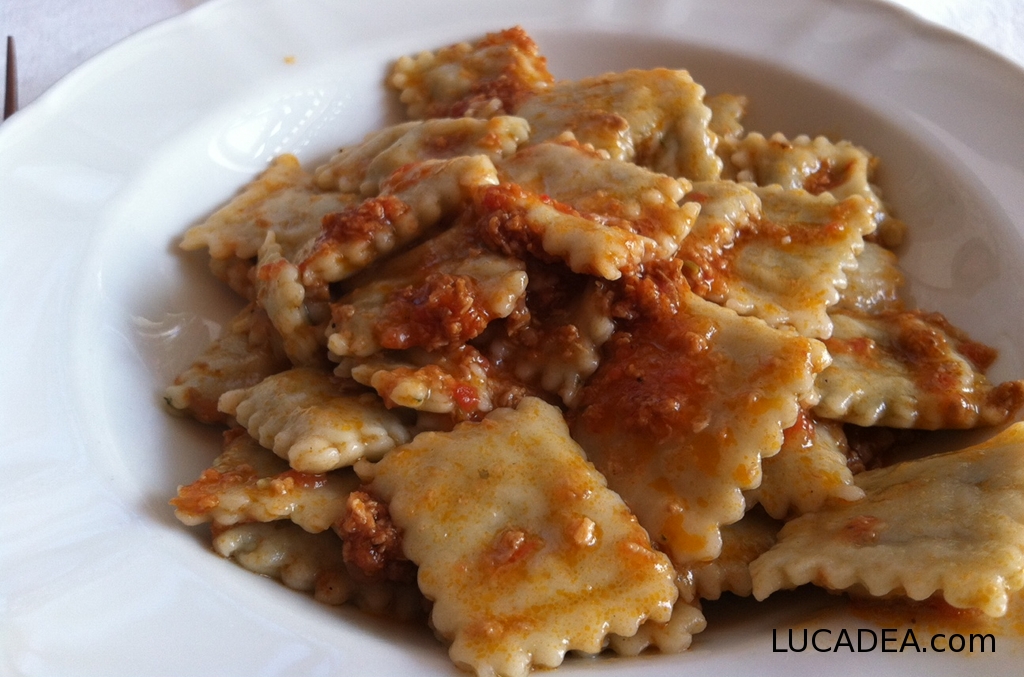
I’ll leave you with a picture of a nice plate of ravioli topped with meat sauce (not the touch though):

ravioli al ragu di Marchin

The typical Ligurian meat ragu prepared at my home, the recipe – Le ragoût de viande typique de la Ligurie préparé chez moi, la recette – El ragú de carne típico de Liguria preparado en mi casa, la receta – O típico ragu de carne da Ligúria preparado em minha casa, a receita – Das typisch ligurische Fleischragout, bei mir zu Hause zubereitet, das Rezept – Món ragu thịt đặc trưng của vùng Liguria được chế biến tại nhà tôi, công thức

Pasta with mantis shrimp, my recip

Pasta con le cicale di mare

Pasta with mantis shrimp, my recipe.
This morning I had planned to buy a slice of tuna, but at the fish counter I found a box of live mantis shrimp, still moving. That was enough to change my plans completely and make me think about preparing a plate of spaghetti with their rich seafood flavor.
I like recipes that begin unexpectedly, without having been planned in advance. Instead of coming home with what I originally intended to buy, I simply followed what caught my attention at the fish counter. The mantis shrimp looked fresh and were just what I needed for a simple but flavorful seafood sauce.
I decided to use whole-wheat spaghetti that I already had at home. I like the slightly rustic character of this type of pasta, especially with a seafood sauce where the main ingredient should remain clearly recognizable. I also had some bottarga and parsley available, which seemed perfect for finishing the dish without making it unnecessarily complicated.
The part I paid most attention to was getting as much flavor as possible from the mantis shrimp. I tend not to discard ingredients that can still contribute something to a dish, and here the heads, tails and other parts became the starting point for a seafood broth. For me, this is one of those small cooking steps that can make a noticeable difference, giving a seafood pasta much more depth without requiring a long list of ingredients.
For the sauce, I kept things deliberately simple. Garlic, one whole chili pepper, olive oil and a few seeded cherry tomatoes created the base. I did not want to hide the flavor of the mantis shrimp, but simply give it a background that would support it. A small amount of good-quality white wine was enough to add another layer to the sauce.
The broth was then used to give the sauce more character. I especially like this stage because the liquid carries the flavor of the parts of the mantis shrimp that would otherwise be discarded. When the pasta is finally tossed in the pan, it absorbs that flavor and becomes much more closely connected to the seafood sauce.
I used 80 grams of whole-wheat spaghetti, which was enough for the portion I had in mind. Once cooked, the pasta went directly into the pan with the mantis shrimp and the sauce. I tossed everything together so the spaghetti could absorb the seafood broth and the flavors already concentrated in the pan.
For the final touch, I grated a little bottarga directly over the plate. It has a strong and salty flavor, so I prefer using it sparingly. Some chopped parsley finished the dish and added a fresh note.
What I particularly like about this recipe is the fact that it was not the meal I had planned at all. I went out looking for tuna and ended up cooking mantis shrimp instead. That is one of the small pleasures of cooking: sometimes the ingredients available at the right moment are more inspiring than the original plan.
Mantis shrimp, also known as slipper lobsters or mantis prawns depending on the region, are valued in Mediterranean cooking for the intense flavor they can give to seafood sauces and broths. Much of that flavor is found in the parts that are not necessarily served directly on the plate, which is why making a broth from the heads and shells can be so useful.
For this dish, I therefore tried to make the most of what I had bought without turning the recipe into something complicated. The result is a seafood pasta with the flavor of the mantis shrimp supported by tomato, chili and the salty character of bottarga.

Ingredients

– 80 g whole-wheat spaghetti;
– mantis shrimp;
– 1 garlic clove;
– 1 whole chili pepper;
– cherry tomatoes;
– olive oil;
– a little good-quality white wine;
– parsley;
– bottarga;
– water for the seafood broth.

Preparation

Clean the mantis shrimp by removing the legs, heads and tails, keeping these parts for the broth. Place them in water and boil for almost an hour, then strain the liquid carefully and set the broth aside.
In a pan, gently brown the garlic and whole chili pepper in olive oil. Add the halved and seeded cherry tomatoes and let them cook gently.
Add the mantis shrimp and allow them to absorb the flavors from the pan. Pour in a small amount of good-quality white wine and let it evaporate.
Add the seafood broth prepared from the discarded parts of the mantis shrimp and allow the sauce to develop its flavor.
Meanwhile, cook 80 grams of whole-wheat spaghetti. When the pasta reaches the desired texture, transfer it to the pan and toss it with the sauce and mantis shrimp until well coated.
Serve the spaghetti hot and finish with a small amount of freshly grated bottarga and chopped parsley.
The next time I go to the fish counter, I may once again start with a completely different idea. This recipe reminded me that it is sometimes worth looking carefully at what is available before deciding what to cook.

Would you have chosen the mantis shrimp instead of the tuna? Add a comment or go to the bottom of the site to read what other visitors have written.

Pasta con le cicale di mare

The mantis shrimp, also known as the mantis shrimp, or the mantis squill, is a crustacean of the Squillidae family that can reach a maximum length of 20 cm.
Continue, even if little is written, on Wikipedia

The featured image is from the free image site pixabay.com.

Milanese-style Ossobuco, the recipe

Ossobuchi alla milanese

Milanese-style Ossobuco – the recipe.
This morning I stopped by Alfredo, my trusted butcher. Alfredo is an old-fashioned butcher: his counter might seem rather modest, but everything is kept in the refrigerator to maintain the right humidity and temperature; just ask, and Alfredo pulls out the best cuts from the refrigerator…
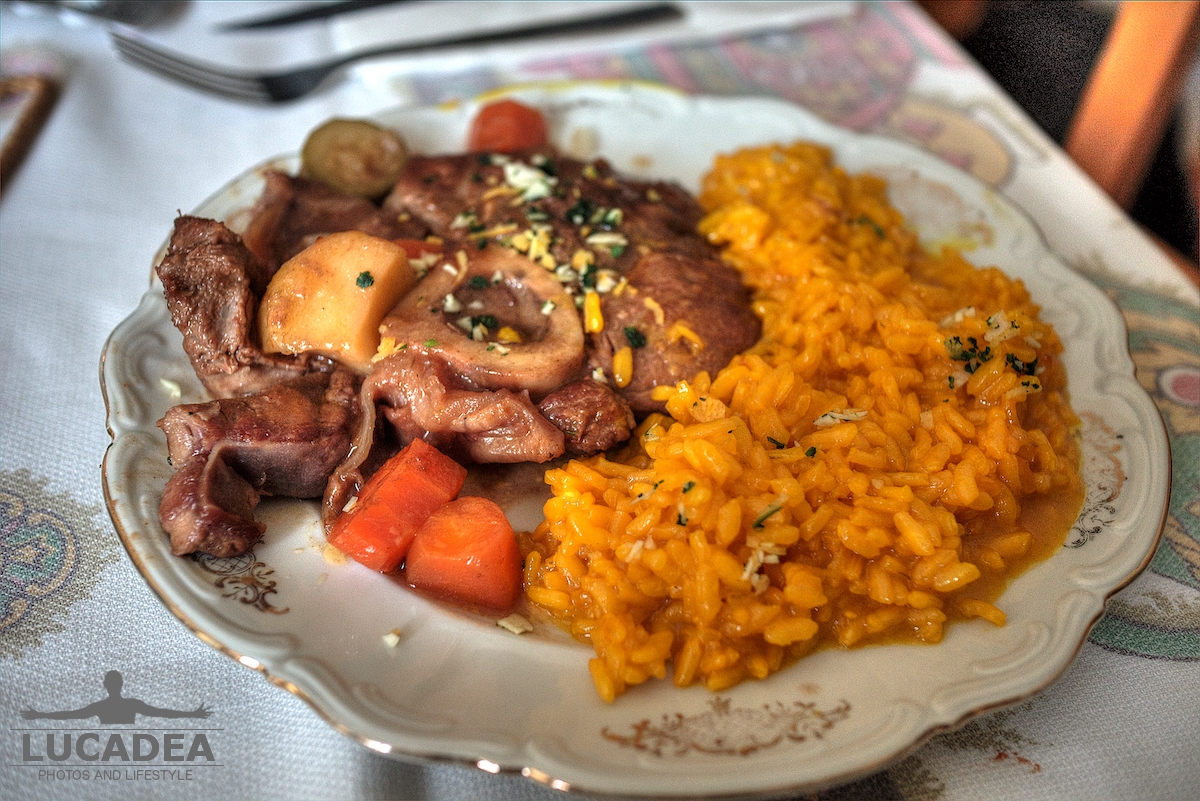
This morning, unusually, he had a beautiful piece of veal shank* in the display case, from which I had three splendid ossobuco cut, which I used to prepare my dish: ossobuco with saffron risotto and gremolada**.
I floured the ossobuco and sautéed them over high heat to seal all the pores and keep the meat’s juices from escaping.
In a terracotta casserole dish, I sautéed an onion and a clove of garlic, added the ossobuco and heated through. I then added a few pieces of carrot, potato, and zucchini, poured in red wine, and started cooking over low heat.
Meanwhile, I carefully prepared the risotto base, chopping a little onion, heating a small pot of good beef broth, and melting the saffron in the water. I added a little tomato paste to the ossobuco and cooked it slowly, always checking to make sure the meat was tender and the vegetables were cooked through. When it was almost cooked, I added a little coarse salt (I always try to be careful with the salt).
Then I started cooking the rice, sautéing the onion in a little olive oil, adding the rice. Once toasted, I deglazed it with a little white wine. Once the wine had evaporated, I added the hot broth (I now know the quantities and, after a little light stirring, I manage not to continue stirring the rice, which cooks slowly and stirs on its own thanks to the boiling liquid). When it was almost cooked, I added the saffron, and, once it was done, I stirred it with a knob of butter, but I didn’t add cheese, which, for me, alters the flavor of the saffron.
Then I prepared the dish with the risotto, the ossobuco, which I basted with its sauce, and added the gremolata. All done…

Enjoy your meal!!!
Add a comment or go to the bottom of the site to read what other visitors have written.

Ossobuchi alla milanese

Ossobuchi alla milanese

Photo taken with Canon EOS M100 and Canon EF-M 22 lens.

* Veal is the meat usually used for this dish because it is more tender, but the important thing is that it comes from the hindquarters because it is less fibrous and larger in diameter. I used veal: I knew where it came from, and the choice proved me right.
** Gremolata is a very simple sauce made by chopping lemon zest (without the white part), garlic, and parsley, and is used to flavor the ossobuco.

Note: As always, the quality of the raw materials is essential: first, choose the right quality meat, if necessary, ordering it from your trusted butcher, specifically requesting a rear-cut. The quality of the wines used to baste the meat and rice is also important.

Ossobuco alla milanese, the recipe – Ossobuco à la milanaise, la recette – Ossobuco a la milanesa, la receta – Ossobuco panado, a receita – Ossobuco Mailänder Art, das Rezept – Công thức theo phong cách Ossobuco Milanese

Blood sausage or berodo, the recipe

Il sanguinaccio o berodo

Black pudding or berodo.
Black pudding, which goes by many names (here in Liguria, it’s called berodo) and is prepared in just as many ways, is a preparation that, as far as I know, is made throughout the non-Muslim world: it’s simply a way to reuse pig’s blood, a precious source of protein, fat, and other ingredients…
I’ve always tasted this product when I’ve found it, and I’ve found excellent ones, both made with dark chocolate and stuffed into small casings and mixed with chili pepper in Mexico.
However, when you buy black pudding, it has actually already been prepared by the butcher and then subjected to an initial boil.
The fresh blood must immediately be mixed with milk, and continuous stirring must be done to prevent it from coagulating. At this point, the further preparation process depends on the customs, cultures, and traditions of the places and countries.
Years ago, I saw blood sausages prepared by Lindo, a local pork butcher called upon by families who, often at great sacrifice, raised and then slaughtered a pig. For me, however, the absolute master of cured meats and blood sausages was Mr. Lino Marcenaro and his two assistants: Franco and Carlo, who later became a frequent traveler to exotic lands and is one of my oldest and dearest friends.
The blood, still fresh, is mixed with fresh milk, continuing to stir in spices, salt, and pine nuts, which must be generous even if expensive; naturally, I don’t know the exact quantities, which must be kept secret. The blood sausages, once sealed using the same technique used for sausages, must be boiled for the initial cooking. This is how we find them at the butcher’s.
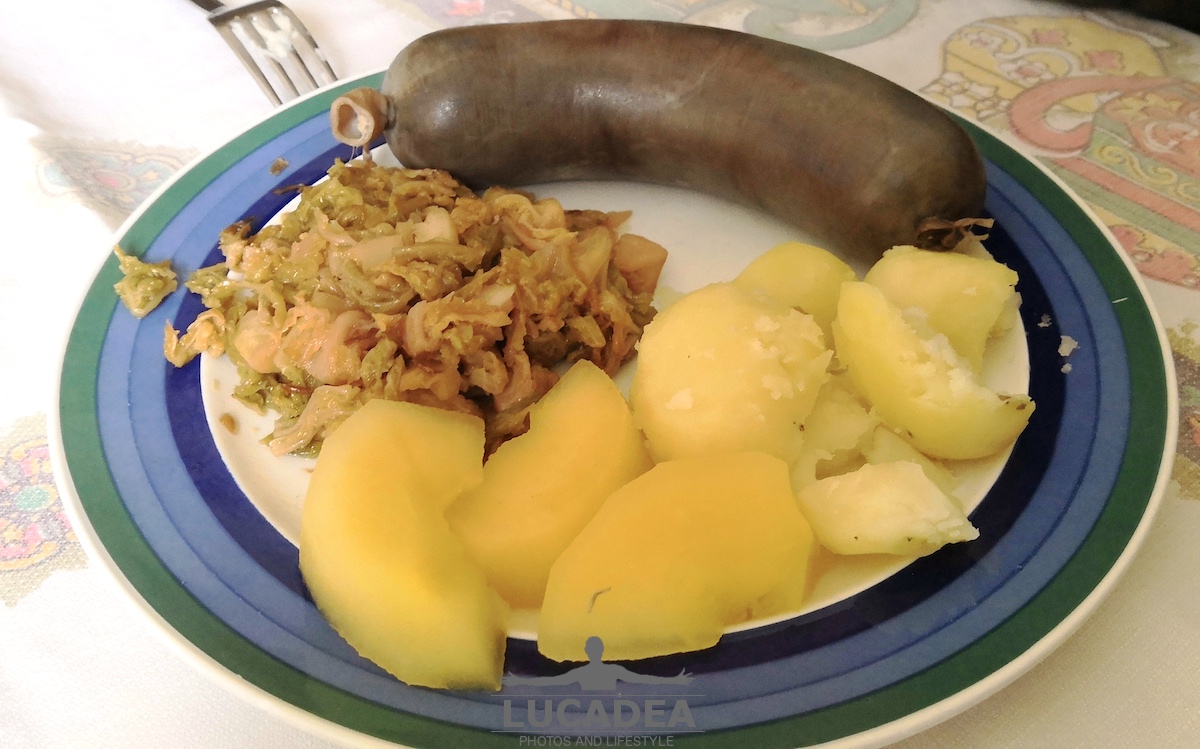
At our house, we simply boil them for a few minutes, garnished with a mix of Swiss side dishes: sandy potatoes (cut into wedges, blanched in water, and then sautéed in butter and breadcrumbs), slices of Rennet apples (peeled, cut into wedges, and then simmered in water lightly acidified with lemon and sprinkled with cinnamon), and finally with sautéed cabbage (sliced ​​roughly and cooked with a little oil, salt, and drizzled with white wine and, finally, a splash of vinegar).
Enjoy your meal!

Do you like them? Add a comment or go to the bottom of the site to read what other visitors have written.

Il sanguinaccio o berodo

Photo taken with Honor 10.

The black pudding or berodo, the recipe – Boudin noir ou berodo, la recette – Morcilla o berodo, la receta – Morcela ou berodo, a receita – Der Blutwurst oder Berodo, das Rezept – Bánh pudding đen hoặc berodo, công thức – 黑布丁或 berodo,食谱 – ブラックプディングまたはベロド、レシピ

Ligurian-style tripe from my house, the recipe

Trippa in umido

Ligurian-style tripe, my recipe.
Tripe is one of the most commonly used offal. It’s cooked in all regions of Italy and is one of the most flavorful peasant dishes consumed around the world: I’ll never forget an extraordinary Hong Kong Chinese soup with rice noodles and caramelized tripe…

In Genoa and the surrounding Riviera, you could often find tripe shops selling tripe and its broth: a cup of piping hot tripe broth with a little grated cheese and plenty of soaked bread was an excellent and hearty breakfast. This, too, however, is a tradition that has almost completely disappeared.

What we find in the butcher’s shop is tripe that has already undergone extensive and lengthy processing: it has been scraped, cleaned, and then boiled for a long time. At this point, it is put on sale and then cooked.

In our house, like many other dishes, it’s made Ligurian-style, but as I’ve said before, my Ligurian cuisine has been influenced by the wisdom and advice of the many chefs I’ve worked with around the world. I’ll therefore describe how my wife, Emmi, prepares it, having become an excellent cook of regional dishes.

First, choose a mixed tripe of as many types as possible and cut it into thin strips.

Then make a stock with onion and celery, and prepare a good hot meat broth, white wine, Taggiasca olives, pine nuts, a few soaked dried mushrooms, a little tomato paste, and diced potatoes.
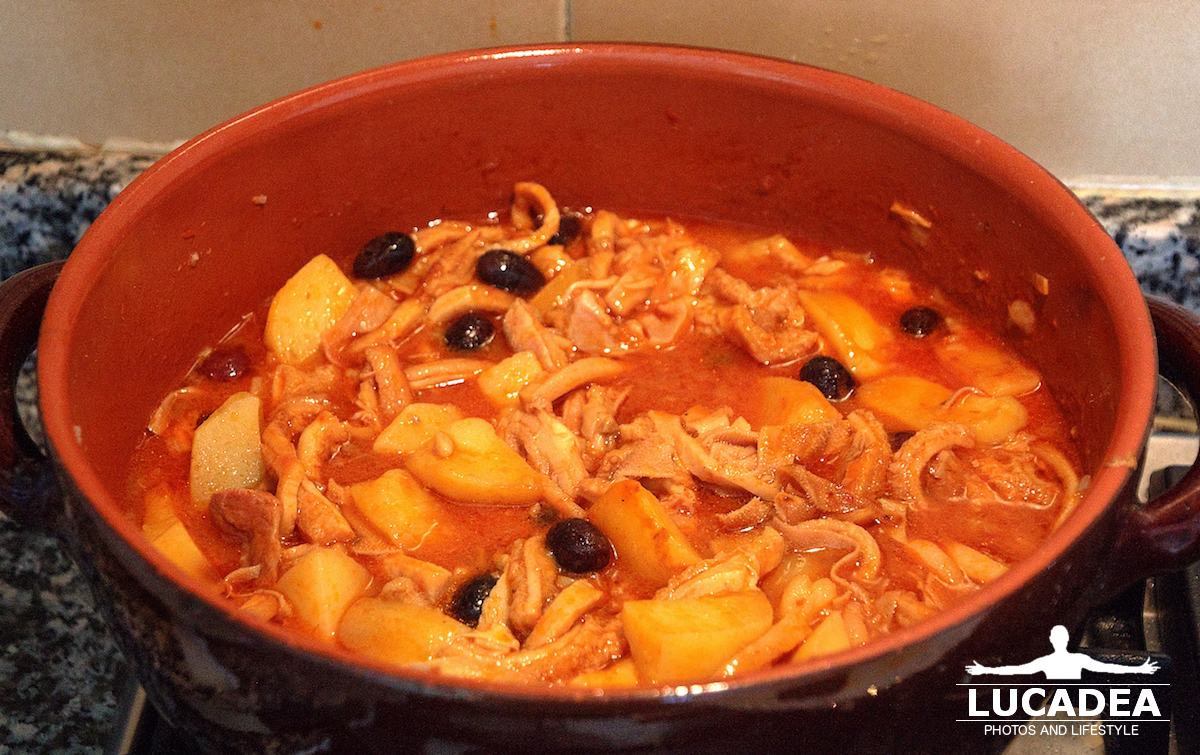
Fry the vegetables in good olive oil, but not too much (tripe is fatty), and add the tripe, allowing it to flavor and heat through. Add a good glass of white wine and let it evaporate. At this point, add the dried mushrooms, pine nuts, olives, and then the potatoes. Heat everything together, stirring slowly, then season with salt and add the tomato paste, then pour in the broth.
Close the pot (preferably earthenware) and let it cook slowly.
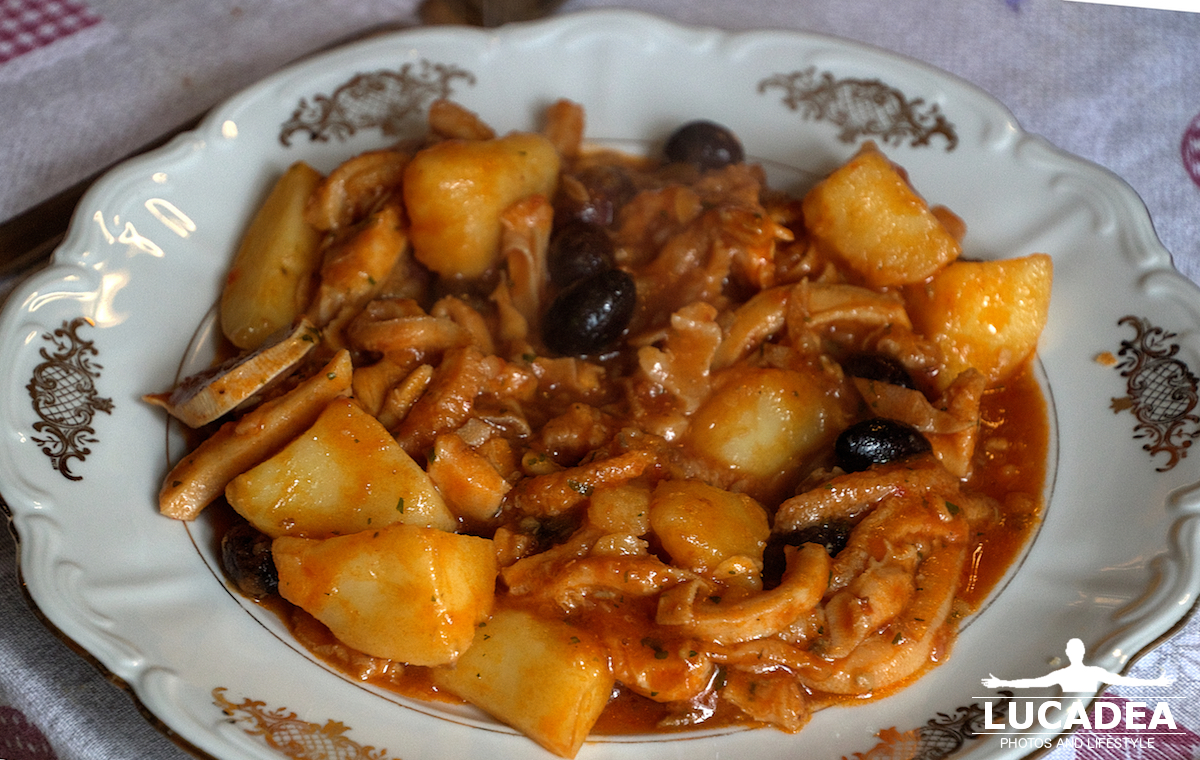
When the potatoes are cooked, the tripe is ready and should be served piping hot, sprinkled with fresh parsley and a little grated cheese.

Do you like tripe? Add your own comment or go to the bottom of the site to read what other visitors have written.

Here are some pictures of this finished dish:

Trippa in umido in pentola

Trippa in umido

Trippa in umido in piatto

Photos taken with Canon 600D and Tamron 16-300.

And here’s a video:

Trippa Day is celebrated on October 24th.

Ligurian tripe from my house, the recipe – Tripes liguriennes de chez moi, la recette – Callos de Liguria de mi casa, la receta – Tripa da Ligúria da minha casa, a receita – Ligurischer Kutteln aus meinem Haus, das Rezept – Món tripe Ligurian từ nhà tôi, công thức – 我家的利古里亚牛肚,食谱 – 私の家のリグリアントリペ、レシピ

Ligurian octopus and potato salad, the recipe

insalata di polpo bollito

Ligurian octopus and potato salad, the recipe. It is a simple dish made with just a few ingredients, which is exactly why the quality of each one matters. This time I found a couple of local octopuses and decided to prepare them for my son Luca, turning them into one of those straightforward seafood dishes I enjoy making when I want something fresh and full of flavour.
For the boiled octopus, I filled a large pot with plenty of water and added salt and a little vinegar. Before leaving the octopus to cook, I held it by the head and dipped the tentacles into the boiling water several times. This makes the tentacles curl up and gives them the familiar shape that looks so good once the dish is served.
After that, I left the octopus to cook for about half an hour. I then prefer not to rush the next step, leaving it to cool in its cooking water. It is a simple way of finishing the cooking gently and preparing the octopus for slicing.
Meanwhile, I boiled some excellent mountain potatoes that came from my friend Enrico Segarini. Once the potatoes were cooked and cooled, I cut them into pieces and combined them with the sliced octopus.
The dressing is where a simple recipe like this really comes together. I used excellent local olive oil from my friend Paolino Muzio in San Bernardo, a locality belonging to Sestri Levante known for the quality of its olives. I then added the juice of a lemon from my own garden and finished everything with a little chopped parsley.
I did not want to add much else. With a dish like this, I prefer the octopus, potatoes, olive oil and lemon to remain the main flavours. The result is fresh and savoury, and it works well either as a starter or as a light main course.
What I particularly like about this recipe is its strong connection with the local area. The local octopus, mountain potatoes, olive oil made from nearby olives and even the lemon from my garden all tell the story of a style of cooking based more on good ingredients than on complicated techniques.
One small detail about cooking octopus is that allowing it to cool in its cooking water can help it retain a pleasant, even texture. It is a simple step, but one I find useful whenever I prepare an octopus salad ahead of serving.
This time there was also a very personal reason for preparing it: my son Luca. Cooking something for someone in your family gives even a simple recipe a different meaning, especially when the ingredients have been found fresh that same morning.
It also fits naturally with the other seafood recipes I have shared on the blog, where I tend to prefer straightforward preparations that allow the main ingredient to remain recognizable rather than covering it with too many flavours.
Once everything was ready, I gently mixed the octopus and potatoes, allowing the olive oil and lemon to coat the ingredients without breaking the potatoes. After a short rest, the salad was ready to serve.
That is what I like about recipes such as this one: there is no need for complicated techniques, just a little care during cooking and ingredients that are good enough to speak for themselves.

How do you prepare octopus and potato salad? Add a comment or go to the bottom of the site to read what other visitors have written.

Ligurian octopus and potato salad with lemon, olive oil and parsley served as a simple seafood dish

Photo taken with Samsung Galaxy.

This is the boiled octopus before being seasoned:

polpo bollito

Photo taken with Samsung Galaxi.

Spaghetti with anchovies and breadcrumbs, the recipe

Spaghetti alle acciughe e mollica di pane

Spaghetti with anchovies and breadcrumbs, the recipe.
Anchovy season has begun; they’re still too small for salting, but they can be used in many simple and tasty dishes.

I thought of a recipe that I may have learned from the many Southern chefs who have positively influenced my tastes and my cooking, and I’m now sharing it with you.
If you have any ideas or comments, please add a comment or scroll to the bottom of the site to read what other visitors have written.

For 4 people, for the sauce I used:

  • 400 grams of fresh anchovies, cleaned and deboned
  • 6 salted anchovy fillets
  • one clove of garlic
  • extra virgin olive oil
  • oregano and breadcrumbs*.

I sautéed the minced garlic in the oil along with the salted anchovy fillets (and chili pepper for those who like it). I deglazed with a little white wine and then added the fresh anchovies, which only needed to cook for a few minutes, and a pinch of dried oregano.

The sauce is ready.

I cooked about 350 grams of spaghetti, which I then tossed in the sauce.
Finally, I sprinkled with breadcrumbs*. A delicious, simple, and flavorful dish.

* Breadcrumbs are different from breadcrumbs. It’s coarser, and I make it by grating the bread by hand and then sautéing it in a nonstick pan without oil to dry it slightly.

Now look at the finished dish and tell me what you think!

Spaghetti alle acciughe e mollica di pane

Spaghetti alle acciughe e mollica di pane

Photos taken with Canon 600D camera and Tamron 16-300.

Spaghetti with anchovies and breadcrumbs, the recipe – Spaghetti aux anchois et chapelure, la recette – Espaguetis con anchoas y pan rallado, la receta – Espaguete com anchovas e pão ralado, a receita – Spaghetti mit Sardellen und Paniermehl, das Rezept – Spaghetti với cá cơm và vụn bánh mì, công thức – 意大利面配凤尾鱼和面包屑,食谱 – アンチョビとブレッドクラムのスパゲッティ、レシピ
🏠
  • Italiano