Entella Street, a hidden corner of Chiavari

Via Entella a Chiavari con palazzi storici e scorci del centro cittadino ligure

Entella Street, a hidden corner of Chiavari.
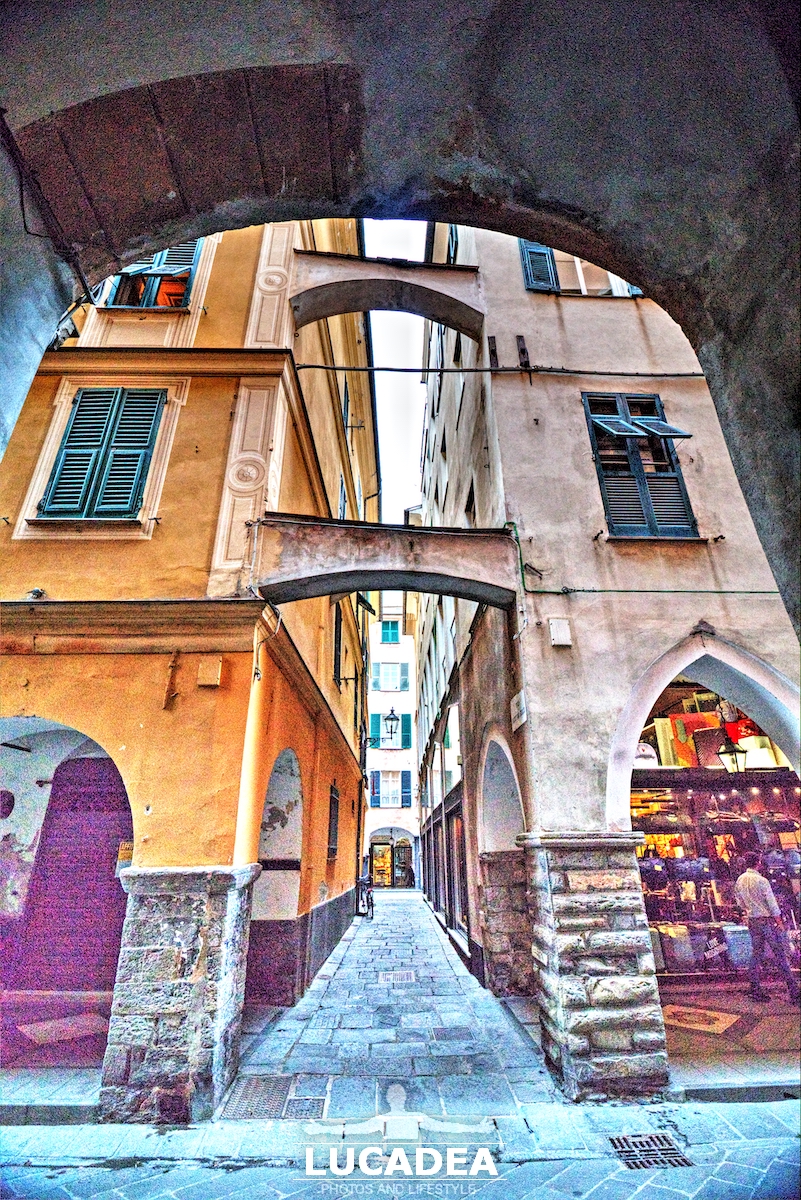
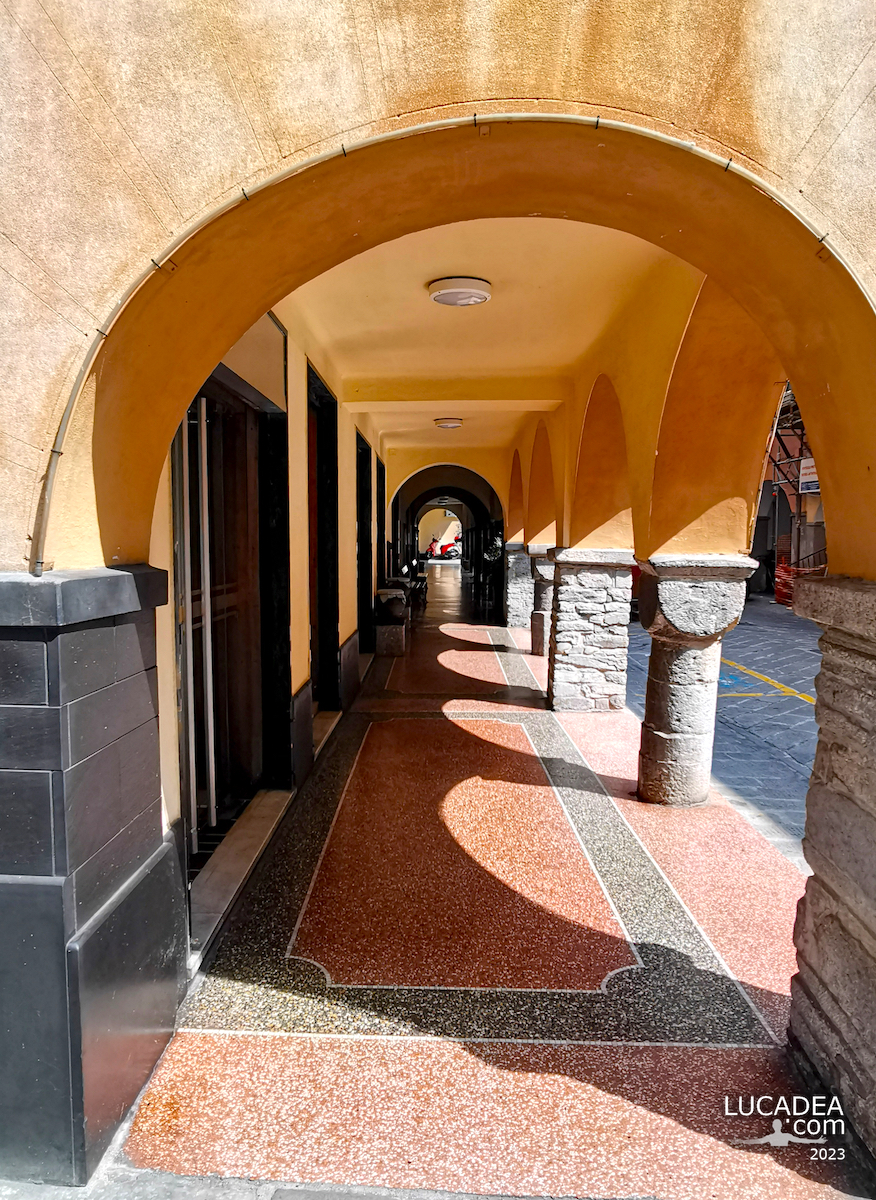
While walking through the centre of Chiavari, I decided to photograph a less common view of the town: Entella Street, a road running parallel to the famous Carruggio Dritto and Vittorio Veneto Street, with its own character made of historic buildings and urban details. This photograph of Entella Street in Chiavari shows that there are still interesting places to see in Liguria even away from the most photographed routes.
When visitors arrive in Chiavari looking for photographic spots, they usually head towards Carruggio Dritto, also known as Martyrs of Liberation Street, or towards Vittorio Veneto Street with its beautiful arcades. These are certainly among the best-known areas of the town centre, famous for their arches, columns and covered walkways. I have photographed those streets many times as well, and my blog contains many images dedicated to their architecture.
This time I wanted to explore a different perspective and focus on a street that is often overlooked. Entella Street proves that discovering Chiavari is not only about following the most popular paths. Smaller streets can also reveal elegant buildings, interesting views and details that become meaningful when observed carefully.
I took this photograph myself with my camera, looking for a different way to tell the story of the town. The image is not about a famous landmark but about the atmosphere created by everyday architecture, the relationship between the buildings and the street, and the quiet beauty that can be found in familiar places.
Entella Street is located in Chiavari, Liguria, Italy, in the Metropolitan City of Genoa, close to the historic streets that form the heart of the town centre. Its position makes it an alternative route for discovering another side of Chiavari, where the urban landscape feels slightly more relaxed while still preserving the elegance of the old town.
One interesting detail about Chiavari is the importance of arcades in its historic centre. These covered spaces have supported commercial activities and social life for centuries, creating a distinctive architectural feature that makes the town recognizable.
This photograph connects naturally with other stories I have shared on my blog about Chiavari, including images of Carruggio Dritto and Vittorio Veneto Street. I enjoy showing different sides of places I visit, because a town is not made only by its most famous views but also by the streets that people walk through every day.
Entella Street is a reminder that changing direction can lead to new discoveries. A less photographed street can still offer a beautiful image and a different way of understanding a city.

Have you ever walked away from the usual route and discovered a place that deserved to be photographed? Add a comment or go to the bottom of the site to read what other visitors have written.
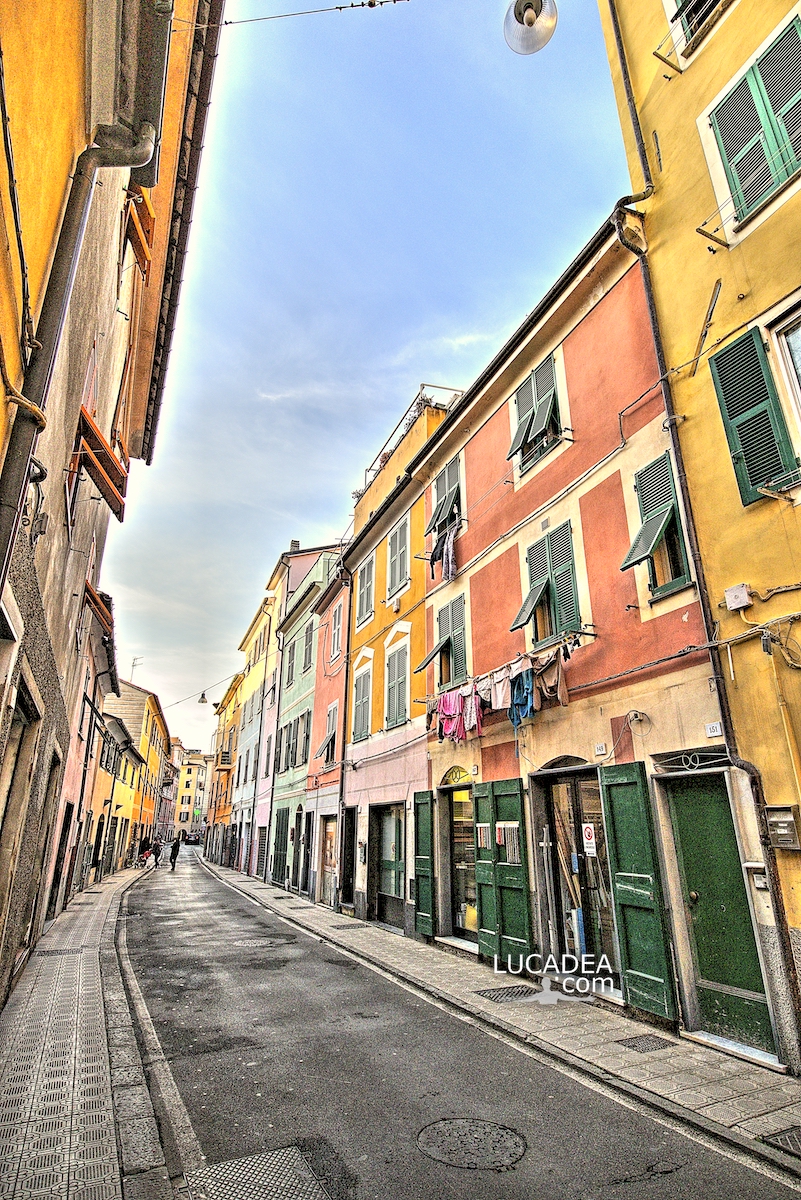
Entella Street in Chiavari with historic buildings and a quiet view of the Ligurian town centre

Photo taken with Canon EOS M100 and lens Canon EF-M 11-22.

Here’s where the street is:

Add one  comment to this article or read  here what other visitors have written.
 
Adv
 
Disclamer

The rights on images, videos, choruses, text and all other material on the LUCADEA.com website are governed as per  Copyright page.


This page has been viewed 1 times today.
This month it has been viewed 1 times.
In total it has been viewed 1 times.
 

Vittorio Veneto Street in Chiavari’s centre

Via Vittorio Veneto a Chiavari con portici, negozi e la strada pedonale del centro cittadino

Vittorio Veneto Street in Chiavari’s centre.
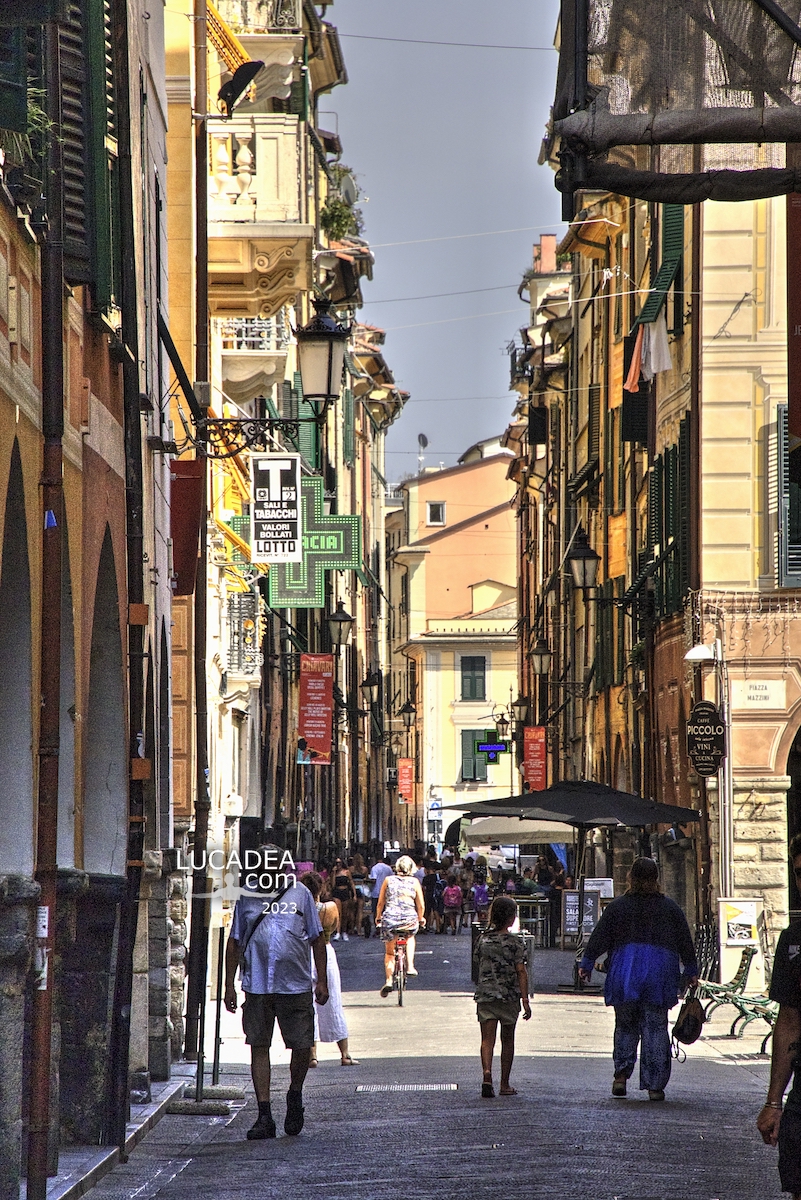
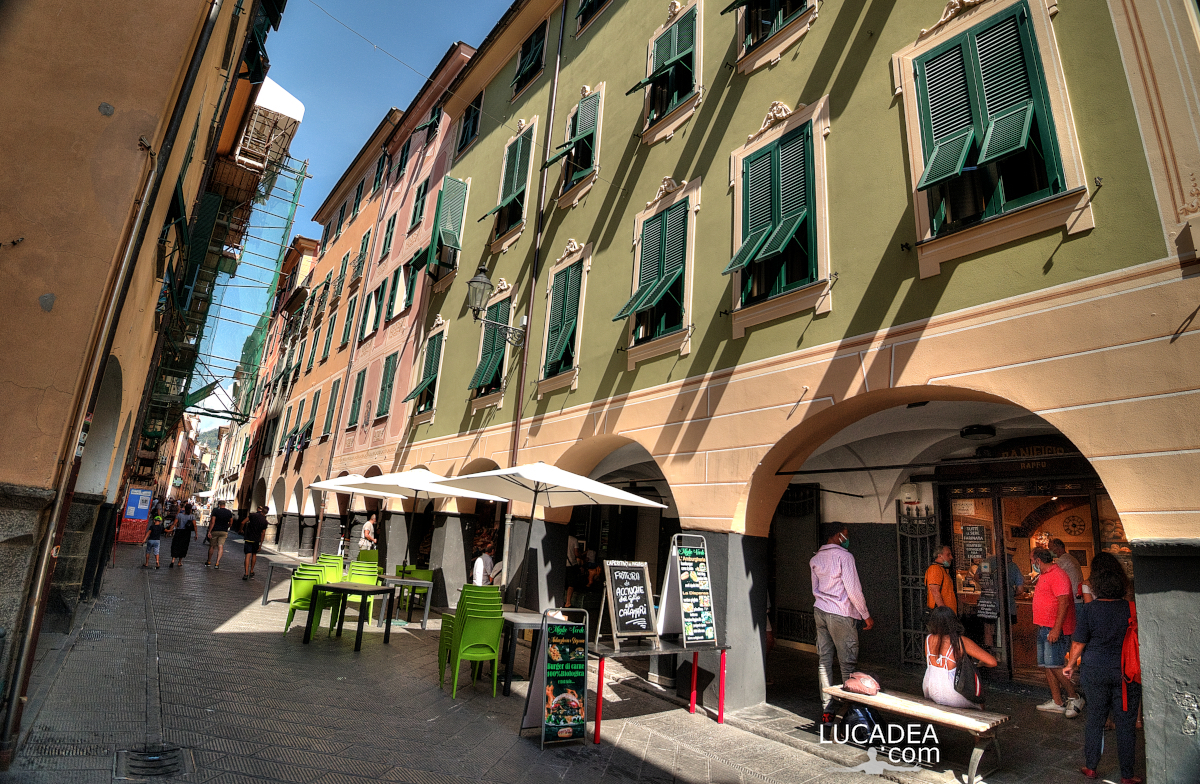
Walking beneath the arcades and along the shop windows, I photographed one of the main streets of Chiavari, a pedestrian area where everyday life continues between local stores, conversations and the simple rhythm of the town. This photograph of Vittorio Veneto Street in Chiavari shows a different side of this Ligurian town, connected to the famous Carrugio Dritto and to the atmosphere of its historic centre.
When thinking about things to see in Chiavari, many people immediately look for the old streets, historic buildings and traditional corners, but the commercial streets are also an important part of the town’s identity. Vittorio Veneto Street represents this living side of Chiavari: a place where residents walk every day, where shops create movement and where the covered arcades become part of the urban landscape.
I took this photograph myself while walking through the centre of Chiavari, paying attention to the details that often go unnoticed. Photography is not only about famous monuments or panoramic views; sometimes a perspective between buildings, a sequence of arcades or the relationship between public spaces and daily activities can tell the story of a place.
Vittorio Veneto Street is located in Chiavari, Liguria, Italy, in the Metropolitan City of Genoa, and it is one of the main pedestrian streets in the town centre. It can be considered an ideal continuation of the better-known Carrugio Dritto, the traditional name of Liberation Martyrs Street, one of the most representative streets of Chiavari’s historic area.
One small curiosity about Chiavari is the importance of its arcades, which have always played a role in the relationship between commerce and public life. These covered walkways allow people to move comfortably between shops and buildings, creating a continuous space where architecture and everyday activities meet.
This photograph connects naturally with other stories I have shared on my blog about Ligurian towns and urban details. I like photographing places that may seem ordinary at first because they often reveal the strongest connection with local life. A street used every day by residents can become an interesting subject when observed with a different perspective.
If you are visiting Chiavari and looking for places worth seeing beyond the most famous attractions, walking through the town centre offers many small details to discover. The character of a city is often found not only in its landmarks but also in the streets where people live, work and meet.
This image is my personal way of preserving a moment of Chiavari, showing that even a simple pedestrian street with shops and arcades can become a meaningful photographic subject.

Have you ever photographed a familiar street and discovered something new about it? Add a comment or go to the bottom of the site to read what other visitors have written.

Vittorio Veneto Street in Chiavari with covered arcades, shops and the pedestrian town centre

Photo taken with Canon EOS M100 and lens Canon EF-S 10-18.

Add one  comment to this article or read  here what other visitors have written.
 
Adv
 
Disclamer

The rights on images, videos, choruses, text and all other material on the LUCADEA.com website are governed as per  Copyright page.

This page has been viewed 0 times today.
This month it has been viewed 0 times.
In total it has been viewed 0 times.
 

The arcades of Chiodo Street in La Spezia

Portici decorati di via Domenico Chiodo alla Spezia vicino ai giardini pubblici del centro storico

The arcades of Chiodo Street in La Spezia.
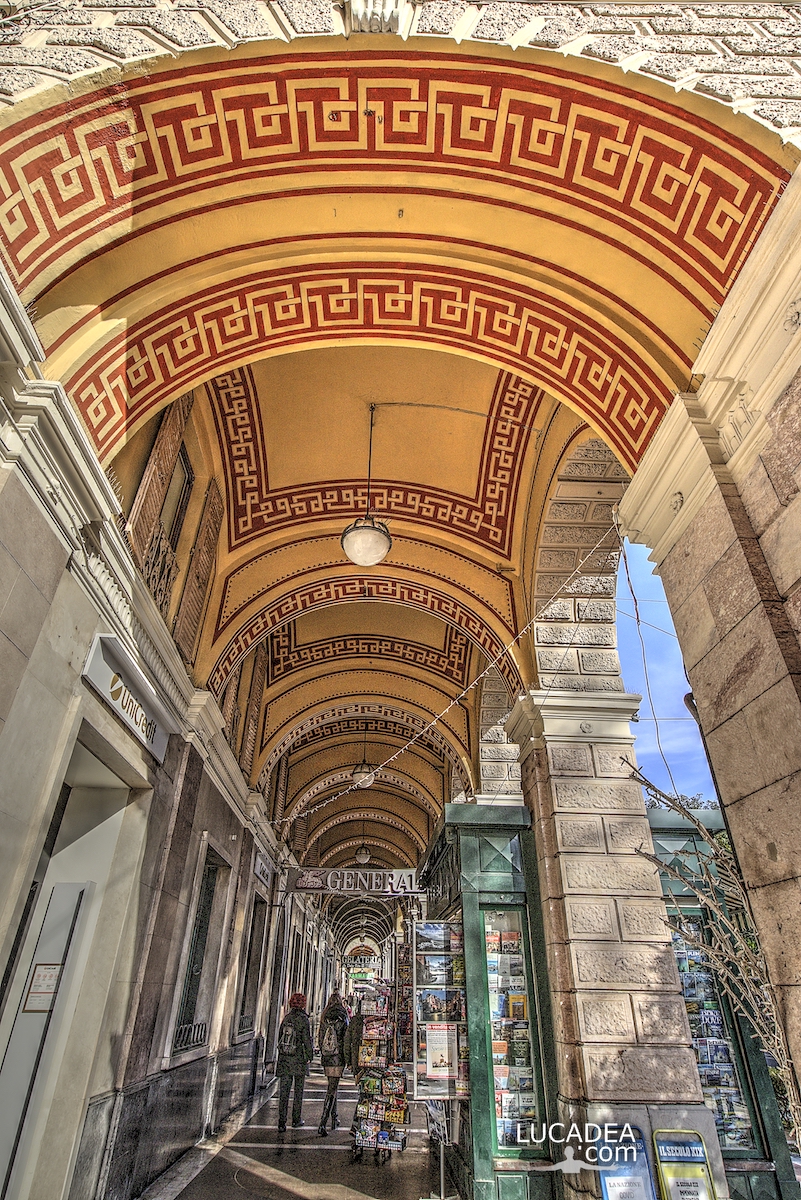
Walking through the city centre of La Spezia, I stopped to photograph this elegant sequence of arches, decorations and architectural details that gives a different character to the urban landscape. The arcades of Chiodo Street are one of the interesting places to see in La Spezia if, like me, you enjoy discovering cities through their less obvious corners.
I took this photograph during one of my walks through the town, carrying my camera and looking for details that could tell something about the place. Often, the images I like the most are not necessarily the ones showing the most famous landmarks, but those small everyday views that reveal the atmosphere of a city.
These arcades run along Chiodo Street, next to the Public Gardens of La Spezia, one of the historic green areas in the centre of the city. The covered walkways create a pleasant perspective, with the repeated rhythm of the columns and arches leading the eye along the street. The decorations on the buildings add an elegant touch and make this part of La Spezia particularly interesting to photograph.
Compared with the traditional arcades that can be found in some Ligurian seaside villages, these have a more urban and nineteenth-century appearance. La Spezia changed considerably during that period, especially after the construction of the Naval Arsenal, which transformed the city from a small coastal town into an important military and industrial centre.
A small historical curiosity is connected with the name of the street. Domenico Chiodo was an Italian military engineer and general who played a key role in the design and construction of the Naval Arsenal of La Spezia. The city dedicated this street to him in recognition of his contribution to the development of the area.
What attracted me to this scene was the balance between architecture and everyday life. The arches create a strong geometric pattern, but the street remains a normal place where people walk, meet and continue their daily activities. This contrast is what makes the photograph interesting to me.
As I have already shown in other photographs from Eastern Liguria, from villages in the countryside to historic streets, I often find the identity of a place in these simple details. They are not always the first things visitors notice, but they are often the ones that remain in memory.
If you are visiting La Spezia, this is one of those corners worth seeing while walking through the city centre, especially if you like historic architecture and urban details.

Have you ever walked along Chiodo Street in La Spezia and noticed these decorated arcades? Add a comment or go to the bottom of the site to read what other visitors have written.

Decorated arcades of Chiodo Street in La Spezia beside the Public Gardens in the city centre

Photo taken with a Canon EOS M100 camera and Canon EF-M 11-22 lens.

If you want to see all the photos I took in the city, click here:

Domenico Chiodo (Genoa, October 30, 1823 – La Spezia, March 19, 1870) was an Italian general and architect—an officer in the Military Engineers—who designed the naval arsenals at La Spezia and Taranto and oversaw the expansion of the one in Venice.
Read more and find out more on Wikipedia

Caruggio Dritto, the heart of Chiavari

Il Caruggio Dritto di Chiavari, il cuore della città rivierasca

Caruggio Dritto, the heart of Chiavari.
Walking through the centre of Chiavari with my camera in hand, I decided to capture the perspective of the town’s most famous street: Caruggio Dritto, the pedestrian road that crosses the heart of the historic centre between arcades, buildings and shops.
This photograph was born from the desire to tell the story of an everyday place, one of those streets that are part of local life but that immediately reveal the authentic atmosphere of a Ligurian town to visitors. I chose a particular composition, intentionally flattened, to include a large part of the street and emphasize the long perspective created by the buildings on both sides.
Caruggio Dritto in Chiavari, officially known as Via Martiri della Liberazione, is the main pedestrian street of the town centre and one of the most recognizable places in the city. Walking along this street means discovering the typical Ligurian arcades, colourful façades, historic shops and many small details connected with daily life in the Tigullio area.
I took this photograph in Chiavari, Liguria, Italy, during a simple walk through the town centre. This is exactly the kind of photography I enjoy: not only famous landmarks or spectacular viewpoints, but also ordinary places that can reveal the true character of a town.
A small curiosity is related to the word “caruggio”, which comes from the Genoese dialect and traditionally indicates a narrow street or alley in Ligurian historic centres. In Chiavari, however, Caruggio Dritto is much more than a small alley: it is the main street of the old town, a meeting place and one of the symbols of the city.
Over the years I have photographed different corners of Chiavari, from the panoramic view at Sanctuary of Grazie to the seaside area of Preli, but every time I return to the historic centre I find new details to observe. Ligurian towns often reveal their identity through these streets, where history and everyday life exist together.
I like the idea that a photograph like this can give someone who has never visited Chiavari a small feeling of walking beneath its arcades and discovering the atmosphere of the town.
If you are visiting Chiavari, Caruggio Dritto is one of the places worth seeing to experience the rhythm of the historic centre and understand the character of this Ligurian town.

Have you ever walked along Caruggio Dritto in Chiavari and stopped to admire the details of its historic buildings? Add a comment or go to the bottom of the site to read what other visitors have written.

Photos taken with Canon EOS RP and Tamron 16-300.

Where the caruggio is located:

Chiavari’s historic center can be considered one of the best-preserved areas in the entire Tigullio region. Its urban and architectural layout differs significantly from that of other coastal towns, particularly due to the abundance of medieval arcades along the historic core’s main thoroughfare—the *Caruggio Dritto* (comprising Via Martiri della Liberazione and Via Vittorio Veneto)—which has stood as the quintessential symbol of the merchant class since the second half of the 14th century.
Read more on Wikipedia

The colorful houses of Verdi Square in Chiavari

Case colorate di Piazza Verdi a Chiavari con facciate liguri e portici in ardesia nel centro storico.

The colorful houses of Verdi Square in Chiavari.
Walking through the historic center of Chiavari, Liguria, I often find myself stopping to photograph the details of buildings, streets and arcades that make this town so interesting.
The colorful houses of Verdi Square in Chiavari are one of those simple views that immediately attract my attention during a photographic walk. Behind the famous Caruggio Dritto, the main street of the old town, this square opens up with a collection of facades where bright colors meet the darker tones of traditional Ligurian architecture.
This photograph was taken because of my habit of looking at the smaller details of the places I visit. I do not always search for famous landmarks or well-known viewpoints; sometimes a row of windows, the shape of an arcade or the contrast between different materials is enough to make me stop and take out my camera. I wanted to capture this corner of Chiavari because it shows a typical atmosphere of the Ligurian Riviera, where historic buildings are still part of everyday life.
The image was photographed in Chiavari, Liguria, Italy, a town where walking through the old streets reveals many unexpected views. If you are visiting Chiavari, one of the most interesting things to do is simply exploring the historic center, where colorful buildings, traditional arcades and small architectural details appear around every corner.
What caught my eye in this scene is the contrast between the warm colors of the houses and the dark slate used in the columns supporting the arcades. Slate has a strong connection with this area, especially with nearby Lavagna, and for centuries it has been one of the most recognizable materials used in Ligurian architecture.
Chiavari is a place I have photographed several times, including other views of its old town and the Riviera di Levante. Every time I walk through these streets, I discover new details because the character of the town is often hidden in small elements rather than only in its main attractions.
This photograph is part of my personal archive dedicated to Liguria: a simple urban view that preserves colors, materials and memories of a place I enjoy returning to with my camera.

Have you ever discovered a town by paying attention to its buildings and small architectural details? Add a comment or go to the bottom of the site to read what other visitors have written.

Colorful houses in Verdi Square in Chiavari with Ligurian facades and slate arcades in the historic town center.

<Photo taken with a Canon EOS M100 camera and a Canon EF-S 10-18 lens.

Here is where this small square is located:

Rivarola Street, a historic street in Chiavari

Via Rivarola nel centro storico di Chiavari con portici e palazzi antichi della strada storica ligure

Rivarola Street, a historic street in Chiavari.
In the heart of Chiavari’s old town, in Liguria, Italy, this characteristic street preserves the atmosphere of a traditional Ligurian town through its arcades, historic buildings, and small architectural details that are often discovered only by walking slowly.
When I explore the streets of Chiavari, these everyday views are often the ones that attract my attention the most. I am not always searching for the most famous landmark; sometimes an old doorway, a decorated façade, or a simple perspective between buildings can tell the story of a place better than a well-known attraction.
This photograph of Rivarola Street comes from my curiosity for these quieter corners of the city. I wanted to capture with my camera a small part of Chiavari’s historic center, where the signs of the past still live together with the daily rhythm of shops, residents, and local life.
Rivarola Street is located in Chiavari, Liguria, Italy, and it is one of the interesting places to see for anyone exploring the historic center of this coastal town. Walking along this street, visitors can discover old buildings, traditional arcades, and architectural details that reveal the authentic character of Chiavari beyond the most popular viewpoints.
What makes Rivarola Street particularly interesting from a photographic point of view is the relationship between its different elements: the arcades, windows, entrances, and façades create changing compositions depending on where you stop and look. These apparently simple details often become the real subjects of a photograph.
A small historical curiosity is connected to the names of many streets in Chiavari, which often recall local families and important figures from the past. These names are still part of the urban landscape and preserve a small piece of the town’s history.
If you are visiting Chiavari and looking for places worth seeing in the historic center, a walk along Rivarola Street offers a chance to experience the everyday side of this Ligurian town. Here, history is not only found in monuments but also in ordinary streets, old buildings, and details that are easy to miss.

This way of photographing towns and their hidden corners is also present in another article dedicated to the historic street of Sestri Levante, where the atmosphere of an old Ligurian street becomes the main subject of the image.

Have you ever walked along Rivarola Street in Chiavari? Add a comment or go to the bottom of the site to read what other visitors have written.

Rivarola Street in Chiavari historic center with old arcades and historic buildings in a Ligurian town

Photo taken with a Canon EOS M100 camera and Canon EF-S 10-18 lens.

The architectural layout remained unchanged until the late 16th century; from that time onwards, new aristocratic palazzi were built within the walls in the contemporary Renaissance style. The adoption of this new architectural style was most evident along the main streets—Via Ravaschieri and Via Stefano Rivarola—where palazzi were erected or remodeled to closely resemble buildings found in Genoa.
Read more on Wikipedia

The arcades of Bighetti Street in Chiavari

I portici del caruggio di via Bighetti nel centro storico di Chiavari

The arcades of Bighetti Street in Chiavari.
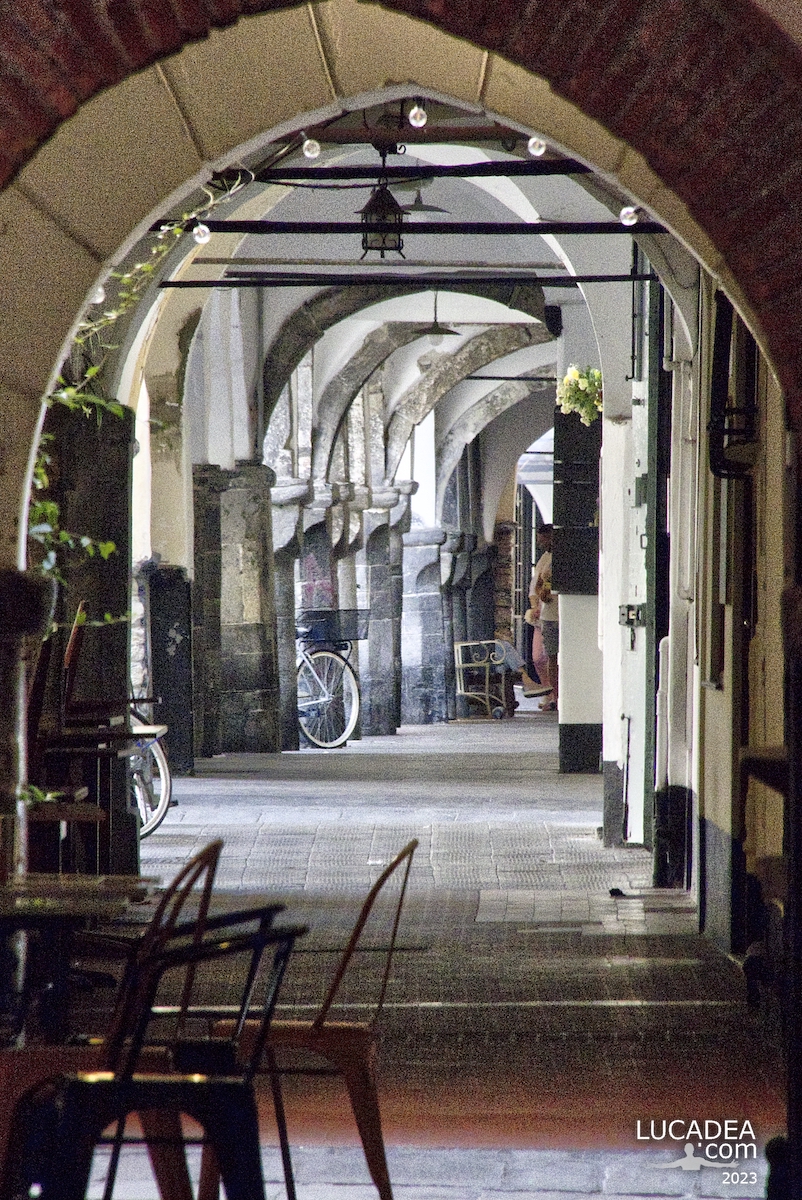
While walking through Chiavari’s historic centre, I stopped to photograph a quieter corner of the town that perfectly represents its everyday atmosphere: the arcades of Bighetti Street, a small road running close to the famous main street of the old town.
When searching for things to see in Chiavari, many visitors focus on the best-known streets and squares, but some of the most interesting views can be found just a few steps away from the main paths. This photograph shows one of those places where the rhythm of daily life, local shops and historic architecture come together.
I took this image in Chiavari, in the Metropolitan City of Genoa, Liguria, Italy, during one of my walks looking for details that often go unnoticed. Bighetti Street is not a place dominated by a famous monument, but its charm comes from the simple elements that define the town: the covered walkways, the old buildings and the small businesses that continue to give life to the street.
The arcades of Chiavari are one of the most recognizable features of the historic centre. They provide shelter from the weather and create a pleasant space for walking, meeting people and observing the everyday life of the town.
One interesting detail is the word “caruggio”, a traditional Ligurian term used to describe a narrow street in a historic centre. In many Ligurian towns, the caruggio has always been an important place for commerce and social life.
What attracted me to this scene was its simplicity. This is not a photograph of a famous landmark, but a view of an ordinary place that tells the story of a living town. These are often the details I enjoy photographing the most because they show a more authentic side of a destination.
On Lucadea I have shared other photographs of Ligurian historic centres and old streets, from Genoa’s alleys to smaller villages, because these small details are what create the identity of a place.

Have you ever walked along Bighetti Street in Chiavari and discovered one of its hidden corners? Add a comment or go to the bottom of the site to read what other visitors have written.

Photos taken with a Canon EOS RP camera and a Tamron 16-300 lens.

Where the *caruggio* is located and roughly where I took the photo:

The arcades of Giuseppe Raggio street in Chiavari

Portici di via Giuseppe Raggio nel centro storico di Chiavari con architettura ligure tradizionale

The arcades of Giuseppe Raggio street in Chiavari.
Walking through the historic center of Chiavari, I often find that the most interesting views are not always the most famous ones. In this photograph, I wanted to capture a quieter corner of the town, where traditional arcades create a familiar atmosphere and show a different side of Ligurian architecture.
Giuseppe Raggio Street is not probably the most famous street in Chiavari, especially when compared with the nearby Caruggio Dritto, the main pedestrian street of the town, but it still preserves beautiful details. The arcades of Chiavari are one of the elements that make the historic center unique, offering covered passages that have always been part of everyday life.
I was in Chiavari, Liguria, Italy, and this image comes from my desire to photograph places that are often overlooked. The streets running parallel to Caruggio Dritto, especially on the mountain side, hide old buildings, entrances, decorations, and perspectives that deserve attention.
When looking for things to see in Chiavari, many visitors focus on the main streets, shops, and landmarks, but walking slowly through the smaller roads can reveal a more authentic atmosphere. The arcades of Giuseppe Raggio Street are a good example of these hidden details.
A curious detail is that traditional Italian arcades were not only built for practical reasons, such as protection from weather conditions, but also became important social spaces where people met and where local businesses developed.
What I like about this photograph is the connection between the past and the present. This is not a forgotten place but a street still used every day, where historic elements continue to be part of modern life.
On the blog I have shared other views of Ligurian historic centers, including small streets in Genoa and hidden corners of Sestri Levante, because these details often tell the real story of a place.

Have you ever explored the less famous streets of Chiavari and discovered a hidden corner worth photographing? Add a comment or go to the bottom of the site to read what other visitors have written.

Portici di via Giuseppe Raggio nel centro storico di Chiavari con architettura ligure tradizionale

Photo taken with Honor 20.

Here’s where the street is:

Giuseppe Raggio (Chiavari, May 24, 1823 – Rome, October 21, 1916) was an Italian painter. Born in Chiavari to Nicolò and Maria Sanguineti, he studied at the Nautical Institute and qualified as a master mariner. He soon abandoned a career as a naval officer and exhibited his first paintings in Genoa.
Read more and learn more on Wikipedia

The arcades of Giuseppe Raggio street in Chiavari – Les arcades de la rue Giuseppe Raggio à Chiavari – Los soportales de la calle Giuseppe Raggio en Chiavari – Os pórticos da rua Giuseppe Raggio em Chiavari – Die Arkaden der Giuseppe Raggio Straße in Chiavari – Những mái vòm trên đường Giuseppe Raggio ở Chiavari – 基亚瓦里朱塞佩·拉焦街的拱廊 – キアーヴァリのジュゼッペ・ラッジョ通りのポルティコ

The text of this post was written with the help of ChatGPT, a language model from OpenAI.

Prato della Valle from under the arcades

Scorcio di Prato della Valle a Padova visto dai portici della Loggia Amulea tra colonne e architettura storica

Prato della Valle from under the arcades.
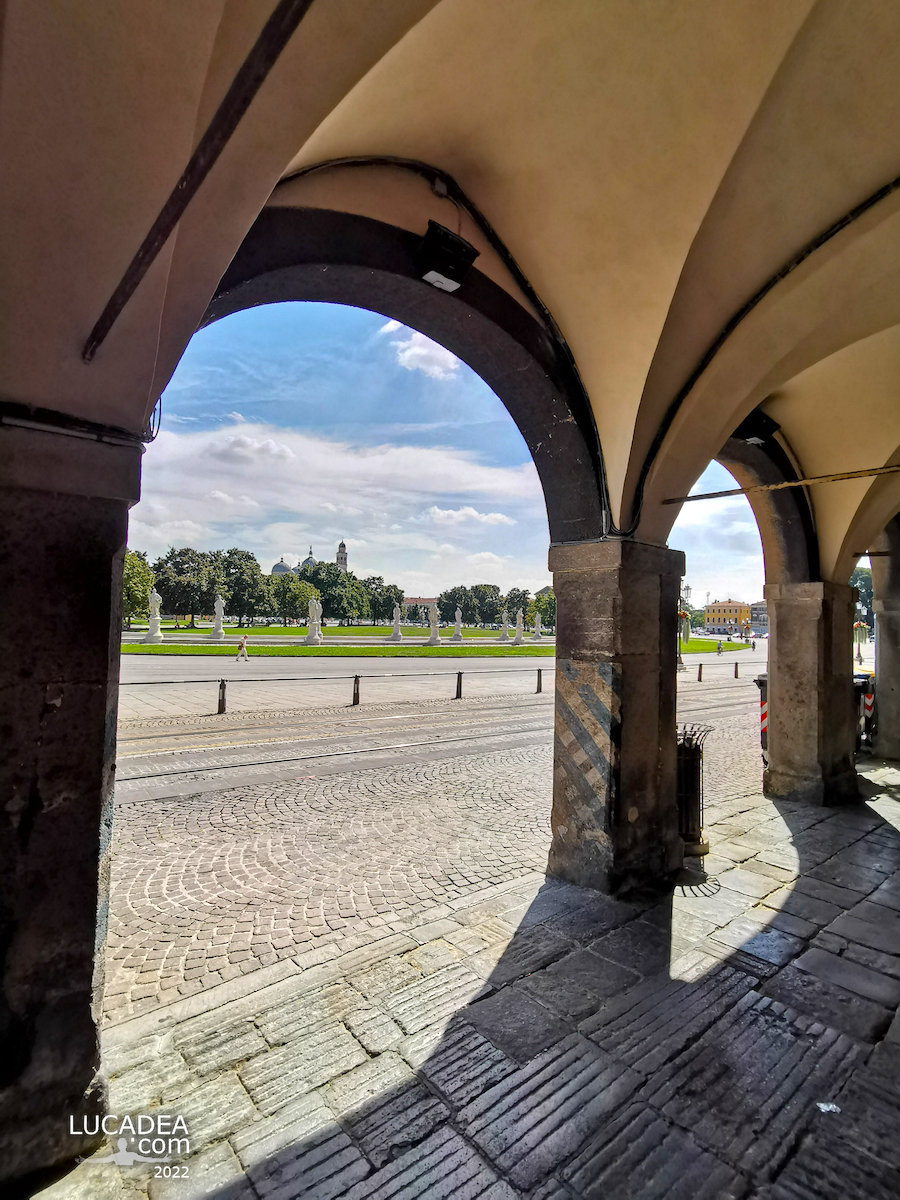
Walking beneath the arcades around Loggia Amulea, I stopped to capture a different view of one of the most famous places in Padua. Among the things to see in Padua, Prato della Valle is certainly one of the landmarks that immediately represents the city, but this photograph tells it from a quieter and more intimate perspective.
Instead of focusing on the entire square from the usual viewpoints, I chose to photograph the details that surround it: the columns, the arches, and the way the architecture frames the open space beyond. The arcades create a natural border around the image, leading the eye toward the centre of the square and giving a different feeling compared to the classic panoramic views.
I was in Padua, Veneto, Italy, during a walk through the historic centre, and I wanted to capture this particular atmosphere. Prato della Valle is not only a large urban space but also a place where people meet, walk, relax, and experience the city at a slower pace.
The square is one of the largest in Europe and its current appearance dates back to the eighteenth-century renovation designed by Andrea Memmo. A curious detail is that the central area, known as Isola Memmia, is surrounded by a canal decorated with numerous statues representing important figures connected with Padua and Italian history.
What I like about this photograph is the contrast between the protected space under the arcades and the openness of the square outside. The darker lines of the architecture create depth, while the perspective invites the viewer to continue looking beyond the first elements of the image.
On the blog I have shared other photographs from Italian cities, often searching for unusual viewpoints rather than only the most famous attractions. As happened in other stories dedicated to historic places, this image comes from the simple pleasure of walking without a precise destination and discovering small details that reveal the character of a city.
If you are visiting Padua, Prato della Valle is a place worth seeing not only from the centre of the square but also from its surrounding arcades, where architecture and perspective create a completely different experience.

Have you ever looked at Prato della Valle from under the arcades? Add a comment or go to the bottom of the site to read what other visitors have written.

Scorcio di Prato della Valle a Padova visto dai portici della Loggia Amulea tra colonne e architettura storica

Photo taken with Honor 20.

To see all the photos I took in the city of Milan, click here:

Prato della Valle is the largest square in the city of Padua, covering an area of ​​88,620 m². Its current layout dates back to the late 18th century and features a central elliptical island known as Isola Memmia (approximately 20,000 m²). This island is encircled by a small canal—fed by the Alicorno Canal—whose banks are lined with a double ring of statues, forming an outer circumference of 1,450 meters.
Read more and find out more at milanofree

A glimpse of Prato della Valle from under the arcades in Padua – Un aperçu du Prato della Valle depuis les arcades à Padoue – Una vista del Prato de la Valle desde los soportales en Padua – Uma vista do Prato della Valle sob os pórticos em Pádua – Ein Blick auf den Prato della Valle unter den Arkaden in Padua – Góc nhìn Prato della Valle từ dưới các mái vòm ở Padua – 从帕多瓦拱廊下看到的普拉托德拉瓦莱 – パドヴァの回廊の下から見たプラート・デッラ・ヴァッレ

The text of this post was written with the help of ChatGPT, a language model from OpenAI.

Ancient decorations under Genoa’s Sottoripa arcades

Decorazioni antiche in via di Sottoripa a Genova

Ancient decorations under Genoa’s Sottoripa arcades.
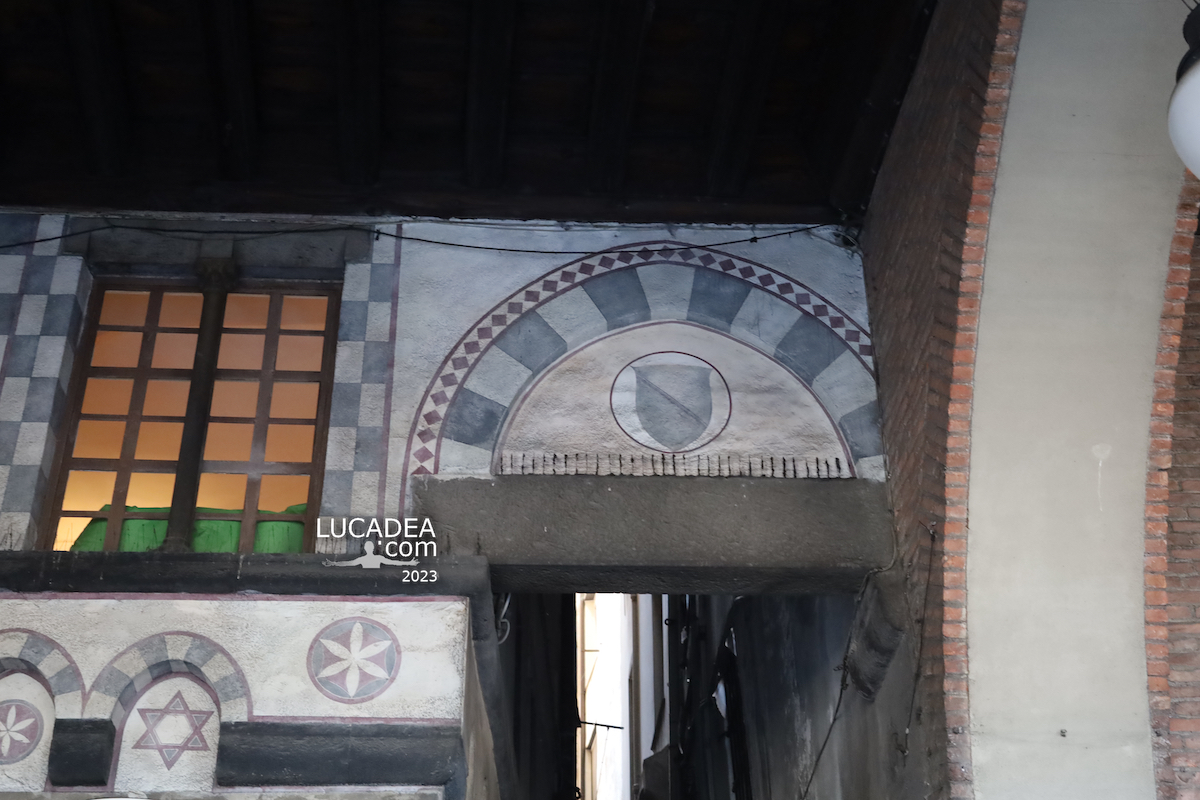
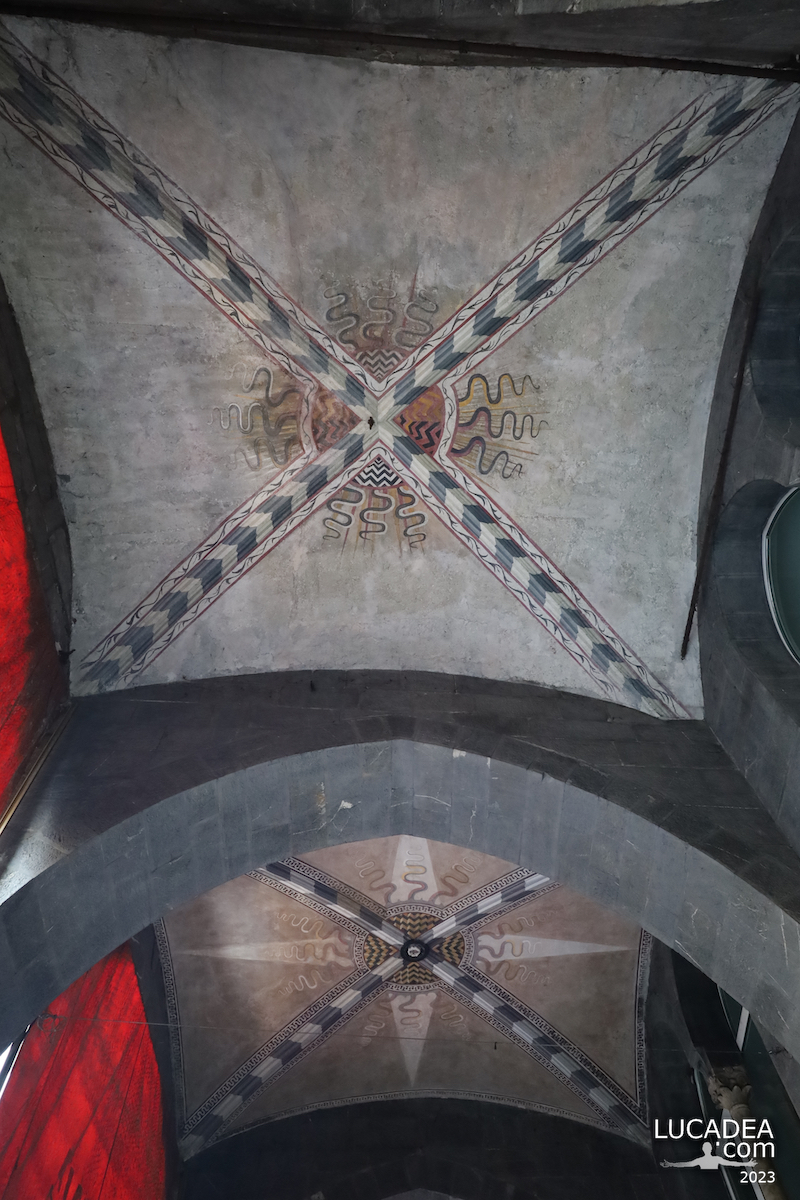
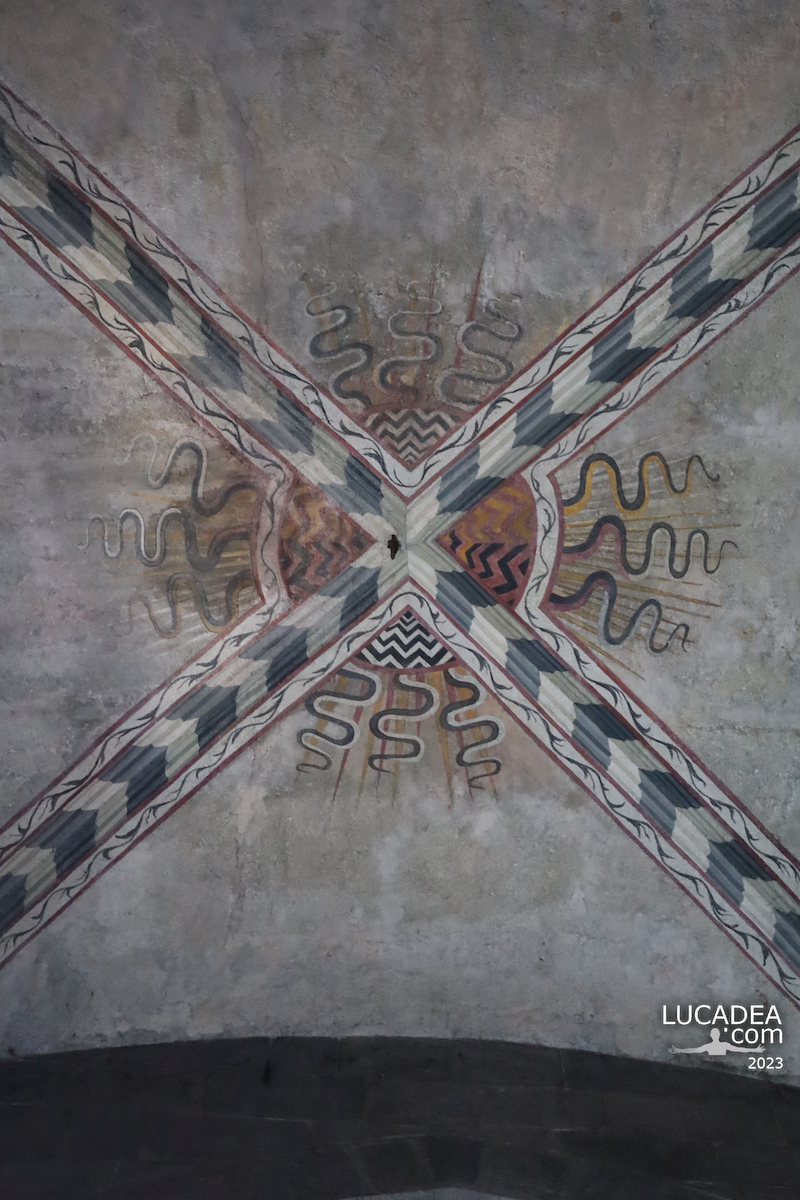
While walking through the historic center of Genoa, I stopped to look at these ancient decorations in Sottoripa, a hidden detail that reveals a quieter side of the city. Among the things to see in Genoa, it is often the small architectural elements that create the most surprising memories.
The decorated vault beneath the arcades of Sottoripa caught my attention while I was passing through this unique street facing the Old Port. It is one of those places where different periods exist together: old buildings and historic structures stand beside modern shops and local businesses, creating a mix that feels very Genoese.
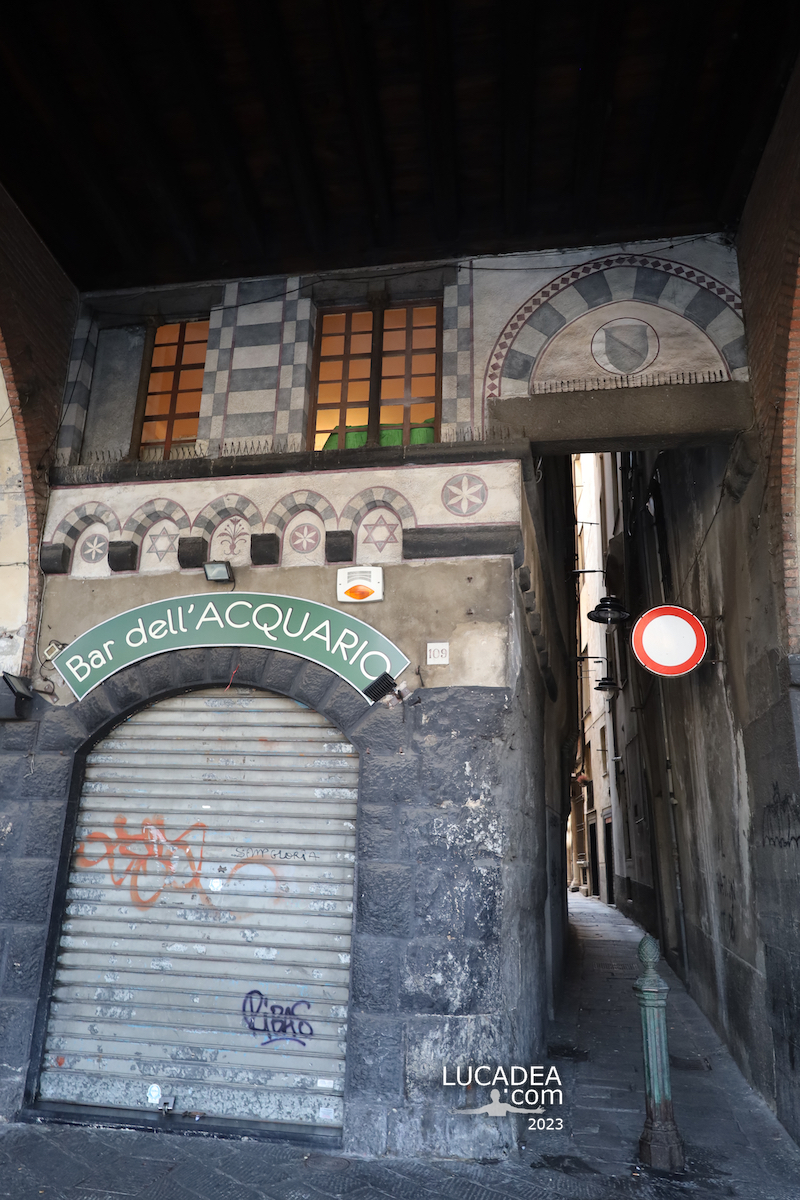
I was in Genoa, Liguria, Italy, near the Old Port and the Genoa Aquarium, and this walk reminded me how many stories can still be found above eye level. Sottoripa is one of the most characteristic streets in the city, running beneath the waterfront buildings and preserving the connection between Genoa and its maritime past. In earlier times, these spaces hosted shops and workshops connected to trade, while today they have a more international atmosphere.
One interesting fact is that these medieval arcades are among the oldest in Europe and represent the historic relationship between Genoa and the sea. Looking at the decorations on the vault, I could not help imagining all the people who have walked beneath them throughout the centuries.
I could not find precise information about the building where these decorations belong, and this is exactly why I wanted to share this photograph. Sometimes an image can become an invitation to discover more, especially when local knowledge can add details that are not immediately visible.
This reminds me of other posts I have shared about hidden corners of Italian cities, where small details often tell stories just as important as famous landmarks.

Have you ever discovered a hidden detail in a street you thought you already knew? If you know something more about this place, feel free to share it by leaving a comment or go to the bottom of the site to read what other visitors have written.

Decorazioni antiche in via di Sottoripa a Genova

Photos taken with Canon EOS RP and lens Canon RF 24-50.

Here’s where the street is:

The street, originally about 900 meters long (3,613 Genoese *palmi*), now extends for approximately 500 meters; 300 meters of this run beneath the row of buildings forming the seaward frontage of the Maddalena *sestiere* (district)—between Via al Ponte Reale and Via al Ponte Calvi—and continue eastward into the Molo *sestiere* as far as Piazza Cavour. A further, lesser-known section—featuring lower arcades and set back from the Ripa—continued past Via al Ponte Calvi to the Porta di Santa Fede, running parallel to Via del Campo.
Read more on Wikipedia

Ancient decorations under the Sottoripa arcades in Genoa – Décorations anciennes sous les arcades de Sottoripa à Gênes – Decoraciones antiguas bajo los soportales de Sottoripa en Génova – Decorações antigas sob os pórticos de Sottoripa em Génova – Alte Verzierungen unter den Arkaden von Sottoripa in Genua – Những trang trí cổ dưới mái vòm Sottoripa ở Genoa – 热那亚索托里帕拱廊下的古老装饰 – ジェノヴァのソットリーパ回廊下にある古い装飾

The text of this post was written with the help of ChatGPT, a language model from OpenAI.

🏠
  • Italiano