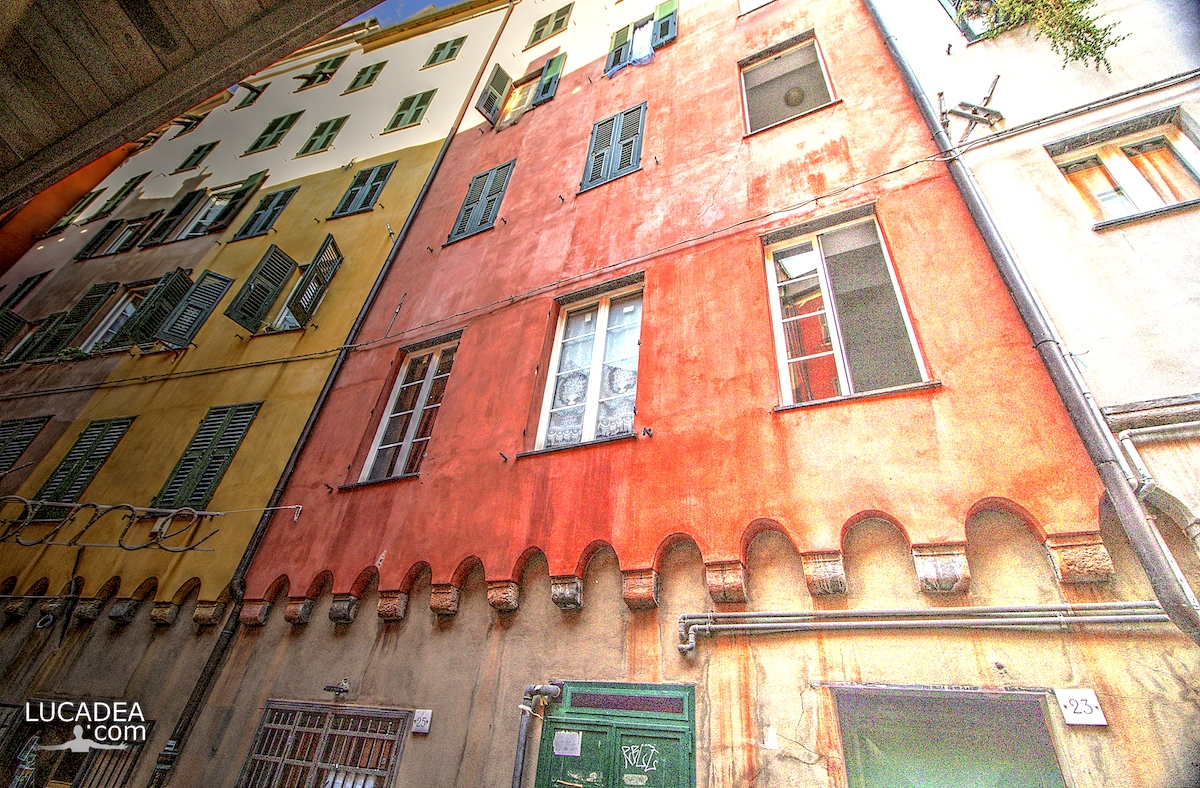
The buildings in Santa Brigida square in Genoa

I palazzi che si affacciano su piazza Santa Brigida a Genova

The buildings in Santa Brigida square in Genoa.
One of Genoa’s most beautiful squares, famous for housing the old “truogoli” (public washhouses), but also for its beautiful buildings.
I especially like, besides the colorful facades, the series of laces (I’m not sure what they’re called) separating the ground floor from the first floor.

Do you know Genoa’s historic center? Add a comment or go to the bottom of the site to read what other visitors have written.

I palazzi che si affacciano su piazza Santa Brigida a Genova

Photo taken with Canon EOS M100 camera and Canon EF-S 10-18 lens.

At the center of a small square that opens into the maze of alleys between Via Balbi and Via Prè, surrounded by tall buildings, the subject of a restoration project in the mid-1980s, are the “truogoli di Santa Brigida,” with an elegant metal roof, one of the few survivors of the numerous Public washhouses existed in every corner of the city until the 1960s.
Continue and learn more at Wikipedia

The palaces overlooking piazza Santa Brigida in Genoa – Les palais surplombant la piazza Santa Brigida à Gênes – Los palacios con vistas a la piazza Santa Brigida en Génova – Os palácios com vista para a Piazza Santa Brigida em Génova – Die Paläste mit Blick auf die Piazza Santa Brigida in Genua – Các cung điện nhìn ra quảng trường Santa Brigida ở Genoa – 俯瞰热那亚圣布里吉达广场的宫殿 – ジェノヴァのサンタブリジダ広場を見下ろす宮殿
Add one  comment to this article or read  here what other visitors have written.
 
Adv
 
Disclamer

The rights on images, videos, choruses, text and all other material on the LUCADEA.com website are governed as per  Copyright page.


This page has been viewed 1 times today.
This month it has been viewed 5 times.
In total it has been viewed 34 times.
 

Carrugio Dritto in the old town of Chiavari

Carrugio Dritto a Chiavari

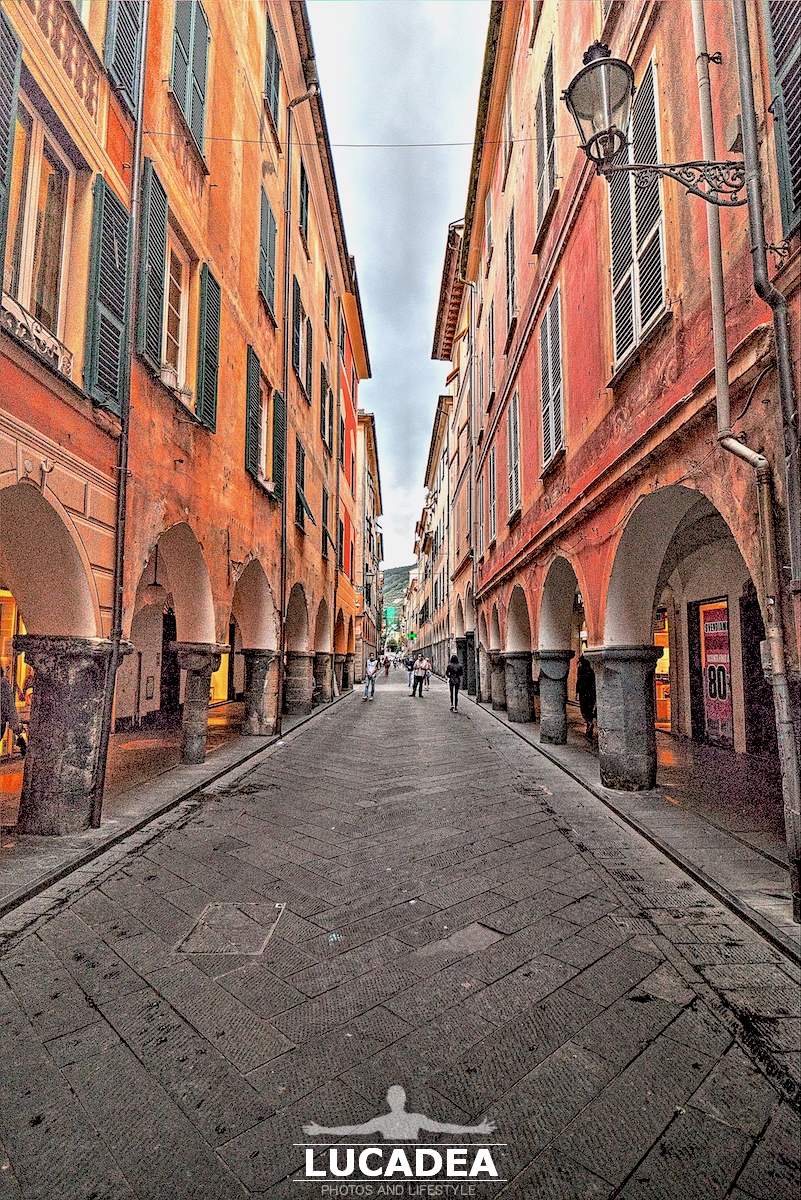
Carrugio Dritto in the old town of Chiavari.
Walking through the centre of Chiavari, I found myself following one of the streets that best captures the everyday character of the town, with its arcades, shops, historic buildings and long perspective. This photograph is about Carrugio Dritto in Chiavari, a simple but very recognisable view of the old town.
I took this photograph myself during a walk through Chiavari, stopping for a moment to look along the street. I did not need a complicated composition: the succession of buildings and arcades already created an interesting perspective. Carrugio Dritto naturally draws the eye forward and makes it easy to appreciate the structure of this part of the historic centre.
Chiavari is in Liguria, in the Metropolitan City of Genoa, along the Gulf of Tigullio in Italy. If you are wondering what to see in Chiavari, the old town is one of the natural places to start, not only because of its historic architecture but also because the streets still have a very everyday atmosphere. This is one of the reasons I enjoy photographing Chiavari: interesting images can appear during an ordinary walk, without needing a special event or a particular occasion.
Carrugio Dritto crosses the historic centre along a route characterised by the typical Ligurian arcades. Walking through it, you encounter shops, entrances to homes, historic façades and small architectural details that change depending on where you stand. In this photograph, I wanted to preserve that feeling of continuity and allow the perspective of the street itself to lead the viewer through the image.
One of the details I find most interesting about the old streets of Chiavari is the relationship between the road and the arcades. This is not simply a narrow alley. The covered walkways create a more open urban space while providing shelter and allowing people to move between buildings. The result is an architectural feature that still belongs to everyday life in the city.
The historic centre of Chiavari is particularly known for its medieval arcades, which developed along important commercial streets. Their original purpose was practical: they offered shelter while creating useful spaces for commercial activities. It is a small historical detail, but it changes the way I look at a photograph like this because what may appear to be a simple architectural feature is actually connected with the practical needs of the city’s past.
When I photograph a street like Carrugio Dritto, I also enjoy looking at details that could easily be overlooked. Shop signs, façades, windows, columns and the changing lines of the arcades all become part of the image. There does not have to be a famous monument in the middle of the frame. Sometimes the combination of ordinary details says much more about a town.
Carrugio Dritto is also a useful starting point for exploring Chiavari on foot. From here, you can continue through other streets in the historic centre, reach Piazza Mazzini, the Sanctuary of Our Lady of Montallegro’s local reference points, and the areas closer to the harbour. Walking rather than following a strict itinerary makes it easier to notice the smaller details along the way.
If you are visiting Chiavari and looking for places worth seeing, I have also created a photographic guide to Chiavari on the site. I like connecting these stories because a single street such as Carrugio Dritto becomes more meaningful when it is seen alongside the other places I have photographed in the town.
Chiavari is a very rewarding place for urban photography. You can walk without a precise destination and still find different perspectives at every turn. A street can look completely different a few metres further on, while the arcades create repeating architectural lines that give each section its own character.
This photograph came from one of those walks. I stopped because the scene in front of me seemed worth preserving, even though for someone who lives in Chiavari it might be an entirely ordinary part of the daily landscape. That is also why I continue photographing familiar places: over time, you begin to notice details that might have escaped your attention on the first visit.
Carrugio Dritto is therefore more than just a street to cross on the way somewhere else. It is one of the views that helps reveal the structure of Chiavari’s historic centre and the relationship between its streets, buildings and commercial life.
Looking at this photograph again, what I like most is how quickly it brings me back to that walk. It is not an image intended to tell the entire story of Chiavari. It is simply one fragment of the town, seen from my own viewpoint. Over time, many fragments like this can become a larger visual memory of the places I have visited and photographed.

If you visit Chiavari, do you find yourself stopping to look at the old streets and arcades, or are you more attracted to the views towards the sea? Add a comment or go to the bottom of the site to read what other visitors have written.

Carrugio Dritto in Chiavari's old town, with traditional arcades, historic buildings and local shops

Photo taken with Canon EOS M100 camera and Canon EF-S 10-18 lens.

Add one  comment to this article or read  here what other visitors have written.
 
Adv
 
Disclamer

The rights on images, videos, choruses, text and all other material on the LUCADEA.com website are governed as per  Copyright page.


This page has been viewed 1 times today.
This month it has been viewed 1 times.
In total it has been viewed 22 times.

 

Bucharest seen from the Romanian Parliament

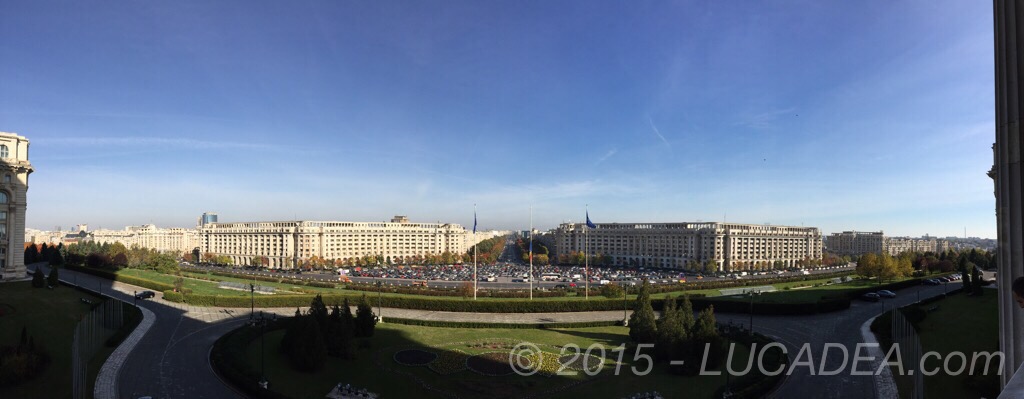
Vista di Bucarest dal balcone del Parlamento rumeno con grande viale, fontane e palazzi monumentali

From the balcony of the Romanian Parliament, the city opens into a remarkable view, with the large avenue stretching ahead and the fountains creating a long perspective through the urban landscape. Seeing Bucharest from the Parliament offers a unique way to understand the scale of the capital, where wide spaces, monumental buildings, and planned architecture create a very distinctive atmosphere.
I stopped to look at the panorama, trying to capture the contrast between the enormous spaces designed around this area and the everyday life continuing throughout the city. From this viewpoint, the avenue almost looks carefully drawn, while the large buildings along its sides add a sense of grandeur to the scene.
Bucharest, Romania, has many different identities, where historic neighborhoods, modern areas, and large urban projects exist together. The view from the Romanian Parliament shows this particular aspect of the city: a capital shaped by ambitious perspectives and wide avenues that strongly influence how the urban space is perceived.
Photographing this panorama made me think about how much a viewpoint can change the way we experience a city. At street level, the details become the main story, while from above the overall design appears more clearly, revealing the relationship between buildings, roads, and open spaces.
It reminded me of another photograph I shared on the site about city viewpoints, because in that case too, the place where you stand became part of the story. Sometimes the most interesting element is not only what you see, but how a certain position allows you to see it.
A small curiosity is that the Palace of the Parliament in Bucharest is one of the largest administrative buildings in the world. It was built during the 1980s under Romania’s communist regime and has become one of the most recognizable symbols of the city.
This photograph shows a monumental side of Bucharest, made of wide perspectives, impressive structures, and urban spaces designed to create a strong visual impact.

Have you ever looked at a city from above and discovered a completely different side of it? Add a comment or go to the bottom of the site to read what other visitors have written.

Vista di Bucarest dal balcone del Parlamento rumeno con grande viale, fontane e palazzi monumentali

Bucharest seen from the Romanian Parliament – Bucarest vue depuis le Parlement roumain – Bucarest vista desde el Parlamento rumano – Bucareste vista do Parlamento Romeno – Bukarest vom rumänischen Parlament aus gesehen – Bucharest nhìn từ Tòa nhà Quốc hội Romania – 从罗马尼亚议会俯瞰布加勒斯特 – ルーマニア国会議事堂から見たブカレスト

The text of this post was written with the help of ChatGPT, a language model from OpenAI.

The buildings in Giacomo Matteotti square in Chiavari

Palazzi di piazza Giacomo Matteotti a Chiavari

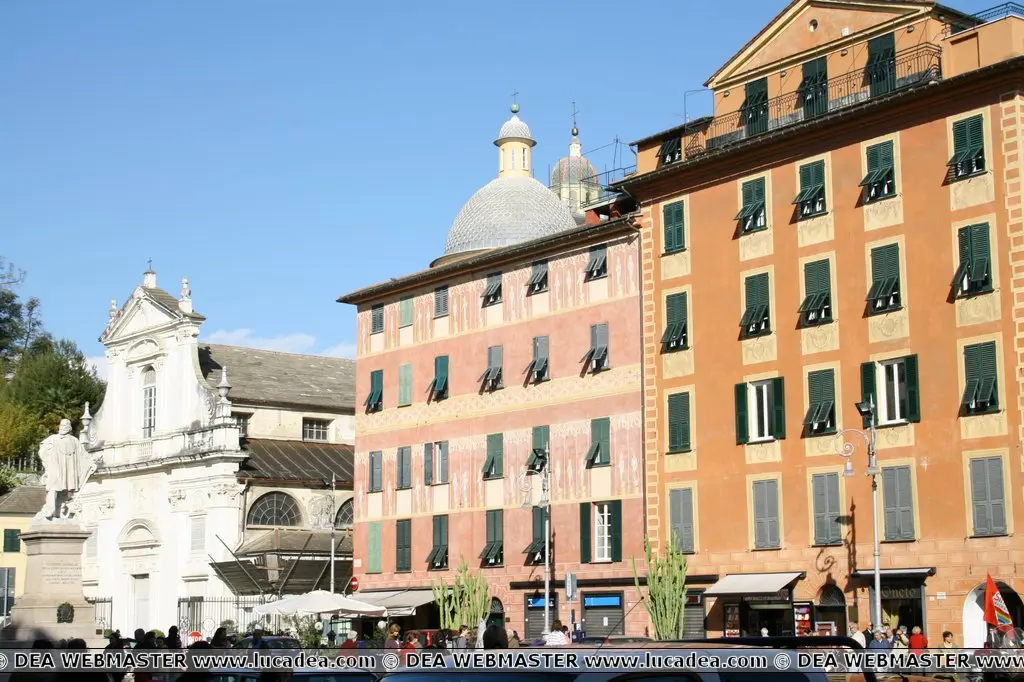
The buildings in Giacomo Matteotti square in Chiavari.
Continuing my (albeit scant) work documenting the towns and places near where I live, here are some photos of the center of Chiavari, the “richest” city in my area.
This is a glimpse of Piazza Matteotti (or Piazza delle Carrozze).

Do you know or have you ever been to Chiavari? Add a comment or go to the bottom of the site to read what other visitors have written.

Palazzi di piazza Giacomo Matteotti a Chiavari

The buildings in the square called Giacomo Matteotti in Chiavari – Les bâtiments de la place Giacomo Matteotti à Chiavari – Los edificios de la plaza llamada Giacomo Matteotti en Chiavari – Os edifícios da praça chamados Giacomo Matteotti em Chiavari – Die Gebäude auf dem Platz namens Giacomo Matteotti in Chiavari – Các tòa nhà ở quảng trường có tên Giacomo Matteotti ở Chiavari
🏠
  • Italiano