The rose window of the Blessed Sacrament Chapel

Rosone della Cappella del Santissimo Sacramento a Brescia con luce filtrata e dettagli decorativi all’interno della chiesa

The rose window of the Blessed Sacrament Chapel in Brescia.
I look up at the rose window of the Blessed Sacrament Chapel in Brescia and immediately feel drawn into the quiet balance between light and structure, as the filtered glow shapes the space around me. The rose window of the Blessed Sacrament Chapel in Brescia, located in Brescia, Lombardy, Italy, is one of those details that often appear when people search what to see inside the city’s historic cathedral complex.
I stand still for a while, observing how the rose window of the Blessed Sacrament Chapel in Brescia transforms the light into something almost tangible, spreading softly across the interior surfaces. It is not just an architectural element but a focal point that connects space, symbolism, and atmosphere.
If you are visiting Brescia and wondering what to see beyond the main attractions, this chapel and its rose window represent a place worth seeing in Brescia for those who appreciate quieter, more intimate details. The experience feels less like sightseeing and more like a pause within the city.
As I’ve done in other photographic stories shared on lucadea.com, I find myself drawn to these smaller elements, the ones that don’t immediately demand attention but reward those who take the time to look. Here, the rose window of the Blessed Sacrament Chapel in Brescia becomes the center of that slow observation.
A small historical note: chapels dedicated to the Blessed Sacrament in Italian churches are often richly decorated, reflecting their importance in Catholic tradition and the central role of the Eucharist.

Have you ever paused long enough to notice how light alone can define a place? Add a comment or go to the bottom of the site to read what other visitors have written.

Rosone della Cappella del Santissimo Sacramento a Brescia con luce filtrata e dettagli decorativi all’interno della chiesa

Photo taken with Canon EOS RP and Canon RF 50 lens.

To see all the photos I took in the city of Brescia, click here:

The rose window of the Chapel of the Blessed Sacrament in Brescia – Le rosace de la chapelle du Saint-Sacrement à Brescia – El rosetón de la Capilla del Santísimo Sacramento en Brescia – O rosáceo da Capela do Santíssimo Sacramento em Brescia – Das Rosettenfenster der Kapelle des Allerheiligsten in Brescia – Hoa hồng cửa sổ của Nhà nguyện Thánh Thể ở Brescia – 布雷西亚至圣圣体小堂的玫瑰窗 – ブレシアの聖体礼拝堂のバラ窓

The text of this post was written with the help of ChatGPT, a language model from OpenAI.

Add one  comment to this article or read  here what other visitors have written.
 
Adv
 
Disclamer

The rights on images, videos, choruses, text and all other material on the LUCADEA.com website are governed as per  Copyright page.


This page has been viewed 1 times today.
This month it has been viewed 1 times.
In total it has been viewed 1 times.
 

The Madonnetta shrine above Sestri Levante

La Madonnetta sopra a Sestri Levante

The Madonnetta shrine above Sestri Levante.
Among the small roadside shrines found along the path toward Punta Manara, this is the one I believe may be the Madonnetta, possibly the best-known of the little chapels encountered along the trail. I deliberately say “may be” because I am not an expert on this path or on the individual shrines, and I would rather leave room for doubt than give the photograph a name that I cannot confidently confirm.
That uncertainty is actually part of the story behind the photograph. While walking along the route that climbs from Parco Nelson Mandela toward Monte Castellaro and Punta Manara, I came across several small religious structures. Some are easier to notice than others, but they all seem to belong to the landscape and to the long relationship between the people of the area and these hills.
This particular votive shrine caught my attention because it is not the sort of monument that announces itself from a distance. It is small and closely connected to the path, something a walker discovers rather than something deliberately placed in front of a visitor. I wanted to stop and photograph it because these modest details often tell me as much about a place as its better-known views.
The route from Parco Nelson Mandela toward Monte Castellaro and Punta Manara offers more than a walk through the landscape. Along the way, there are traces of popular religious devotion that give the path another layer of meaning. The small chapels and votive images are easy to overlook if you are concentrating only on reaching the destination.
In Sestri Levante, Liguria, Italy, the connection between the town, the surrounding hills, and the paths leading toward Punta Manara is particularly clear. As the trail climbs away from the built-up area, the landscape gradually becomes quieter, and small signs of earlier ways of life become more noticeable.
Some time ago I remember reading a Facebook post by Martino Tassano, who knows these places very well. If I remember correctly, he wrote about the relationship between the mountain and the monks, suggesting that much of the area was connected with them and that some of the small chapels may have been created by worshippers as expressions of gratitude. I cannot retrieve that post now and I have not verified the details, so I prefer to present this only as my recollection rather than as established historical information.
That is also what makes votive shrines interesting to me. They are often modest structures, but their meaning can be much larger than their size suggests. A small chapel along a path may have been connected with a prayer, a promise, an act of thanksgiving, or simply a local tradition that continued from one generation to another.
If you are walking toward Punta Manara and paying attention to the details around the trail, these little shrines become part of what is worth seeing along the way. They are not necessarily spectacular sights, and that is precisely why I think they deserve to be photographed. Their importance comes from the context in which they survive.
The ones I encountered looked slightly weathered to me, but not abandoned. There is an important distinction there. Time has clearly left its mark, yet the structures remain part of the path and have not simply disappeared from the landscape. Their imperfect condition gives them an everyday quality that feels different from a carefully restored monument.
If this really is the Madonnetta, its identity is therefore only one part of what interests me. The other part is its position along a well-known walking route and the way it represents a small trace of popular devotion within the landscape above Sestri Levante.
I also like photographs that leave a question behind. Not every image I take comes with a complete explanation. Sometimes I photograph something first and only afterward begin wondering about its name, its origin, and the reason it was placed there. In that sense, the photograph becomes the beginning of the research rather than the conclusion.
This image also connects naturally with other photographs I have published from Sestri Levante and its walking routes. The subjects may be different, but they share the same approach: looking beyond the obvious view and stopping for the details that might otherwise disappear during a walk.
If you are visiting Sestri Levante and walking toward Punta Manara, this is the kind of small detail worth noticing along the trail, especially if you are interested in the less obvious history of the landscape.

Do you recognize this shrine, and can you tell me whether it really is the Madonnetta and what is known about its history? Add a comment or go to the bottom of the site to read what other visitors have written.

Madonnetta votive shrine along the trail above Sestri Levante toward Punta Manara

Madonnetta votive shrine along the trail above Sestri Levante toward Punta Manara

Photos taken with Canon EOS M100 and lens Canon EF-S 10-18.

Add one  comment to this article or read  here what other visitors have written.
 
Adv
 
Disclamer

The rights on images, videos, choruses, text and all other material on the LUCADEA.com website are governed as per  Copyright page.


This page has been viewed 0 times today.
This month it has been viewed 0 times.
In total it has been viewed 0 times.
 

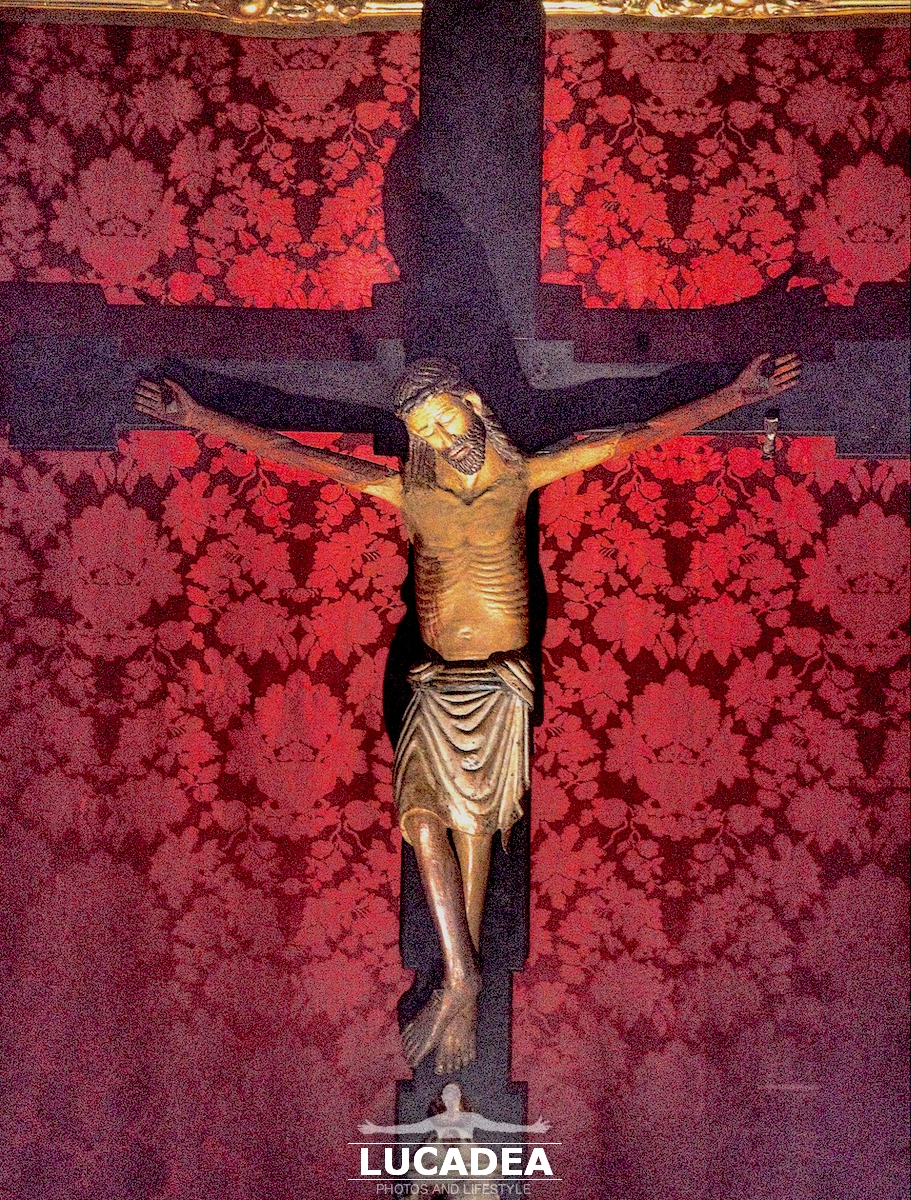
The Christ in Santa Maria di Nazareth church

La statua del Cristo nella chiesa di Santa Maria di Nazareth

The Christ in Santa Maria di Nazareth church.
In the left aisle of the Basilica of Santa Maria di Nazareth in Sestri Levante, I photographed the Holy Christ kept in its chapel, one of the religious symbols most closely connected with my town. The statue stands inside a small chapel at the beginning of the streets that start climbing towards the Sestri Levante peninsula, making it a quieter subject than the famous views usually associated with the town.
This is a photograph of a place I know well and have passed many times. The Basilica of Santa Maria di Nazareth, also known locally as the “white” church, has a distinctive position in Sestri Levante. Leaving the area around the Bay of Silence behind, the streets begin to climb towards the peninsula and the character of the town gradually changes.
For this image, I wanted to use my camera to capture a detail inside the basilica rather than photograph the building as a whole. The Holy Christ is kept in the chapel on the left side of the church and has been an object of devotion for the local community for centuries.
If you are wondering what to see in Sestri Levante, your attention will naturally be drawn to the two bays, the sea and the streets of the peninsula. Yet the religious buildings in the historic center reveal another side of the town. Santa Maria di Nazareth is one of those places that can easily be encountered while walking through Sestri Levante and that deserves a closer look beyond its exterior.
Sestri Levante, Liguria, Italy, is known especially for its coastline and its distinctive peninsula, but the town also has a long religious and cultural history. The basilica occupies a central position in the historic fabric of the town. Its pale facade is easy to recognize from outside, while the interior offers a much more intimate setting. That contrast made me pay particular attention to some of the details kept inside.
The Holy Christ is connected to a deeply rooted religious tradition in Sestri Levante. According to local tradition, a miracle is associated with the Crucifix, helping to strengthen its veneration over the centuries. It is a story belonging to the religious memory of the town and gives the statue a significance that goes beyond its artistic appearance.
I do not want to turn this photograph into a long historical account. What interests me more is the relationship between the image and the place. A religious statue can be an artistic subject, but for many people it is also connected with personal memories and with the shared history of the community.
That is what caught my attention here. The statue has been known by generations of local residents and remains part of the town’s religious tradition. For someone visiting Sestri Levante for the first time, it may be a less obvious detail than the sea or the famous bays, but for people who know the town it represents something familiar.
I also like including photographs like this because they show Sestri Levante from a different perspective. I have already shared images of the peninsula, the bays and the coastline, but this photograph shifts the focus towards the religious heritage of the town and towards a detail that belongs to the local community.
The Basilica of Santa Maria di Nazareth is also part of the historical development of the town. Its position between the central streets and the roads climbing towards the peninsula makes it feel almost like a natural transition between two very recognizable parts of Sestri Levante. One side leads through the town, while the other begins the ascent towards the peninsula and its views.
This photograph of the Holy Christ appeals to me precisely because it does not try to show everything. It is a more intimate image, centered on a single subject carrying a story that is especially familiar to local people. That is also why I wanted to keep it: it is a small fragment of my town, far from the more immediate images usually associated with Sestri Levante.
When I photograph places I know well, I sometimes realize that there are details I have seen many times without really stopping to look at them. The Holy Christ is one of those details. Taking the photograph gave me the opportunity to observe it more carefully and to share another part of the town that might otherwise remain unnoticed.
It also fits naturally with the other photographs of Sestri Levante I have shared on the blog. Together, these images create a broader view of a place that is not only about the sea and its famous landscapes, but also about churches, streets, memories and details that belong to everyday life.

Have you ever heard the story of the Holy Christ kept inside the Basilica of Santa Maria di Nazareth? Add a comment or go to the bottom of the site to read what other visitors have written.

Photos taken with Canon EOS M100 and lens Tamron 16-300.

The Fresco Chapel at San Domenico Maggiore

Affreschi della Cappella degli Affreschi nella chiesa di San Domenico Maggiore nel centro storico di Napoli

The Fresco Chapel at San Domenico Maggiore.
Entering the San Domenico Maggiore complex in the heart of Naples, I found myself surrounded by an interior where the decorated walls immediately draw attention and invite you to stop and look more carefully. The Fresco Chapel is one of those places worth seeing in Naples when you want to discover a quieter and more intimate part of the city’s artistic heritage.
I wanted to photograph this particular space because of the details that appear as soon as you enter. The frescoes, decorated surfaces and architecture create an environment in which it is difficult to concentrate on just one element. Moving your eyes from one wall to another reveals something new, and photography becomes a way of slowing down and observing details that might otherwise disappear in the overall impression.
The Fresco Chapel is part of the church and complex of San Domenico Maggiore, in the historic centre of Naples. This is an area where religious architecture is closely intertwined with the narrow streets and everyday life of the city, making the transition from the busy streets outside to these historic interiors particularly striking.
What caught my attention most was the relationship between the size of the space and the amount of detail covering its surfaces. The frescoes are not simply decorative backgrounds. They occupy the architecture and help define the atmosphere of the chapel. Through the camera, I tried to preserve some of that overall feeling rather than focusing on a single isolated detail.
If you are looking for what to see in Naples, San Domenico Maggiore is worth considering not only for its architecture but also for the artistic history preserved within the complex. The Fresco Chapel offers a more intimate way of approaching that heritage, through decorations and details that reward a slower look.
San Domenico Maggiore has a long connection with the Dominican Order and with the religious and cultural history of Naples. The basilica and its surrounding complex have undergone changes over the centuries and preserve numerous artistic testimonies, making the site particularly interesting for anyone who enjoys photographing historic interiors.
One small curiosity I find especially meaningful is the layered character of the complex. It is not a place created and left untouched at a single point in history. Instead, different periods have left their marks through artworks, alterations and additions. That accumulation is part of what makes the location so interesting to photograph.
Photography helps me slow down in places like this. When visiting a historic building, it is easy to become overwhelmed by the number of things to see and move quickly from one room to another. With a camera in my hands, I can stop, choose a detail, adjust the frame and try to preserve something of my first impression.
I was not trying to turn this photograph into a purely documentary image. What interested me was the feeling I had when I entered the chapel, allowing the decorated surfaces to guide the eye. This is one of the things I enjoy when photographing churches and historic buildings: finding a detail that can suggest the character of a place without necessarily showing the entire interior.
Naples naturally offers countless better-known photographic subjects, but much of the city’s identity can also be found in the details of its historic buildings. San Domenico Maggiore is a good example because simply stepping inside and looking carefully reveals how much heritage can exist behind a familiar exterior.
This photograph therefore comes from the desire to preserve one of those moments during my visit when I stopped for longer than expected. The frescoes naturally attract attention, but what remains in my memory is the combination of the decorations, the architecture and the sense of being inside a space shaped and transformed over many generations.
Other stories on my photo blog about Italian churches and historic monuments follow a similar approach, using a photograph to focus on a detail that can easily be overlooked when seeing a place in person. Here, the frescoes are the main subject, but their impact also comes from the setting in which they have been preserved.
For anyone interested in art history, religious architecture or simply photographing historic interiors, this is one of the images I like remembering from my time in Naples. Not because the scene needs to be spectacular, but because it captures an environment where almost every wall seems to ask for a few extra seconds of attention.

Have you ever visited San Domenico Maggiore and stopped to look closely at the frescoes in the chapel? Add a comment or go to the bottom of the site to read what other visitors have written.

Frescoes inside the Fresco Chapel at San Domenico Maggiore in the historic centre of Naples, Italy

Photo taken with a Canon EOS M100 camera and Canon EF-M 11-22 lens.

To see all the photos I took in Naples—both that weekend and on other trips—click here:

The Basilica of San Domenico Maggiore is a monumental church in Naples, situated in a nearly central position along the *decumanus inferior* (lower main street) in the square of the same name. A prime example of Angevin Gothic architecture, the basilica—together with its adjoining convent—forms one of the city’s most important religious complexes from historical, artistic, and cultural perspectives.
Read more on Wikipedia

The Chapel of Saint Anthony inside the basilica in Padua

La cappella di Sant'Antonio nella basilica a Padova

The Chapel of Saint Anthony inside the basilica in Padua.
Stepping inside, you quickly understand what to see in Padua Basilica of Saint Anthony when your attention is drawn to a more intimate space, slightly apart from the rest, where the chapel dedicated to the saint feels quietly significant. Among the places to see in Padua, this part of the basilica offers something beyond architecture, something more personal and reflective.
I pause for a moment before moving closer, letting the details reveal themselves gradually. The decorations, the soft light, and the slow movements of visitors create a different rhythm compared to the rest of the church. If you are visiting and wondering what to see in Padua Basilica of Saint Anthony, you might first think about the scale of the building, but this chapel tells a quieter story.
Padua, Veneto, Italy becomes tangible as I look around. The chapel houses the relics of Saint Anthony and is one of the most visited areas inside the basilica. It reminds me of another photo I shared on my site, taken outside among the domes and architectural lines; here, instead, everything is focused into a smaller, more concentrated space.
An interesting detail is that the chapel has been enriched over centuries with artworks and decorations, making it both a place of devotion and an example of sacred art. Knowing this adds depth to what you see, making every detail feel more meaningful.
I stay there a little longer, observing how people approach quietly, each in their own way. There is no rush, no noise, just a sequence of small, repeated gestures. It’s one of those places that is not just photographed, but experienced.
If you are thinking about what to see in Padua Basilica of Saint Anthony, this is one of the most interesting places in Padua to truly pause and take in the atmosphere.

Have you ever found a place that completely changed the pace of your visit? Add a comment or go to the bottom of the site to read what other visitors have written.

Photos taken with Honor 20.

This is the basilica’s official website: santantonio.org.

To see all the photos I took in the city of the Saint, click here:

The stained glass window of the Convent of San Francisco

La vetrata del convento di San Francesco a Cadice

The stained glass window of the Convent of San Francisco in Cadiz.
The Convent of San Francisco in Cadiz is known not only for its historic architecture, but also for its splendid stained glass windows. Among these, the window in the main chapel stands out for its beauty and complexity.
The window was created in the late Middle Ages, a period when stained glass art reached its peak in Europe. Commissioned by the Franciscan friars, the window was intended to depict scenes from the life of Saint Francis of Assisi, the founder of the order. Each panel of the window recounts a different episode in the saint’s life, from his conversion to his preaching to the animals.
The window is composed of numerous panels of stained glass, joined by thin strips of lead. The vibrant colors and intricate decorations make each scene a masterpiece of sacred art. The details are extraordinary: the faces of the saints, the expressions of the animals, and the background landscapes are all rendered with astonishing precision.
The stained glass window is created by painting on glass, followed by kiln firing to fix the colors. This technique allows for bright, long-lasting colors that stand the test of time. Furthermore, the use of lead to join the glass pieces gives the window a solid and durable structure.
The window represents the devotion of the Franciscan friars and their dedication to spreading the message of St. Francis. Furthermore, it continues to be a source of inspiration for visitors and the faithful who admire its beauty and spiritual significance.

Are you familiar with the Spanish city of Cadiz? Add your own comment or go to the bottom of the site to read what other visitors have written.

La vetrata del convento di San Francesco a Cadice

Photo taken with Canon EOS RP and Canon RF 24-50 lens.

To see all the photos of the convent, click here:
foto gallery

Here’s where the church is located:

The stained glass window of the convent of San Francisco in Cadiz – Le vitrail du couvent de San Francesco à Cadix – La vidriera del convento de San Francisco de Cádiz – O vitral do convento de San Francesco em Cádis – Das Buntglasfenster des Klosters San Francesco in Cadiz – Cửa sổ kính màu của tu viện San Francesco ở Cadiz

This post was written with the help of Copilot, an AI-powered virtual assistant.

San Giovanni Chapel in Bolzano

Cappella San Giovanni a Bolzano tra arte e spiritualità

St. John’s Chapel in Bolzano: art and spirituality.
Walking through the streets of Bolzano, I often discover hidden corners that tell profound stories. St. John’s Chapel is one of those places that fascinates me every time: a small church nestled in the historic center, with a simple façade hiding delicate frescoes and an almost tangible atmosphere of peace.
Upon entering, I immediately feel the silence enveloping every wall, as if time were passing more slowly here. I lose myself in the details of the frescoes, the figures of the saints, and the biblical scenes, each small but rich in meaning. It’s incredible to think that these works have been there for centuries, witnesses to the devotion of generations of believers and to the history of Bolzano itself.
I love to stop, even for a few minutes, sit on a bench, and let myself be carried away by that serene atmosphere, so different from the bustle of the nearby squares. Around the chapel, the modern city continues to pulsate: shops, cafes, and alleyways that tell of a daily life filled with encounters and energy. Yet, inside the chapel, everything seems suspended, a place where art, history, and spirituality meet in perfect harmony.
Every time I return here, I’m reminded of how precious the hidden heritage Bolzano holds is, and how important it is to take the time to truly discover it, without rushing. The Chapel of St. John is not just a monument to be seen, it is a place to experience, feel, and remember.

Have you ever discovered a hidden corner of your city that left you as speechless as this chapel? Add a comment or go to the bottom of the site to read what other visitors have written.

Photos taken with Canon EOS RP camera and Canon RF 24-50 lens.

To see all the photos I took in Bolzano, click here:

Where is the church located?

The chapel dedicated to Saint John includes a cycle of frescoes from the first half of the 14th century, painted by the School of Giotto: the Legend of Saint John, Stories of Mary, and the Legend of Saint Nicholas, among which the scene of the Horseman of the Apocalypse with sinners below stands out.
Continue and learn more at Wikipedia

San Giovanni Chapel in Bolzano – Chapelle Saint-Jean à Bolzano – Capilla San Juan en Bolzano – Capela São João em Bolzano – Kapelle St. Johann in Bozen – Nhà nguyện San Giovanni tại Bolzano – 博尔扎诺圣若望小教堂 – ボルツァーノのサン・ジョヴァンニ礼拝堂

The text of this post was written with the help of ChatGPT, a language model from OpenAI.

The Castellani Chapel in Santa Croce

La Cappella Castellani nella Basilica di Santa Croce a Firenze

The Castellani Chapel in the Basilica of Santa Croce in Florence.
The Basilica of Santa Croce in Florence, famous for being the burial place of illustrious Italian figures, is home to numerous chapels of extraordinary artistic and historical value. Among these, the Castellani Chapel stands out for its rich history and cultural significance.
The Castellani Chapel is named after the Castellani family, one of the oldest and most influential Florentine families. Located along the right side of the basilica’s main nave, the chapel was commissioned by the family during the 14th century, a period of great prosperity for Florence. The Castellani family, known for their devotion and patronage of the arts, wanted to create a sacred space that reflected their faith and social status.
The chapel’s architectural structure follows the typical Florentine Gothic style, characterized by pointed arches and cross vaults. The chapel’s walls are enriched with frescoes and stucco decorations, demonstrating the mastery of the artists of the time.
One of the most notable features of the Castellani Chapel is the fresco cycle created by Agnolo Gaddi, a renowned 14th-century painter. These frescoes, depicting scenes from the life of St. John the Evangelist and the Virgin Mary, are exemplary of Florentine Gothic art due to their vivid colors and delicate figures.
Over the centuries, the chapel has undergone various restorations to preserve its artwork. One of the most significant restorations was carried out in the 19th century, when the chapel underwent a major restoration campaign that restored the original beauty of the frescoes to the public.
The Castellani Chapel is not only a place of worship, but also a symbol of Florence’s rich cultural and historical heritage. It represents a tangible example of the patronage of Florentine families and their contribution to the development of art and architecture in the city.
Every year, thousands of tourists visit the Basilica of Santa Croce to admire its many chapels, including the Castellani Chapel, a testament to a time when Florence was at the center of the Renaissance and European culture.

Do you know or have you visited this beautiful church in Florence?
Add your own comment or go to the bottom of the site to read what other visitors have written.

La Cappella Castellani nella Basilica di Santa Croce a Firenze

Photo taken with Canon EOS M100 and lens Canon EF-M 11-22.

This is the official website: santacroceopera.it.

To see all the photos of the basilica, click here:

The Castellani Chapel, with its double bay, was frescoed by his son Agnolo Gaddi with assistants and features Stories of Saints Anthony Abbot, John the Baptist, John the Evangelist, and Nicholas of Bari. The chapel’s tabernacle is the work of Mino da Fiesole, while the painted cross is by Niccolò Gerini. The statues of the Della Robbia school represent Saints Francis and Dominic, while among the tombstones, the one dedicated to Luisa Stolberg, Countess of Albany, stands out. It is a Neo-Renaissance work by Luigi Giovannozzi and Emilio Santarelli based on a design by Charles Percier.
Continue and learn more at Wikipedia

The Castellani Chapel in the Basilica of Santa Croce in Florence – La chapelle Castellani dans la basilique Santa Croce de Florence – La Capilla Castellani en la Basílica de Santa Croce en Florencia – A Capela Castellani na Basílica de Santa Croce em Florença – Die Castellani-Kapelle in der Basilika Santa Croce in Florenz – Nhà nguyện Castellani trong Vương cung thánh đường Santa Croce ở Florence

The text of this post was written with the help of ChatGPT, a language model from OpenAI.

The Chapel of Blessed Luca Belludi in Padua

La Cappella del beato Luca Belludi a Padova

The Chapel of Blessed Luca Belludi in Padua.
The Chapel of Blessed Luca Belludi, located in the Basilica of Saint Anthony in Padua, is an artistic and spiritual gem of great importance. This sacred place, dedicated to one of Saint Anthony’s closest collaborators, is not only a point of reference for devotees but also an extraordinary example of medieval art and architecture.
Luca Belludi was born in Padua in 1200 and became a Franciscan friar, known for his life of humility and devotion. A disciple and friend of Saint Anthony, Luca continued his evangelizing and charitable work after the saint’s death. His life was characterized by a profound spirituality and a constant commitment to serving the poor and needy. His beatification took place in 1927, officially recognizing his sanctity and his contribution to the Church.
The Chapel of Blessed Luca Belludi is a refined example of medieval art, with frescoes dating back to the 14th century, attributed to the school of Giotto. Located in the Basilica of Saint Anthony, one of the most venerated sites in Padua, the chapel is a place of pilgrimage for the faithful seeking the intercession of Blessed Luca.
The chapel’s frescoes recount the life and miracles of Blessed Luca Belludi and Saint Anthony. The scenes are rich in vivid detail and brilliant colors, conveying a sense of profound spirituality and religious devotion. Among the most famous scenes are those depicting Blessed Luca in prayer and his numerous acts of charity.
The chapel’s architecture reflects the Gothic style, with elegant pointed arches and a structure that invites contemplation. The slender lines and stained-glass windows contribute to creating an atmosphere of recollection and peace, ideal for prayer and meditation.
The Chapel of Blessed Luca Belludi is a place of profound spiritual importance for the faithful. Devotion to Blessed Luca is particularly heartfelt in Padua, where many pilgrims come to pray for graces and favors. The chapel is also a place where Masses and other religious ceremonies are celebrated, keeping alive the memory and cult of Blessed Luca.
Over the centuries, the Chapel of Blessed Luca Belludi has undergone various restorations to preserve its beauty and integrity. These works have preserved the frescoes and architectural structure in good condition, ensuring that this artistic and spiritual treasure can be admired and venerated by future generations.

The Chapel of Blessed Luca Belludi is a place of extraordinary beauty and spirituality, perfectly combining art and faith. This jewel of the Basilica of Saint Anthony in Padua continues to attract devotees and art lovers from around the world, offering a unique opportunity to immerse yourself in the history and spirituality of one of the most fascinating periods of the Italian Middle Ages. Its preservation and veneration testify to the enduring importance of Blessed Luca Belludi in Padua’s religious and cultural tradition.

Have you ever visited beautiful Padua?
Add a comment or go to the bottom of the site to read what other visitors have written.

Photos taken with Honor 20.

This is the official website of the basilica: santantonio.org.

To see all the photos I took in the city of the Saint, click here:

San Bernardino alle Ossa Sanctuary in Milan

Il Santuario di San Bernardino alle Ossa a Milano

San Bernardino alle Ossa Sanctuary in Milan.
In the centre of Milan, just a short distance from the Duomo, I came across one of those places that can surprise you because of the unusual story hidden behind an otherwise modest setting. The ossuary chapel of San Bernardino alle Ossa is one of the most unusual places to see in Milan, especially for anyone interested in photographing spaces where art and history meet in an unexpected way.
Inside the ossuary, your attention is immediately drawn to the walls covered with bones and skulls arranged in carefully organised patterns. The first impression can be unsettling, but looking more closely reveals the care with which the space was created and decorated. I wanted to capture this atmosphere with my camera, preserving something of the feeling I had when standing in front of a place so different from Milan’s better-known monuments.
San Bernardino alle Ossa is located in central Milan, close to Piazza del Duomo, and its position makes the visit even more striking. You only need to move a short distance away from the busiest parts of the city centre to enter an environment where death is represented in a very direct way, but also through a deliberate aesthetic arrangement.
The history of the ossuary is connected with the need to provide space for the remains of the dead. The first structure associated with this purpose dates back to the Middle Ages, while the chapel was altered and rebuilt over the centuries. The present structure dates from the late seventeenth century, following a fire that damaged the earlier building.
This layered history is also what makes the site so interesting from a photographic point of view. The bones covering the walls are not simply piled together randomly. They are arranged into patterns and compositions, turning a practical necessity into one of the defining features of the architecture. That is one of the details that stayed with me most strongly after the visit.
There is much more inside the sanctuary than the ossuary itself. Religious decorations and paintings create a striking contrast with the human remains. The presence of artwork, frescoes and the main altar makes the interior considerably more complex than the simple image of an ossuary might suggest.
The surfaces and atmosphere of the chapel also contribute to the way the scene is perceived, but what remains most memorable is the contrast between the refined decorations and the presence of human remains. That contrast is what makes the place difficult to treat as merely a documentary photographic subject.
When I think about what to see in Milan, these less obvious places are often the ones that interest me most. Not necessarily because they are spectacular in the traditional sense, but because they have a story to tell and allow you to look at a familiar city from a completely different perspective.
San Bernardino alle Ossa is also a good example of how urban history can survive in places located almost beside the city’s most famous landmarks. After seeing the Duomo and the grand architecture of central Milan, entering such an unusual chapel changes the atmosphere completely.
The photograph I took was therefore mainly driven by curiosity. I did not want to photograph just another famous monument. I wanted to preserve a detail from a visit that had stayed with me because of the atmosphere and because of the unusual combination of art, religious devotion and memory.
It also connects naturally with other photographs I have shared of churches, chapels and historic interiors in Italy. In these places I am usually looking for the detail that can tell something about the setting without turning the photograph into a conventional postcard.
Looking at this image again, what comes back to me most clearly is the feeling of entering a space completely different from what I expected to find in the middle of Milan. The ossuary is not simply a macabre curiosity. It is a historical testimony that still has a very distinctive identity through the arrangement of the bones and the surrounding decoration.
For anyone interested in photography, history or unusual religious interiors, this chapel offers a particularly distinctive subject. It is the kind of place where it is worth staying for a few extra minutes, looking carefully at the details and allowing the space itself to suggest the photograph.

Have you ever visited San Bernardino alle Ossa, and what detail caught your attention most? Add a comment or go to the bottom of the site to read what other visitors have written.

Photo taken with Honor 20.

This is the official website of the sanctuary: sanbernardinoalleossa.it.

To see all the photos I took of the sanctuary, click here:

Here’s where it is:

🏠
  • Italiano