Seafood Salad, a Taste of Barcelona’s Markets

Insalata di mariscos

Seafood Salad, a Taste of Barcelona’s Markets.
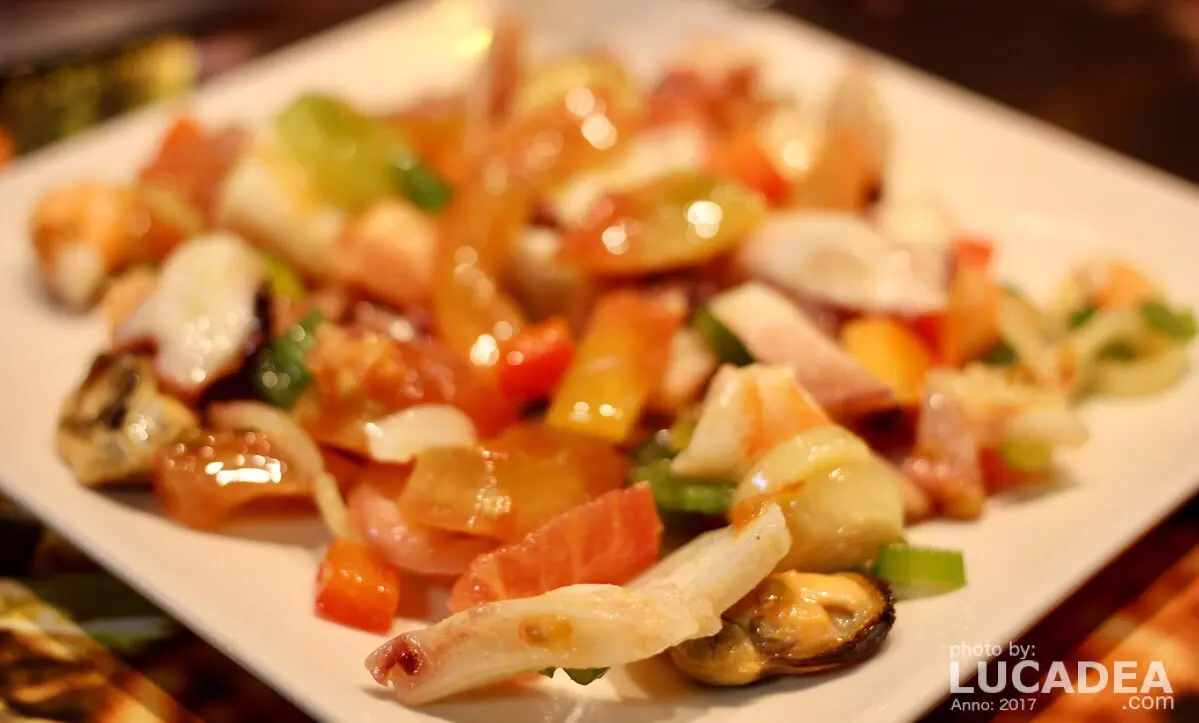
During a visit to one of Barcelona’s markets, I stopped at a food stall offering a tempting selection of ready-to-eat specialities. Among the dishes on display, this seafood salad immediately caught my attention. In Spain, seafood is commonly referred to as mariscos, and preparations like this are a familiar sight at many market counters.
The salad contained octopus, mussels, tomatoes and squid. It was a colourful combination of ingredients from the sea, with different textures and flavours coming together in one simple dish. It looked so inviting that I decided to take a photograph before enjoying it. This time I did not just admire the food behind the counter: I actually got to taste it as well!
I always enjoy visiting food markets when travelling. They offer much more than the chance to buy fresh ingredients. In many Spanish cities, markets have also become lively places to eat, with small bars and food stalls serving local specialities and dishes inspired by different culinary traditions. You can stop for a quick bite, share a few plates or simply explore the different options before deciding what to try.
Barcelona is particularly enjoyable from this point of view. Its markets bring together fresh produce, seafood, vegetables, meat and countless prepared dishes. Seafood salad is a good example of the kind of food that works so well in this setting: it is easy to enjoy during a break from sightseeing and offers several flavours in a single serving.
The Spanish word mariscos refers to seafood, especially shellfish and other marine delicacies, although everyday dishes can include a variety of ingredients. In the version I photographed, octopus, mussels and squid were combined with tomatoes. Each ingredient brings a different texture, while the tomatoes add freshness and a pleasant contrast to the seafood.
For me, food is an important part of discovering a place. Visiting a market gives you the opportunity to see what people eat, discover local products and try dishes that you might not think of ordering in a restaurant. Sometimes a simple stop at a counter can become one of the most enjoyable memories of a trip.
I like sharing these discoveries on lucadea.com, alongside photographs and stories about markets, Spanish food and the dishes I come across while travelling. Barcelona has plenty of places where you can enjoy good food, and its markets are certainly among the most interesting stops for anyone who loves gastronomy.

When you visit a new city, do you enjoy exploring its markets and tasting the local specialities? Add a comment or go to the bottom of the site to read what other visitors have written.

Seafood salad with octopus, mussels, tomatoes and squid, photographed and enjoyed at a food stall in a Barcelona market

Photo taken with a Canon 600D camera and a Canon EF 40 lens.

Add one  comment to this article or read  here what other visitors have written.
 
Adv
 
Disclamer

The rights on images, videos, choruses, text and all other material on the LUCADEA.com website are governed as per  Copyright page.


This page has been viewed 1 times today.
This month it has been viewed 1 times.
In total it has been viewed 1 times.
 

A Classic Ligurian Seafood Starter

Antipasto di mare

A Classic Ligurian Seafood Starter.
A seafood starter is one of the simplest and most enjoyable dishes in Ligurian cuisine, as well as in many other places along the Mediterranean coast. Just a few ingredients, carefully prepared and seasoned, are enough to bring the flavours of the sea to the table. This photograph shows a wonderfully straightforward version: a few squid rings, some small prawns and mussels, all served together in a simple seafood appetiser.
There is no need for complicated preparation or particularly elaborate ingredients. The beauty of this dish lies precisely in its simplicity. The squid provides a pleasant texture, the prawns add their delicate flavour, and the mussels complete the selection with their distinctive taste. Each ingredient has its own character, but together they create a small assortment of seafood that works beautifully.
The dressing is just as uncomplicated: a drizzle of good extra virgin olive oil, some chopped parsley and a few drops of lemon juice. These are only a handful of ingredients, but they make a real difference. The olive oil enhances the seafood without overpowering it, the parsley adds a fresh note, and the lemon brings a gentle acidity that makes every bite even more enjoyable. There is no need to overdo the seasoning. When the seafood is good, it is best to let its natural flavour shine through.
I particularly like this kind of starter because it does not try to impress with elaborate presentation or unnecessary additions. It is a familiar dish in seafood restaurants and can vary slightly from one coastal town to another, depending on the available catch and local cooking traditions. In Liguria, as in many other parts of Italy, the connection with the sea is reflected in everyday dishes like this, where a few simple ingredients take centre stage.
I think of a seafood starter like this as the perfect beginning to a fish-based meal. It is ideal for sharing at the table, perhaps with a glass of white wine, before moving on to the main courses. It is fresh, light and instantly appetising. Of course, the quality of the ingredients and careful cooking are essential: the squid and prawns should remain tender, while the mussels should retain their characteristic flavour.
To me, this is one of those dishes that is always difficult to refuse. Sometimes the simplest recipes are also the most satisfying, especially when they bring together familiar flavours and the freshness of the sea.

Would you enjoy this seafood starter just as it is, with olive oil, parsley and lemon, or would you prefer a richer dressing? Add a comment or go to the bottom of the site to read what other visitors have written.

Ligurian seafood starter with squid rings, small prawns and mussels, dressed with olive oil, parsley and lemon

Add one  comment to this article or read  here what other visitors have written.
 
Adv
 
Disclamer

The rights on images, videos, choruses, text and all other material on the LUCADEA.com website are governed as per  Copyright page.


This page has been viewed 1 times today.
This month it has been viewed 2 times.
In total it has been viewed 2 times.
 

A Delicious Plate of Fried Squid and Prawns

Fritto di calamari e gamberi

A Delicious Plate of Fried Squid and Prawns.
A good plate of fried squid and prawns is one of those dishes that can instantly brighten up a day. Golden, crispy and served hot, it has everything needed to turn an ordinary meal into an enjoyable occasion. This photograph shows exactly the kind of seafood dish that makes you want to sit down, relax and enjoy the moment without worrying about anything else.
I have to admit that, on this occasion, my memory is not particularly helpful. I cannot remember exactly where I ate this fried seafood or what the meal was like. It might have been during a stay in Ibiza, but I am not completely sure. Sometimes I come across a photograph in my archive and immediately recognise the dish, yet I can no longer remember the restaurant or the precise circumstances. I may recall the general atmosphere, but the finer details have disappeared. That is part of the charm of keeping photographs from trips and meals enjoyed along the way.
Squid and prawns are two seafood favourites, and when they are prepared with care, they make a simple but always tempting combination. The secret lies in the quality of the ingredients, the right oil temperature and a beautiful golden finish. The coating should complement the seafood rather than hide its flavour, allowing the texture of the squid and the delicate taste of the prawns to stand out.
In my opinion, a good seafood fry does not need an elaborate presentation. It should be crisp on the outside and tender inside, without being too greasy or heavy. It is a sociable dish, perfect for sharing around the table, perhaps with a few lemon wedges on the side. Sometimes the simplest things are the most satisfying: the aroma of the sea, freshly fried seafood and good company.
Even though I cannot remember the exact place where I enjoyed this meal, the photograph gives me a good reason to talk about one of the most popular ways to prepare seafood. If Ibiza really was the location, it would certainly be a pleasant setting for a fish lunch or dinner. Still, I would rather leave the location uncertain than confidently attach this memory to the wrong restaurant.

How do you prefer your seafood fry: just squid and prawns, or a more generous mix of different seafood? Add a comment or go to the bottom of the site to read what other visitors have written.

A plate of golden fried squid and prawns, a tempting and crispy classic seafood dish

Photo taken with iPhone 6.

Simple Fried Seafood

Fritto di pesce semplice con acciughe aperte e anellini di calamari, fotografato a fine maggio e ripescato dall'archivio

Simple Fried Seafood.
Some dishes are appealing precisely because they do not try to be anything more than what they are. This simple fried seafood combines two familiar favourites: butterflied anchovies and calamari rings. It is an uncomplicated plate, full of the flavours of the sea, and certainly not the first time I have photographed it. I doubt it will be the last, either!
I took this picture at the end of May, but I decided to bring it back from my photo archive and share it today. I often look through older photographs and find something worth publishing, even if the moment when I took the picture has long passed. Sometimes an image simply needs to wait until the right day comes along.
What makes this combination so enjoyable is the contrast between the anchovies and the calamari. The anchovies are opened out before frying, giving them their characteristic shape and a delicate texture. The calamari rings provide a slightly different bite and a milder flavour. Together, they make a straightforward seafood dish that needs very little embellishment.
Of course, simple cooking still depends on getting a few things right. The seafood should be dried thoroughly before being coated, and the oil needs to be hot enough to produce a crisp, golden finish. Frying in small batches helps keep the temperature steady. Calamari also needs particular care: cooking it for too long can leave it tough and chewy, so it is best to avoid leaving it in the hot oil unnecessarily.
Once the seafood is ready, I like the idea of serving it immediately, while everything is still hot and crisp. A little salt is usually all it needs, with a squeeze of lemon for anyone who enjoys a fresher, sharper flavour. There is no need for a complicated sauce or a long list of ingredients. The pleasure comes from the seafood itself and the simple way it is prepared.
Food photography often makes me think about how many everyday moments are worth remembering. Not every meal needs to be a special occasion, and not every photograph needs to show something unusual. Sometimes it is enough to capture a dish that tasted good and that I would happily eat again. Looking back at this picture, I can almost imagine sitting down to another plate of fried anchovies and calamari.
I regularly share food photographs and stories on Lucadea.com, including simple meals and dishes that catch my eye during everyday life or while travelling. This kind of fried seafood is one of those subjects I am always happy to return to.

How do you like your fried seafood? Would you keep it simple with anchovies and calamari, or add prawns, shrimp and other small fish as well? Add an comment or go to the bottom of the site to read what other visitors have written.

Simple fried seafood with butterflied anchovies and calamari rings, photographed at the end of May and rediscovered in the archive

Fresh Langoustines in Spain

Astici

Fresh Langoustines in Spain.
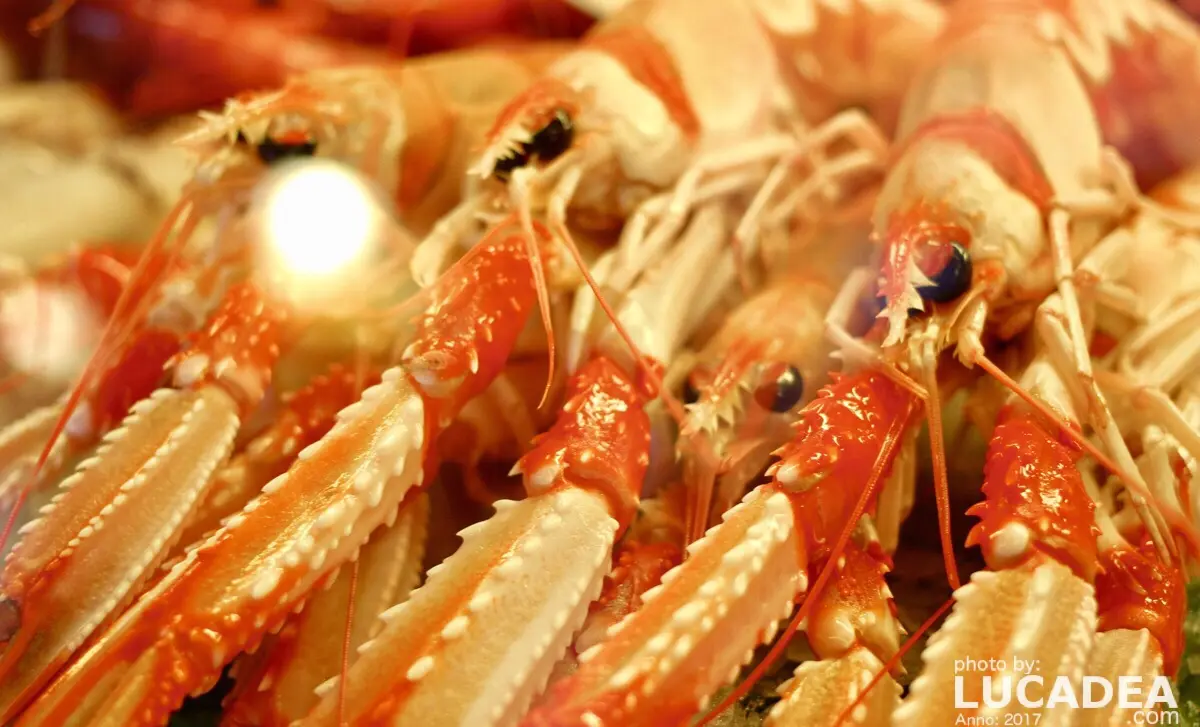
While walking past a Spanish restaurant, I was drawn to a display filled with fresh fish and seafood, all ready to be selected and prepared in the kitchen. I decided to photograph the langoustines from very close up, focusing on their shapes and details.
Seafood displays are often an appealing sight for anyone who enjoys good food. Seeing the ingredients before ordering makes choosing a dish part of the experience. Whole fish, shellfish and other products from the sea come together in a colourful presentation that can easily tempt passers-by to stop and take a closer look.
In this photograph, the langoustines are the main attraction. The close-up composition leaves much of the display outside the frame and draws attention to the crustaceans themselves, including the shapes and subtle colours of their shells. I enjoy this kind of photography because it turns an ordinary scene into something worth looking at more carefully. Sometimes, all it takes is moving closer to discover an interesting subject.
Langoustines are appreciated throughout Mediterranean cuisine and can be prepared in several ways. They may be grilled, roasted or cooked in a pan, or used in seafood pasta and rice dishes. Their delicate flavour works particularly well with simple seasonings that allow the natural taste of the shellfish to shine through.
In Spain, seafood is an important part of many regional food traditions. What is available naturally depends on the location and the day’s selection, but a restaurant display can offer a tempting introduction to the dishes on the menu. Even without knowing exactly how these langoustines would be prepared, the sight of the fresh seafood made an impression on me.
My photographic collection includes more than landscapes, architecture and famous landmarks. I also enjoy capturing small details encountered during a trip, especially when something unexpected catches my eye. A seafood display may seem like an everyday scene, but it can still preserve a memory of a place and its food culture.
This close-up is a simple reminder that travel photography can be about the little things as well as the big attractions. Sometimes a few fresh ingredients behind a restaurant window are enough to inspire a photograph—and make you think about what you might order for lunch.

How would you prefer to enjoy langoustines: simply grilled, or served in a delicious seafood pasta dish? Add an comment or go to the bottom of the site to read what other visitors have written.

Close-up of fresh langoustines displayed in a Spanish restaurant window alongside other fresh seafood

Photo taken with a Canon 600D camera and a Tamron 16-300 lens.

Turkish Aubergine Kebab Enjoyed in Barcelona

Un piatto di patlican kebab turco a Barcellona

Turkish Aubergine Kebab Enjoyed in Barcelona.
During a visit to Barcelona, in Catalonia, Spain, I had the chance to try a traditional dish from Turkish cuisine: patlıcan kebabı, also known as aubergine kebab. It is a particularly interesting combination of meat and aubergines, two simple ingredients that come together to create a rich and flavourful dish.
The Turkish word patlıcan means aubergine, while kebabı refers to kebab. In one of the best-known versions, slices of aubergine are alternated with portions of seasoned minced meat, usually lamb or beef, and cooked together, often over charcoal. As the ingredients cook, the aubergine becomes soft and absorbs some of the juices and aromas released by the meat. The result is a satisfying combination in which the vegetable is just as important as the meat itself.
Patlıcan kebabı is particularly associated with the south-eastern part of Turkey, including the culinary traditions of Gaziantep and Şanlıurfa. In these areas, it is a well-known regional speciality. One traditional method involves placing pieces of aubergine and seasoned minced lamb alternately on metal skewers and grilling them over charcoal. This cooking technique gives the dish a distinctive flavour, with the smoky aroma of the grill complementing the soft texture of the aubergines.
There is no single recipe for this kebab. Different regions, restaurants and families have their own ways of preparing it. The type of meat and the choice of spices can vary, as can the cooking method. Some versions are assembled in a baking tray and cooked in the oven, often with tomatoes and peppers. Others follow the traditional skewer method, with alternating pieces of aubergine and meat. The dish may also be served with Turkish bread, grilled vegetables and sauces that complete the meal.
I enjoy discovering food from different culinary traditions, especially when a dish is based on familiar ingredients combined in an interesting way. Turkish cuisine has a remarkable variety of kebabs, and patlıcan kebabı is a good example of the importance of regional cooking. It is not simply grilled meat: the aubergine, spices and cooking technique all contribute to the final flavour.
Barcelona is also a wonderful city for discovering international food. Its restaurants reflect the many cultures that have become part of everyday life in the Catalan capital. Trying a Turkish speciality while exploring the city was a pleasant way to experience another culinary tradition without leaving Spain. It also reminded me how food can tell us something about a country’s culture and regional identity.

I wanted to share this photograph because the dish caught my attention and deserved a place among the food experiences I have documented on Lucadea. Have you ever tried Turkish aubergine kebab? Would you choose the charcoal-grilled version or the one cooked in the oven? Add a comment or go to the bottom of the site to read what other visitors have written.

Photos taken with Honor 20.

Here’s where the restaurant is located:

Spaghetti with lobster sauce, the recipe

Gli spaghetti al sugo di astice, la ricetta

Spaghetti with lobster sauce, the recipe.
Every now and then, on board, I’m lucky enough to enjoy a plate of pasta topped with lobster sauce (or crawfish, depending on what’s on the menu).
Making the sauce at home isn’t particularly difficult either, but like everything else, it takes a little talent.
Here’s a simple recipe that ChatGPT helped me write.

Ingredients:

– 400g spaghetti;
– 1 whole lobster (or cleaned and halved);
– A few fresh cherry tomatoes;
– 2 garlic cloves, finely chopped;
– Red chili pepper (to taste, for a spicy touch);
– Fresh parsley, chopped;
– Extra virgin olive oil;
– Salt and black pepper to taste.

Preparation:

Preparing the lobster:
If you’re using a whole lobster, cook it in a pot of boiling salted water for about 8-10 minutes until it turns red. Drain the lobster and let it cool slightly. Then crack the shell and scoop out the meat. Cut the lobster meat into smaller pieces, leaving a few larger pieces for garnish.
Preparing the sauce:
In a large skillet, heat a little olive oil over medium heat. Add the minced garlic and chili pepper (if desired) and sauté until the garlic turns golden.
Add the halved fresh cherry tomatoes. Cook over medium-low heat for about 15-20 minutes, stirring occasionally.
Add the previously prepared lobster meat and cook for another 5-7 minutes. Season with salt and pepper to taste. If the sauce seems too thick, you can add a little of the pasta cooking water to thin it out.

Meanwhile, cook the spaghetti in plenty of salted water according to the package instructions. Drain the pasta al dente and reserve a cup of the cooking water.
Add the spaghetti to the lobster sauce in the pan, stir well, and sauté for a minute, adding a little of the cooking water if necessary to combine.
Add the chopped fresh parsley and stir.

Serve the spaghetti with lobster sauce, garnished with larger pieces of lobster and a drizzle of fresh olive oil.
Like it? Add a comment or go to the bottom of the site to read what other visitors have written.

Photos taken with Honor 20.

Pasta with Garlic, Chilli and Prawns

Un bel piatto di pasta aglio, olio e peperoncino e con i gamberi

Pasta with Garlic, Chilli and Prawns.
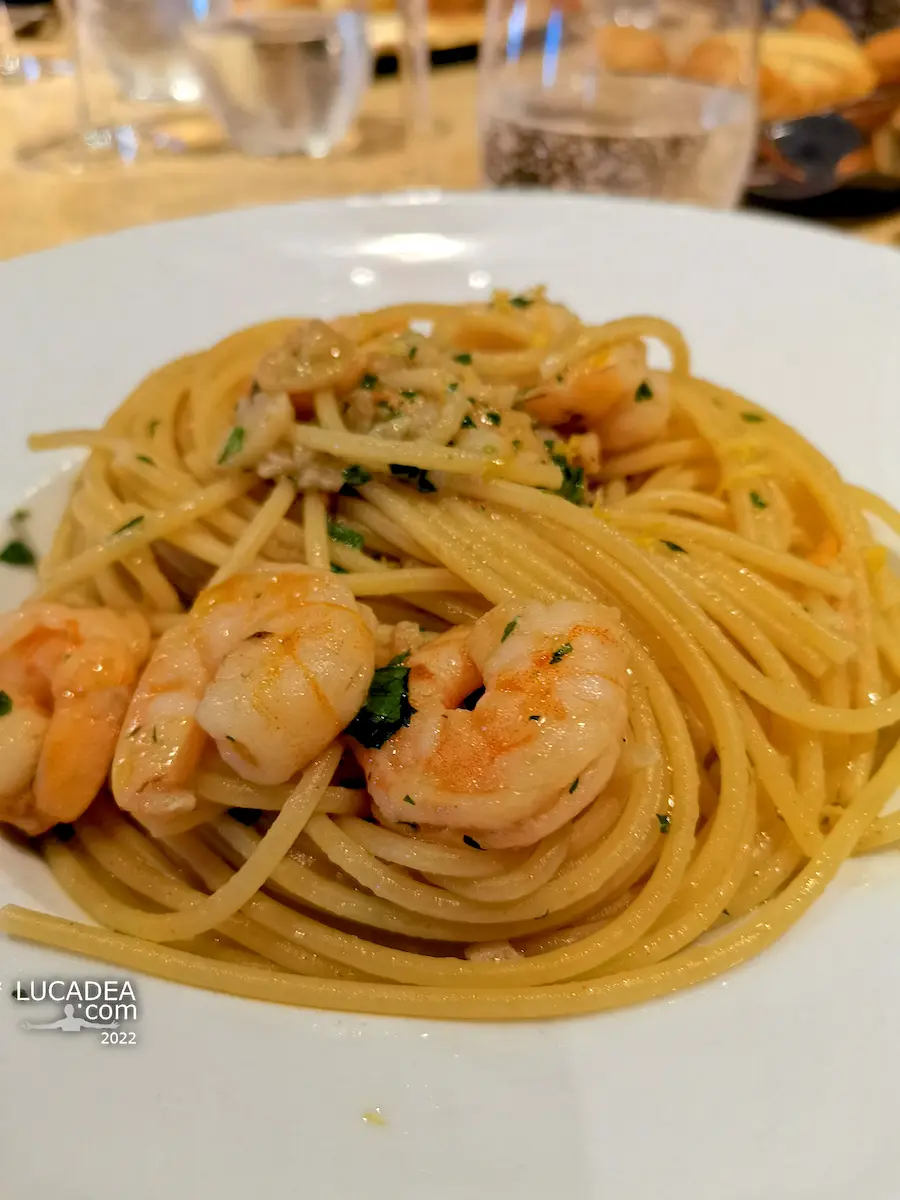
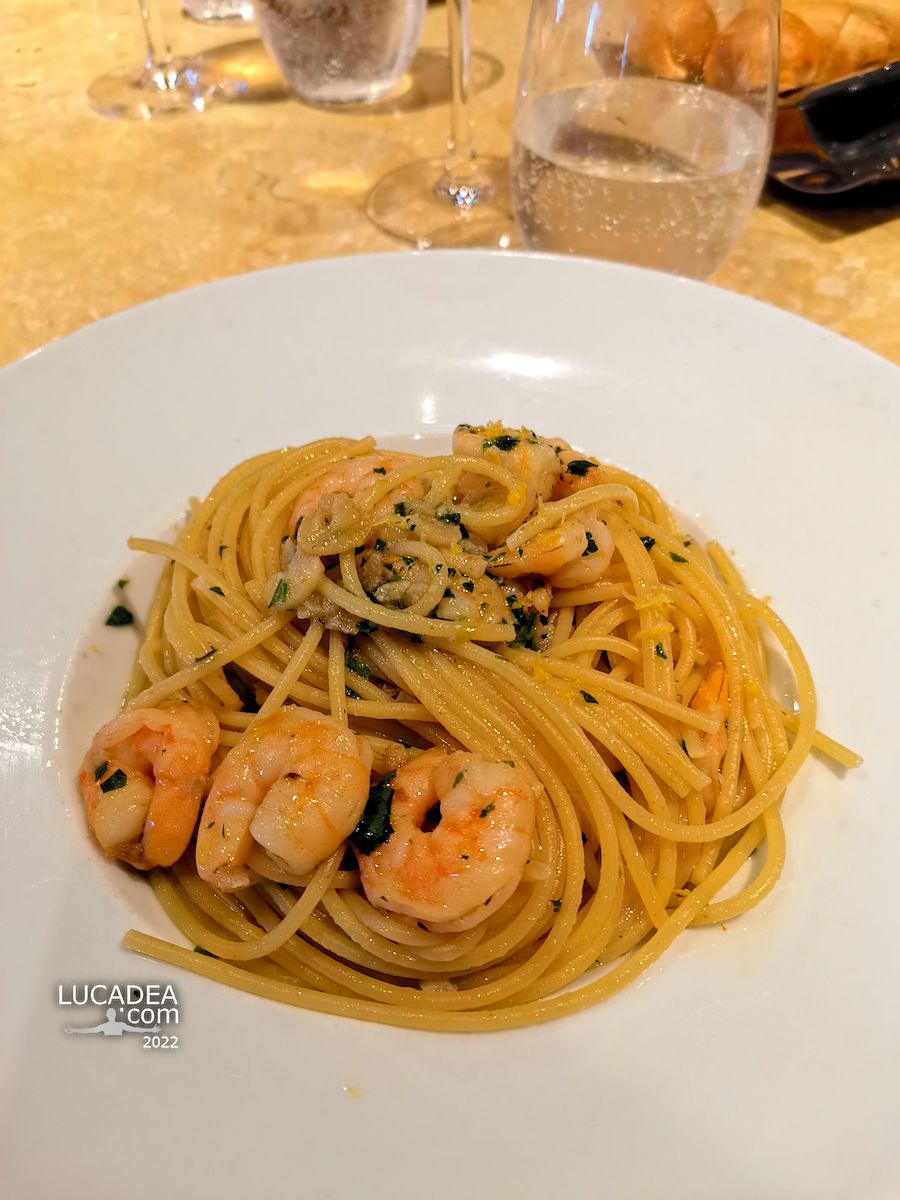
Some time ago, a friend of mine who works as a chef introduced me to a pasta dish that was new to me: the familiar combination of garlic, olive oil and chilli, enhanced with a few prawns. I already knew the traditional recipe, but I had never tried this seafood variation before. After the first taste, I was pleasantly surprised by how delicious such a simple combination could be.
Garlic, olive oil and chilli pasta is a classic example of how a handful of everyday ingredients can create a satisfying meal. The garlic gives the oil its distinctive aroma, while the chilli adds a little heat. Tossed with the pasta, these flavours come together in a straightforward dish that does not need an elaborate sauce or a long list of ingredients.
Adding prawns gives the recipe a different character. Their delicate, slightly sweet flavour works beautifully with the fragrant garlic and the gentle warmth of the chilli. The seafood makes the dish feel a little more special without taking away the simplicity that makes the original so appealing. The key is to keep the flavours balanced, allowing the prawns to stand out rather than overwhelming them with too much garlic or spice.
I really enjoyed this version, and I liked the idea of taking a familiar Italian preparation and giving it a seafood twist. The plate looked inviting, too, and I decided to photograph it as a reminder of a meal I had particularly enjoyed. Food photography is a lovely way to preserve these moments, especially when a dish introduces you to an ingredient combination you might not have thought of yourself.
One of the pleasures of cooking is discovering new variations on recipes you already know. Sometimes a suggestion from a friend is all it takes to find a new favourite. In this case, my friend’s professional experience helped me see how easily prawns could be incorporated into a dish that is usually associated with a very simple garlic, oil and chilli dressing.
I would certainly like to make it at home. I imagine that good extra virgin olive oil, fresh garlic, a carefully measured amount of chilli and quality prawns would be enough to produce a wonderful result. Long pasta, such as spaghetti or linguine, would be a natural choice because it holds the seasoning well. A little chopped parsley could also add freshness, depending on personal taste.
This dish reminded me that good food does not always need complicated techniques or expensive ingredients. What matters is the quality of the ingredients and the way their flavours work together. It is a recipe I would happily return to when I want something tasty, uncomplicated and a little different from the usual pasta dishes.

Have you ever tried pasta with garlic, olive oil, chilli and prawns, or do you prefer the traditional version without seafood? Add an comment or go to the bottom of the site to read what other visitors have written.

Photos taken with Honor 20.

Lemon-marinated anchovies, a Ligurian starter

Le acciughe al limone in Liguria

Lemon-marinated anchovies, a Ligurian starter.
In Liguria, these are among the simplest and most popular seafood appetisers: fresh fish, lemon juice, a little extra virgin olive oil and just a few other ingredients bring the flavours of the Mediterranean straight to the table.
You can find this dish in restaurants and traditional trattorias throughout the region, often served at the beginning of a seafood lunch or dinner. I like it precisely because it is so simple. There is no need for elaborate preparation or rich sauces. When the anchovies are fresh and properly handled, they already have plenty of flavour, while the lemon adds a fragrant, pleasantly sharp note.
The photographs show a preparation that I know well from home, too. We often make lemon-marinated anchovies when they are in season and good-quality fresh fish is available. Although this dish appears on the menus of many restaurants, I think it can be particularly enjoyable when prepared at home, taking the time to choose the fish and make everything just the way we like it.
The traditional preparation is quite straightforward. The anchovies are cleaned, opened and filleted, with the central backbone removed. They are then arranged in a container and covered with lemon juice. The acidity changes the appearance of the flesh, making it paler and firmer. However, this is not the same as cooking the fish with heat: the anchovies remain raw, and lemon juice does not eliminate all potentially harmful microorganisms or parasites. It is therefore essential to use fish that has undergone the appropriate freezing treatment for raw or marinated consumption. Marinating alone is not a food-safety measure.
Once the marinating time is complete, the anchovies can be drained and dressed with extra virgin olive oil, parsley and, depending on family tradition, a few additional ingredients. Some people like to add garlic, while others prefer a milder flavour that allows the lemon and olive oil to stand out. The final texture also depends on how long the fish is left in the marinade. I particularly enjoy anchovies that remain tender, with a dressing that complements rather than overwhelms their natural taste.
In Ligurian restaurants, this appetiser can be surprisingly expensive, especially when it is made with carefully selected fresh fish. It is one of the curious things about simple dishes: they may seem to require very little, but the quality of the ingredients makes all the difference. At home, on the other hand, we can prepare a generous portion whenever the season and the fish market allow.

Some time ago, my dad wrote the recipe here.

For me, lemon-marinated anchovies are one of the flavours that best express Ligurian seafood cooking. A handful of ingredients, no unnecessary complications and plenty of character. Do you make them at home, too, or do you prefer ordering them when you eat out? Add a comment or go to the bottom of the site to read what other visitors have written.

Lemon-marinated anchovies with olive oil and parsley, a traditional seafood starter from Liguria, Italy

Lemon-marinated anchovies with olive oil and parsley, a traditional seafood starter from Liguria, Italy

Lemon-marinated anchovies with olive oil and parsley, a traditional seafood starter from Liguria, Italy

Photos taken with Canon EOS M100 camera and Canon EF-M 22 lens.

🏠
  • Italiano