In the Caruggio of Sestri Levante Among Colors

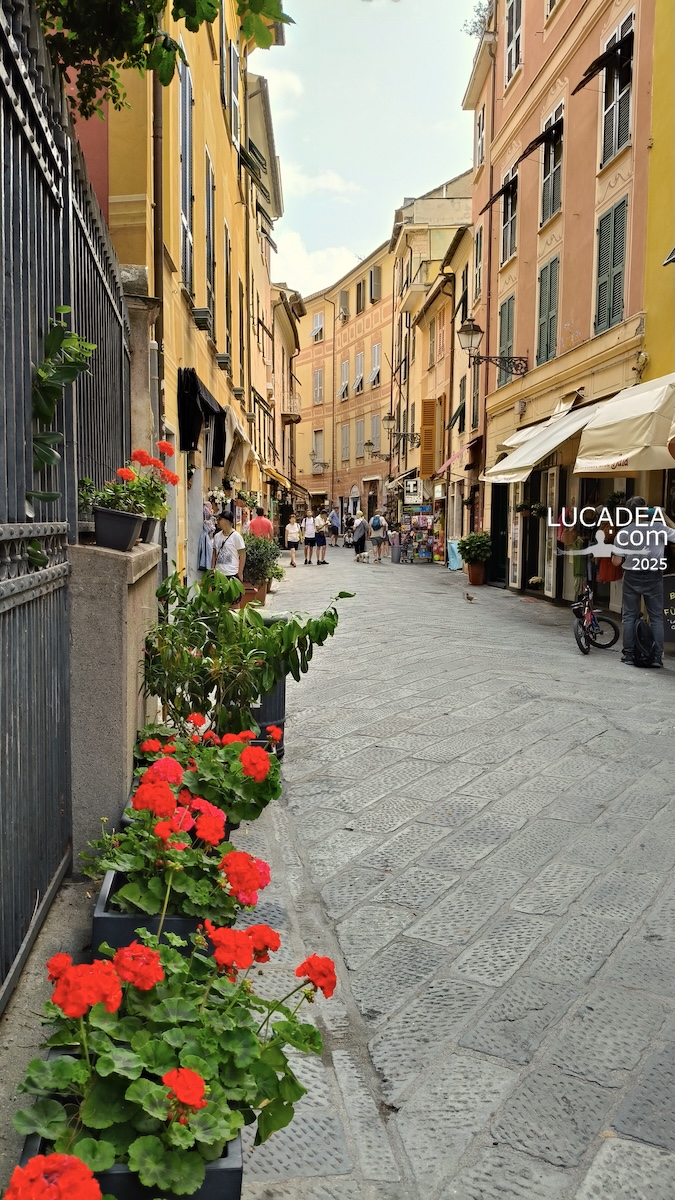
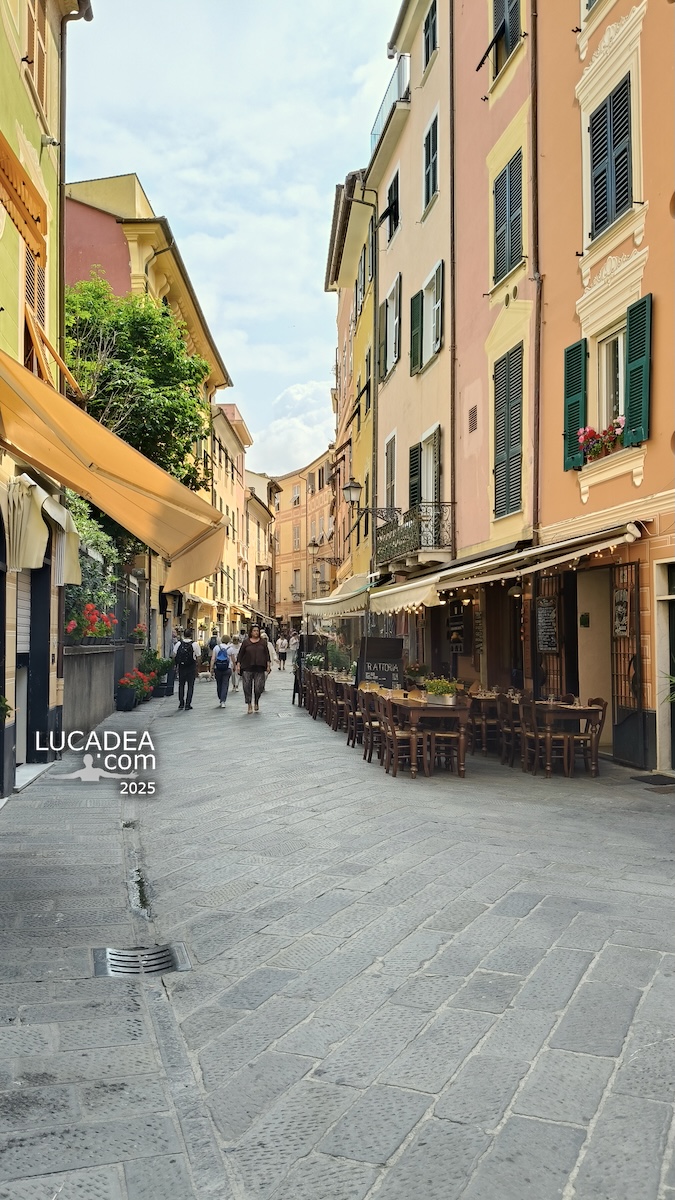
Caruggio di Sestri Levante con fiori rossi e palazzi colorati nel centro storico ligure tra vicoli suggestivi

In the Caruggio of Sestri Levante Among Colors.
The Caruggio of Sestri Levante opens in front of me like a narrow ribbon of life, where pastel facades and small details guide every step deeper into its rhythm. The Caruggio of Sestri Levante feels immediately alive, not as a tourist image but as a lived-in passage where color and texture shape the experience.
I am in Sestri Levante, Liguria, Italy, walking through the historic center where every stone underfoot seems to carry memory. The narrow street is framed by tall buildings painted in warm tones, and red geraniums spill from balconies and windowsills, creating a contrast that feels both spontaneous and perfectly balanced. The Caruggio of Sestri Levante becomes a visual thread connecting these elements into a single continuous scene.
As I move forward, the soundscape softens. Footsteps, distant voices, and the faint echo of daily life blend into the architecture itself. The shutters, the shopfronts, and the slightly curved perspective of the street create a sense of depth that invites slow observation. If you are visiting Sestri Levante, Liguria, Italy, this is one of those places where you understand the charm not through monuments, but through atmosphere and detail.
There is a small but interesting aspect about these “caruggi”: they were historically designed to provide shade and shelter from coastal winds, shaping not only the look of the town but also the rhythm of daily life. In another post from my blog about Sestri Levante, I explored a similar street where light and architecture created an equally intimate feeling, almost like a visual conversation between different corners of the same town.
The Caruggio of Sestri Levante lingers in my mind as a space where color is not decoration but identity, where everyday life becomes composition without effort. It makes me wonder how many hidden stories are carried by streets like this all along the Ligurian coast.

What would you notice first if you walked through this narrow street in person? Add a comment or go to the bottom of the site to read what other visitors have written.
Photos taken with Honor 20.

The Caruggio of Sestri Levante among colors – Le caruggio de Sestri Levante parmi les couleurs – El caruggio de Sestri Levante entre colores – O caruggio de Sestri Levante entre cores – Die Caruggio von Sestri Levante zwischen Farben – Con hẻm Sestri Levante giữa sắc màu – 锡斯特里莱万特小巷的色彩之间 – セストリ・レヴァンテの路地の色彩の中で

The text of this post was written with the help of ChatGPT, a language model from OpenAI.

Add one  comment to this article or read  here what other visitors have written.
 
Adv
 
Disclamer

The rights on images, videos, choruses, text and all other material on the LUCADEA.com website are governed as per  Copyright page.


This page has been viewed 1 times today.
This month it has been viewed 1 times.
In total it has been viewed 1 times.
 

Oven-baked sea bream with potatoes and mussels

Orata al forno

Oven-baked sea bream with potatoes and mussels.
When I cook sea bream at home, I like to keep things simple and let the fish remain the main character of the dish. In this photograph, there are a few sea bream fillets served with potatoes and some mussels, a combination I find particularly satisfying.
Oven-baked sea bream is one of those dishes that reminds me how rewarding simple cooking can be. The flesh is delicate but full of flavour, and once cooked it works beautifully with uncomplicated side dishes. The potatoes provide a natural accompaniment, while the mussels bring an extra taste of the sea that fits perfectly with the fish.
I took this photograph at home, capturing what was actually served at the table. There was no intention of turning it into an elaborate restaurant-style presentation. It is simply one of those meals I enjoy preparing, and, at least according to the chef at home, it can easily compete with something served in a restaurant.
Food photography has a different rhythm from photographing streets, landscapes or buildings. With a plate like this, the photograph is tied to a very specific moment: the meal is ready, everything is on the table, and there is usually not much time to think about the composition before somebody starts eating.
I like that spontaneity. A photograph of food can preserve the memory of an ordinary lunch or dinner just as effectively as a photograph from a journey. Sometimes the most familiar moments are precisely the ones that are worth keeping.
Sea bream with potatoes is also a wonderfully flexible preparation. It can remain very simple, allowing the natural flavour of the fish to stand out, or it can be enhanced with a few herbs and seasonings. Baking is particularly convenient because the fish and the side dish can be prepared together without requiring complicated cooking techniques.
There is a small detail behind the name of sea bream itself. The fish is easily recognised by the distinctive golden band between its eyes, which becomes especially noticeable when the fish is whole. It has long been appreciated around the Mediterranean and is commonly prepared baked, grilled or with other straightforward methods that preserve its delicate flavour.
In this image, however, what catches my attention is simply the finished plate: the sea bream fillets, the potatoes beside them and the mussels completing the meal. It is quite different from the photographs of Ligurian villages, streets and seaside views that usually appear on my blog, but food is also part of the places and memories I want to record.
And yes, I have to admit it: at my house we cook like a restaurant. Actually, better!

How do you like to cook sea bream? Add a comment or go to the bottom of the site to read what other visitors have written.

Oven-baked sea bream fillets with potatoes and mussels, a simple homemade seafood dish

Photo taken with Canon 600D and Canon EF 40.

Add one  comment to this article or read  here what other visitors have written.
 
Adv
 
Disclamer

The rights on images, videos, choruses, text and all other material on the LUCADEA.com website are governed as per  Copyright page.


This page has been viewed 0 times today.
This month it has been viewed 0 times.
In total it has been viewed 0 times.
 

Greek octopus salad from Santorini

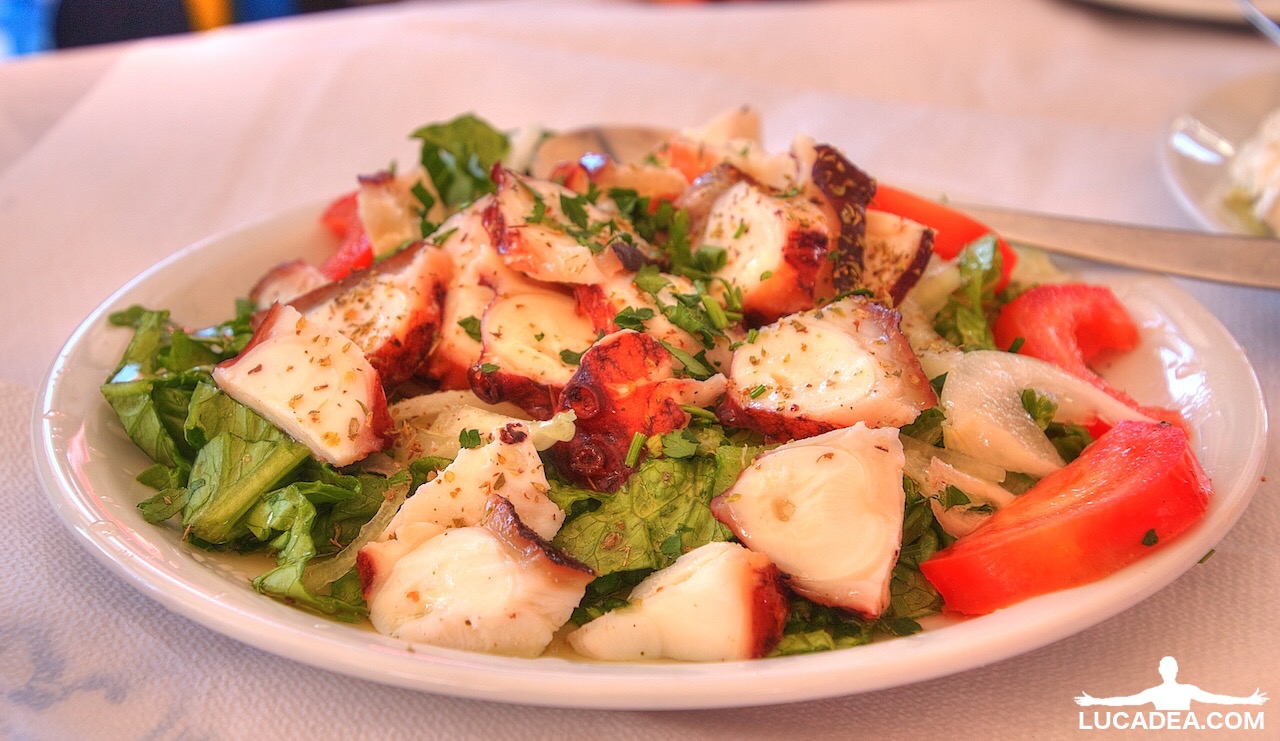
Insalata di polpo alla greca fotografata a Santorini, con lattuga, pomodori, cipolla e origano

Greek octopus salad from Santorini.
While I was in Santorini, Greece, I found myself looking at a simple but very appealing dish in which octopus was clearly the main ingredient. This Greek octopus salad, made with fresh vegetables, olive oil, vinegar and oregano, is the kind of food that can say quite a lot about local cooking without needing a long list of ingredients.
Many of my recent food photographs have focused on seafood, and octopus in particular has appeared several times. Whenever I come across a dish that catches my attention, I like to photograph it before eating, trying to preserve something of the moment rather than creating an image that feels too carefully arranged.
Here the ingredients were straightforward: lettuce, onion, tomatoes and stewed octopus, dressed with a little olive oil and a few drops of vinegar. A light sprinkling of oregano finished the dish and immediately gave it a flavour that, at least to me, feels closely connected with Greek cooking.
I took this photograph myself in Santorini during my trip to Greece. I did not want to turn the plate into an overly staged food photograph. I simply wanted to show what was actually in front of me. I enjoy food images more when they retain something of the real situation in which they were taken, because they become part of the memory of the journey rather than looking like catalogue photographs.
If you are wondering what to eat in Santorini, octopus is one of the ingredients you can easily encounter in the island’s local cuisine. Being surrounded by the Aegean Sea, it is natural for seafood to have an important place on local tables, and octopus can be prepared in several different ways, from grilled dishes to slower cooking methods and cold preparations such as the salad I photographed.
What I liked about this particular salad was the balance between the ingredients. The octopus brings its distinctive texture, while lettuce and tomatoes add freshness. Onion, vinegar and oregano give the dish more character, while olive oil brings everything together without making the preparation feel complicated.
It is not the kind of dish that needs a complicated explanation. The photograph immediately reveals most of the main ingredients and gives an idea of what the combination might taste like. This is one of the things I appreciate about Mediterranean cooking: a relatively small number of ingredients can be enough when they work well together.
Octopus has also long been an important ingredient in the cooking of Greek islands and coastal communities. One small culinary curiosity is that Greek tavernas commonly serve octopus grilled or cooked after being allowed to dry, a traditional practice connected with preparing and preserving the catch. It is a simple detail, but it reflects the long relationship between island communities and the sea.
In Santorini, food and landscape often seem to belong to the same Mediterranean setting. Even when sitting at a table with a relatively uncomplicated dish, the ingredients can evoke the island around you. Tomatoes, olive oil, oregano, vegetables and seafood all belong to a very recognisable culinary landscape.
That is why the simplicity of this photograph appealed to me. There was no need to add many elements or create an elaborate composition. The colours of the vegetables, the pieces of octopus and the dressing were enough to tell the story.
After photographing so many places, monuments and city details during my travels, I enjoy occasionally switching to something much more ordinary: a dish that has just been served. Food photographs preserve another part of a journey, the pauses at a table and the meals that can become just as memorable as a beautiful view.
This Greek octopus salad belongs exactly to that kind of memory. It may not be the most elaborate dish I encountered in Santorini, but it caught my attention and, naturally, it also caught the attention of my camera.
I also like the fact that the photograph does not really tell only the story of the food. It brings back the journey in which I discovered it. Santorini remains part of the memory behind the image, while the plate becomes a small reminder of time spent in Greece.
In other food stories on my photo blog, I have also written about dishes I encountered while travelling, always trying to keep the personal experience and the photograph at the centre. Here, I am returning to Greek flavours through a preparation that is simple and immediately recognisable.
Sometimes these uncomplicated dishes are the ones that stay with us. A portion of octopus, a few vegetables, olive oil, vinegar and oregano: ordinary ingredients that together bring back some of the Mediterranean atmosphere I experienced in Santorini.

Have you ever tried octopus salad while travelling in Greece? Add a comment or go to the bottom of the site to read what other visitors have written.

Greek octopus salad photographed in Santorini, with lettuce, tomatoes, onion and oregano on the plate

Photos taken with Canon 600D and Tamron 16-300.

Spaghetti with clams and bottarga by the sea

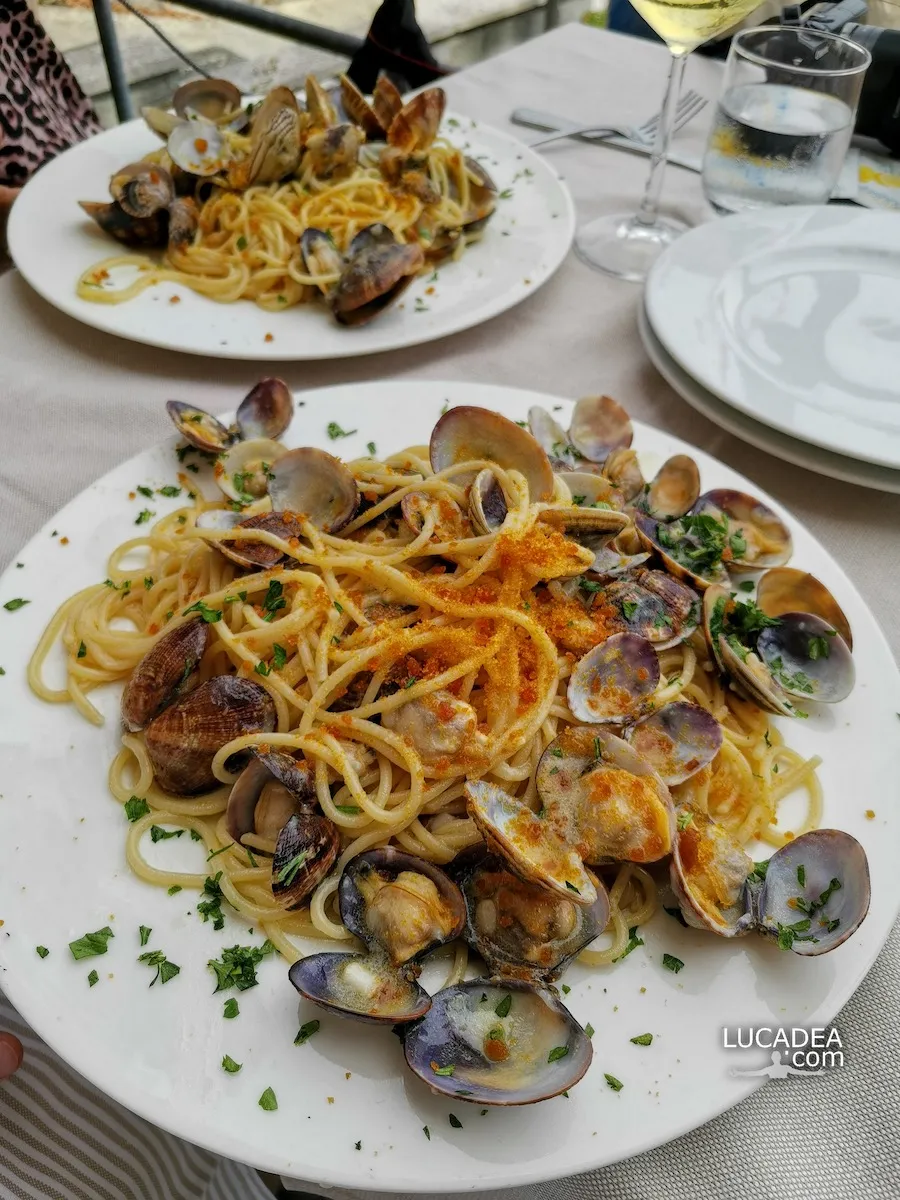
Spaghetti alle vongole con bottarga del Caffè del Porto a Santa Margherita Ligure, piatto di mare ligure

Spaghetti with clams and bottarga by the sea.
Among the seafood dishes I enjoy in Italy, spaghetti with clams is certainly one of the recipes that best represents the connection between the coast and its cuisine. Adding bottarga gives this traditional dish a stronger identity and a deeper flavour.
I photographed this plate during a lunch at Caffè del Porto in Santa Margherita Ligure, Liguria, Italy, a place where the relationship between the sea and everyday life is always easy to feel. The dish in front of me was simple but full of character, combining the delicate taste of clams with the more intense flavour of bottarga.
When people search for what to eat in Liguria, they often think about famous local specialities, but seafood recipes like spaghetti with clams are also an important part of the coastal tradition. The beauty of these dishes is their simplicity: a few ingredients, carefully prepared, can create a memorable experience.
According to my girlfriend, these were almost certainly among the best spaghetti with clams she has eaten in Italy so far. It is obviously a personal opinion, but that small comment made the moment even more meaningful and gave me another reason to capture it with my camera.
Bottarga is the ingredient that makes this version different from the classic recipe. It is produced by preserving fish roe with salt and drying, a method that has been used for centuries in Mediterranean coastal areas. Its strong flavour means that only a small quantity is needed to add a unique touch to a dish.
I wanted to photograph this meal because photography is not only about landscapes, buildings or famous places. Sometimes a plate on a table can preserve the atmosphere of a day, the memory of a place and the emotions connected to a simple experience.
Santa Margherita Ligure is a location I have photographed several times, from seaside views to small details of daily life. As with other images I have shared from the Ligurian coast, this photograph is another way of keeping a personal memory connected to the places I visit.
If you are visiting Liguria and wondering what seafood dish is worth trying, spaghetti with clams is certainly one of the choices that represents the spirit of the Italian coast. The combination of fresh flavours and traditional preparation makes it a dish that speaks about the sea without needing complicated explanations.
This photograph is therefore not only about food, but about a moment spent enjoying a taste of Liguria.

Have you ever tried spaghetti with clams and bottarga, or do you prefer the traditional version? Add a comment or go to the bottom of the site to read what other visitors have written.

Spaghetti with clams and bottarga at Caffè del Porto in Santa Margherita Ligure, a Ligurian seafood dish2

Photo taken with Honor 20.

Santa Sabina church in Trigoso

La chiesa di Santa Sabina a Trigoso

Santa Sabina church in Trigoso.
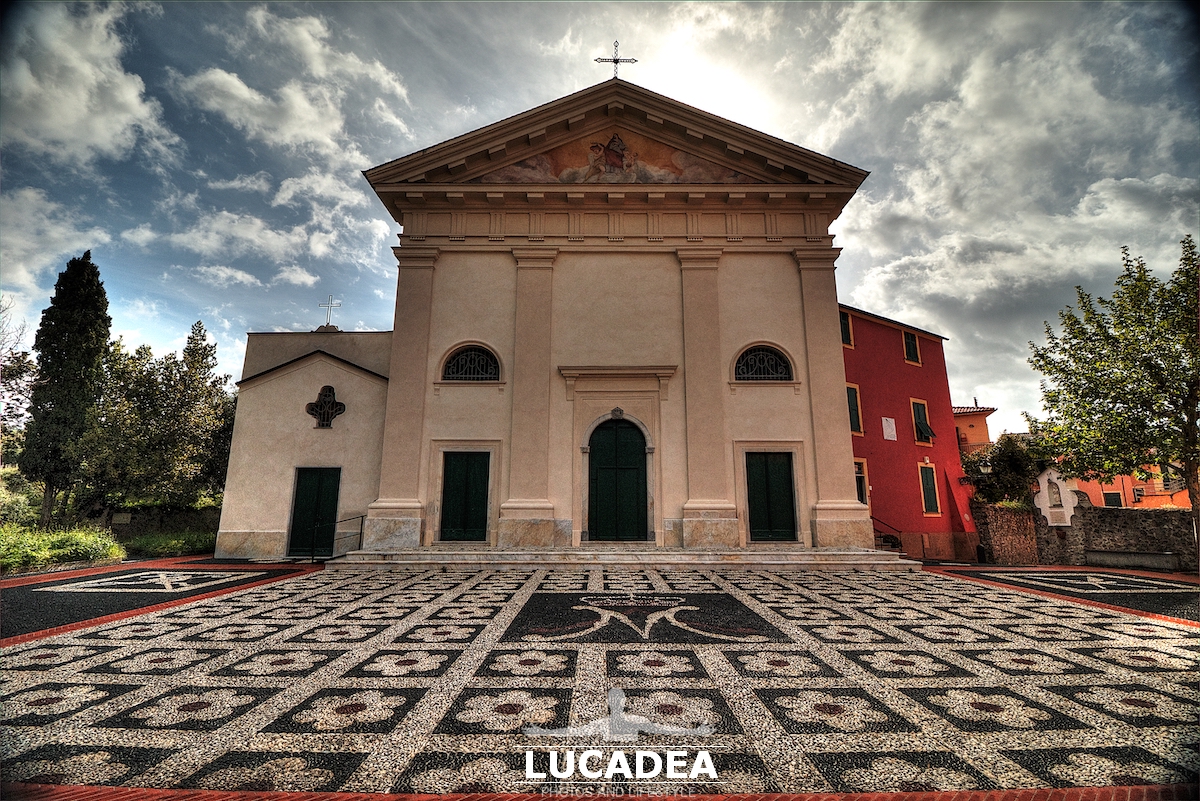
The Santa Sabina church in Trigoso is one of the quiet details worth seeing in Sestri Levante, where a simple religious building meets the traditional Ligurian craftsmanship of its pebble courtyard. Walking through the village of Trigoso, I noticed how the church facade and the carefully arranged stones in front of it created a scene that represents the authentic character of the Ligurian villages.
I took this photograph with my own camera because I was interested not only in the architecture but also in the small details surrounding the building. The stone pattern of the church square immediately caught my attention: a surface made of rounded pebbles that tells a story of local materials and old construction techniques.
Pebble pavements are a typical feature of Liguria. The small stones, naturally smoothed by the sea or rivers, were often arranged by hand to create decorative patterns, frequently using black and white contrasts. These designs can still be found in front of churches, historic buildings and village squares, adding a distinctive element to the landscape.
Trigoso is located in the municipality of Sestri Levante, Liguria, Italy, in the Tigullio area along the eastern Ligurian coast. While Sestri Levante is famous for its seaside views and bays, places like Trigoso offer another perspective, showing the quieter side of the region. If you are visiting Liguria and looking for a place worth seeing beyond the main coastal attractions, small villages and historic churches can reveal many interesting details.
A short historical curiosity concerns the traditional Ligurian churchyards made with pebbles. Their creation required patience and skill, as each stone was selected and positioned to build durable surfaces that also had decorative value. These spaces were not only practical areas around churches but also important meeting places for local communities.
This search for hidden details is something I have also shared in other photographs of Ligurian villages and historic buildings on Lucadea.com. I often find that small architectural elements can tell as much about a place as its most famous views.
Looking at this image again, I appreciate the balance between the church facade and the patterned ground in front of it. The photograph is not only about a building, but about the relationship between architecture, tradition and the materials shaped by the surrounding environment.
Santa Sabina church in Trigoso is a reminder that many of the most interesting places to see in Liguria are found away from the busiest routes, in small corners where history continues through everyday details.

Have you ever stopped to look closely at the pebble designs in Ligurian church squares? Add a comment or go to the bottom of the site to read what other visitors have written.

Santa Sabina church in Trigoso with its white and black pebble courtyard in the Ligurian village of Sestri Levante

Foto scattata con macchina Canon EOS M100 e lente Canon EF-S 10-18.

Questa è solamente una delle molte foto che ho scattato nel piccolo borgo di Trigoso. Tutte le altre le potete trovare qui:
foto gallery

Ecco dove si trova la chiesa:

Punta della Suina, a dream beach in Salento

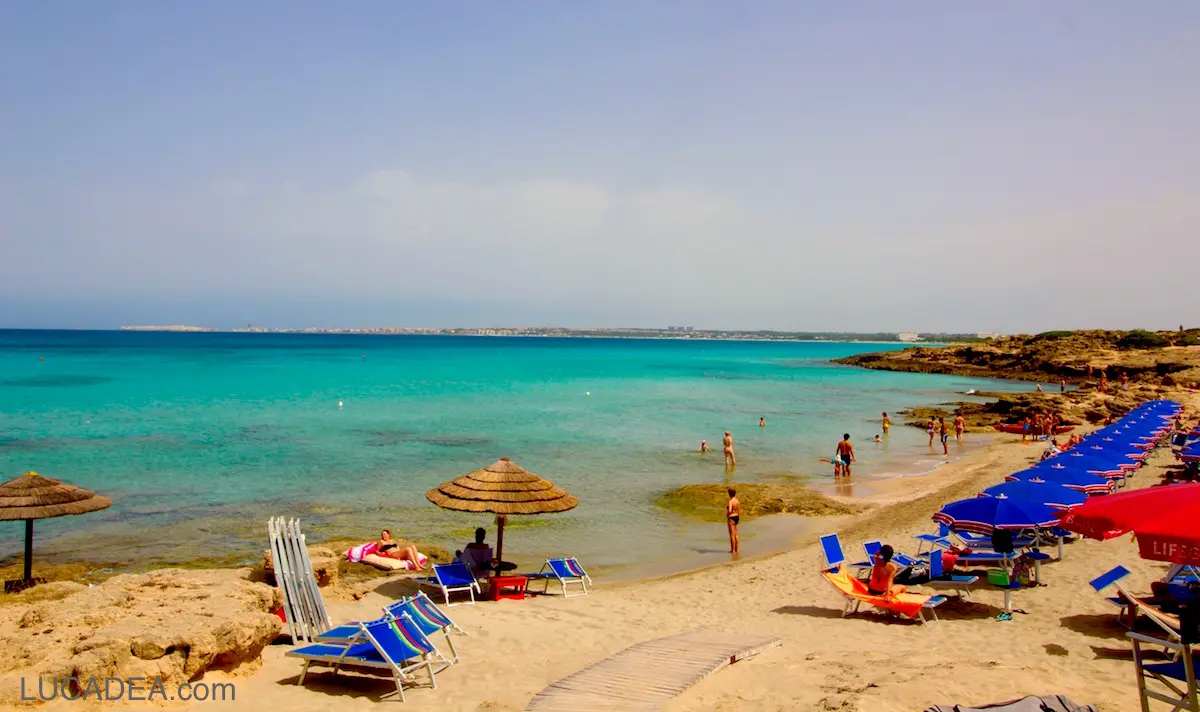
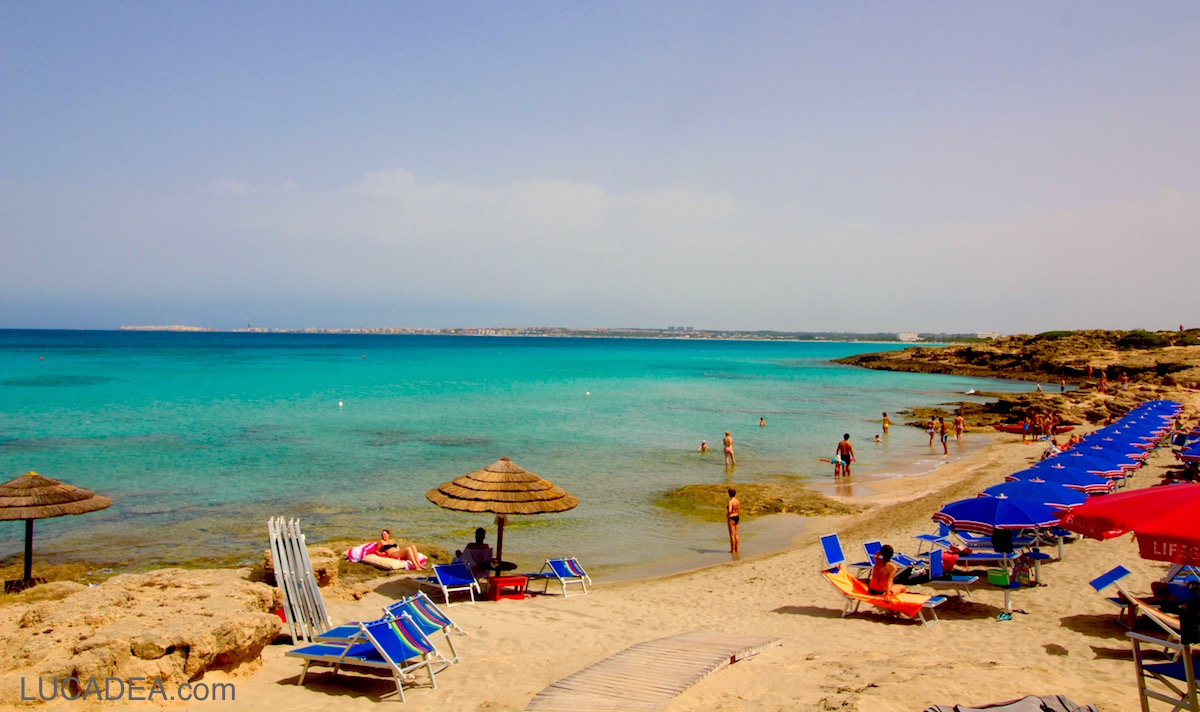
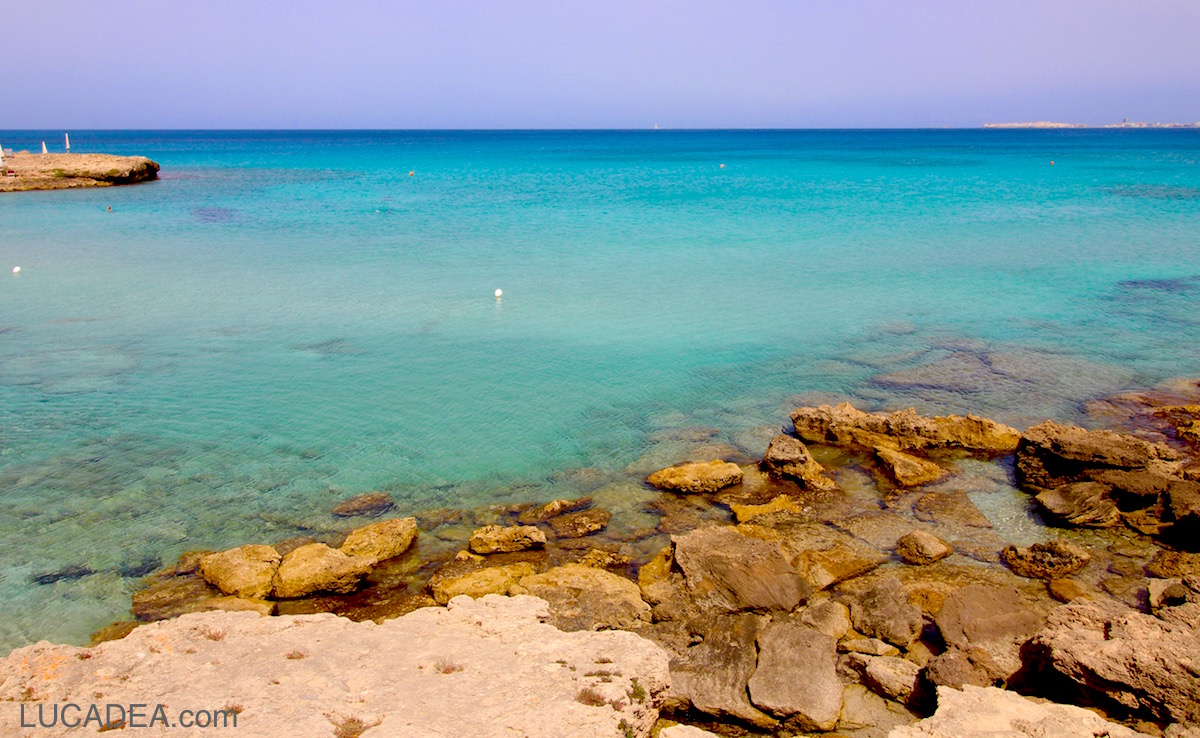
Punta della Suina nel Salento con spiaggia dorata e mare cristallino vicino a Gallipoli

Punta della Suina, a dream beach in Salento.
During my trip to Puglia, I photographed Punta della Suina, one of the most beautiful beaches in Salento, with its golden sand and crystal clear sea that make this part of the coast near Gallipoli so special. Standing in front of this landscape, I immediately understood why this beach is often considered one of the places worth seeing in Salento.
This photograph was taken to preserve a memory of that day by the sea, not just to create a typical postcard image. What interested me was capturing the atmosphere of the place: the colours of the beach, the transparency of the water and the natural landscape surrounding Punta della Suina.
The beach is located near Gallipoli, in the province of Lecce, in the Puglia region of Italy, and it is one of the best-known spots along the Ionian coast of Salento. Its location makes it easy to reach while still offering a landscape where the Mediterranean vegetation meets the sea.
When I visited Punta della Suina, even arriving at around ten thirty in the morning, we were still able to find two sun loungers. During that period, perhaps because of the time of the season, we could enjoy the beach with a more relaxed atmosphere and appreciate the view without the crowds that often surround famous coastal destinations.
I took this photograph because I wanted to keep the memory of one of the places that impressed me most during my holiday in Salento. On my photo blog, I often share locations I have personally visited through images that are not only descriptions, but small memories connected with my travels.
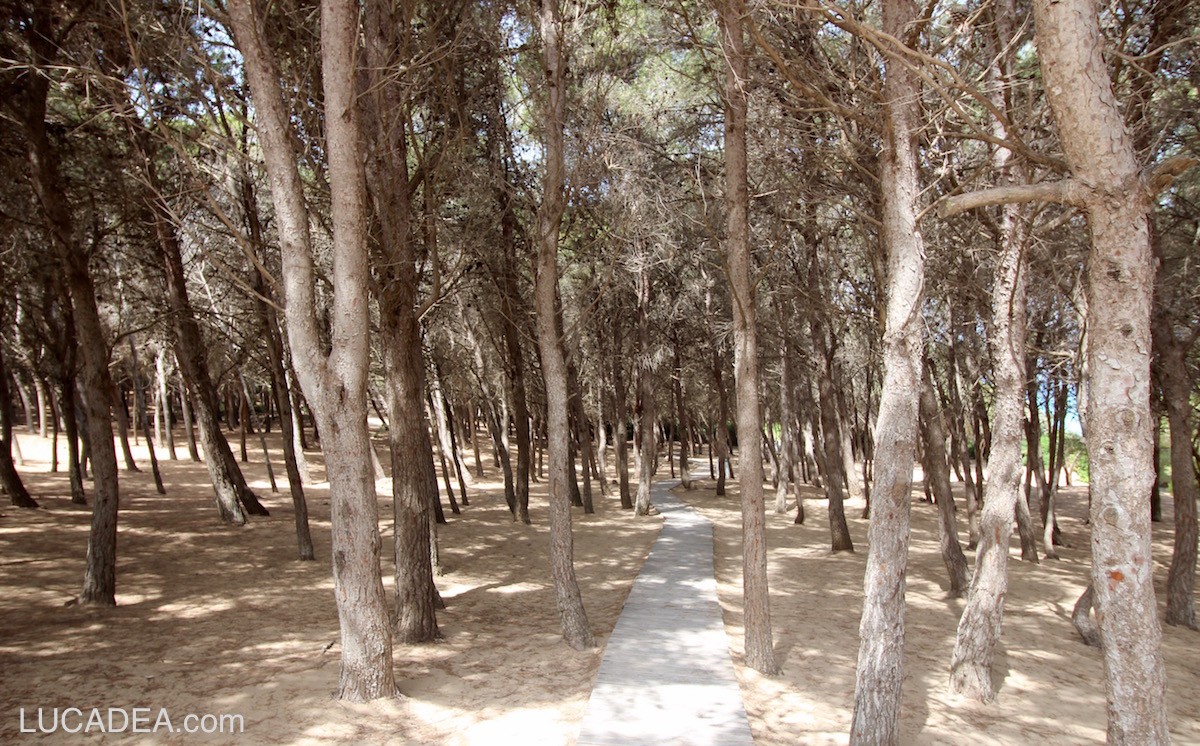
One interesting detail about Punta della Suina is its natural setting. Besides the beach and the sea, the area is surrounded by Mediterranean vegetation that reaches close to the coastline, creating a landscape that feels different from more developed beaches.
As I already mentioned in my article about the most beautiful beaches in Salento, this was one of my favourite stops among the places I visited from Gallipoli. Every beach had something different to offer, but Punta della Suina impressed me for the balance between nature and the sea.
If you are looking for what to see in Salento and want to discover a beach with clear water and a beautiful natural setting, Punta della Suina is certainly a place worth considering.

Have you ever spent a day at Punta della Suina beach? Add a comment or go to the bottom of the site to read what other visitors have written.

Punta della Suina beach in Salento with golden sand and crystal clear sea near Gallipoli

Punta della Suina beach in Salento with golden sand and crystal clear sea near Gallipoli

Punta della Suina beach in Salento with golden sand and crystal clear sea near Gallipoli

And this is the pine forest behind the beach:

Punta della Suina beach in Salento with golden sand and crystal clear sea near Gallipoli

Tourism remains a primary source of revenue, drawing crowds of visitors to the beaches and *masserie* (traditional fortified farmhouses) of Salento during the summer months. In 2011, the Salento peninsula saw a sharp upward trend, recording approximately two million arrivals and—with a total of around nine million visitor-nights—marking one of the highest levels of attendance in recent years.
Read more on Wikipedia

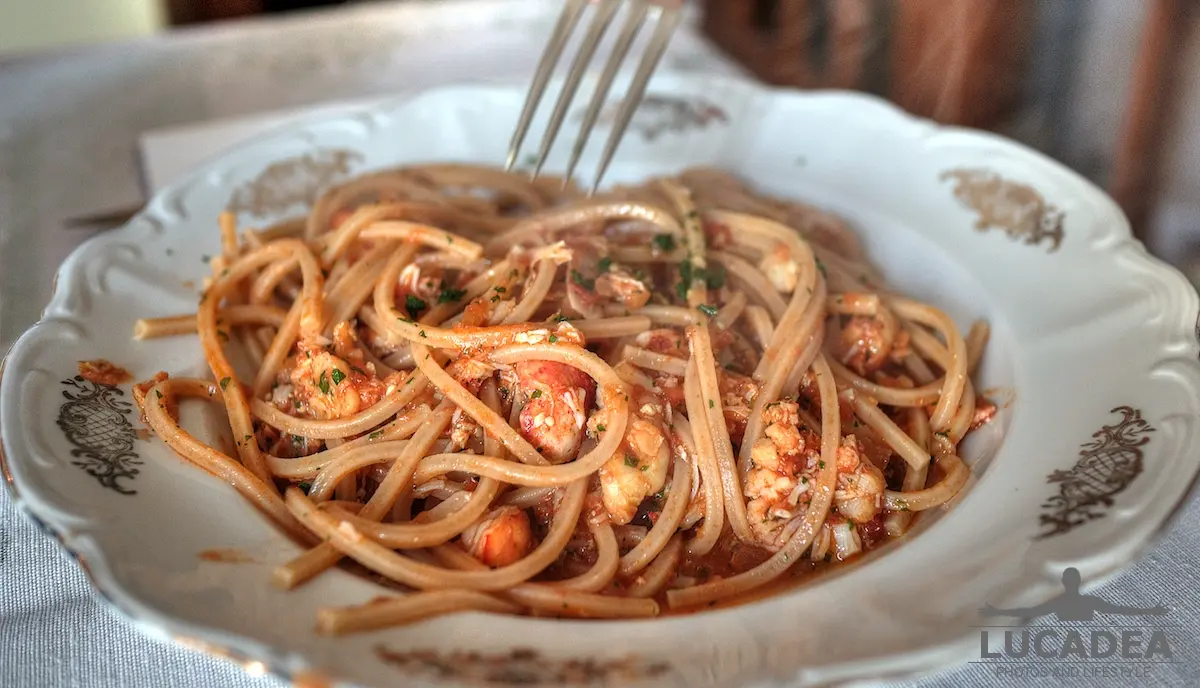
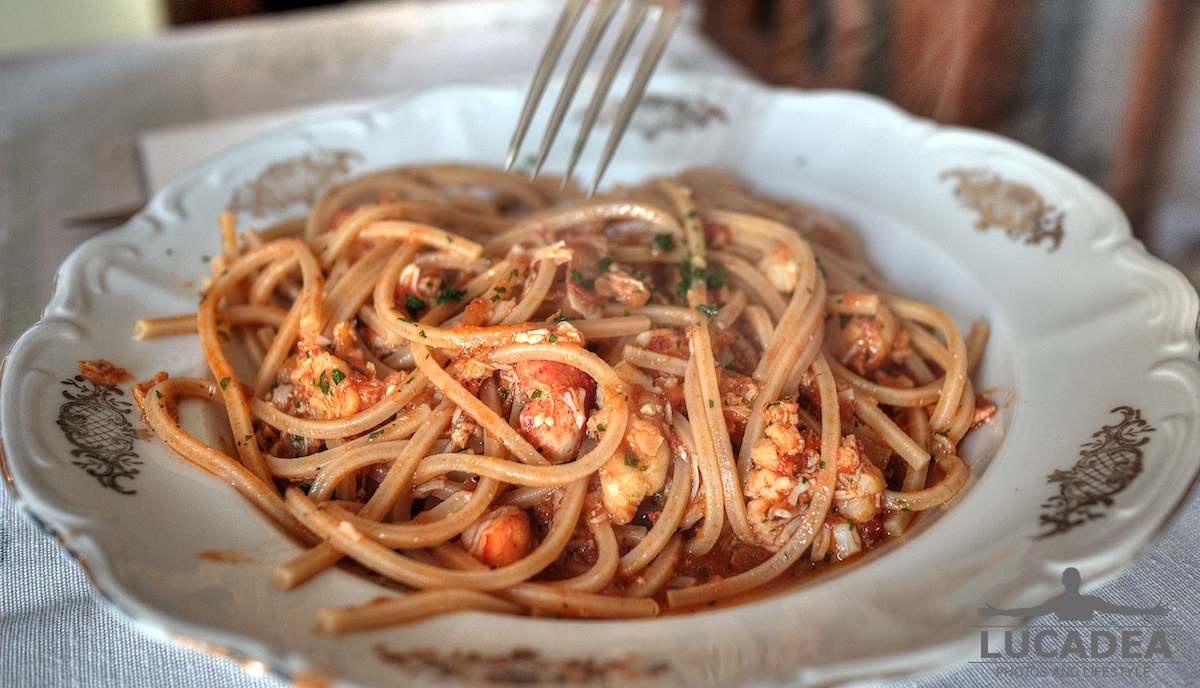
Whole wheat pasta with fresh lobster sauce

Trenette integrali al sugo di astice fresco servite in un piatto di cucina di mare

Whole wheat pasta with fresh lobster sauce.
Among the pasta dishes that combine simplicity and seafood flavours, this whole wheat pasta with fresh lobster sauce is certainly one of the most interesting. In this photograph I wanted to capture a dish where the intense taste of lobster meets the more rustic character of whole wheat pasta, creating a balance between tradition and a slightly different interpretation.
This image comes from my habit of photographing not only places, landscapes and historic buildings, but also everyday moments connected with food. A carefully prepared dish can tell a story just like a village street or a beautiful view, because behind every recipe there are choices, memories and the pleasure of sharing something special.
Whole wheat pasta with lobster sauce is an appealing variation of classic seafood pasta. The stronger flavour and texture of whole wheat pasta create a different experience, while the lobster remains the main character thanks to its delicate but distinctive taste. The result is a dish where the flavours of the sea are enhanced without being overwhelmed.
I took this photograph focusing on the finished plate, the colour of the sauce and the presence of the fresh lobster that makes this preparation so inviting. Food photography, like the images of places I often share on my blog, is about paying attention to details. A single ingredient, a colour contrast or the way a dish is presented can completely change the feeling of an image.
One interesting detail about crustacean recipes is that traditional cooking often tries to extract as much flavour as possible from the ingredient itself. This attention to every part of the lobster is what helps create richer and more aromatic sauces.
This dish is also connected with other food stories I have shared on my website, such as spaghetti with lobster sauce and cherry tomatoes or other seafood recipes. In all these cases, my goal is not only to show a plate of food, but to preserve a small personal moment through photography.
A plate of whole wheat pasta with fresh lobster is one of those meals that already creates anticipation before the first taste. The combination of quality ingredients and careful preparation can turn a simple lunch into something memorable.

Have you ever tried whole wheat pasta with lobster sauce? Add a comment or go to the bottom of the site to read what other visitors have written.

Whole wheat pasta with fresh lobster sauce served as a Mediterranean seafood dish

Photo taken with a Canon EOS M100 camera and Canon EF-M 22 lens.

Bluish in color, with yellow patches on its back and a light-colored underside, it has two pairs of antennae—one long pair and one short pair—and eight walking legs, in addition to two chelae (claws); one claw is larger than the other to better perform different tasks. The carapace is smooth and indented, featuring two spines located near the eyes. It can reach half a meter in length, though typical specimens measure between 30 and 40 cm.
Read more on Wikipedia

The Stern Lines of Costa Toscana

Le linee di poppa della nave Costa Toscana viste da bordo, con curve moderne e design imponente sul mare aperto durante la navigazione

The Stern Lines of Costa Toscana.
I still remember the feeling of standing in front of something immense yet surprisingly fluid, almost shaped by wind and sea itself. The stern lines of Costa Toscana open up in front of my eyes like a soft geometry, curves drawn to follow the movement of water rather than cut through it.
I recall the moment I was observing the stern of Costa Toscana from the deck where I was on board: there was no rush, only the slow rhythm of navigation and that particular way the ship seemed to communicate with the open sea. Costa Toscana never feels static, even when it is in port or sailing calmly, because its architecture carries an idea of constant motion within itself.
The stern lines of Costa Toscana become almost a visual language, an aesthetic signature recognizable from afar. I found myself following them with my gaze several times, as if each curve could tell something different depending on light and distance. The stern of Costa Toscana in particular gives a feeling of openness toward the outside, as if the ship does not truly end there but continues ideally toward the horizon.
There is a detail that struck me while I was there: the perception of scale completely changes when you are on board. What looks compact from a distance becomes, once you are inside, a complex system of layers, terraces, and surfaces interlocking with each other. Costa Toscana was launched in 2021 and is one of the largest modern ships in the Costa Cruises fleet, designed to combine sustainability with Italian-inspired design, featuring spaces that resemble a floating city.
Putting those memories together, what remains most vivid is not only the scale of the ship, but the way light rested on the stern lines of Costa Toscana, constantly transforming them. I found myself wondering how much the perception of a ship changes when experienced from within rather than seen from afar.

And in the end, looking again at those shapes, I wondered: can a ship become a landscape of its own? Add a comment or go to the bottom of the site to read what other visitors have written.

Photos taken with Oppo Reno 12.

Costa Toscana is a cruise ship of the Genoa-based Costa Crociere company, built at the Meyer Turku shipyard in Finland. It has a sister ship named Costa Smeralda. Costa Toscana is part of the Excellence class, a category of cruise ships designed for the Carnival Corporation & plc cruise group for its brands, and is the second ship of this type built for Costa Crociere.
Continue and learn more on Wikipedia

Le linee di poppa della Costa Toscana – The stern lines of Costa Toscana – Les lignes de poupe du Costa Toscana – Las líneas de popa del Costa Toscana – As linhas de popa do Costa Toscana – Die Hecklinien der Costa Toscana – Đường đuôi tàu Costa Toscana – コスタ・トスカーナの船尾ライン – 迪斯科斯托斯卡纳号船尾线条 – コスタ・トスカーナの船尾ライン

The text of this post was written with the help of ChatGPT, a language model from OpenAI.

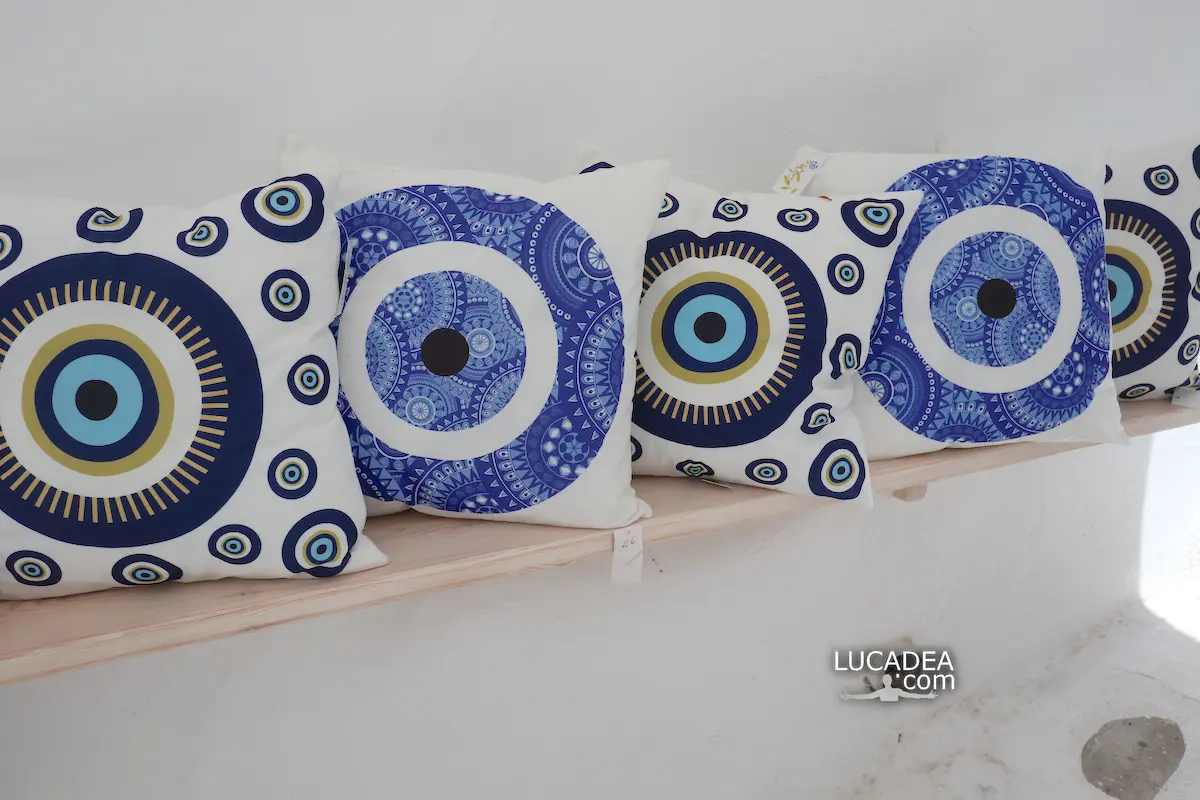
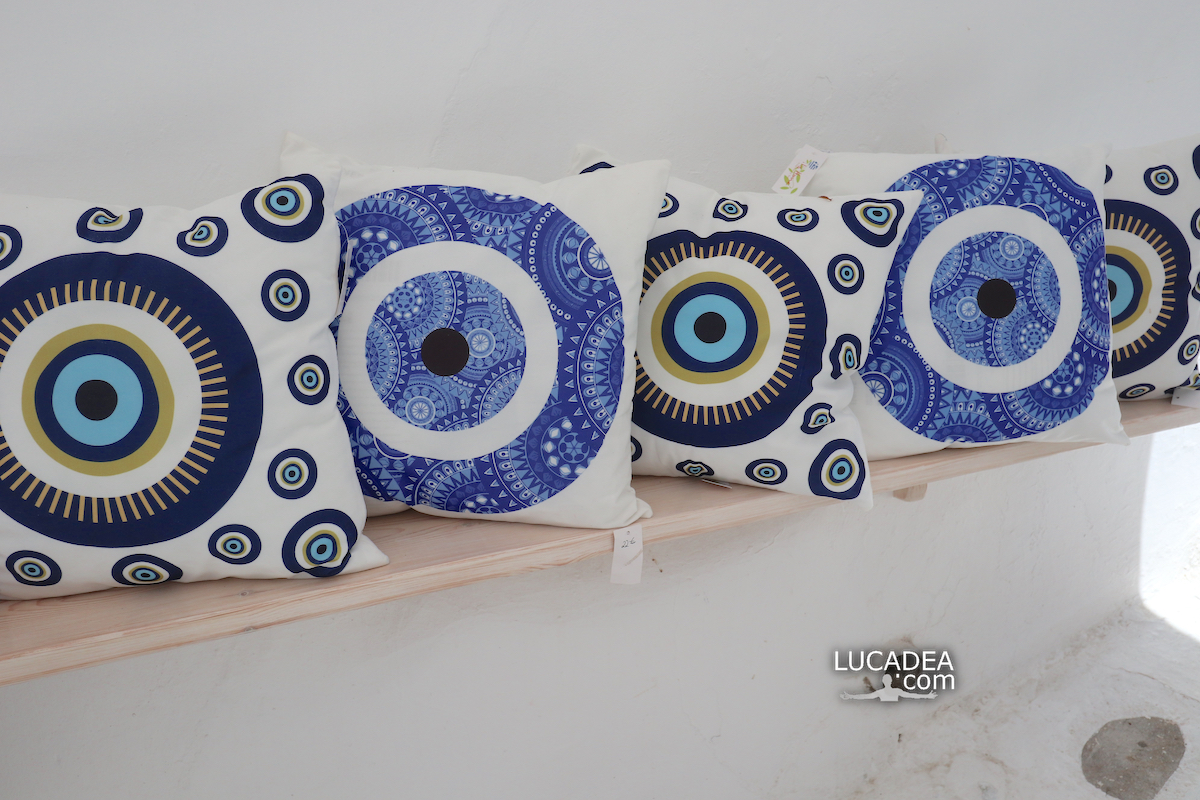
Greek cushions among Mykonos old town alleys

Cuscini greci con occhio Nazar esposti in un negozio nei vicoli di Mykonos vicino alla Little Venice

Greek cushions among Mykonos old town alleys.
Walking through the narrow streets of Mykonos, Greece, I came across a small souvenir shop where Greek cushions immediately caught my attention with their colors and traditional symbols. When people search for what to see in Mykonos, they often think about beaches and nightlife, but the island also reveals its character through small details hidden inside its whitewashed alleys.
I always enjoy walking without a strict plan, especially in the old towns of Greek islands. Taking time to explore slowly often leads to the most interesting discoveries: a colorful door, a local decoration, or a simple object displayed outside a shop. In this case, I decided to capture a collection of cushions decorated with the Greek eye symbol, known as the Nazar.
The shop was located just behind Little Venice, one of the most recognizable areas of Mykonos, and it perfectly matched the atmosphere of the town. Of course, many businesses here are created for visitors, but there is often a genuine attention to detail. Even a simple souvenir can become part of the visual identity of the place.
The Nazar is a traditional Mediterranean amulet commonly associated with protection from the evil eye. Its blue and white design has become one of the most recognizable symbols of Greece and can be found on jewelry, decorations, and everyday objects throughout the country.
I took this photograph because I wanted to preserve a small piece of Mykonos beyond the famous views. The island is not only made of beaches, sunsets, and crowded streets; it is also made of these quiet moments while walking through the village and noticing the details around you.
I have shared other stories on the site where small objects and local details became the focus of my photographs, and this was another example of how a simple scene can represent the atmosphere of a destination.

Have you ever found a souvenir that reminded you of a special place you visited? Add a comment or go to the bottom of the site to read what other visitors have written.

Greek cushions with Nazar eye symbols displayed in a souvenir shop alley near Little Venice in Mykonos

Photo taken with a Canon EOS M100 camera and Canon EF-M 11-22 lens.

To see all the photos of the town, click here:
foto gallery

This is a nice video shot while strolling through the narrow alleys:

Video recorded with the GoPro Hero 10 Black.

But why is it blue? In the Aegean region, people with blue eyes were so rare that a belief began to spread that they were the primary bearers of the evil eye.
Read more at kaliparos.com.

🏠
  • Italiano