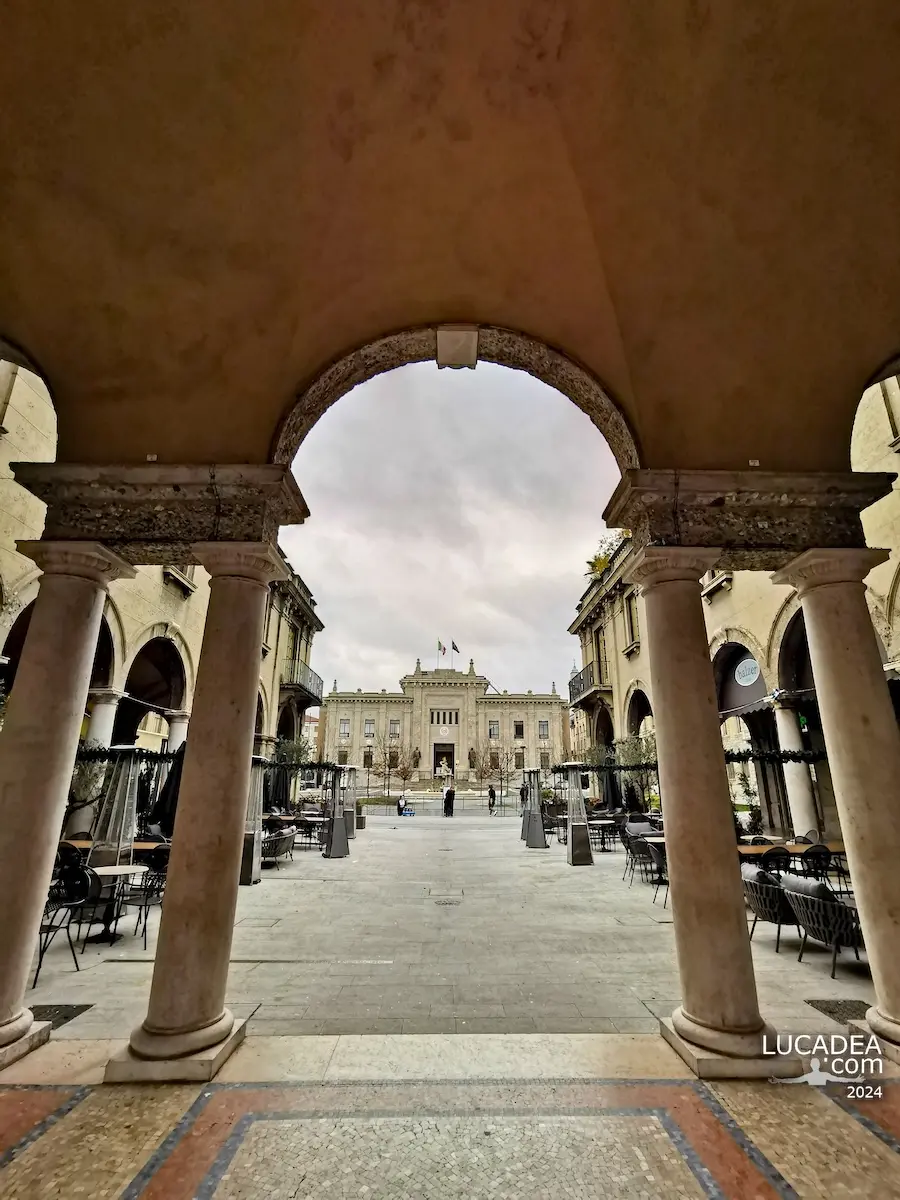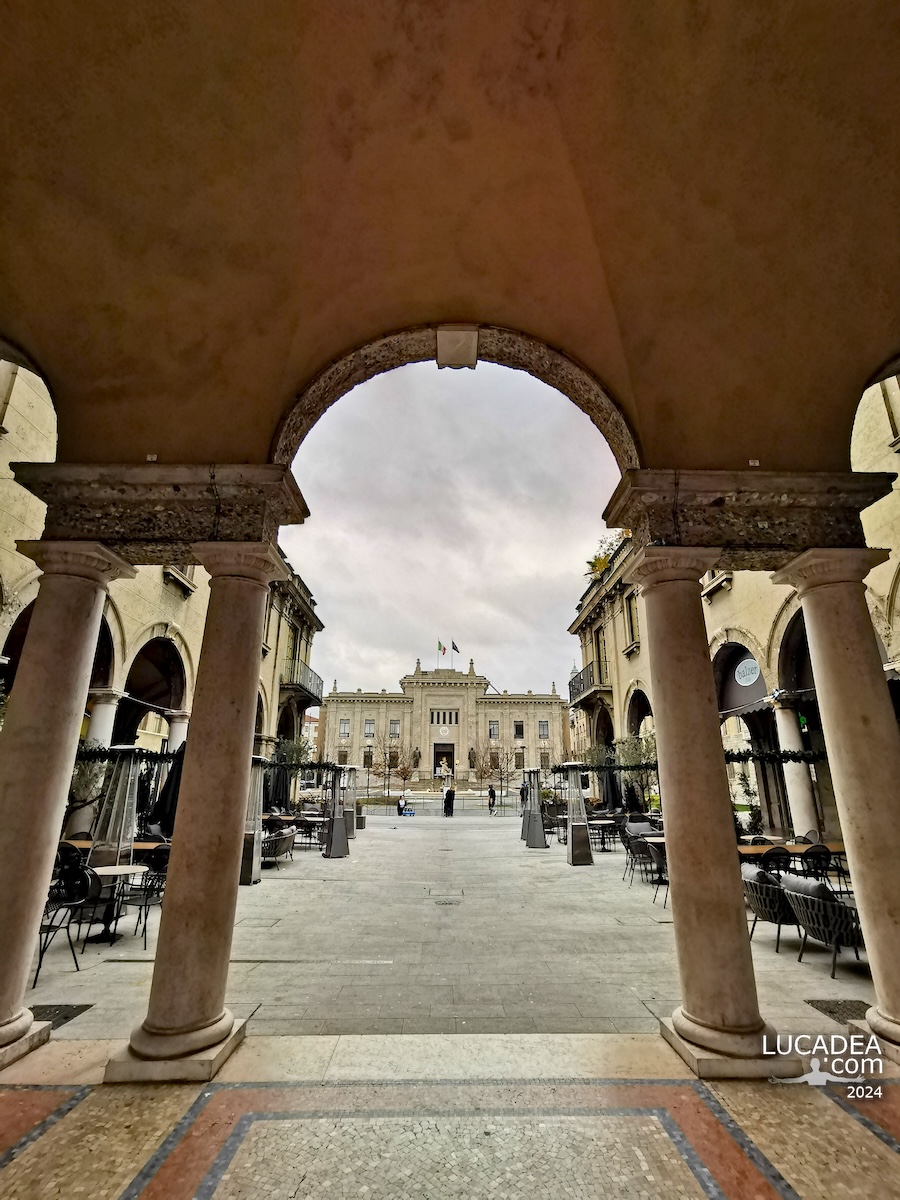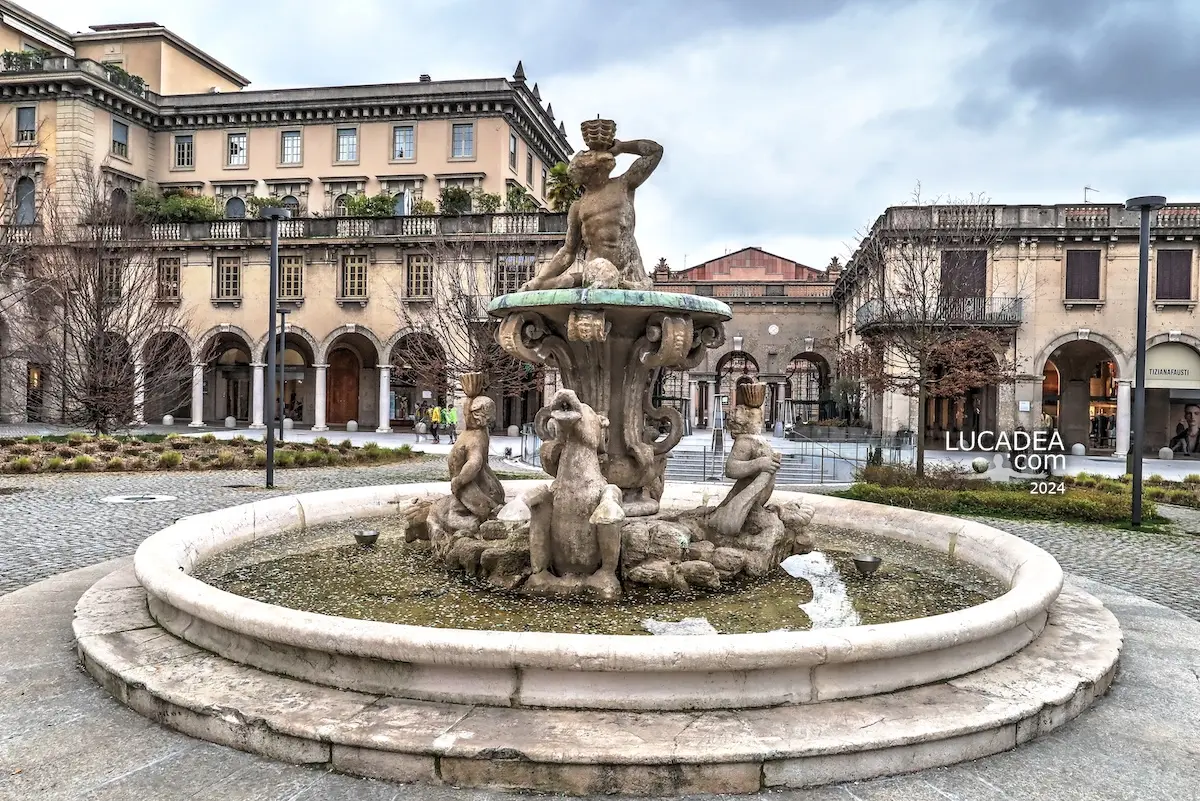
Triton Fountain in Dante Square, Bergamo

Fontana del Tritone in piazza Dante a Bergamo con scultura centrale e vasca decorata

Triton Fountain in Dante Square, Bergamo.
While walking through the lower part of Bergamo, I reached Dante Alighieri Square, a place that has changed its name and appearance over time but still preserves an elegant fountain at its centre. I wanted to photograph the Triton Fountain because, although it is located in a central area of the city, it is a detail that can easily be overlooked compared with Bergamo’s most famous landmarks.
The Triton Fountain in Dante Square, Bergamo, Lombardy, Italy, is one of those small urban elements that helps reveal the history and transformation of a city. During my walk, I found interesting the way the fountain fits into the surrounding environment, between the buildings of the lower town and the memory of a square that has had different roles throughout the years.
When I photograph a city, I often look for these less obvious details. The most famous monuments do not always tell the whole story of a place; sometimes a fountain, a square or a simple corner can communicate the atmosphere of a city in a more direct way. This photograph comes from the curiosity of capturing a detail I discovered while walking.
Dante Square is located in the modern centre of Bergamo and has played an important role in the urban life of the city. In the past, it was known as Fair Square because it hosted commercial activities and markets connected with everyday life. Today, the area remains a place of movement and meeting, with the fountain acting as a central feature of the urban space.
The Triton Fountain recalls the classical theme of mythology through the figure of Triton, a sea creature often represented in Italian monumental fountains as a symbol connected with water and the ancient world. This subject links Bergamo with a wider artistic tradition found in many Italian cities.
If you are visiting Bergamo, the lower town also offers interesting places to see beyond the famous Upper Town, its Venetian Walls and historic monuments. Walking without a strict plan can reveal squares, buildings and small details that tell a more everyday story of the city.
I wanted to capture this fountain with my camera because these unexpected discoveries during a walk often become the most personal memories. Photography does not always begin in front of the most famous subject, but from the ability to notice what appears along the way.
This image connects with other stories on my blog dedicated to urban details of Italian cities, where I often try to describe well-known places through smaller and less obvious elements.

Have you ever discovered an interesting fountain or hidden detail simply by walking through a city? Add a comment or go to the bottom of the site to read what other visitors have written.

Triton Fountain in Dante Square Bergamo with central sculpture and decorated stone basin

Photo taken with Canon EOS RP and Canon RF 24-50 lens.

To see all the photos I took in Bergamo, click here:

Where is the fountain located:

The monumental fountain in Piazza Dante dates back to 1740 and is also known as the “Triton Fountain” for the statue of Neptune that overlooks the basin. It is the work of architect and sculptor Gian Battista Caniana and was originally located at the center of the structures that made up the Bergamo Fair.
Continue and learn more at aquadro.net

Add one  comment to this article or read  here what other visitors have written.
 
Adv
 
Disclamer

The rights on images, videos, choruses, text and all other material on the LUCADEA.com website are governed as per  Copyright page.


This page has been viewed 1 times today.
This month it has been viewed 1 times.
In total it has been viewed 9 times.
 

The medieval Ticinese Gate in Milan

Porta Ticinese medievale lungo Corso di Porta Ticinese, vicino alle Colonne di San Lorenzo a Milano

The medieval Ticinese Gate in Milan.
During a visit to Milan, I found myself in the area around the Columns of San Lorenzo, where the route naturally continues along Ticinese Gate Avenue towards the city centre. Walking along the avenue, I came across this large medieval gate and decided to stop for a photograph.
I took this picture myself because I liked the way such an old structure remains part of the modern city. The Ticinese Gate does not feel like an isolated monument set apart from everyday life. It stands directly along the route, connecting the historic surroundings with the streets that people still walk through today.
The photograph shows the medieval Ticinese Gate in Milan, Lombardy, Italy, near the Columns of San Lorenzo. This is an interesting part of the city for photography because several different periods of Milan’s history can be encountered within a relatively short walk. Ancient remains, historic buildings and today’s urban life all occupy the same space.
If you are wondering what to see in Milan beyond the best-known landmarks, this area is particularly interesting for the contrasts it offers. The Columns of San Lorenzo and the basilica are nearby, while Ticinese Gate Avenue continues towards the centre, passing through a neighbourhood where traces of the old city remain visible alongside contemporary Milan.
What caught my attention most was the role of the gate as an actual passage. It is not simply an architectural object to admire from a distance. Its position along the avenue makes it part of the urban landscape, and that relationship with the surrounding streets is what I wanted to preserve in the photograph.
The name Ticinese Gate is connected with the route leading towards the area of the Ticino River. It belongs to the medieval history of Milan and represents one of the old access points through which people entered and left the city. As Milan expanded over the centuries, the urban landscape grew far beyond these earlier boundaries, leaving structures such as this one as reminders of the city’s previous scale.
One small historical detail I find interesting is the original practical purpose of medieval city gates. They were not built simply to make an entrance look impressive. They were part of the city’s defensive and administrative system, controlling movement through important routes. Today, that function has completely changed, but the gate still marks a point of transition between different parts of Milan.
During my visit, I was not looking for a historical reconstruction of the city. I was simply walking through the area around the Columns of San Lorenzo and observing what appeared along the way. The gate caught my attention because of its size and because Ticinese Gate Avenue passes directly through this historic structure.
That is one of the things I enjoy about taking photographs while walking. I do not always need to plan every subject beforehand. A church, a building or even a street corner can lead naturally to the next photograph. In this case, the Ticinese Gate became the subject simply because it appeared in front of me during the walk.
The image also connects naturally with the other photographs of Italian cities and architectural details that I have published on the blog. I often prefer this kind of encounter to a carefully planned photographic stop because the resulting image preserves something about the way I actually experienced the place.
Looking at the photograph again, what I like is the meeting between the old and the current city. The medieval gate belongs to another period of Milan’s history, but it is still surrounded by the movement of the modern city. Walking along Ticinese Gate Avenue, that contrast becomes particularly easy to notice.
For me, this is what makes the photograph more interesting than a simple picture of an old gate. It records a moment during a walk through Milan when the city’s past suddenly became part of the route I was following.

Have you ever walked through the Ticinese Gate during a visit to Milan? Add a comment or go to the bottom of the site to read what other visitors have written.

Medieval Ticinese Gate on Ticinese Gate Avenue near the Columns of San Lorenzo in Milan

Photo taken with Canon EOS M100 and Canon EF-M 11-22 lens.

To see all the photos I took on the roof and inside the Duomo, click here:

And here’s where the door is:

Add one  comment to this article or read  here what other visitors have written.
 
Adv
 
Disclamer

The rights on images, videos, choruses, text and all other material on the LUCADEA.com website are governed as per  Copyright page.


This page has been viewed 1 times today.
This month it has been viewed 1 times.
In total it has been viewed 9 times.
 

The old washhouse in Bergamo Alta

Un antico lavatoio nel cuore di Bergamo Alta

The old washhouse in Bergamo Alta.
Walking through the stone streets of the upper town, I discovered and photographed this old public washhouse, a small piece of everyday history hidden among the corners of Bergamo’s historic centre. These are exactly the kind of details that often catch my attention because, unlike famous monuments, they reveal the life of ordinary people and the traditions that shaped a place.
The old washhouse of Bergamo Alta, Lombardy, Italy, is a testimony to the daily life that once characterised many Italian towns and villages. When I photograph places like this, I am not only interested in the architecture itself, but also in the memories connected to the spaces where generations of people lived, worked and met.
This photograph comes from my curiosity for the details that appear while walking without a precise destination. In Bergamo Alta, almost every street can offer something unexpected: a fountain, an old doorway, a staircase or, as in this case, a washhouse that tells the story of a different way of living.
Public washhouses had an important role for centuries. Before running water became common inside private homes, they were essential places where people went to wash clothes, but they were also social spaces where neighbours exchanged conversations, news and stories. For this reason, these structures are interesting not only from a historical point of view but also because they preserve a human memory.
If you are visiting Bergamo, the upper town is a place worth seeing not only for its famous squares and buildings but also for its quieter corners. Exploring Bergamo Alta means discovering a medieval urban landscape where small details can complete the story of the city.
I wanted to capture this scene with my camera because it represents a more discreet part of urban history. It is not a spectacular monument, but a place that invites us to imagine the people who used it and the everyday gestures that took place here many years ago.
A small curiosity is that many historic washhouses across Italy have survived because they are now considered valuable examples of local heritage, preserving the relationship between water, work and community life.
This photograph connects with other stories on my blog dedicated to hidden details of Italian cities, because I often find the most interesting subjects in places that are not immediately noticed.

Have you ever discovered an old washhouse or a small historic detail while walking through a city? Add a comment or go to the bottom of the site to read what other visitors have written.

Old public washhouse in Bergamo Alta historic centre with stone basins and traditional details

Photo taken with Canon EOS RP and Canon RF 24-50 lens.

To see all the photos I took in Bergamo, click here:

Here’s where the washhouse is located:

A washhouse is a place, space, or building for doing laundry. Previously, villages had public washhouses, where women, as household stewards, washed dirty laundry. Before the introduction of running water into homes, people had a public washhouse where women went to do their laundry. Washhouses were also places where people went to socialize and talk.
Continue and learn more at Wikipedia

The Cathedral Square in Milan

Piazza del Duomo a Milano

The Cathedral Square in Milan.
This is the most famous square in Milan. A half-day in the city.
Obviously, and to be honest, I didn’t even have one on my website, I photographed the most famous square with the cathedral in the background, the statue of Vittorio Emanuele II, and the gallery (also dedicated to Vittorio Emanuele II) on the left.
Milan is always a great Milan!

Do you know or have you ever been to Milan? Add a comment or go to the bottom of the site to read what other visitors have written.

Piazza del Duomo a Milano

Photo taken with Canon EOS M100 and Canon EF-S 10-18 lens.

To see all the photos I took on the roof and inside the Duomo, click here:

Here’s where the city is located:

Founded around 590 BC, perhaps under the name Medhelan, near a sanctuary by a Celtic tribe belonging to the Insubres and the Golasecca culture, it was conquered by the ancient Romans in 222 BC and later renamed Mediolanum. Over the centuries, its importance increased until it became the capital of the Western Roman Empire, during which period the Edict of Milan was promulgated, granting all citizens, including Christians, the freedom to honor their deities.
Continue and learn more at Wikipedia

The Piazza del Duomo in Milan – La Piazza del Duomo à Milan – La plaza del Duomo en Milán – A Piazza del Duomo em Milão – Die Piazza del Duomo in Mailand – Quảng trường Duomo ở Milan – 米兰大教堂广场 – ミラノのドゥオモ広場

A doorway on Via del Carmine in Milan

L'ingresso del Comando Militare Esercito Lombardia in Via del Carmine a Milano

The entrance to the Lombardy Army Military Command on Via del Carmine in Milan.
Walking through the streets of central Milan, I came across this door decorated with military statues and a plaque next to it that read: “Lombardy Army Military Command.”
Via del Carmine is a street located in the heart of Milan, characterized by historic buildings and a charming atmosphere. The street is known for its tranquility and the presence of numerous shops and businesses, making it a lively and popular place. Via del Carmine’s central location allows easy access to the city’s main attractions, making it a popular area for both residents and visitors.
The Lombardy Army Military Command building, located on this street, is easily recognizable for its imposing architecture and the presence of highly qualified military personnel. Lombardy Army Military Command is constantly seeking synergies with local authorities to improve the services offered to citizens. Among these services, documentation and administrative support activities stand out, which are essential for the efficient functioning of military operations.
The Lombardy Army Military Command (CME), located at Via del Carmine 8 in Milan, is a key point of reference for military activities in the region. This territorial command of the Northern Military Region is responsible for numerous functions, including recruitment, reserve forces, and promotion and public information in Lombardy.

Do you know Milan? Add a comment or go to the bottom of the site to read what other visitors have written.

Photos taken with Canon EOS RP and Canon RF 24-50 lens.

Click here if you want to see all the photos I took:
foto gallery

Where is Via del Carmine located:

In the 12th century, a group of Catholic monks retreated there, beginning a life of contemplation. From these monks, the Order of Carmel, a Catholic order, was born. The liturgical feast of the Blessed Virgin Mary of Mount Carmel (one of the names by which the Catholic Church venerates Mary, including its variant of Carmine, through the Spanish equivalent Carmen), was established to commemorate this Marian apparition and is celebrated on July 16.
Continue and learn more at Wikipedia

The entrance of the Lombardy Army Military Command in Via del Carmine in Milan – L’entrée du commandement militaire de l’armée lombarde dans la Via del Carmine à Milan – La entrada del Comando Militar del Ejército de Lombardía en Via del Carmine en Milán – A entrada do Comando Militar do Exército da Lombardia na Via del Carmine, em Milão – Der Eingang des Militärkommandos der lombardischen Armee in der Via del Carmine in Mailand – Lối vào của Bộ chỉ huy quân sự quân đội Lombardy ở Via del Carmine ở Milan

The text of this post was written with the help of Copilot, a virtual assistant based on artificial intelligence.
References:
– https://www.esercito.difesa.it/organizzazione/capo-di-sme/COMFOTER/Comando-Truppe-Alpine/CME-Lombardia
– https://www.difesa.it/protocollo/aoo-difesa/esercito/e24469/35396.html

TVittorio Emanuele II Gallery, Milan’s Elegant Salon

La Galleria Vittorio Emanuele II: il salotto elegante di Milano

Vittorio Emanuele II Gallery, Milan’s Elegant Salon.
In the heart of Milan, Italy, between Cathedral Square and La Scala, stands one of the city’s most impressive architectural landmarks. The Vittorio Emanuele II Gallery is much more than a covered shopping arcade. It is a meeting place, a symbol of Milanese elegance and a wonderful example of how historic architecture can remain part of everyday urban life.
As soon as I enter the gallery, the magnificent glass roof and iron framework draw my eyes upwards. Natural light filters through the glazed ceiling, illuminating the decorative details and the colourful mosaics beneath my feet. At the centre, an imposing octagonal dome creates a spectacular focal point, while the long covered passages lead towards the surrounding streets and squares. The combination of light, height and symmetry makes this place particularly attractive for architectural photography.
Designed by architect Giuseppe Mengoni, the gallery was built between 1865 and 1877. Its architecture reflects the ambitions of nineteenth-century Milan, a city increasingly associated with commerce, culture and modern urban life. The use of iron and glass created a spacious covered environment that was both practical and visually striking for its time.
The gallery was conceived as a grand public meeting place, often described as Milan’s elegant drawing room. That role continues today. Fashion boutiques, restaurants, cafés and historic businesses line its passages, while visitors and local residents move between the city’s major landmarks. Some people come to shop or enjoy a meal; others simply walk through the arcade, admire its decorations and take photographs.
One of its best-known details is the mosaic of a bull on the floor near the central dome. According to a popular local tradition, spinning on one’s heel over the bull is supposed to bring good luck. Visitors regularly repeat the gesture, and the spot has become noticeably worn over time. It is a small curiosity that adds a playful element to the gallery’s grand surroundings.
For me, places like this are especially rewarding to explore with a camera. Looking upwards reveals patterns and perspectives that might otherwise be missed, while changes in daylight give the architecture a different appearance throughout the day. Even a familiar landmark can offer something new when viewed from another angle.
The Vittorio Emanuele II Gallery is also an ideal stop for anyone exploring central Milan on foot. Its location makes it easy to combine a visit with the cathedral, Cathedral Square and the famous La Scala opera house. Whether you are interested in architecture, shopping or simply enjoying the atmosphere, there is always something to catch your attention.
If you enjoy historic buildings and beautiful urban spaces, you may also appreciate my photographs of Italian squares, palaces and picturesque city streets.

Would you enjoy spending time in the Vittorio Emanuele II Gallery, admiring its architecture and discovering its little details? Add an comment or go to the bottom of the site to read what other visitors have written.

The Vittorio Emanuele II Gallery in Milan, featuring its elegant nineteenth-century architecture, glass dome and decorative interior

The Vittorio Emanuele II Gallery in Milan, featuring its elegant nineteenth-century architecture, glass dome and decorative interior

Foto scattate con macchina Canon EOS RP e lente Canon RF 24-50.

Click here to see all the photos I took:
foto gallery

Where to find the gallery:

Piave Square and the Triton Fountain in Bergamo

Piazzetta piave con la Fontana del Tritone a Bergamo

Piave Square and the Triton Fountain in Bergamo.
Walking through central Bergamo, I came across this small urban square where the fountain immediately caught my attention. It is one of those corners that can appear almost by chance during a walk, yet offers plenty of details worth stopping to photograph.
This photograph came from my attention to the Triton Fountain, which dominates the scene with its elaborate decoration against the quieter surroundings of the square. I wanted to capture this view with my camera while keeping the fountain, the greenery and the surrounding architecture together in the same image.
Piave Square is located in the Piacentiniano center of Bergamo, Lombardy, Italy, just a short distance from the Sentierone and Dante Square. This part of the city has a different character from the Bergamo most immediately associated with the Upper Town. The urban landscape is more regular and monumental, but there are also smaller spaces where it is easy to slow down and look around.
If you are wondering what to see in Bergamo beyond the best-known landmarks, a corner like this can be interesting precisely because it reveals another side of the city. The fountain becomes the main subject of the photograph, while the square and its gardens create a quieter setting around it.
The Triton Fountain is much older than its current location might suggest. It was created in the eighteenth century by Giovan Battista Caniana and originally formed part of the Sant’Alessandro Fair complex. It was later moved, and today it stands in this part of central Bergamo. This is a small but interesting example of how a historic monument can change location while remaining part of the city’s visual memory.
What caught my eye most were the sculpted figures. The white marble, sea horses, dolphins, cherubs and the figure of Triton create a rich composition that is difficult to take in all at once. This is where photography becomes particularly useful to me: an image can isolate details that might otherwise disappear when you simply walk past.
The relationship between the fountain and the surrounding greenery also changes the atmosphere. Flower beds, trees and benches make the square feel like an ordinary part of the city, while the fountain has an almost theatrical presence. That contrast was one of the things I found most interesting from a photographic point of view.
I was not trying to create a purely architectural photograph. I was more interested in the way an eighteenth-century work fits into contemporary Bergamo without seeming disconnected from its surroundings. The square creates an interesting balance between the elaborate decoration of the fountain and a green urban space used as part of everyday city life.
This is an approach I often enjoy when photographing cities. I do not always look for the most famous monument or the most recognizable viewpoint. Sometimes I prefer to stop in front of an element that reveals a less obvious side of a place and photograph it within its surroundings.
Bergamo, like other cities I have photographed for the blog, offers plenty of opportunities for this kind of discovery. Some places are immediately recognizable, while others simply appear as you walk. For me, Piave Square belongs to the second category. You do not necessarily need to plan your entire walk around it; it can simply become part of your exploration of the city center.
The Triton Fountain, however, makes it difficult to walk past without looking. The amount of carved detail invites you to stop for a moment and study the composition, especially if you enjoy finding photographic subjects in architecture and small urban details.
For anyone visiting Bergamo, this is one of those places worth seeing when you want to look beyond the most obvious views. The fountain provides the historical element, while the surrounding square gives it a quieter and more contemporary setting.
This image remains for me a memory of a corner of Bergamo where art, history and everyday city life come together without needing a grand setting. A small square, an eighteenth-century fountain and some greenery were enough to make me stop and take the photograph.

Have you already seen Piave Square and the Triton Fountain, or is this one of those corners of Bergamo you discovered only by walking around? Add a comment or go to the bottom of the site to read what other visitors have written.

Piave Square in Bergamo with the Triton Fountain, surrounded by gardens and historic architecture in the city center

Photo taken with Honor 20.

To see all the photos I took in Bergamo, click here:

Where is the fountain located?

The Red Lions Gate of Bergamo Alta

La Porta dei Leoni Rossi di Bergamo Alta

The Red Lions Gate of Bergamo Alta.
During my visit to Bergamo Alta, I stopped to photograph one of the most recognizable details of the Basilica of Santa Maria Maggiore: the Red Lions Gate, one of the entrances overlooking the beautiful Piazza del Duomo. Among the things to see in Bergamo Alta, this portal immediately captures attention thanks to its sculptures, architecture and the centuries of history preserved in its stones.
Standing in front of the basilica, I was drawn to the marble porch and the two lion sculptures supporting the columns. I wanted to capture this detail because, in photography, a small architectural element can often tell the story of an entire place.
The Red Lions Gate, also known as the Northern Gate, opens on the left transept of the Basilica of Santa Maria Maggiore. Its name comes from the two red Verona marble lions that support the porch, a structure created in the fourteenth century by Giovanni da Campione.
We are in Bergamo, Lombardy, Italy, and this corner of the city contains centuries of history within a few metres. The Basilica of Santa Maria Maggiore was built from the twelfth century after a vow made by the citizens of Bergamo to the Virgin Mary, asking for protection from the plague. Over time, the church maintained its Romanesque appearance on the outside while the interior was enriched with important Baroque decorations.
What fascinated me while photographing this entrance was the contrast between the strength of the stone, the detailed sculptures and the everyday life continuing in the square outside. It is a place visited by many people, but taking a moment to observe carefully reveals details that are easy to miss.
In other photographs of churches and historic places I have shared on Lucadea, I have often looked for these same elements: not only the famous monument itself, but also the smaller details that help tell a more personal story.
The Red Lions Gate is one of the reasons why Bergamo Alta remains such a fascinating place, where architecture and history are still part of the daily landscape.

Have you ever visited Bergamo Alta and seen this beautiful entrance of Santa Maria Maggiore? Add a comment or go to the bottom of the site to read what other visitors have written.

The Red Lions Gate of Santa Maria Maggiore Basilica in Bergamo Alta with its marble porch details

Photo taken with Canon EOS RP and Canon RF 24-50 lens.

To see all the photos I took in Bergamo, click here:

Where is the door:

The Basilica of Santa Maria Maggiore is a church located in Bergamo’s Città Alta, in Piazza del Duomo. Built in the second half of the 12th century, the exterior retains its original Romanesque-Lombard architectural lines, while the interior is decorated in Baroque style (between 1600 and 1700). It was originally the baptismal church of the Cathedral of San Vincenzo, built next to the complex of the episcopal curia of Bergamo.
Continue and learn more at Wikipedia

The Facade of Milan Cathedral

La mastodontica facciata del Duomo di Milano

The Facade of Milan Cathedral.
Standing in front of the countless marble details and soaring spires, I wanted to capture with my camera one of the most recognizable views of the city and one of the most searched things to see in Milan. This photograph of Milan Cathedral’s facade is about the meeting between architecture, history, and the small details that often disappear when looking only at the whole monument.
When I observed the facade of Milan Cathedral in Milan, Lombardy, Italy, I was drawn to the incredible amount of craftsmanship covering every part of the building. The surface is not simply a background for the main structure; it is a collection of sculptures, decorations, and architectural elements that invite the viewer to stop and look closer. The five main sections of the facade recall the internal layout of the cathedral, while the portals, windows, and spires create a rhythm that makes this monument immediately recognizable.
This image was created from my personal attention to a place that is photographed thousands of times every day, but that can still reveal something different through a careful observation. I tried to preserve the feeling of standing in front of the cathedral and noticing the details carved into the marble rather than focusing only on its impressive size. A photograph cannot contain the entire complexity of the Duomo, but it can highlight a small part of its visual story.
The construction of Milan Cathedral began in 1386, and the facade developed over several centuries with influences from different artistic periods. Although the building is strongly connected with Gothic architecture, later interventions added elements from other styles, creating the unique appearance visible today. One interesting detail is the extraordinary number of sculptures decorating the cathedral, created by different artists over generations and making the facade almost like an open-air collection of carved works.
If you are visiting Milan, the cathedral facade is one of the places worth seeing because it offers not only a famous city landmark but also countless small details to discover. Every statue, relief, and architectural element contributes to the identity of the building and gives photographers many possible perspectives.
In my photographic journey through Milan, I have also shared other views of the historic center, and this image naturally continues that exploration of urban details and places where architecture preserves memories of the past.

Looking at the facade, which detail would catch your attention first if you had your camera in front of this masterpiece? Add a comment or go to the bottom of the site to read what other visitors have written.

Milan Cathedral facade with marble sculptures and Gothic spires showing a historic landmark in Italy

Photo taken with Canon EOS RP and Canon RF 24-50 lens.

This is the official website of the cathedral: duomomilano.it.

Click here to see all the photos I took:
foto gallery

Here’s where the cathedral is located:

The symbol of the Lombard capital, and located in the eponymous square in the center of the metropolis, it is dedicated to Santa Maria Nascente. It is the largest church in Italy.
Continue and learn more at Wikipedia

Saffron risotto or Milanese risotto, the recipe

Il risotto allo zafferano o alla milanese, la ricetta

Saffron risotto, the classic Milanese recipe.
Every now and then I like to enjoy a good saffron risotto, especially when it has that creamy texture and deep golden colour that make it immediately recognizable. Some time ago, the chef on board prepared this dish for me, and I wanted to keep the memory of it here by sharing a traditional version of saffron risotto, also known as risotto alla milanese, one of the best-known dishes of Lombard cuisine.
What I like about this risotto is its simplicity. There are not many ingredients, but each one has an important role, and the cooking requires a little attention and patience. The rice needs to be followed throughout the process, with hot stock added gradually while the grains are stirred regularly enough to encourage the creamy texture that makes a proper risotto so distinctive.
Saffron is naturally the defining ingredient. It gives the dish its characteristic golden colour as well as its particular aroma and flavour. A traditional preparation also uses butter, onion, white wine, stock and Parmigiano Reggiano. The choice of rice matters too. Carnaroli, Arborio and Vialone Nano are all suitable varieties because they release starch during cooking while keeping enough structure in the grain.
The recipe below is a deliberately simple traditional version. It is not meant to reproduce exactly the dish prepared by the chef on board, but it follows the same basic idea: a creamy saffron risotto made with a small number of ingredients and cooked with care.

Ingredients (serves 4):

– 320 g Carnaroli or Arborio rice;
– 1 l meat broth (preferably beef);
– 1 small onion;
– 1 sachet saffron (about 0.15 g);
– 50 g butter;
– 50 g grated Parmigiano Reggiano;
– 1 glass dry white wine;
– 2 tablespoons extra virgin olive oil;
– Salt to taste;
– Black pepper to taste (optional).

Preparation

First, prepare the broth, preferably homemade, with beef, celery, carrot, and onion. Alternatively, you can use ready-made beef broth or a stock cube dissolved in hot water.
Then finely chop the onion. In a large, shallow saucepan, melt half the butter with the extra virgin olive oil. Add the chopped onion and sauté over low heat, stirring occasionally, until translucent.
Add the rice to the saucepan with the onion and toast for a couple of minutes, stirring constantly. This step is essential for sealing the grain and keeping it al dente during cooking. Pour in the white wine and let the alcohol evaporate, stirring constantly.
Once the wine has evaporated, begin adding the hot broth one ladle at a time, stirring frequently. Wait until the broth is absorbed before adding the next ladle.
After about 10 minutes of cooking, dissolve the saffron in a ladle of hot broth and add it to the risotto. Continue cooking, adding broth until the rice is al dente (about 18-20 minutes total).
When the risotto is cooked to the desired consistency, remove it from the heat. Add the remaining butter and the grated Parmigiano Reggiano. Stir vigorously to blend the risotto, achieving a creamy, smooth consistency.
Taste and adjust the seasoning with salt, if necessary. If desired, add a sprinkle of freshly ground black pepper.
Let the risotto rest for a couple of minutes before serving. Divide it among the plates and, if desired, garnish with a few saffron threads.
Tips:
Quality of ingredients: Using high-quality ingredients, especially the rice, broth, and Parmigiano Reggiano, will make a difference in the final result.
Consistency in cooking: Constantly stirring the risotto during cooking helps release the rice’s starch, giving the dish its characteristic creaminess.
Variation: For an extra touch of flavor, you can add beef marrow to the onion while sautéing, following the Milanese tradition.
Saffron risotto is a dish that combines simplicity and sophistication, capable of conquering even the most discerning palates. Enjoy!

Do you like this dish?
Add a comment or go to the bottom of the site to read what other visitors have written.

Photos taken with Honor 20.

Risotto alla Milanese (also called yellow rice and saffron risotto, ris sgiald, or risot a la milanesa in the Lombard dialect) is, along with cotoletta alla Milanese and panettone, Milan’s most typical and well-known dish. It is a risotto whose main ingredients, in addition to those needed for a white risotto, are saffron, which gives it its characteristic yellow color, and beef marrow. It can also be served as a side dish with ossobuco, another typical Milanese dish.
Continue and learn more at Wikipedia

🏠
  • Italiano