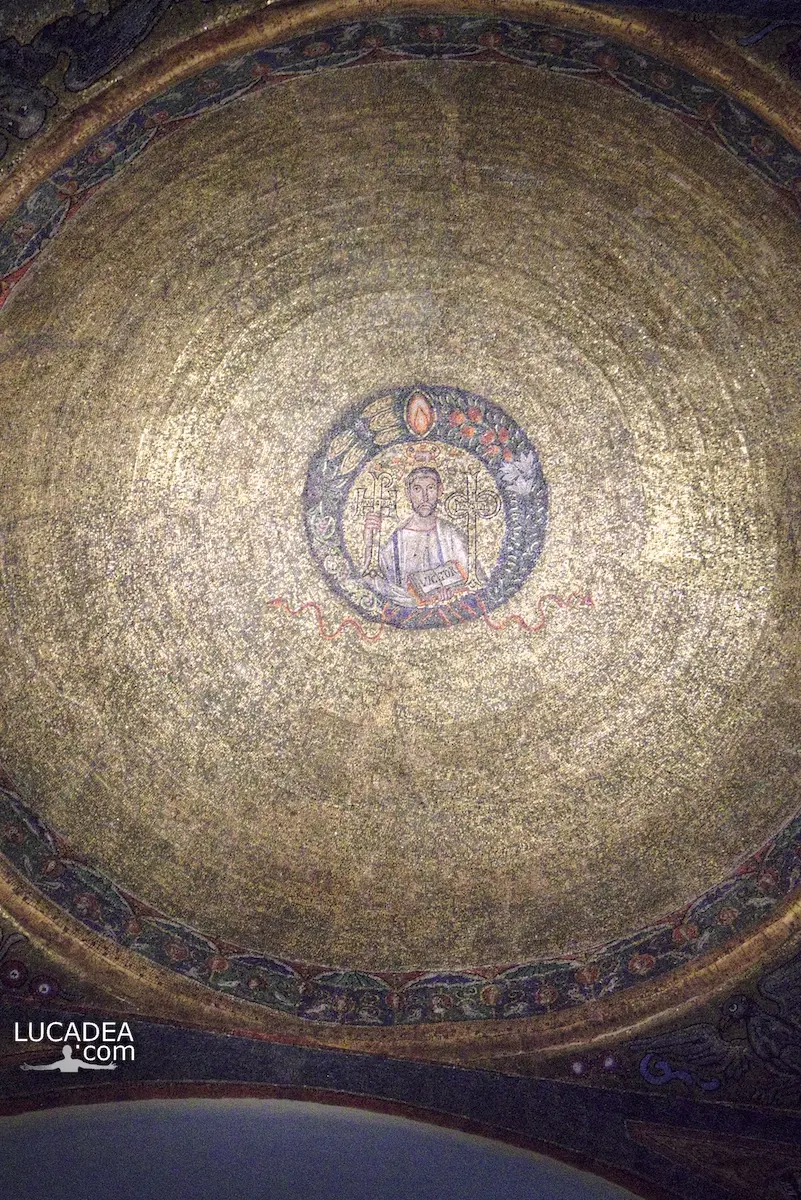
San Bernardino alle Ossa Sanctuary in Milan.
In the centre of Milan, just a short distance from the Duomo, I came across one of those places that can surprise you because of the unusual story hidden behind an otherwise modest setting. The ossuary chapel of San Bernardino alle Ossa is one of the most unusual places to see in Milan, especially for anyone interested in photographing spaces where art and history meet in an unexpected way.
Inside the ossuary, your attention is immediately drawn to the walls covered with bones and skulls arranged in carefully organised patterns. The first impression can be unsettling, but looking more closely reveals the care with which the space was created and decorated. I wanted to capture this atmosphere with my camera, preserving something of the feeling I had when standing in front of a place so different from Milan’s better-known monuments.
San Bernardino alle Ossa is located in central Milan, close to Piazza del Duomo, and its position makes the visit even more striking. You only need to move a short distance away from the busiest parts of the city centre to enter an environment where death is represented in a very direct way, but also through a deliberate aesthetic arrangement.
The history of the ossuary is connected with the need to provide space for the remains of the dead. The first structure associated with this purpose dates back to the Middle Ages, while the chapel was altered and rebuilt over the centuries. The present structure dates from the late seventeenth century, following a fire that damaged the earlier building.
This layered history is also what makes the site so interesting from a photographic point of view. The bones covering the walls are not simply piled together randomly. They are arranged into patterns and compositions, turning a practical necessity into one of the defining features of the architecture. That is one of the details that stayed with me most strongly after the visit.
There is much more inside the sanctuary than the ossuary itself. Religious decorations and paintings create a striking contrast with the human remains. The presence of artwork, frescoes and the main altar makes the interior considerably more complex than the simple image of an ossuary might suggest.
The surfaces and atmosphere of the chapel also contribute to the way the scene is perceived, but what remains most memorable is the contrast between the refined decorations and the presence of human remains. That contrast is what makes the place difficult to treat as merely a documentary photographic subject.
When I think about what to see in Milan, these less obvious places are often the ones that interest me most. Not necessarily because they are spectacular in the traditional sense, but because they have a story to tell and allow you to look at a familiar city from a completely different perspective.
San Bernardino alle Ossa is also a good example of how urban history can survive in places located almost beside the city’s most famous landmarks. After seeing the Duomo and the grand architecture of central Milan, entering such an unusual chapel changes the atmosphere completely.
The photograph I took was therefore mainly driven by curiosity. I did not want to photograph just another famous monument. I wanted to preserve a detail from a visit that had stayed with me because of the atmosphere and because of the unusual combination of art, religious devotion and memory.
It also connects naturally with other photographs I have shared of churches, chapels and historic interiors in Italy. In these places I am usually looking for the detail that can tell something about the setting without turning the photograph into a conventional postcard.
Looking at this image again, what comes back to me most clearly is the feeling of entering a space completely different from what I expected to find in the middle of Milan. The ossuary is not simply a macabre curiosity. It is a historical testimony that still has a very distinctive identity through the arrangement of the bones and the surrounding decoration.
For anyone interested in photography, history or unusual religious interiors, this chapel offers a particularly distinctive subject. It is the kind of place where it is worth staying for a few extra minutes, looking carefully at the details and allowing the space itself to suggest the photograph.
Have you ever visited San Bernardino alle Ossa, and what detail caught your attention most? Add a comment or go to the bottom of the site to read what other visitors have written.


Photo taken with Honor 20.
This is the official website of the sanctuary: sanbernardinoalleossa.it.
To see all the photos I took of the sanctuary, click here:

Here’s where it is:
The rights on images, videos, choruses, text and all other material on the LUCADEA.com website are governed as per Copyright page.