Ravecca Street and the Soprana Gate in Genoa

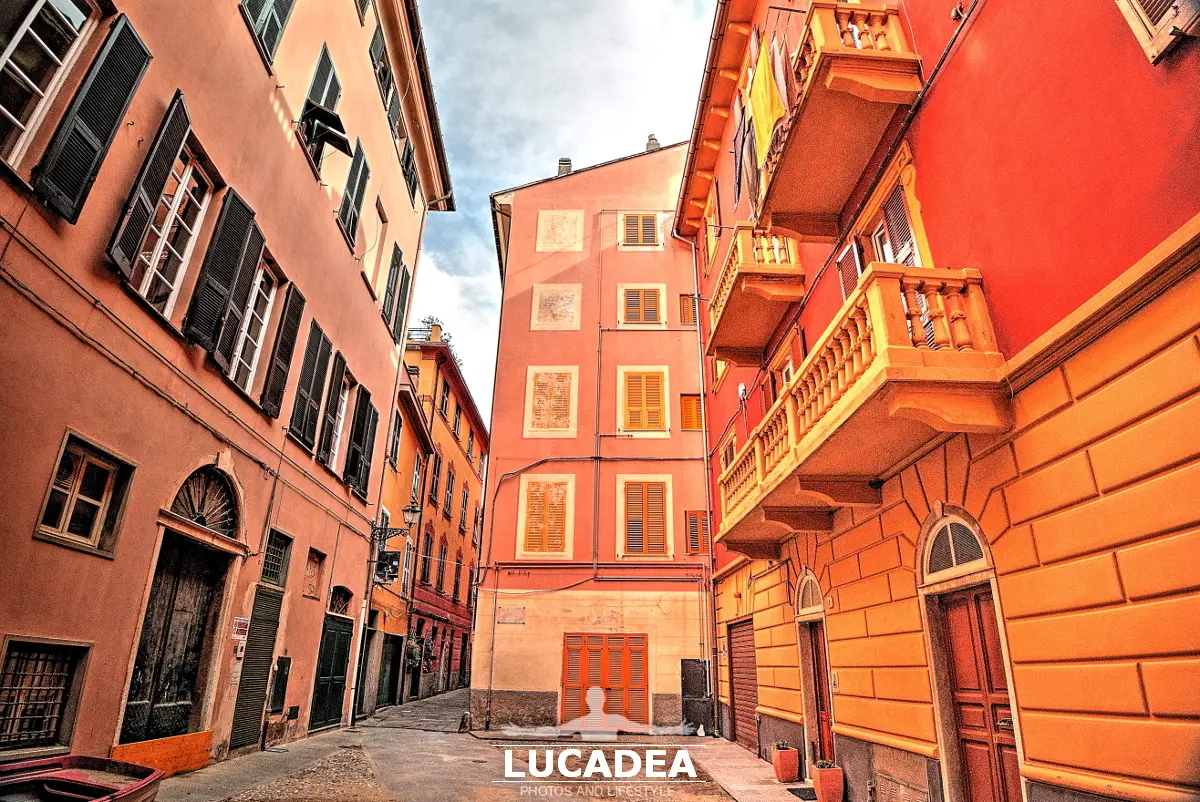
Via di Ravecca nel centro storico di Genova con edifici ravvicinati e Porta Soprana visibile in fondo alla strada

Ravecca Street and the Soprana Gate in Genoa.
Walking through the historic center, I found myself drawn into a narrow perspective where the street seemed to guide my eyes naturally toward the old city gate in the distance. The view of the Soprana Gate and the surrounding historic streets came together almost without effort, and that was what made me stop and take a closer look.
Ravecca Street has a particular rhythm. The buildings become close enough to shape the view, while their worn walls and uneven surfaces give the scene an everyday character. At the end of this perspective, the Soprana Gate appears with a clear and solid presence, becoming the natural point where the eye comes to rest.
When I think about what to see in Genoa’s historic center, these kinds of views often interest me more than a monument photographed on its own. The surroundings are part of the subject. Here, the medieval gate gains meaning because of the street leading toward it, while the buildings on either side create a frame that was already there.
I took this photograph myself because the composition seemed to suggest itself. I did not want to interfere with the scene or look for a more elaborate arrangement. The irregular façades, changing textures and marks left by time were important parts of the image. Those imperfections give the photograph a more direct connection with the street as I actually saw it.
This is Genoa, Liguria, Italy, a city where historic architecture remains closely connected to everyday urban life. That is one of the things I enjoy when photographing the old center. You can walk along an apparently ordinary street and suddenly find yourself looking toward a structure that belongs to another period of the city’s history.
The Soprana Gate, also known as Saint Andrew’s Gate, was part of Genoa’s medieval defensive walls and served as one of the historic entrances to the city. Its two towers are particularly recognizable from nearby, but from Ravecca Street they become part of a wider urban composition. The gate remains the destination of the view without dominating the photograph from the very beginning.
This small historical detail adds another layer to the image. What is now a familiar landmark was once part of a practical defensive system designed to protect the city and regulate access through its walls. Today, the gate stands naturally within the historic center, surrounded by streets that continue to form part of everyday Genoese life.
If you are visiting Genoa and looking for places worth seeing in the historic center, perspectives like this are worth noticing. You do not always need to stand directly in front of a landmark to appreciate it. Sometimes the more interesting photograph comes from the way a street gradually reveals what lies beyond it.
While I was taking the picture, I had the feeling that there was nothing to add or remove. Ravecca Street already created the direction of the composition, while the Soprana Gate provided a strong visual ending. The buildings and walls filled the space between the two, making the image feel complete without requiring anything artificial.
Looking at the photograph again, I like the way the eye moves through it. First come the façades and the textures of the street, then the perspective becomes stronger and finally the medieval gate appears in the distance. It is a simple sequence, but it reflects the way I actually encountered the scene.
It also connects naturally with the other photographs of Genoa I have shared on the site, especially those where the historic streets themselves become part of the subject. In these images, I am less interested in presenting a place as a postcard and more interested in recording the particular view that made me stop with my camera.

Have you ever walked along Ravecca Street and followed its perspective toward the Soprana Gate? Add a comment or go to the bottom of the site to read what other visitors have written.

View of Ravecca Street in Genoa with the Soprana Gate framed by historic façades in the old city center

Photo taken with Canon EOS R50 V and lens Canon RF 28.

Where I took the photo:

Add one  comment to this article or read  here what other visitors have written.
 
Adv
 
Disclamer

The rights on images, videos, choruses, text and all other material on the LUCADEA.com website are governed as per  Copyright page.

This page has been viewed 1 times today.
This month it has been viewed 1 times.
In total it has been viewed 1 times.
 

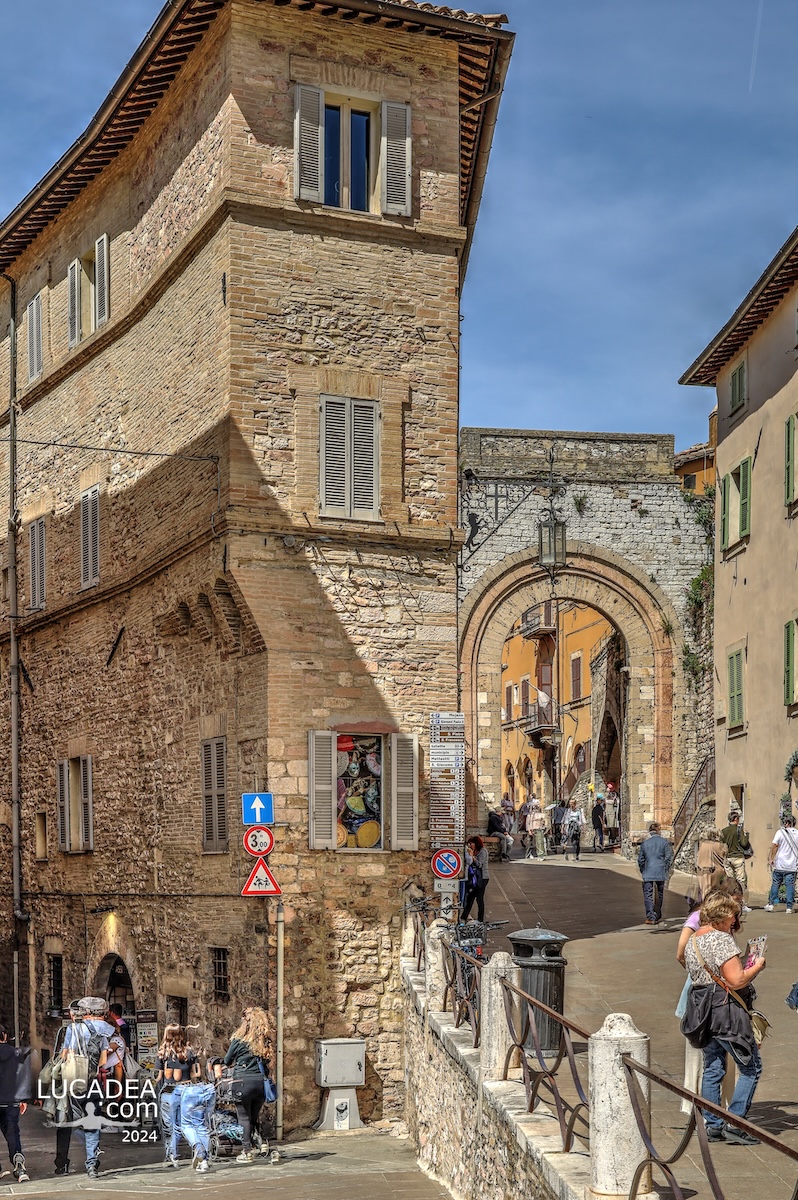
The arch of Portella di San Giorgio in Assisi

Incrocio tra Via di Santa Chiara e Via di Sant’Agnese ad Assisi con la Portella di San Giorgio sullo sfondo in pietra antica

The arch of Portella di San Giorgio in Assisi.
I reach the intersection between Santa Chiara Street and Sant’Agnese Street almost without noticing, guided more by instinct than by any planned route. The arch of Portella di San Giorgio appears in the background with a quiet presence, framing the passage and naturally leading the eye toward a part of the town that seems to move at a slower pace.
At this point in Assisi, everything feels balanced and contained. The streets meet without effort, and there is no need for dramatic elements to capture attention. Instead, the focus settles on this ancient gateway that leads toward the area of Basilica of Santa Chiara. The arch does not dominate the scene; it simply exists within it, blending into the rhythm of the place.
As I move closer, I start noticing the textures. The stone surfaces carry the marks of time, with small imperfections that give depth and authenticity. Nothing feels staged or overly restored. Photographing here becomes less about composition and more about awareness, about recognizing the quiet details that make the scene meaningful.
An interesting detail is that Portella di San Giorgio is often mistaken for Porta Nuova, which lies further east, yet the two are quite different in scale and presence. This one feels more intimate, less imposing, and perhaps more connected to the everyday life of the town.
I pause for a moment, waiting for the space to settle, watching how people move through it or how it briefly empties. In places like this, photography feels like something that happens naturally rather than something to chase.

Have you ever found yourself in a place so quiet it made you slow down without even realizing it? Add a comment or go to the bottom of the site to read what other visitors have written.

Incrocio tra Via di Santa Chiara e Via di Sant’Agnese ad Assisi con la Portella di San Giorgio sullo sfondo in pietra antica

Photo taken with Canon EOS RP and Canon RF 24-50 lens.

To see all the photos of Assisi, click here:

Where is the village located:

The arch of the Portella di San Giorgio in Assisi – L’arc de la Portella di San Giorgio à Assise – El arco de la Portella di San Giorgio en Asís – O arco da Portella di San Giorgio em Assis – Der Bogen der Portella di San Giorgio in Assisi – Vòm Portella di San Giorgio ở Assisi – 阿西西圣乔治小门拱门 – アッシジのサン・ジョルジョ門のアーチ

The text of this post was written with the help of ChatGPT, a language model from OpenAI.

Add one  comment to this article or read  here what other visitors have written.
 
Adv
 
Disclamer

The rights on images, videos, choruses, text and all other material on the LUCADEA.com website are governed as per  Copyright page.


This page has been viewed 1 times today.
This month it has been viewed 1 times.
In total it has been viewed 1 times.
 

Sant’Antonio Square, the heart of Sestri Levante

Rotonda di Piazza Sant’Antonio a Sestri Levante, punto centrale del traffico cittadino

Sant’Antonio Square, the heart of Sestri Levante.
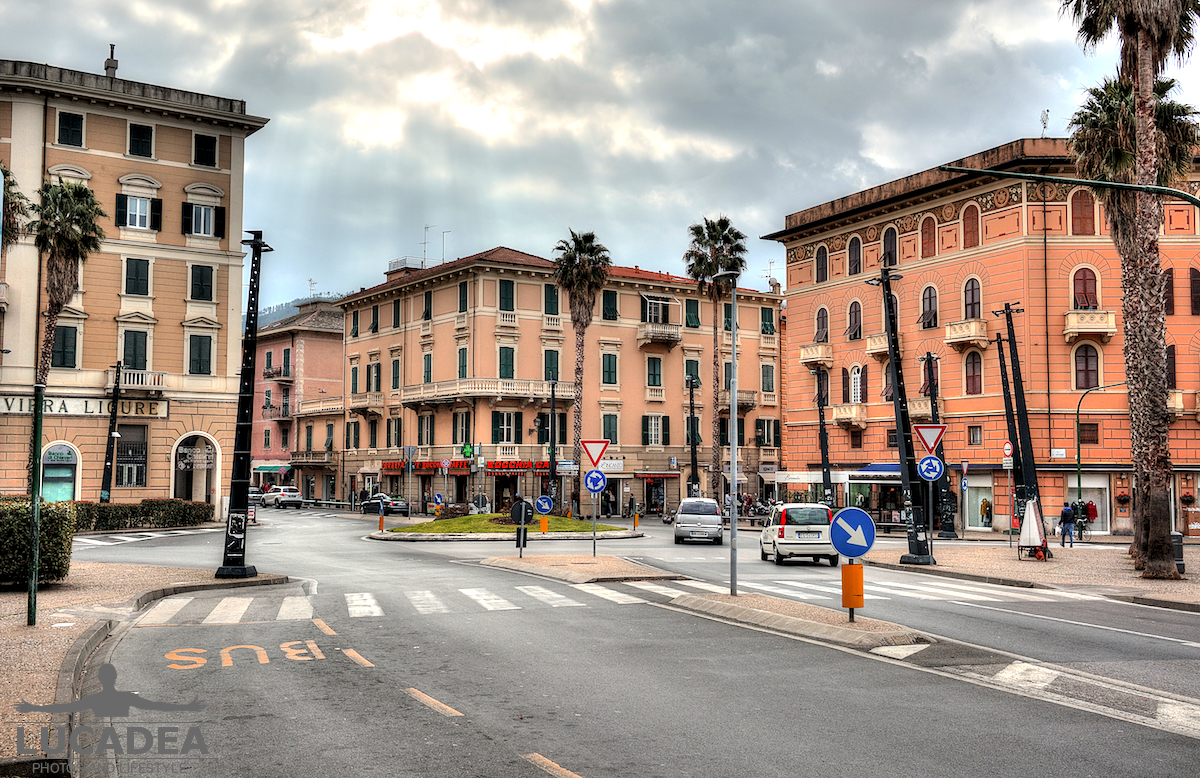
Walking through Sestri Levante, Liguria, Italy, it is almost impossible not to pass through this area, which represents one of the main connections of the town. The Sant’Antonio Square roundabout is one of the most recognizable places for those arriving or moving around the center, where the flow of vehicles meets everyday local life.
This photograph shows a less postcard-like but equally important side of Sestri Levante: the town as it is experienced every day by the people who live here. When looking for places to see in Sestri Levante, visitors usually think about the sea, Bay of Silence, or the historic center, but these everyday urban spaces are also part of the identity of a place.
I wanted to photograph Sant’Antonio Square because it is a location I know well and one of the real reference points of my hometown. It is not a hidden corner or a forgotten detail, but a place crossed continuously by residents and visitors, where the organization of traffic has changed several times over the years.
This photograph comes from my habit of observing the places that are part of daily life. I captured this view with my camera because even a roundabout can tell a story about how a town evolves. Over time, different solutions were tested to make this intersection safer, including various traffic light systems designed to manage the constant movement of vehicles.
Today, the roundabout seems to be the solution that works best for this particular location. It allows traffic to move more naturally and has reduced the difficulties that this busy crossing created in the past.
An interesting detail is the strategic position of Sant’Antonio Square within Sestri Levante. From here, it is possible to easily reach the historic center, XXV April Street, and the carruggio, the traditional main street of the old town. Its position has always made it one of the most active and frequently crossed areas of the town.
I like connecting this image with my other photographs dedicated to Sestri Levante because telling the story of a place does not only mean showing famous views. It also means capturing the streets, intersections, and everyday corners that give a town its personality.
This is my hometown, and for this reason I always feel the need to photograph it, even when the subject is a place that many people simply pass by without noticing.

Does your town have a square or intersection that has become a familiar landmark for everyone? Add a comment or go to the bottom of the site to read what other visitors have written.

Sant’Antonio Square roundabout in Sestri Levante, a central point of the town traffic

Photo taken with Canon EOS M100 and lens Canon EF-M 22.

Colombo Avenue and Fascie-Rossi Palace in Sestri

Corso Colombo a Sestri Levante con Palazzo Fascie-Rossi e la torre in mattoni rossi

Colombo Avenue and Fascie-Rossi Palace in Sestri Levante.
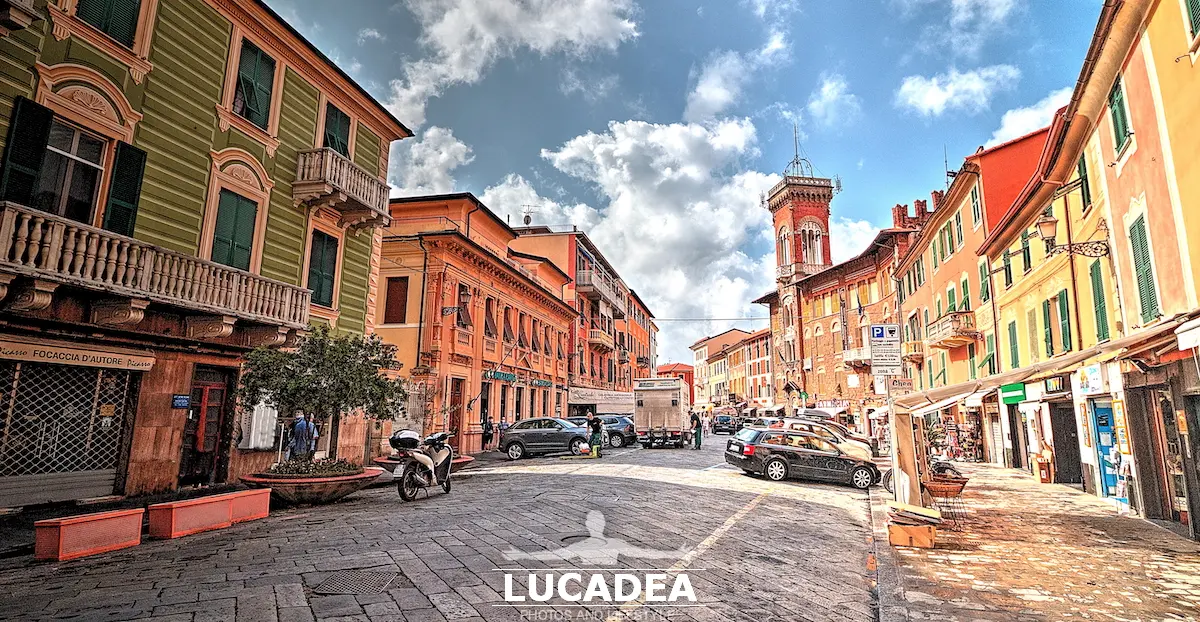
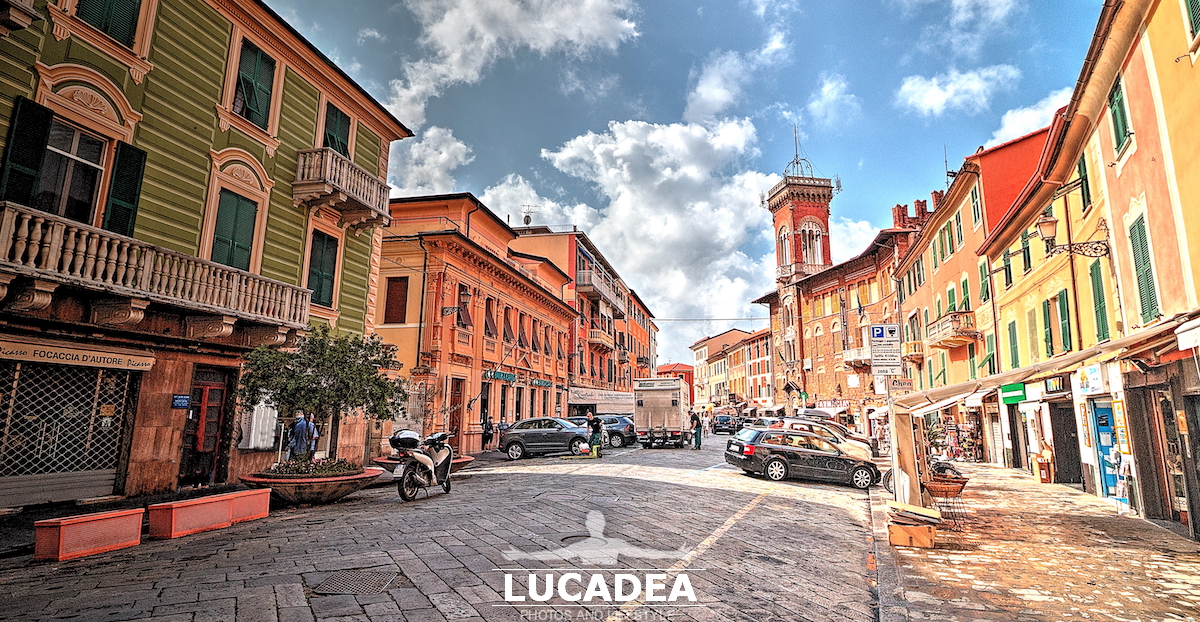
Walking through the center of Sestri Levante, Liguria, Italy, I often think about how important everyday places can be when telling the story of a town. This photograph shows one of the central avenues of my hometown, with the unmistakable red brick tower of Fascie-Rossi Palace, one of the architectural elements that defines the town’s urban landscape.
Colombo Avenue is a street I know very well and one that I enjoy photographing because it represents daily life in Sestri Levante. It is a busy avenue, especially in the morning, also because of its position close to the historic center. The route continues naturally towards XXV April Street, the carruggio of Sestri Levante, creating a connection between the more modern part of town and the older heart of the village.
I wanted to capture this view with my camera because it tells a side of Sestri Levante that is very personal to me. A photograph does not always need to come from a distant journey or an exotic destination. Sometimes the most meaningful subject is the place we see every day and learn to observe differently. My home is Sestri Levante, and this is exactly why I feel proud to dedicate many photographs to it.
This is not the first time I have published an image of Colombo Avenue, but every photograph can reveal a different detail. The people walking through the street change, the atmosphere changes, and even my own way of looking at a familiar place evolves over time.
Fascie-Rossi Palace is one of the most recognizable historic buildings in Sestri Levante. Its red brick tower, inspired by the medieval revival style popular between the late nineteenth and early twentieth centuries, has become a true landmark in the town center. Today the palace also hosts cultural activities connected with local history.
If you are visiting Sestri Levante and looking for places worth seeing, Colombo Avenue offers a simple way to experience the town’s everyday character: not only famous views and landmarks, but also streets, shops, people, and architectural details that create the identity of the place.
This photograph connects with other stories I have shared about Sestri Levante, because I believe a town can be discovered through many small fragments collected over time.

What place in your hometown feels most like your own and you would never stop photographing? Add a comment or go to the bottom of the site to read what other visitors have written.

Colombo Avenue in Sestri Levante with Fascie-Rossi Palace and its red brick tower

Photo taken with Canon EOS M100 and lens Canon EF-S 10-18.

The Garibaldi statue in Chiavari’s heart

Statua di Giuseppe Garibaldi nel centro di Chiavari tra il caruggio dritto e corso Garibaldi in Liguria

The Garibaldi statue in Chiavari’s heart.
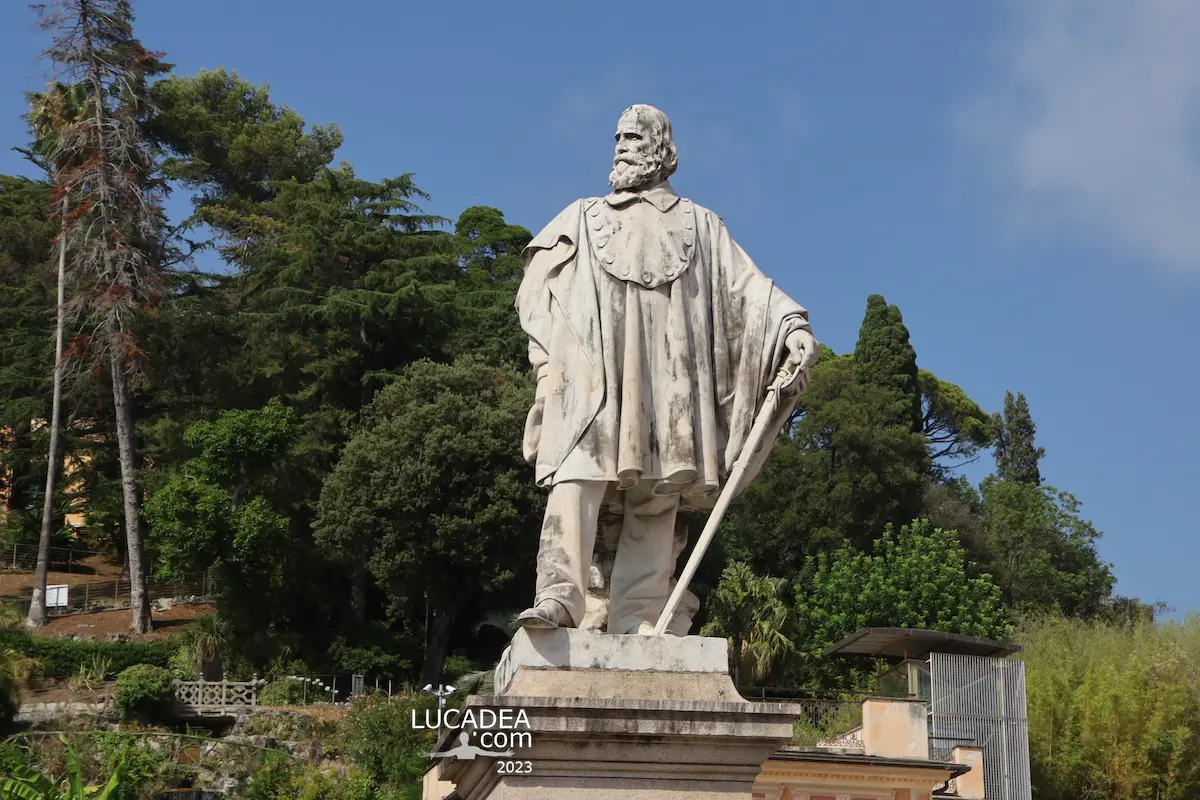
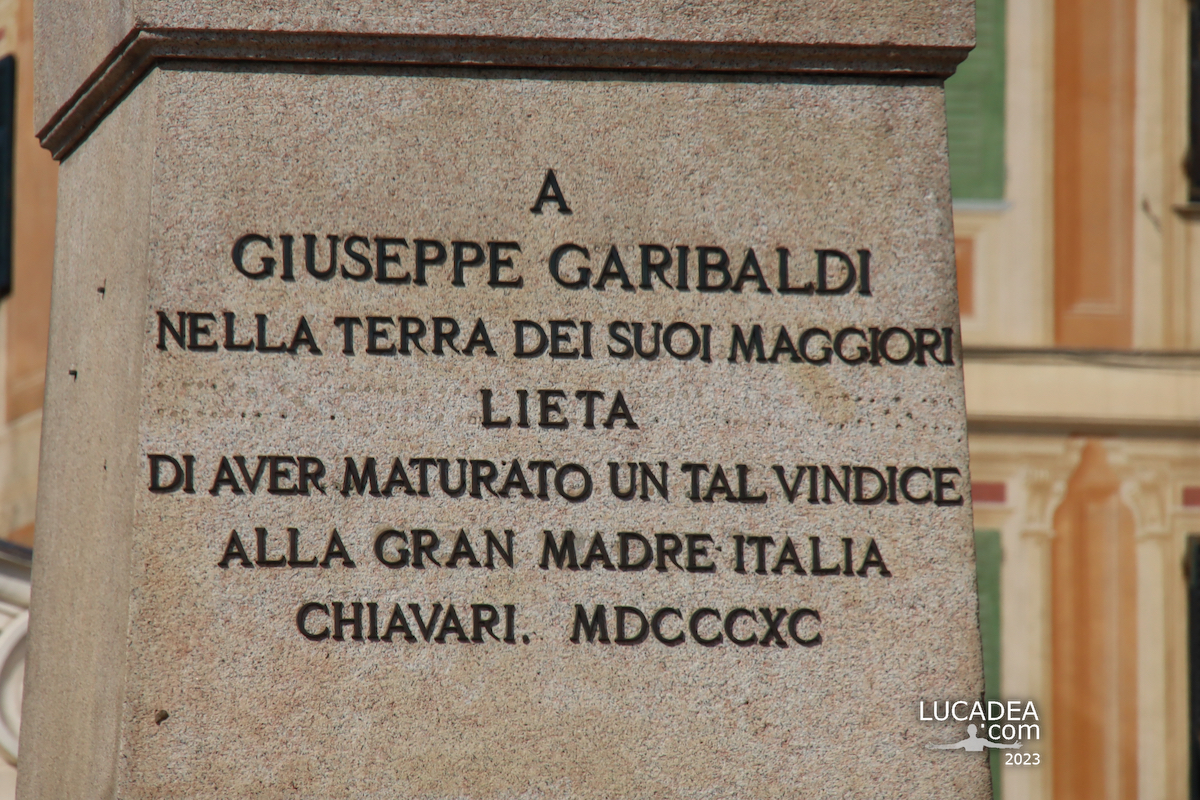
While walking through the historic center of Chiavari, I stopped in front of this monument dedicated to Giuseppe Garibaldi, a detail of the city that quietly connects everyday life with an important part of Italian history. The Garibaldi statue in Chiavari is one of the interesting places to see in the town center, especially for those who enjoy discovering historical references hidden among ordinary streets.
The monument stands where the main caruggio crosses Corso Garibaldi, one of the most recognizable areas of the old town. Here, the statue is not separated from its surroundings but becomes part of the daily rhythm of the city. People walking by, historic buildings, and small urban details create a setting where the past and present naturally meet.
The Garibaldi statue is located in Chiavari, Liguria, Italy, and recalls the connection between the city and the family of the famous Italian figure. The inscription on the monument remembers that Garibaldi’s father, Domenico, was born in Chiavari. This local connection gives the statue a more personal meaning, making it more than just a tribute to a historical character.
When I photograph monuments, I like to look beyond the subject itself. The real story often comes from the relationship between the object and the place around it. In this image, the statue becomes part of the street scene, surrounded by the architecture and atmosphere of the Ligurian town.
One interesting detail is that Giuseppe Garibaldi received the nickname “Hero of the Two Worlds” because of his military activities in both South America and Europe, becoming one of the key figures of the Italian unification movement.
On the blog, I have also shared other views of Chiavari and eastern Ligurian towns, because small details found during a walk often reveal the strongest identity of a place. A monument, a street corner, or an old building can tell a story without needing a large explanation.

This photograph reminds me that history is often closer than we think, waiting in the places we cross every day. Have you ever discovered an unexpected historical connection while exploring a town? Add a comment or go to the bottom of the site to read what other visitors have written.

A
GIUSEPPE GARIBALDI
NELLA TERRA DEI SUOI MAGGIORI
LIETA
DI AVER MATURATO UN TAL VINDICE
ALLA GRAN MADRE ITALIA
CHIAVARI. MDCCCXC

Statua di Giuseppe Garibaldi nel centro di Chiavari tra il caruggio dritto e corso Garibaldi in Liguria

Foto scattata con macchina Canon EOS RP e lente Tamron 16-300.

Here’s where the monument is located:

Giuseppe Maria Garibaldi (Nice, July 4, 1807 – Caprera, June 2, 1882) was an Italian general, patriot, military leader, writer, sailor, and politician. A key figure of the Risorgimento, he was one of the most celebrated historical figures of his era. He is also known as the “hero of two worlds” for his military exploits in both Europe and South America.
Continue and learn more at Wikipedia

La statua di Garibaldi nel cuore di Chiavari – The Garibaldi statue in the heart of Chiavari – La statue de Garibaldi au cœur de Chiavari – La estatua de Garibaldi en el corazón de Chiavari – A estátua de Garibaldi no coração de Chiavari – Die Garibaldi-Statue im Herzen von Chiavari – Tượng Garibaldi giữa trung tâm Chiavari – 基安瓦里的加里波第雕像 – キアーヴァリ中心部のガリバルディ像

The text of this post was written with the help of ChatGPT, a language model from OpenAI.

From Via del Campo to Fossatello Square in Genoa

Scorcio da via del Campo verso piazza Fossatello nei vicoli di Genova con passaggio stretto tra caruggi storici

From Via del Campo to Fossatello Square in Genoa.
Every time I walk from Via del Campo to Fossatello Square in Genoa, it feels like moving through two connected layers of the same city, where narrow alleys open suddenly into slightly wider spaces. People searching for Via del Campo Genoa things to see or what to see in Genoa old town usually imagine a straight itinerary, but here the experience is always fragmented and fluid.
Whenever I go to Genoa for errands, I almost inevitably pass through the historic center. In recent years I often stop in small Asian grocery shops looking for ingredients for my wife’s Vietnamese cooking, and this has slowly turned my visits into a mix of daily life and observation. Even the walk back through Via del Campo feels like a familiar ritual that changes slightly every time.
I was in Genoa, Liguria, Italy, right at the final stretch of Via del Campo, where the narrow street begins to open toward Fossatello Square and the surrounding streets. The rhythm shifts here: from enclosed and shadowed alleys to a more open urban space, even though the light in the caruggi always remains indirect and uneven.
If you are visiting Genoa, these transitions between streets and small squares are often more revealing than the famous landmarks themselves. Via del Campo, known also through Italian music and cultural memory, still carries a strong identity shaped by layers of everyday life and history.
One interesting fact is that Genoa’s old town is one of the largest medieval centers in Europe, designed as a dense network of passages meant to be experienced on foot rather than observed from above.
Every time I reach Fossatello Square, I feel a brief sense of release from the maze of alleys, even though just a few steps are enough to be back inside it again. This constant shift is part of what makes Genoa so unique and difficult to capture in a single image.

Have you ever walked through a city where every turn felt both familiar and slightly different at the same time? Add a comment or go to the bottom of the site to read what other visitors have written.

Scorcio da via del Campo verso piazza Fossatello nei vicoli di Genova con passaggio stretto tra caruggi storici

Photo taken with Canon EOS RP and Canon RF 24-50 lens.

Here’s where the exact spot is:

Before the construction of Barbarossa’s walls in 1155, Fossatello was a rural area outside the walls, crossed by a stream, the Fossatello River, and characterized by sparse wooden huts.
Continue and learn more at amezena.net

From Via del Campo to Piazza Fossatello in Genoa – De la Via del Campo à la place Fossatello à Gênes – De Via del Campo a la plaza Fossatello en Génova – Da Via del Campo à Praça Fossatello em Génova – Von Via del Campo zum Piazza Fossatello in Genua – Từ Via del Campo đến Quảng trường Fossatello ở Genoa – 从热那亚的德尔坎波街到福萨泰洛广场 – ジェノヴァのヴィア・デル・カンポからフォッサテッロ広場へ

The text of this post was written with the help of ChatGPT, a language model from OpenAI.

The altar of Santa Maria delle Vigne in Genoa

L'altare di Santa Maria delle Vigne a Genova

The altar of Santa Maria delle Vigne in Genoa.
The altar of Santa Maria delle Vigne in Genoa is a significant element of the historic church located in the heart of the city’s old town. This church, dating back to the 10th century, is one of the oldest in Genoa and is dedicated to the Virgin Mary.
Origins: The church’s origins go back to the 10th century, when a small chapel dedicated to the Virgin Mary was built. The church takes the name “delle Vigne” from the vineyards that once surrounded the area.

Have you ever visited the church? Add your own comment or go to the bottom of the site to read what other visitors have written.

L'altare di Santa Maria delle Vigne a Genova

Photos taken with Canon EOS M100 and Canon EF-S 10-18 lens.

To see all the photos I took in the basilica, click here:

Where is the church:

On the high altar, Giacomo Antonio Ponsonelli’s last work (1730) based on a design by Pierre Puget, stands a statue of the Madonna, supported by angels, also by the artist. The presbytery contains several eighteenth-century paintings: the Nativity of the Virgin by Giuseppe Cades (painted in Rome in 1784, originally intended for the church of San Carlo al Corso), the Presentation of the Virgin by Giovanni David (1785), and the Annunciation by Carlo Giuseppe Ratti (1787).
Continue and learn more at Wikipedia

The altar of the church of Santa Maria delle Vigne in Genoa – L’autel de l’église de Santa Maria delle Vigne à Gênes – El altar de la iglesia de Santa Maria delle Vigne en Génova – O altar da igreja de Santa Maria delle Vigne em Gênova – Der Altar der Kirche Santa Maria delle Vigne in Genua – Bàn thờ của nhà thờ Santa Maria delle Vigne ở Genoa – 热那亚圣玛丽亚德尔维涅教堂的祭坛 – ジェノヴァのサンタ・マリア・デッレ・ヴィーニェ教会の祭壇

The text of this post was written with the help of ChatGPT, a language model from OpenAI.

A winter walk through Sestri Levante’s old town

Caruggio quasi vuoto nel centro storico di Sestri Levante, una passeggiata invernale tra le vie del paese

A winter walk through Sestri Levante’s old town.
Walking through the old town of Sestri Levante in winter offers a much quieter way to experience the streets, with fewer people around and more time to notice the small details along the way. The narrow lane through the centre becomes a natural photographic route, especially when I can walk without feeling that I need to move on immediately.
I took this photograph during winter, a season when it is not particularly difficult to walk through Sestri Levante’s historic centre and find the streets almost empty. For me, this is one of the best times to photograph my hometown. The quieter atmosphere makes it easier to stop, look carefully at a building or perspective and wait for the scene to feel right without having to work around a constant stream of people.
Sestri Levante is in Liguria, Italy, on the Italian Riviera, and it is perhaps best known for its coastline and the famous Bay of Silence. But if you are wondering what to see in Sestri Levante beyond the beaches, the old town is worth exploring as well. Walking through its narrow streets offers a different perspective on the town, one that feels more connected to everyday life than to the busy summer season.
That everyday quality is what I wanted to preserve in this photograph. I took the image myself during a winter walk, when the historic centre had a noticeably slower rhythm. I was not looking for a spectacular scene or a carefully staged composition. The almost empty street was already enough to make me stop and take the camera out.
Winter changes the way the centre feels. The town does not simply disappear when the tourist season ends, but the reduced number of visitors gives the streets more breathing room. From a photographer’s point of view, that makes a real difference. I can take more time with a composition and pay attention to details that might otherwise be lost among people moving through the frame.
The narrow streets of Sestri Levante are part of the character of its historic centre. They connect different parts of the town and create a rhythm of small views, entrances, facades and changing perspectives. For me, walking through them is often less about reaching a particular destination and more about seeing what appears around the next corner.
One of the things I like about Sestri Levante is the relationship between its old town and the sea. A short walk can take you from the more intimate streets of the centre towards the coast and the open views that have made the town so well known. This contrast is something I have also explored in other photographs published on the site, where different corners of Sestri Levante become small pieces of the same visual story.
If you are visiting Sestri Levante outside the busiest months, the quieter streets can be a good reason to slow down and explore without a fixed route. There is no need to turn the walk into a checklist of places. Sometimes the most interesting photograph is simply the one that appears while you are walking somewhere else.
Looking at this image again, I still think winter is one of the most enjoyable seasons for photographing Sestri Levante. Every day can obviously look different, depending on the weather, the light and the people around, but the slower pace is what I appreciate most. It gives me the chance to experience the town as a resident and photographer rather than only as a place shaped by summer tourism.
This photograph therefore represents something quite simple for me: a familiar part of Sestri Levante seen without the usual rush. The quiet street, the old town and the freedom to stop whenever I notice an interesting detail are enough to make an ordinary walk worthwhile.

Do you also prefer exploring and photographing Sestri Levante in winter, when the old town becomes quieter? Add a comment or go to the bottom of the site to read what other visitors have written.

A quiet narrow lane in Sestri Levante's old town, photographed during a peaceful winter walk

Photo taken with Canon EOS RP camera and Canon RF 24-50 lens.

Here, precisely, is the spot where I took the shot:

Some lizards as souvenirs in Ibiza

Some lizards as souvenirs in Ibiza.
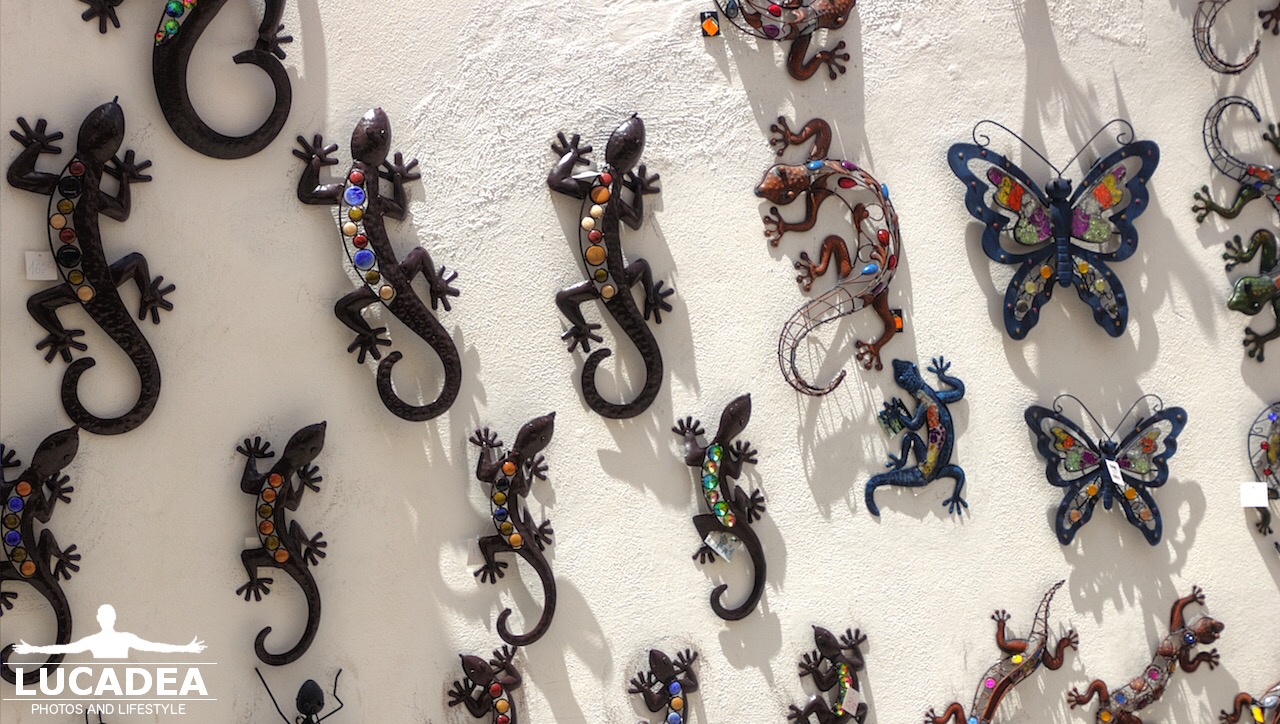
I saw and photographed these souvenir lizards in the alleyways of Ibiza’s old town some time ago.
They are made of wrought iron with colored stones. The lizards (or geckos) are displayed, along with other insects such as butterflies, on a wall along the street.

Have you ever been to Ibiza? Add a comment or go to the bottom of the site to read what other visitors have written.

lucertole souvenir

Photo taken with Canon 600D and Tamron 16-300.

Some lizards as souvenirs in Ibiza – Quelques lézards comme souvenirs à Ibiza – Unos lagartos como souvenir en Ibiza – Alguns lagartos como lembranças em Ibiza – Einige Eidechsen als Souvenirs auf Ibiza – Một số thằn lằn làm quà lưu niệm ở Ibiza

The little-known Marsala Square in Sestri Levante

Piazza Marsala a Sestri Levante

The little-known Marsala Square in Sestri Levante.
One of the most hidden and, perhaps, most original spots in my town.
A true Maina square located in a small bay just behind the Bay of Silence.

Do you know Sestri Levante? Add a comment or go to the bottom of the site to read what other visitors have written.

Piazza Marsala a Sestri Levante

Photo taken with Canon EOS M100 camera and Canon EF-S 10-18 lens.

Here’s exactly where the square is located:

The birth of Marsala as a fortified wine is centered on and credited to the English merchant John Woodhouse from Liverpool, who landed in the port of Marsala in 1773.
According to tradition, during their stopover, he and the rest of the crew had the opportunity to taste the wine produced in the area, which was aged in oak barrels and acquired a flavor similar to the Spanish and Portuguese wines that were very popular in England at the time.
Continue and learn more at Wikipedia

The little known square called Marsala in Sestri Levante – La place peu connue appelée Marsala à Sestri Levante – La plaza poco conocida llamada Marsala en Sestri Levante – A praça pouco conhecida chamada Marsala em Sestri Levante – Der wenig bekannte Platz namens Marsala in Sestri Levante – Quảng trường ít được biết đến có tên Marsala ở Sestri Levante – 塞斯特里莱万特 (Sestri Levante) 鲜为人知的广场 Marsala – セストリ レバンテのマルサラと呼ばれるあまり知られていない広場
🏠
  • Italiano