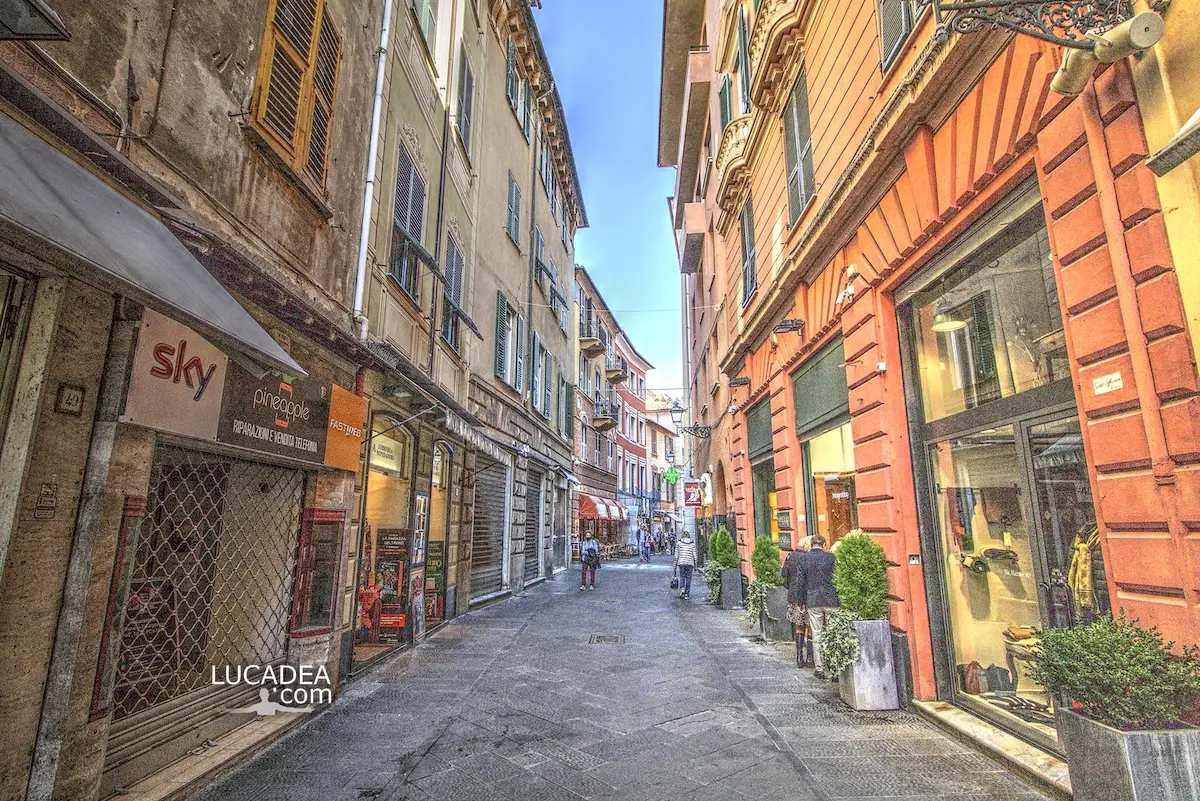
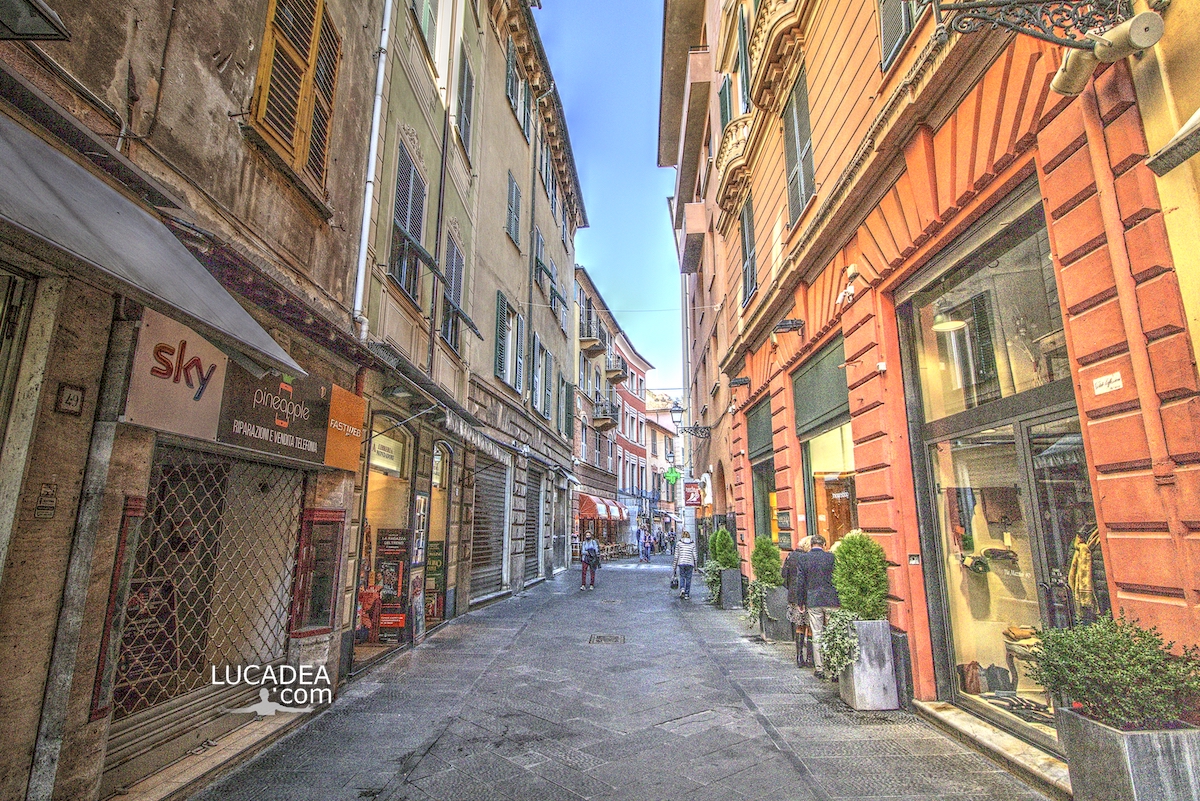
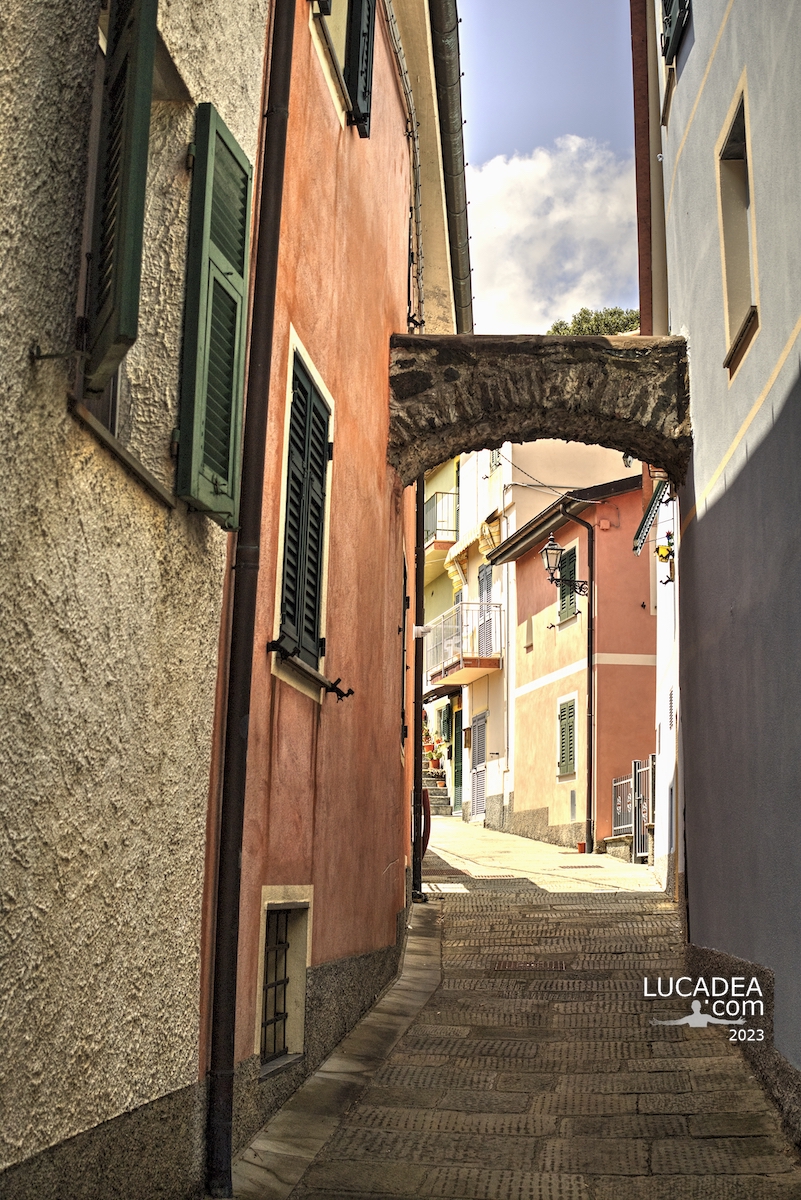
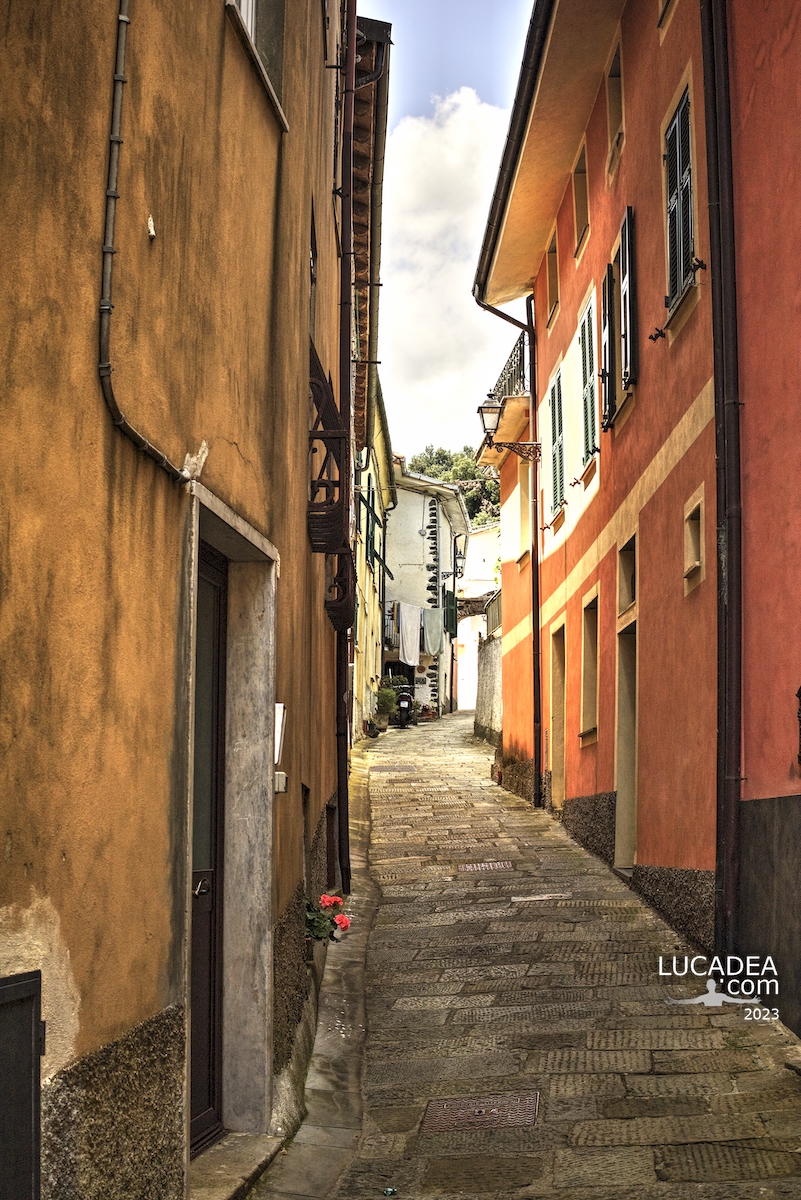
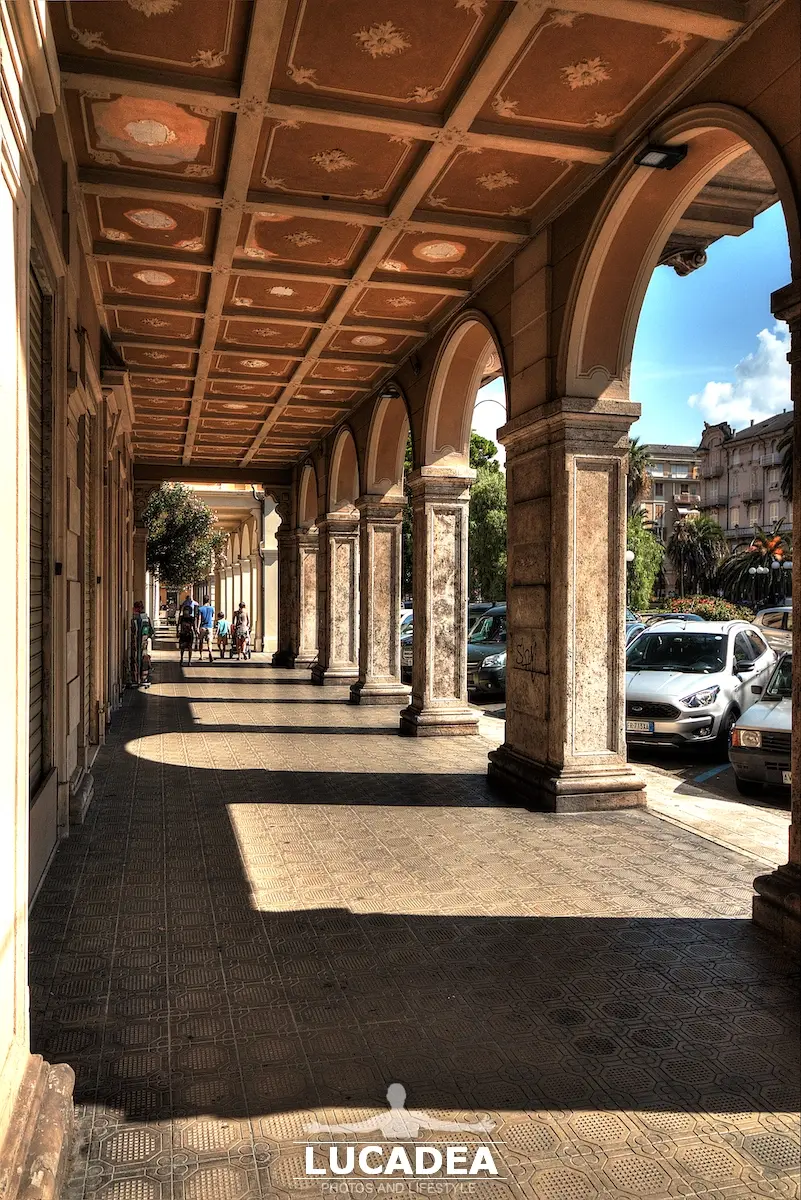
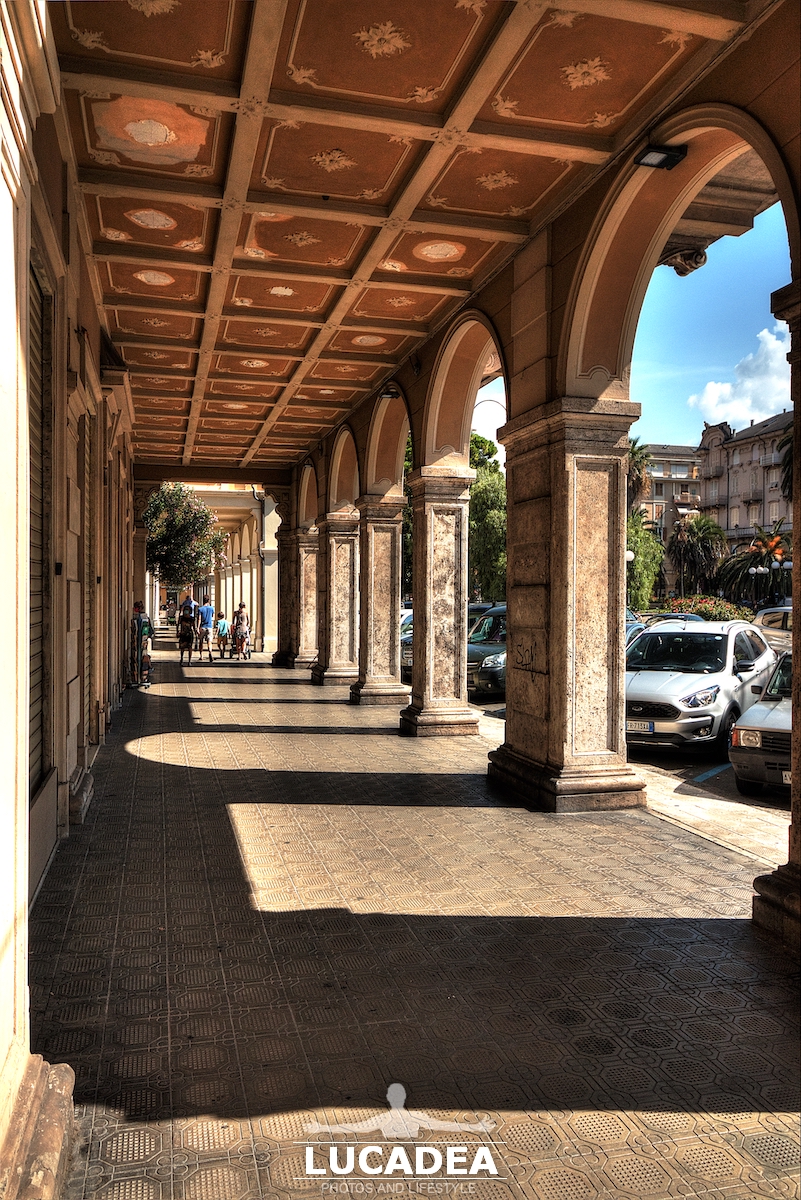
A glimpse of Chiavari old town streets

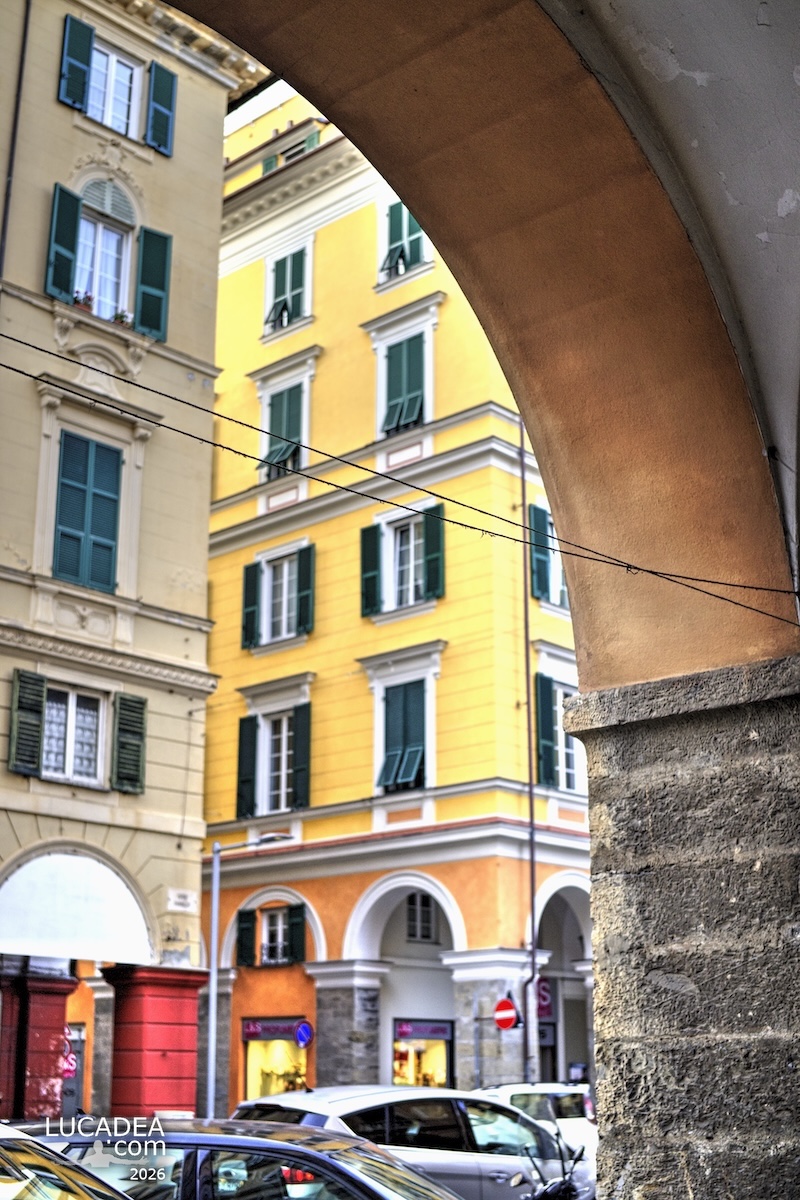
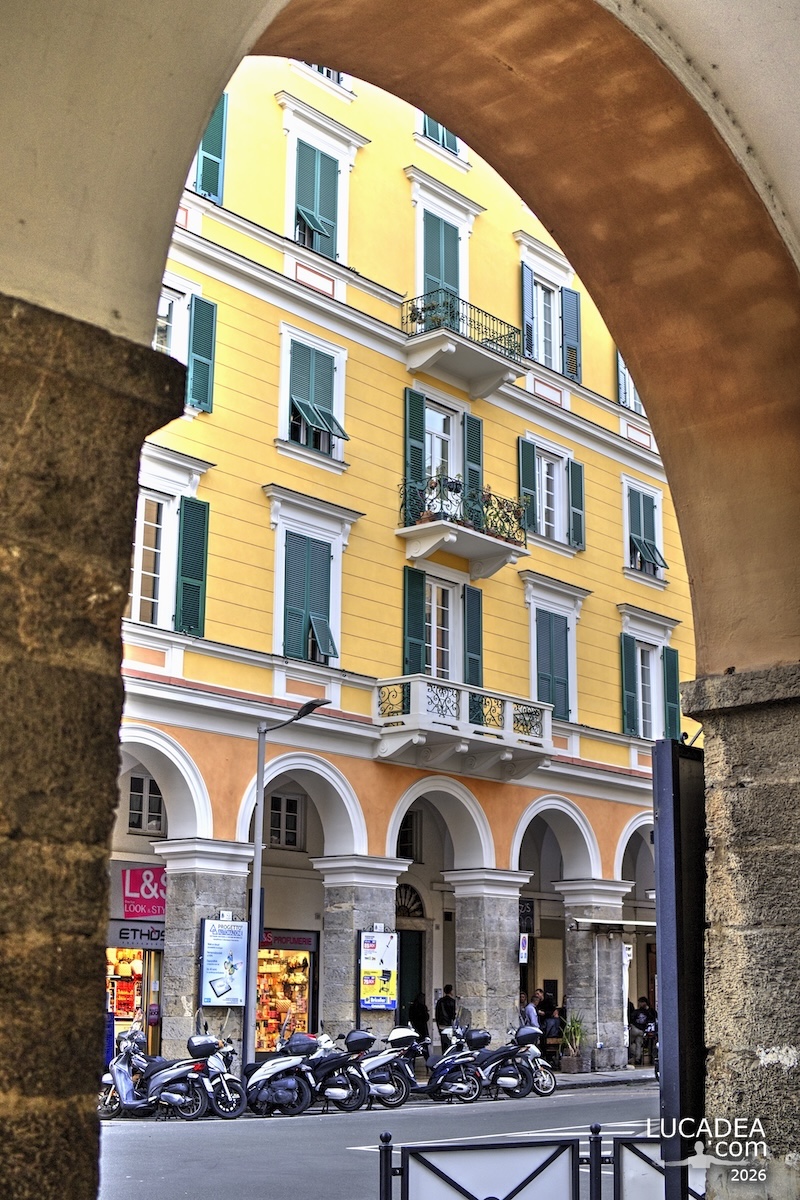
Portici del centro storico di Chiavari con palazzi gialli e persiane verdi incorniciati da un arco in primo piano

A glimpse of Chiavari old town streets.
Walking beneath the arcades in the old town of Chiavari is one of those simple experiences that shows you what to see in Chiavari without even trying. This view of Chiavari old town streets, with its colorful buildings and green shutters, feels like a natural introduction to the atmosphere of this coastal town in Liguria.
I paused under the arch almost without thinking, drawn by the way it framed the scene ahead. The curve of the stone created a soft border, guiding my eyes toward the yellow façade across the street. The repetition of windows and shutters gave the composition a quiet rhythm, something I always look for when photographing urban details.
In Chiavari, Liguria, Italy, the old town is not just a place to pass through but one of the most interesting places in Liguria to slow down and observe. If you are visiting this area, these arcades are definitely worth seeing, not only for their aesthetic but for the way they shape daily life. Historically, Chiavari is known for having some of the longest arcades in the region, offering shelter and continuity through centuries of local activity.
As I stood there, I remembered another photo I had taken along these same streets, shared on my site in a different season. The light had changed completely, yet the feeling remained familiar. That’s something I find fascinating: places like this hold their identity no matter the time or conditions.
Cars passing at the edge of the frame added a subtle contrast between past and present. They didn’t ruin the mood; instead, they reminded me that this is not just a preserved setting, but a living town.

Have you ever found yourself stopping for a moment in a place like this, realizing it’s more than just a street? Add a comment or go to the bottom of the site to read what other visitors have written.
Photos taken with Canon EOS R50 V and lens Canon RF 28.

Uno scorcio del centro storico di Chiavari – A glimpse of Chiavari old town – Un aperçu du centre historique de Chiavari – Un rincón del centro histórico de Chiavari – Um vislumbre do centro histórico de Chiavari – Ein Blick auf die Altstadt von Chiavari – Một góc khu phố cổ Chiavari – 基亚瓦里历史中心的一角

The text of this post was written with the help of ChatGPT, a language model from OpenAI.

Add one  comment to this article or read  here what other visitors have written.
 
Adv
 
Disclamer

The rights on images, videos, choruses, text and all other material on the LUCADEA.com website are governed as per  Copyright page.

This page has been viewed 0 times today.
This month it has been viewed 0 times.
In total it has been viewed 0 times.
 

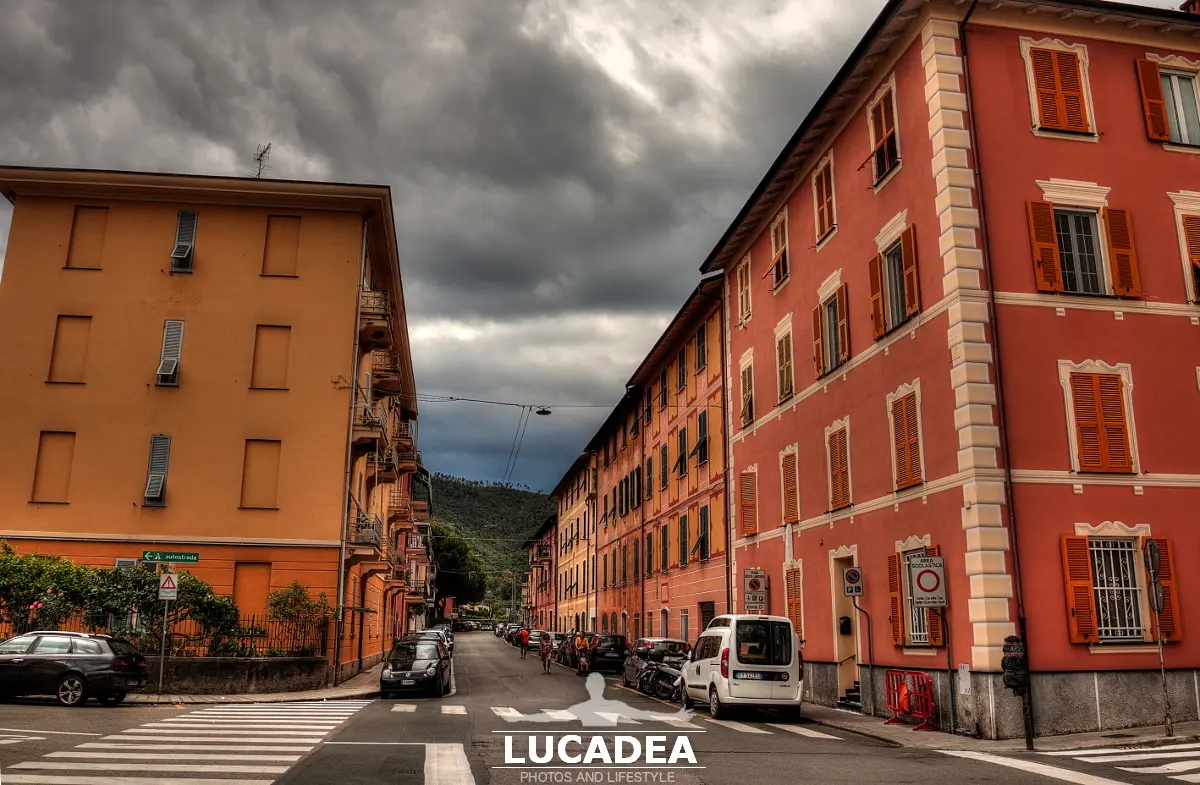
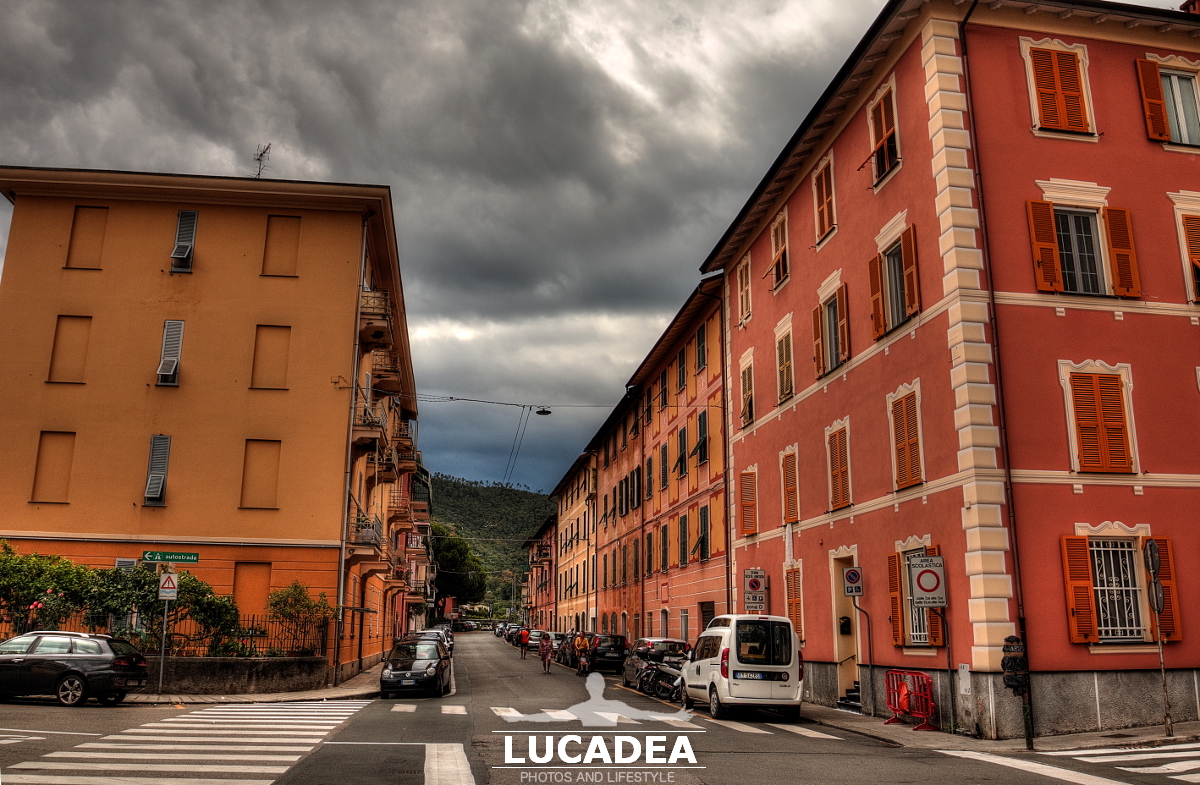
Val di Canepa street at Sestri Levante

Via Val di Canepa a Sestri Levante

Val di Canepa street at Sestri Levante.
Among my photographs of Sestri Levante, I was still missing a view of this well-known street, mainly associated with the school and the cemetery. At the beginning of the street, however, my attention was drawn to those large residential buildings, which look considerably more modern than much of the surrounding area.
The photograph shows the start of Val di Canepa street, and what I like about this view is the contrast between the road and the buildings around it. The large apartment blocks immediately give the scene a more urban character, while the street continues toward places that are part of everyday life in Sestri Levante. It is not necessarily the kind of view people look for when searching for the town, but that is precisely why I wanted to include it in my photographic collection.
When I photograph a place I already know through other images, I often realize that some ordinary corners have been left out. Over time I have photographed many different parts of Sestri Levante, but I had not yet taken a photograph of this section of Val di Canepa street. I wanted to add it without trying to turn an everyday scene into something it is not.
The street is particularly familiar because of two very different landmarks: the school and the cemetery. They obviously have completely different functions, yet both are part of the everyday geography of the town. For local residents they can be ordinary points of reference, while for a photographer they help identify an area that is rarely represented in the more typical images of Sestri Levante.
In Sestri Levante, Liguria, Italy, many of the best-known photographs focus on the sea, the Bay of Silence, the Bay of Fables, and the historic center. Val di Canepa street belongs to another side of the town, a more residential and everyday one. I find this side worth documenting because it shows Sestri Levante beyond the postcard views.
This photograph is not really about a monument or a particular attraction. I was interested in the relationship between the street and the large buildings at its entrance. They stand out immediately because of their size and because they appear to belong to a more modern phase of urban development.
The contrast becomes quite clear even if you do not know the area well. The street leads toward familiar local destinations, while the buildings at the beginning give the scene a distinctly urban appearance. Details like these can easily be overlooked when photography concentrates only on the most scenic or recognizable parts of a town.
One of the things I enjoy about keeping a photographic record of Sestri Levante is being able to put very different kinds of images next to each other. A photograph of the sea tells one story, while an ordinary residential street tells another. Neither needs to be more important. Together, they help create a more complete personal portrait of the town.
I wanted to photograph this particular view because a street mainly known for a school and a cemetery might not seem like an obvious subject. Yet these everyday places are part of what makes a town recognizable to the people who live there. They also reveal how different periods of construction have gradually become part of the same urban landscape.
There is a small linguistic curiosity in the Italian word “casermoni”, which I used to describe the large buildings. It is an informal expression commonly used for sizeable residential blocks because of their appearance and scale, rather than because they have any specific architectural classification. In this case, it simply describes the impression they make when seen from the street.
If you are looking for what to see in Sestri Levante, Val di Canepa street probably will not be among the first places suggested by a typical sightseeing guide. For me, however, that is part of its interest. It represents the everyday side of the town, away from the most photographed viewpoints, and it adds another piece to my personal visual map of Sestri Levante.
This photograph also connects naturally with the other Sestri Levante images I have published on the blog. Each street, building, and less familiar corner adds another small part to the story, gradually creating a portrait of the town that goes beyond its most famous views.

Do you know Val di Canepa street, and have you ever noticed the contrast between these large buildings and the rest of the street? Add a comment or go to the bottom of the site to read what other visitors have written.

Beginning of Val di Canepa street in Sestri Levante with large modern residential buildings

Beginning of Val di Canepa street in Sestri Levante with large modern residential buildings

Photos taken with Canon EOS M100 and lens Canon EF-S 10-18.

Add one  comment to this article or read  here what other visitors have written.
 
Adv
 
Disclamer

The rights on images, videos, choruses, text and all other material on the LUCADEA.com website are governed as per  Copyright page.

This page has been viewed 0 times today.
This month it has been viewed 0 times.
In total it has been viewed 0 times.
 

A lively afternoon along Sestri Levante alley

Caruggio di Sestri Levante con persone che passeggiano tra negozi e case colorate in una via stretta del centro storico

A lively afternoon along Sestri Levante alley.
Light slips between the narrow buildings, warming the facades while the alley fills with footsteps, voices, and small everyday gestures. There is no real rush here, even though people are constantly moving; it feels more like a natural flow than a busy passage. The alley of Sestri Levante has its own rhythm, made of brief encounters, passing glances, and moments that overlap without asking to be noticed.
I walk slowly, trying not to miss anything. Open shops, modest signs, half-closed doors: everything contributes to a scene that isn’t staged, but simply happening. The warm tones of yellow and red walls reflect softly on the slightly damp pavement, creating a visual continuity that draws the eye deeper into the street. I pay attention to the people: a family walking together, a child holding a bright bag, someone pausing to chat in front of a store.
This alley is more than just a street; it is a living part of the town, a place where time seems to stretch without ever really stopping. In Sestri Levante, these narrow passages reflect a Ligurian tradition of compact, shared spaces. An interesting detail is the word “alley” here translates the local term “caruggio,” used across Liguria to describe these tight streets originally designed to protect from wind and make efficient use of limited space.
I stand still for a moment before taking the shot, watching how everything naturally falls into place. I’m not searching for perfection, just for something that conveys this sense of everyday life. When I finally press the shutter, I feel like I’ve captured only a small fragment of what was unfolding around me.

Do you enjoy watching people as they move through a street full of life like this? Add a comment or go to the bottom of the site to read what other visitors have written.

Caruggio di Sestri Levante con persone che passeggiano tra negozi e case colorate in una via stretta del centro storico

Photo taken with Canon EOS R50 V and lens Tamron 16-300.

A glimpse of Rapallo’s old town street

Scorcio di via Mazzini, il caruggio pedonale nel centro di Rapallo, cuore della passeggiata cittadina

A glimpse of Rapallo’s old town street.
Taking a walk through the center of Rapallo eventually brings you to Mazzini Street, the pedestrian street at the heart of the town, and this photograph comes from one of those simple walks without a particular destination. In Rapallo, Liguria, Italy, this central street offers a succession of small urban views that are easy to pass without noticing, but which can become interesting once you start looking at them through a camera.
What I like about this part of town is its everyday character. I was not looking for a specific monument or a famous viewpoint, but for a street scene that could capture something of the atmosphere of the old town. Walking through a Ligurian historic center often works this way: the view changes with every few steps, with buildings, shopfronts, passages and perspectives constantly creating new compositions.
Mazzini Street is also the kind of pedestrian street where people come to walk, meet friends, look at shop windows and simply spend some time in the center. In Rapallo, this traditional stroll is known locally as the “struscio”, a word associated with the habit of walking through town and being part of its everyday social life. Even during the quieter winter months, this part of Rapallo remains closely connected with the daily rhythm of the town.
If you are looking for things to see in Rapallo, there are certainly more famous sights and views across the Gulf of Tigullio. But walking along this central street offers a different way of seeing the town. It is less about a single attraction and more about experiencing the urban fabric through the streets people actually use.
That is what I wanted to capture with my camera. The subject here is not a monument, but the street itself and the way it runs through the center of Rapallo. I like photographs like this because they preserve something ordinary. A place does not necessarily have to be spectacular to become worth remembering once you have actually spent time there.
The word “caruggio” is traditionally used in Liguria for a narrow street or lane typical of historic town centers. In everyday local language, it can also refer more broadly to the characteristic pedestrian streets through which people walk and meet. In Rapallo, the expression fits naturally with the role Mazzini Street has in the life of the town.
Photographing a street scene like this also means paying attention to perspective. A few steps can completely change the composition, bringing one building forward while another disappears behind it. This is one of the reasons I often find myself taking photographs even when I am simply walking around without having planned a particular shot.
This image fits naturally with other posts on my site about historic centers and walks through Liguria. I enjoy documenting these places through different details and viewpoints because a town is not made only of the monuments that appear in guidebooks. Its character also comes from the streets that people cross every day.
If you are visiting Rapallo, a walk through the caruggio is therefore one of the simplest ways to get a feel for the center. You do not need a particular itinerary. Just walking along Mazzini Street gives you the opportunity to observe the town at street level, with all the small details that make the setting feel lived in.
For me, that is what this photograph represents: a quiet glimpse of Rapallo as I experienced it while walking through the center. Nothing monumental was required. The street itself was enough to make me stop, look at the scene and take out my camera.

Do you also enjoy the traditional “struscio” when walking through Rapallo’s old town? Add a comment or go to the bottom of the site to read what other visitors have written.

View of Mazzini Street, Rapallo's pedestrian old town street, where the traditional stroll takes place in the city center

Photo taken with a Canon EOS M100 camera and Canon EF-M 11-22 lens.

The *Caruggio* (or *Carruggio*)—a word that, in the “official spelling” of the Genoese language, is written *Caroggio* and pronounced *Caruggiu* (since the letter ‘o’ is pronounced ‘u’ in Ligurian)—is the term used to describe a street or alleyway, sometimes featuring arcades, typical of Ligurian historic centers. The term is thought to derive from the Latin *quadrivium*, or the more common *quadruvium*.
Read more on Wikipedia

The center of Mattarana village in Liguria

Il centro del piccolo borgo di Mattarana in Liguria

The center of Mattarana village in Liguria.
Walking along Aldo Moro street in Mattarana, in the province of La Spezia, Liguria, Italy, I photographed the heart of this small inland village, a straight caruggio surrounded by the houses that make up the old center. Among the things worth seeing in Liguria there are not only the famous coastal towns, but also these quiet villages where a street, a church, and a few houses can still tell the story of a local community.
I visited Mattarana for the first time last year and, to be honest, I did not know this village very well before arriving. My curiosity started from the possibility of stopping for a meal at a local trattoria, but once I was there I decided to take some time to walk around without rushing and explore the village with my camera.
What caught my attention most was the structure of the old center. The main caruggio crosses the village in an almost perfect straight line, with houses built along both sides of the street and a perspective that naturally leads the eye through the settlement. It is a simple view, but one that immediately communicates the atmosphere of a small Ligurian village.
The word caruggio belongs to the Ligurian tradition and describes a narrow street or alley, often the main passage through historic villages. In many towns across the region, these streets were the center of everyday life, where people met and where the activities of the community developed.
Mattarana is a small hamlet of the municipality of Carrodano, in the inland area of the La Spezia province, and it still preserves the typical layout of Ligurian villages. The presence of the church and the houses gathered around the main street shows how the village developed following a simple and practical structure.
This photograph represents exactly why I enjoy exploring lesser-known places. After sharing many views of the Ligurian coast, I also like to discover inland villages where architecture and everyday details reveal another side of the region.
Mattarana gave me the feeling of a peaceful place where a simple walk along the caruggio is enough to discover the authentic character of the village.

Have you ever visited Mattarana or another small village in the Ligurian countryside? Add a comment or go to the bottom of the site to read what other visitors have written.

Photos taken with a Canon EOS RP camera and Canon RF 24-50 lens.

To see all the photos I took in the village, click here:

Here is where the village is located:

Historic buildings along Mazzini square in Chiavari

Palazzi storici sul lato est di piazza Mazzini a Chiavari con facciate colorate e atmosfera di mercato ligure

Historic buildings along Mazzini square in Chiavari.
Walking through the center, I found myself once again drawn to Mazzini square in Chiavari, one of those places you naturally think about when wondering what to see in Chiavari. Among the things to see in Chiavari, this square in Liguria always feels like a natural stop, especially when the market fills the space with everyday life and movement.
This time I focused on the eastern side of the square, a view I’ve already photographed more than once. Still, it never looks exactly the same. The buildings seem to shift personality depending on the light, the time of day, and even the rhythm of people passing through. Photographing Mazzini square in Chiavari is often about noticing these subtle changes, the way shadows slide across the facades or how the colors quietly emerge without forcing attention.
Chiavari, in Liguria, Italy, has a historic center that gently invites you to slow down. If you are visiting this part of the Italian Riviera, this is one of the most interesting places to pause and observe daily life rather than chase landmarks. The square becomes especially lively in the morning, when the market takes over and gives the place its local nickname, tied to the tradition of selling vegetables and fresh produce.
I remember sharing another shot of this same side of the square on the site before, but in a completely different mood, with fewer people and a quieter atmosphere. That’s what keeps bringing me back: the feeling that even a familiar place can surprise you again, without changing anything except the moment.
A small curiosity about Mazzini square is that it has long been the commercial heart of Chiavari, and even today it still holds that role in a very authentic way, without losing its everyday character.
In this photo, I didn’t try to create anything dramatic. Just the natural alignment of the buildings, the perspective opening into the square, and that subtle balance that you only notice if you stop for a moment.

Do you also enjoy returning to the same place just to see how it changes over time? Add a comment or go to the bottom of the site to read what other visitors have written.

Palazzi storici sul lato est di piazza Mazzini a Chiavari con facciate colorate e atmosfera di mercato ligure

Photo taken with Canon EOS M100 camera and Canon EF-M 11-22 lens.

The architectural layout remained unchanged until the late 16th century; from that time on, new noble palaces were built within the walls in the contemporary Renaissance style. The choice of the new architectural style was particularly evident in the main streets of Ravaschieri and Stefano Rivarola, where buildings very similar to other buildings in Genoa were erected or renovated. From 1648, or perhaps 1646, it received the title of City from the Republic of Genoa.
Continue and learn more at Wikipedia

Historic buildings in Piazza Mazzini in Chiavari – Bâtiments historiques de la place Mazzini à Chiavari – Edificios históricos en la plaza Mazzini de Chiavari – Edifícios históricos na praça Mazzini em Chiavari – Historische Gebäude am Piazza Mazzini in Chiavari – Các tòa nhà lịch sử tại quảng trường Mazzini ở Chiavari – 基亚瓦里马志尼广场的历史建筑 – キアーヴァリのマッツィーニ広場の歴史的建物

The text of this post was written with the help of ChatGPT, a language model from OpenAI.

The alleway in Chiavari, an unusually empty street

Via Martiri della Liberazione a Chiavari, un caruggio insolito

The alleway in Chiavari, an unusually empty street.
Strolling along Via Martiri della Liberazione in Chiavari in October 2024, I encountered a surprisingly rare atmosphere: a straight, normally bustling alleyway, completely deserted. No passersby, no sound of footsteps or voices mingling among the arcades. Only the light wind caressing the shutters and a few fallen leaves rolling across the stone pavement. Photographing that moment was almost a trick of the city: a familiar, usually lively place, for a few minutes revealed itself in an almost unreal calm.
Chiavari’s straight alleyway has a linearity that guides the gaze from one end to the other, and that absence of movement highlighted the symmetry of the facades, the lights and shadows of the arcades, the simple lines of the balconies. In this silence, every detail takes shape: a faded sign, the reflection of a shop window, the signs of time on the walls. Everything seems to breathe slowly, as if the street itself were slowing its pace to allow us to observe it without haste.
Strolling there, in that rare emptiness, was almost meditative. Via Martiri della Liberazione is one of those streets that speaks to the life of Chiavari: activities, shops, unexpected encounters. Seeing it without people was a break from routine, making it clear how the architecture itself, with its porticos and the linearity of the alleyway, can define the character of a place, even without the presence of its inhabitants.
That October afternoon, the silence wasn’t disturbing, but almost reassuring. It was an invitation to observe, to pause, to notice what often escapes in the frenzy of the city. Photographing the deserted alleyway transformed a familiar street into a small, suspended scene, where the ordinary became extraordinary for a few minutes.

Have you ever seen a street you know well completely empty and felt it change before your eyes? Add a comment or go to the bottom of the site to read what other visitors have written.

Via Martiri della Liberazione a Chiavari, un caruggio insolito

Photo taken with Oppo Reno 12.

Via Martiri della Liberazione in Chiavari, an unusually empty street – Via Martiri della Liberazione à Chiavari, une rue inhabituellement vide – Via Martiri della Liberazione en Chiavari, una calle inusualmente vacía – Via Martiri della Liberazione em Chiavari, uma rua incomumente vazia – Via Martiri della Liberazione in Chiavari, eine ungewöhnlich leere Straße – Via Martiri della Liberazione ở Chiavari, một con phố bất thường vắng vẻ – 奇亚瓦里解放烈士街,异常空旷的街道 – キアヴァリのマルティリデッラリベラツィオーネ通り、異例の閑散とした通り

The text of this post was written with the help of ChatGPT, a language model from OpenAI.

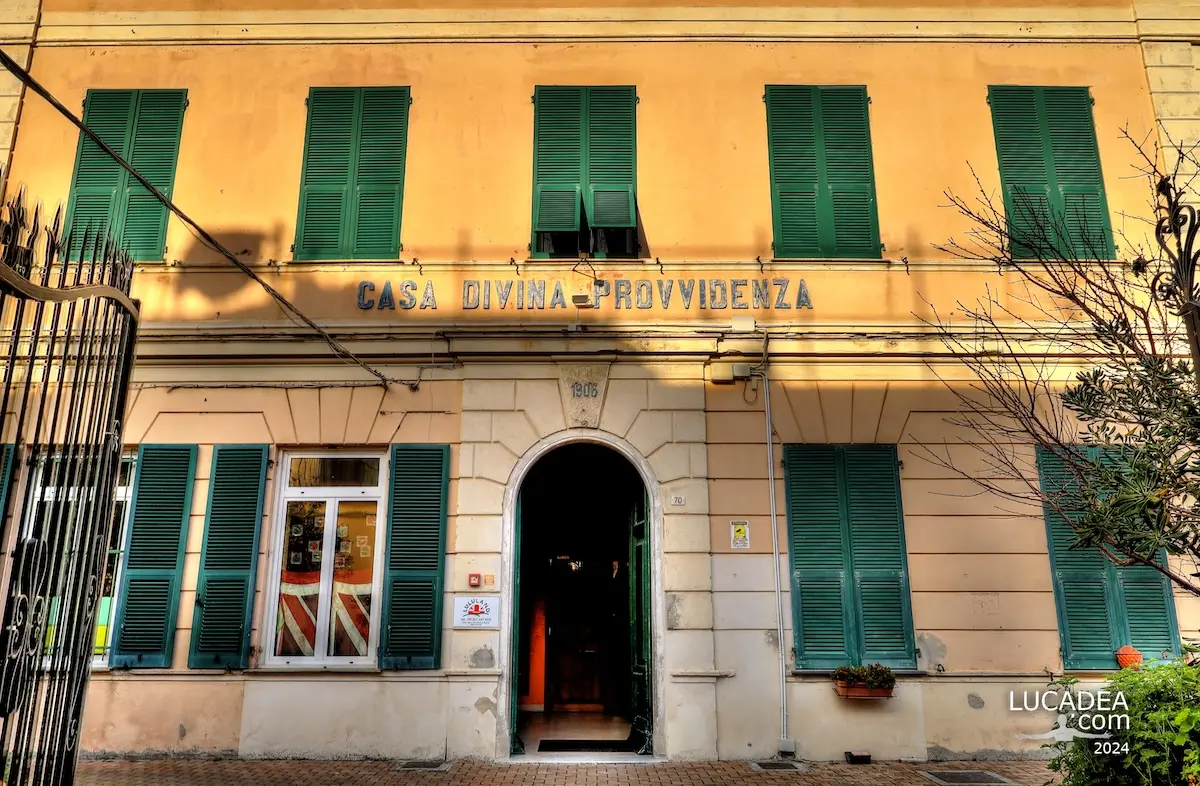
The House of Divine Providence in Lavagna

Facciata della Casa della Divina Provvidenza a Lavagna lungo una via del centro con edificio semplice e discreto

The House of Divine Providence in Lavagna.
Walking through the town center of Lavagna in Liguria, Italy, I found myself pausing in front of this building, a place that most people might overlook while searching for things to see in Lavagna or more visually striking corners of the old town. Yet the House of Divine Providence in Lavagna quietly stands as part of the town’s everyday life, far from the usual highlights visitors tend to notice.
At first glance, there’s nothing particularly eye-catching about it. No elaborate decorations, no dramatic architectural details. It blends into the street almost too well. But sometimes that’s exactly what makes a place worth photographing. I stopped, took a moment, and decided to frame it just as it was. This photo comes from that simple decision: paying attention to something that doesn’t try to stand out.
Lavagna, in the Liguria region of Italy, is often associated with the sea and its promenade, but places like this reveal a different layer of the town. The House of Divine Providence Cordeviola is not just a building; it’s part of a social reality, offering support and care to people in difficult situations. If you want to learn more, there is also a reference online: divincorde.blogspot.com.
If you are visiting Lavagna and looking beyond the typical landmarks, this is the kind of place that tells a more authentic story. It may not appear in guides, but it represents a living part of the community. I’ve explored similar quiet corners in other posts on this site, where the focus shifts from iconic views to everyday scenes that carry their own significance.
There’s also a small historical note worth mentioning: institutions like this became especially important during the 20th century, when private and religious organizations often played a key role in social support before modern welfare systems expanded.
Looking back at the image, I realize it’s not about visual impact but about context. It’s a reminder that photography is sometimes about noticing, not just capturing.

Have you ever stopped to photograph a place that most people would simply walk past? Add a comment or go to the bottom of the site to read what other visitors have written.

Facade of the House of Divine Providence in Lavagna along a quiet street with a simple building in the town center

Photo taken with Canon EOS RP and Canon RF 24-50 lens.

Here’s where it is:

The “Divina Provvidenza – Cordeviola” Educational and Care Community is run by the Gianelline Sisters, “Daughters of Mary Most Holy of the Garden.” It offers a family-like environment, characterized by acceptance, mutual understanding, respect, trust, simplicity, and love, in keeping with the educational style passed down by their founder, Saint Anthony Gianelli. The Community is fully available to minors with serious and urgent family problems.
Continue and learn more at cylex-italia.it

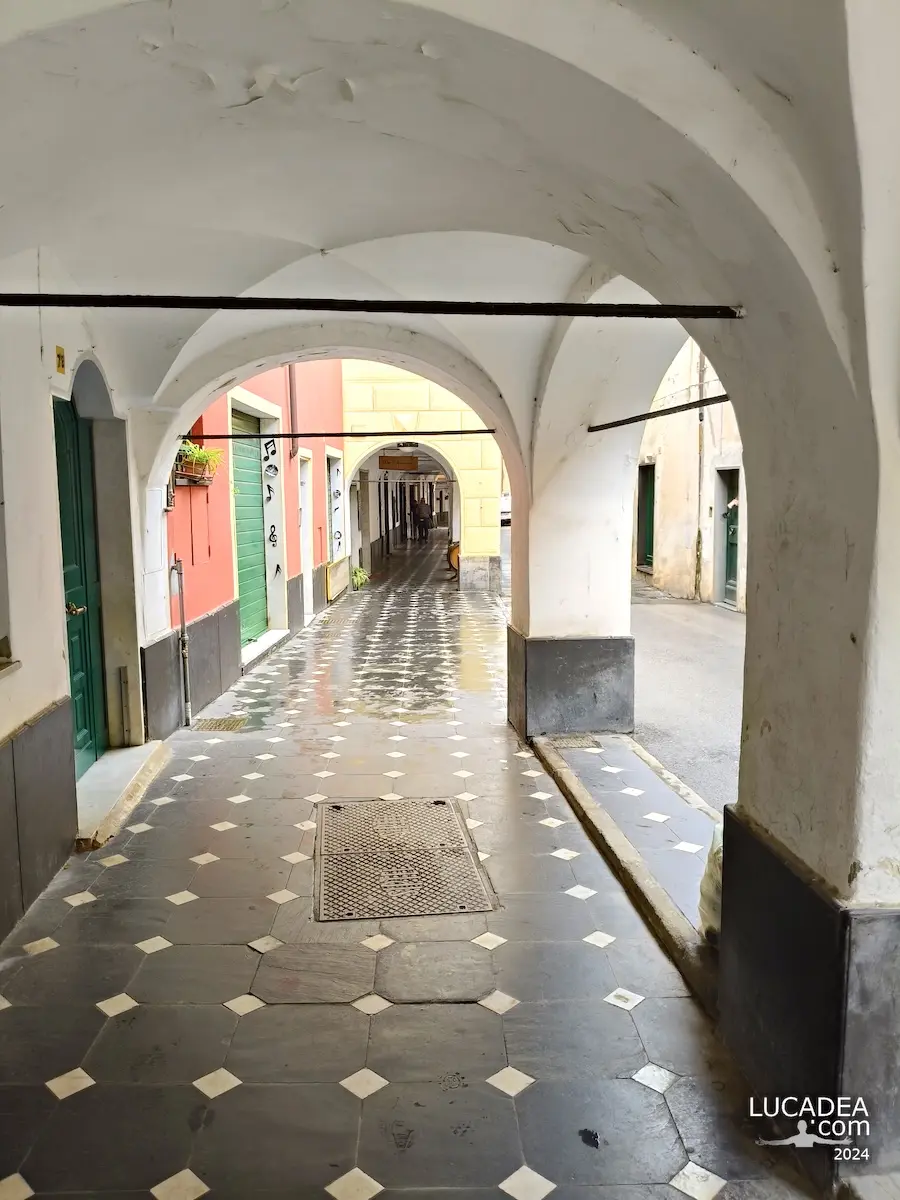
Slate porticoes on Dante street in Lavagna

Portici in ardesia di via Dante a Lavagna

Slate porticoes on Dante street in Lavagna.
Walking under these porticos automatically slows you down. On Via Dante Alighieri in Lavagna, your pace changes without you even noticing: the slate floor dictates the rhythm, its dark slabs interrupted by small light inserts that guide your gaze forward. The photo is born from this slow, almost respectful movement, as the light filters from one arch to the next and bounces off the still slightly damp pavement.
Down here, you don’t just walk. You observe. The white vaults, marked by time, frame a perspective that seems endlessly repeating, yet actually changes with every step. The green doors, the colorful facades, the small variations in the pavement tell the story of a discreet daily life, made up of habits rather than attractions. It’s a lived-in space, not a staged one.
I remember the sound of footsteps on the slate, dry and regular, amplified by the portico covering. Slate has this ability: it absorbs light but restores character. It’s never intrusive, yet it’s always present. Looking closely, you notice the irregularities, the traces of wear, the marks left by time and people. Each slab seems slightly different from the next, as if it had its own memory.
Via Dante Alighieri is one of Lavagna’s historic axes, and the porticos are an integral part of the street’s character. They weren’t simply designed as decorative elements: they served to protect from the sun and rain, to allow passage and commerce, and to create continuity between public and private spaces. The use of slate, a stone typical of this part of Liguria, is no accident. It’s durable, practical, and deeply rooted in the land. Walking on it literally means moving on a material that tells the story of the local area.
When I took the photo, I had the feeling that everything was in the right place. There was nothing to add and nothing to take away. The porticos guided my gaze without imposing themselves, letting the lines, geometries, and light do the work. It’s one of those places that don’t seek attention, but that lingers for that very reason.
Looking at the image, the calm of the details returns: the design of the pavement, the depth of the arches, the feeling of being protected yet still outdoors. Via Dante, under these porticoes, is a passage that becomes an experience.

Have you ever noticed how a pavement can change the way you walk? Add a comment or go to the bottom of the site to read what other visitors have written.

Photos taken with Oppo Reno 12.

Where is the street:

Slate porticoes on Via Dante in Lavagna – Les portiques en ardoise de la via Dante à Lavagna – Los pórticos de pizarra de la vía Dante en Lavagna – Os pórticos de ardósia da via Dante em Lavagna – Die Schieferarkaden der Via Dante in Lavagna – Dãy hành lang đá phiến trên phố Dante ở Lavagna – 拉瓦尼亚但丁街的板岩拱廊 – ラヴァーニャ、ダンテ通りのスレートのポルティコ

The text of this post was written with the help of ChatGPT, a language model from OpenAI.

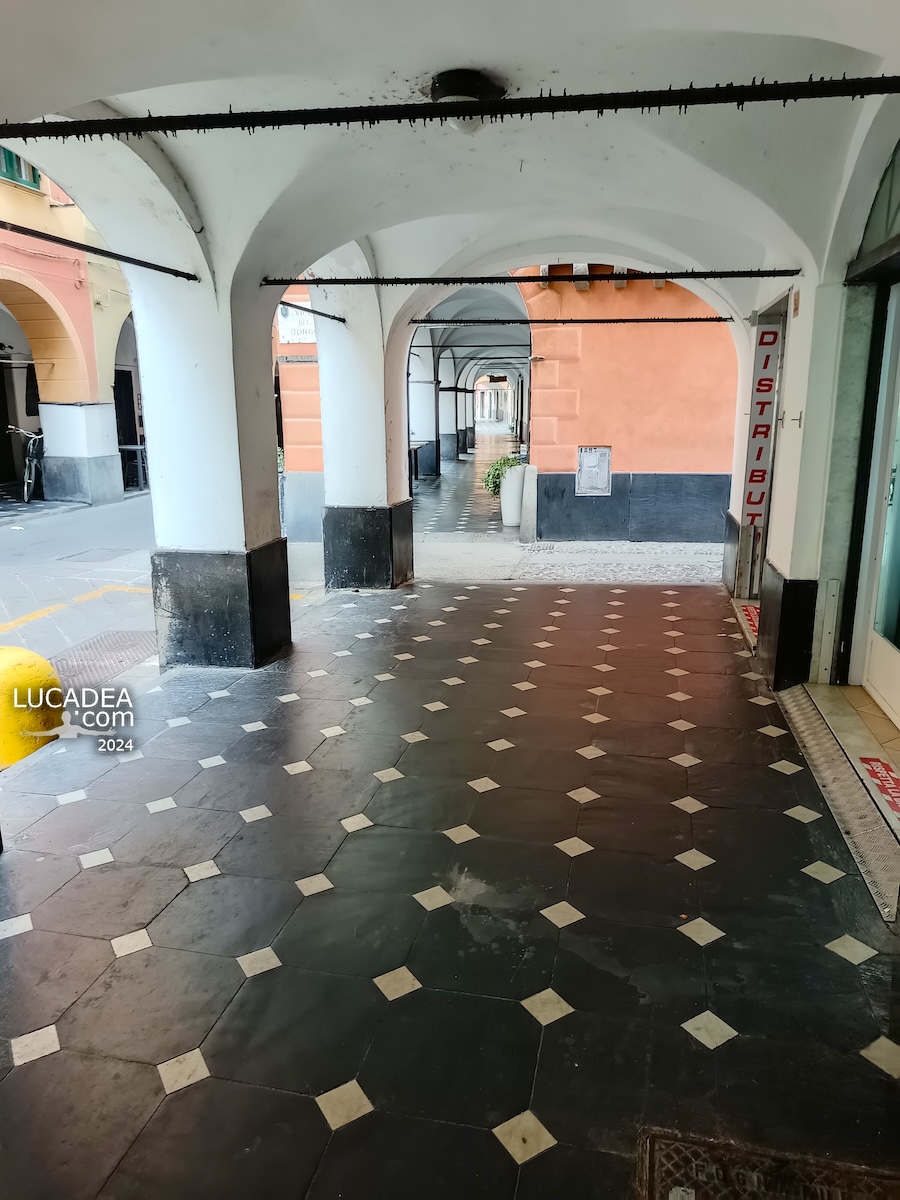
The arcades of Piazza Roma in Chiavari

Portici di piazza Roma a Chiavari con arcate regolari e luce naturale che filtra tra colonne e ombre sul pavimento.

The arcades of Piazza Roma in Chiavari.
When I took this photo, I was walking through Chiavari during a quiet moment of the day, with soft light filtering through the arches and creating gentle shadows on the ground. The arcades of Piazza Roma are less famous than those of the Carrugio Dritto, but precisely for this reason I felt drawn to stop and observe them more carefully.
Walking under these columns gave me the impression of entering a different rhythm of the city, quieter and more everyday. Chiavari is well known for its historic center and its continuous arcades, but most attention usually goes to the main streets, while other areas, less celebrated, still hold a clear identity.
What struck me most in this case was the regular rhythm of the arches and the way perspective naturally guides the eye along the row of arcades. There is nothing particularly monumental here, but that simplicity is exactly what makes the scene interesting to photograph. The side light changes everything, creating subtle contrasts that add depth.
The arcades of Chiavari are one of the city’s most distinctive features, originally built for practical reasons such as shelter from rain and sun, but over time they have become an essential part of the urban identity. Piazza Roma, in particular, shows a more modern side compared to the historic center, yet it still preserves that continuous architectural line that connects the whole town.
Looking at the photo again, I realize I’m especially drawn to this quieter version of Chiavari, less photographed but still authentic. It offers a different way of reading the city, beyond its most iconic spots.

Do you like the arcades of Chiavari? Add a comment or go to the bottom of the site to read what other visitors have written.

Portici di piazza Roma a Chiavari con arcate regolari e luce naturale che filtra tra colonne e ombre sul pavimento.

Photo taken with Canon EOS M100 and lens Canon EF-S 10-18.

Porticoes of Piazza Roma in Chiavari – Arcades de la Piazza Roma à Chiavari – Pórticos de la Piazza Roma en Chiavari – Pórticos da Piazza Roma em Chiavari – Arkaden der Piazza Roma in Chiavari – Hành lang Piazza Roma ở Chiavari – 基亚瓦里罗马广场的拱廊 – キアヴァリのローマ広場の回廊

The text of this post was written with the help of ChatGPT, a language model from OpenAI.

🏠
  • Italiano