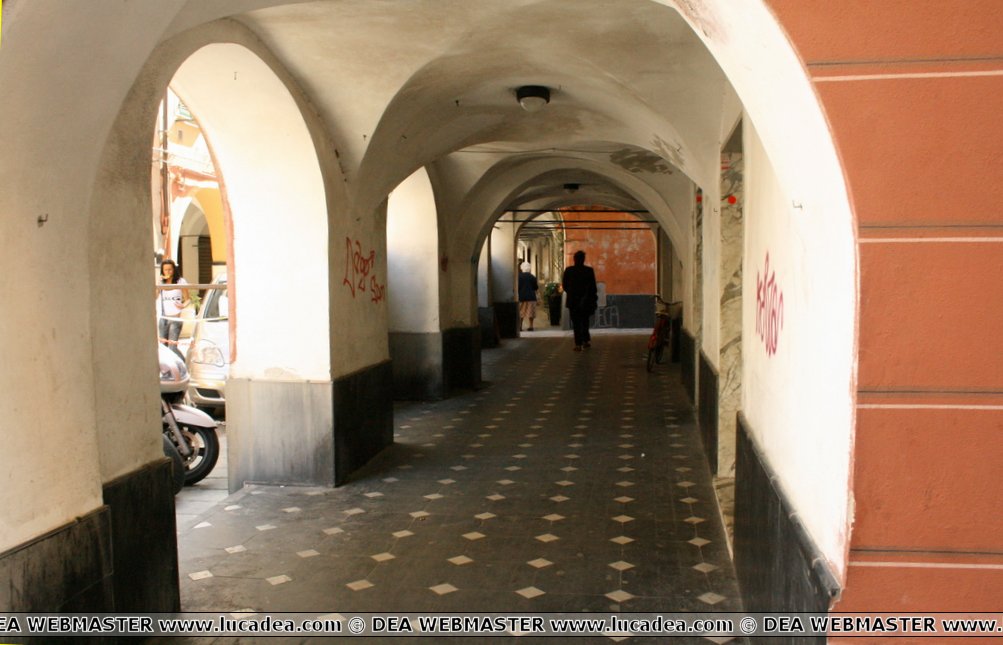
Maria Teresa Asylum Street in Sestri Levante

Via Asilo Maria Teresa a Sestri Levante

Maria Teresa Asylum Street in Sestri Levante.
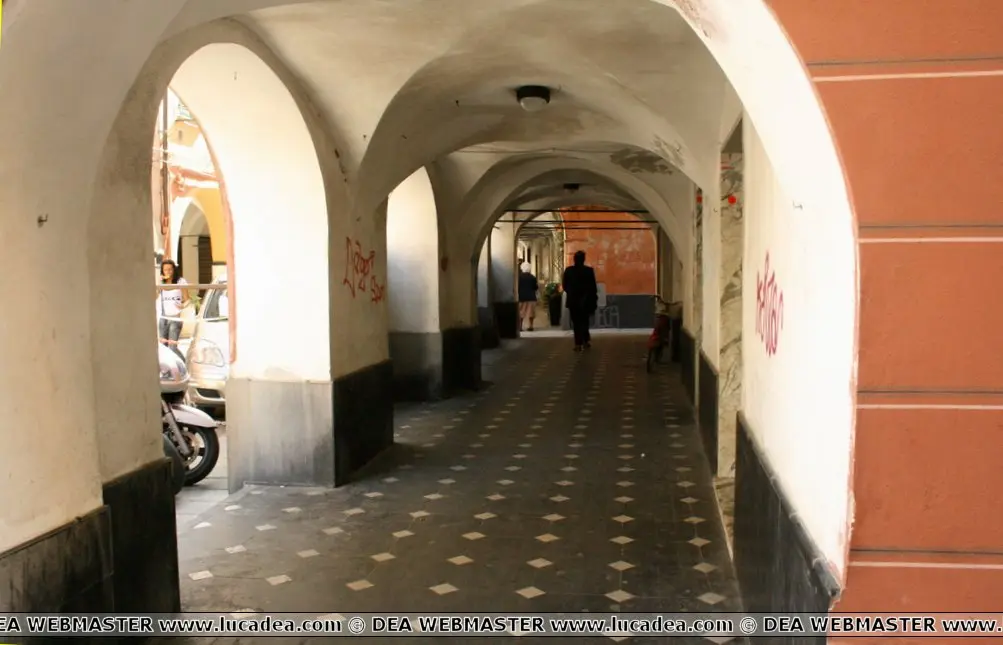
It’s becoming one of the streets in my town I’ve photographed most often recently, the one that runs from Corso Colombo to the seaside promenade.

Do you know this street in Sestri? Add a comment or go to the bottom of the site to read what other visitors have written.

Via Asilo Maria Teresa a Sestri Levante

Photo taken with Canon EOS RP and lens Canon RF 24-50.

Maria Teresa Nursery School Street in Sestri Levante – Via Asilo Maria Teresa à Sestri Levante – Via Asilo Maria Teresa en Sestri Levante – Via Asilo Maria Teresa em Sestri Levante – Via Asilo Maria Teresa in Sestri Levante – Qua Asilo Maria Teresa ở Sestri Levante
Add one  comment to this article or read  here what other visitors have written.
 
Adv
 
Disclamer

The rights on images, videos, choruses, text and all other material on the LUCADEA.com website are governed as per  Copyright page.


This page has been viewed 1 times today.
This month it has been viewed 4 times.
In total it has been viewed 4 times.
 

The old fountain in Italia square in Sestri Levante

La vecchia fontana di piazza Italia a Sestri Levante

The old fountain in Italia square in Sestri Levante.
Every time I pass by Piazza Italia in Sestri Levante, my gaze always falls there, almost without meaning to. Right across from Via Roma, a little out of the way and decidedly neglected, there’s that old fountain that seems to exist in a dimension all its own. It’s not elegant, it’s not restored, it’s not even particularly well-kept. Yet, for me, it’s one of those fixed points that say more than they show. A silent, discreet presence, resisting time and change with a somewhat tired but profoundly authentic dignity.
I remember well when the agency called La Vela stood in front of it. It was a landmark, one of those names you memorize effortlessly and that continue to exist even after it closes. The fountain was already there then, perhaps a little less visible, perhaps simply more familiar because it was part of an everyday landscape that we didn’t question. Today I look at it and clearly see the signs of time: the dulled surfaces, the encrustations, the water that sometimes flows listlessly. It’s not a postcard fountain, but it’s real, like certain corners of the city that don’t try to please.
Sometimes I stop for a few seconds, perhaps while I’m crossing the square slowly or waiting for someone. Everything around me changes: shops opening and closing, signs being renovated, facades being renovated. Instead, it remains there, with that slightly forgotten air, as if it were an outdated object that no one has the courage to remove. And perhaps that’s right. Because in that neglect there is memory, there is a more everyday, less glossy, more sincere Sestri Levante.
The old fountain in Piazza Italia doesn’t tell of great events or celebrate anything official that I know of. It tells of passages, waits, chance encounters. It tells of those who, like me, saw it for years without really looking at it, and then one day realized it was part of their way of remembering the city. It’s these minor, often overlooked details that build a place’s profound identity. And perhaps, sooner or later, someone will remember it, not to remake it, but to respect its history.

How many seemingly insignificant corners of your city hold memories you’ve never truly heard?
Add a comment or go to the bottom of the site to read what other visitors have written.

La vecchia fontana di piazza Italia a Sestri Levante

Photo taken with Canon EOS RP and lens Canon RF 28.

Where the fountain is located:

The old fountain of Piazza Italia in Sestri Levante – La vieille fontaine de la place Italia à Sestri Levante – La vieja fuente de la plaza Italia en Sestri Levante – A velha fonte da praça Itália em Sestri Levante – Der alte Brunnen am Piazza Italia in Sestri Levante – Đài phun nước cũ ở quảng trường Italia tại Sestri Levante – 塞斯特里莱万特意大利广场的老喷泉 – セストリ・レヴァンテ、イタリア広場の古い噴水

The text of this post was written with the help of ChatGPT, a language model from OpenAI.

Add one  comment to this article or read  here what other visitors have written.
 
Adv
 
Disclamer

The rights on images, videos, choruses, text and all other material on the LUCADEA.com website are governed as per  Copyright page.


This page has been viewed 1 times today.
This month it has been viewed 1 times.
In total it has been viewed 46 times.
 

The roundabout in Sant’Antonio square

Rotonda in piazza Sant’Antonio a Sestri Levante

Roundabout in Sant’Antonio square in Sestri Levante.
Walking through Sestri Levante, one of the places that always stays in my heart is the roundabout in Piazza Sant’Antonio, opening onto the charming Via Fascie. As soon as I arrive in this square, I’m struck by the harmony of the spaces: the roundabout, with its simple yet elegant design, seems to create the perfect stage for admiring the daily life of the city and the view that opens onto Via Fascie.
I love stopping here at the beginning of the day, when the first rays of the sun caress the colorful facades of the buildings and the shadow of the roundabout lengthens, creating a play of light and shapes that invites you to discover every detail. Looking toward Via Fascie, I feel like I’m seeing a painting in motion: people strolling, shop windows reflecting the sky, bicycles whizzing by like a small urban festival.
This rotation of perspectives and rhythms makes me feel part of a living place, where every corner tells a different story. The square is a meeting place: cafés with outdoor tables, chattering friends sitting on benches, and the scent of coffee mingling with the sea air typical of Sestri Levante. And Via Fascie, with its natural continuity, invites the gaze to continue beyond, towards new streets and new discoveries.
For me, this view is one of the small, great pleasures of a city that knows how to combine its history with the lightheartedness of everyday life. Every time I return here, I wonder how lucky I am to have such authentic corners to explore and cherish in my memories.

Have you ever stopped here in Piazza Sant’Antonio in Sestri Levante and gazed at the view of Via Fascie as if it were a moving painting? Add a comment or go to the bottom of the site to read what other visitors have written.

Rotonda in piazza Sant’Antonio a Sestri Levante

Photo taken with Canon EOS RP and lens Canon RF 28.

The roundabout in Piazza Sant’Antonio and the view on Via Fascie – Le rond-point de la Piazza Sant’Antonio et la vue sur la Via Fascie – La rotonda en la Piazza Sant’Antonio y la vista en Via Fascie – A rotunda na Piazza Sant’Antonio e a vista na Via Fascie – Der Kreisverkehr auf der Piazza Sant’Antonio und die Aussicht auf die Via Fascie – Vòng xoay ở Piazza Sant’Antonio và góc nhìn ra Via Fascie – 圣安东尼奥广场的环岛和向费西大道的景观 – サント・アントニオ広場のロータリーとファシエ通りの眺め

The text of this post was written with the help of ChatGPT, a language model from OpenAI.

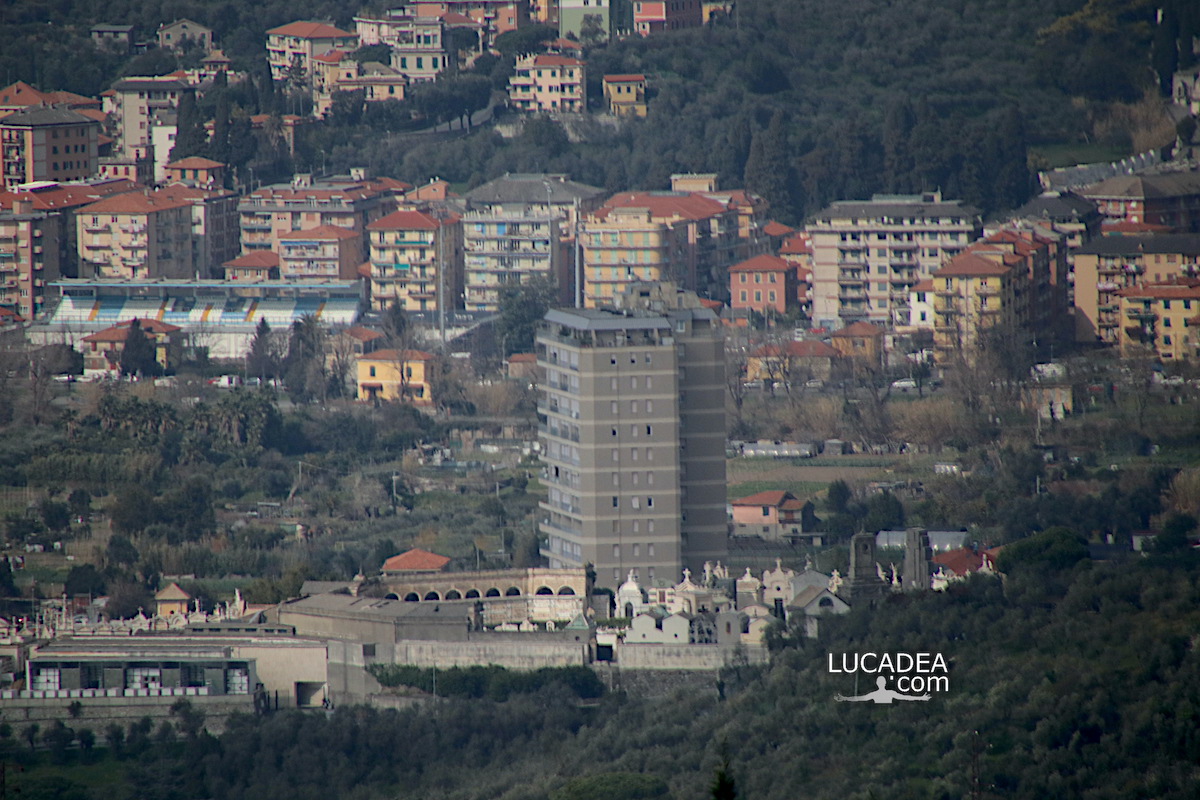
The second skyscraper in Lavagna

Secondo grattacielo di Lavagna con cimitero monumentale in primo piano e stadio di Chiavari sullo sfondo

The second skyscraper in Lavagna between outskirts and sea.
Looking at the second skyscraper in Lavagna, I find myself thinking about what to see in Lavagna beyond its seaside and how even a tall building like this becomes part of the Ligurian landscape. This skyscraper in Lavagna, less known than the first one, stands in a quieter area but still catches the eye because of its height.
It’s not located in the town center, and that already changes its presence. The structure feels more minimal, almost stripped of decorative elements, yet this simplicity gives it a distinct identity. Every time I photograph it, it doesn’t seem to demand attention, but it inevitably becomes the focal point of the frame.
In the image, you can clearly see the monumental cemetery of Lavagna in the foreground, its lower and more ordered shapes creating an interesting contrast with the vertical lines of the building. Farther in the distance, the stands of the Entella stadium in Chiavari appear as a small but meaningful detail, visually linking two nearby towns.
Lavagna, Liguria, Italy, is not a place you immediately associate with skyscrapers, and that’s probably why this building feels so striking. It reminds me of another shot I shared on the site, the first skyscraper, located in a more central and busy area. Similar buildings, but with completely different surroundings and atmospheres.
A small curiosity: buildings like this were often constructed during the economic boom years, when even smaller towns expanded vertically to meet housing demands.
I didn’t look for a complex composition here, just a way to include everything that tells the story: the tower, the cemetery, and that distant glimpse of the stadium that you might miss at first glance.

Had you ever noticed this second skyscraper, or did you only know the more famous one? Add a comment or go to the bottom of the site to read what other visitors have written.

Secondo grattacielo di Lavagna con cimitero monumentale in primo piano e stadio di Chiavari sullo sfondo

Photo taken with Canon EOS M100 and lens Tamron 16-300.

The second skyscraper of Lavagna between outskirts and sea – Le deuxième gratte-ciel de Lavagna entre périphérie et mer – El segundo rascacielos de Lavagna entre periferia y mar – O segundo arranha-céu de Lavagna entre periferia e mar – Der zweite Wolkenkratzer von Lavagna zwischen Stadtrand und Meer – Tòa nhà cao tầng thứ hai của Lavagna giữa ngoại ô và biển – 拉瓦尼亚的第二座摩天大楼,位于郊区与海之间 – ラヴァーニャの2番目の高層ビル、郊外と海の間

The text of this post was written with the help of ChatGPT, a language model from OpenAI.

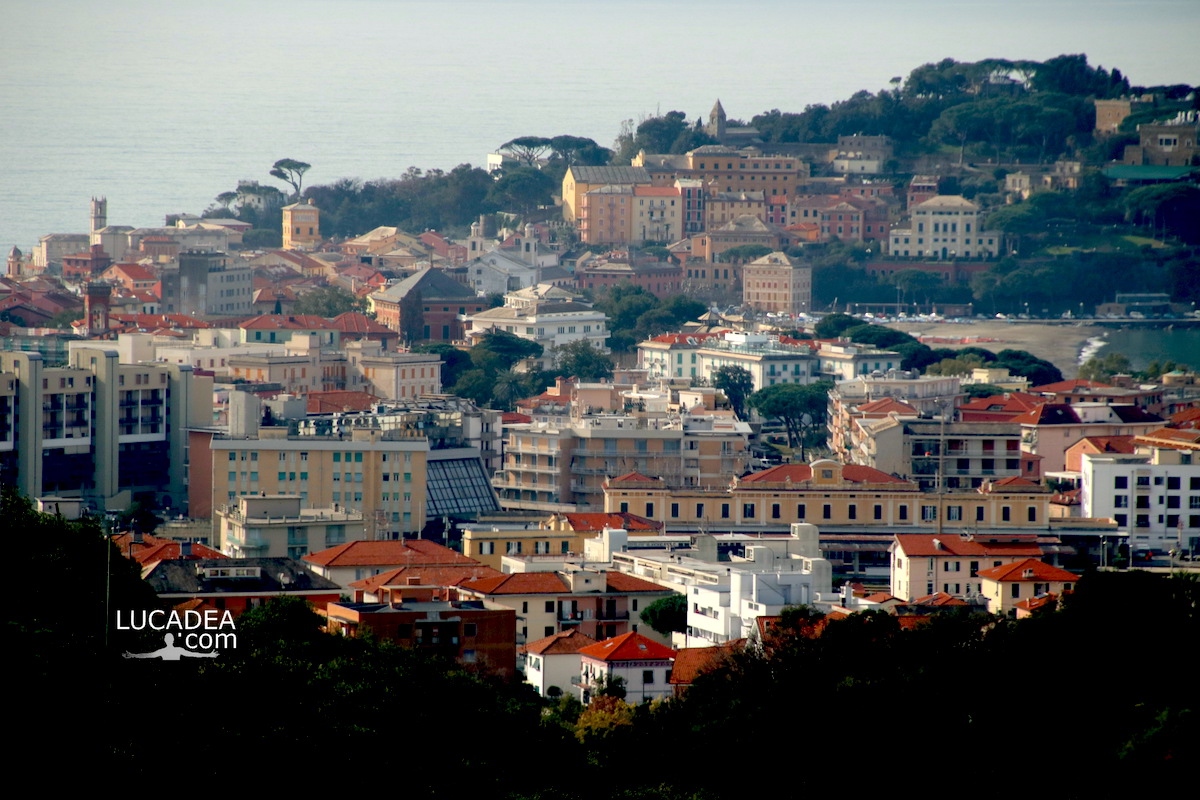
Sestri Levante from the hills of San Bernardo

Particolari di Sestri Levante vista da San Bernardo

Sestri Levante from the hills of San Bernardo.
To photograph Sestri Levante from a different perspective, I have to leave the centre for a while and climb into the hills. From San Bernardo, a small hillside area above my hometown, the view changes completely and offers a chance to look down towards Sestri Levante and notice details that are easily missed from sea level.
There is something particularly appealing to me about these walks because they do not require travelling far. A little climbing is enough, and gradually the landscape begins to open up. This is one of my favourite ways of photographing places I already know well: changing the viewpoint and trying to see my own town almost as if I were discovering it for the first time.
I took this photograph in San Bernardo, along one of the paths running through the hills surrounding Sestri Levante. The image is not necessarily about creating a huge postcard panorama. Instead, I wanted to capture some details of the town that look different when seen from higher ground.
From above, it becomes easier to understand the shape of the landscape. Sestri Levante lies between the sea and the hills, and climbing upwards makes that relationship much more apparent. Houses, roads and patches of vegetation begin to form a broader picture, while the town itself seems to gather beneath the viewpoint.
This is exactly the kind of perspective I enjoy looking for when I have my camera with me. A photograph does not always need a remarkable subject. Sometimes all it takes is finding a position from which something familiar can be seen in an unfamiliar way. San Bernardo offers several opportunities like this, with different views appearing as the paths climb higher.
If you are wondering where to see Sestri Levante from above, the hills behind the town are certainly worth considering. There is no need to remain only in the best-known parts of the centre. Walking towards the hillside areas can reveal quieter viewpoints and a different relationship between the town and its surroundings.
There is a small geographical detail that becomes particularly clear from this perspective. Sestri Levante is shaped by its position between two bays and the promontory of Punta Manara, making the proximity of hills and sea an important part of its character. From San Bernardo, that landscape is easier to read as a whole.
I wanted to capture one of these views because San Bernardo belongs to a side of Sestri Levante that is often less visible in the most familiar photographs. Images of the Bay of Silence or the caruggio are certainly more immediate, but these views from above also tell the story of my town and the landscape around it.
I have previously photographed Sestri Levante from the centre, walking through the almost empty caruggio on winter mornings, and from the Bay of Silence, one of my favourite subjects. Seeing the town from San Bernardo is a completely different experience. The viewpoint changes, and naturally the way I photograph it changes as well.
That is one of the things I continue to appreciate about photography: even a place I know extremely well can reveal something new simply by moving a few hundred metres and climbing a little higher.

Do you prefer seeing Sestri Levante from the sea or from viewpoints like this in the hills? Add a comment or go to the bottom of the site to read what other visitors have written.

Sestri Levante seen from above in San Bernardo, with the Ligurian hills surrounding the coastal town

Photo taken with Canon EOS M100 and lens Tamron 16-300.

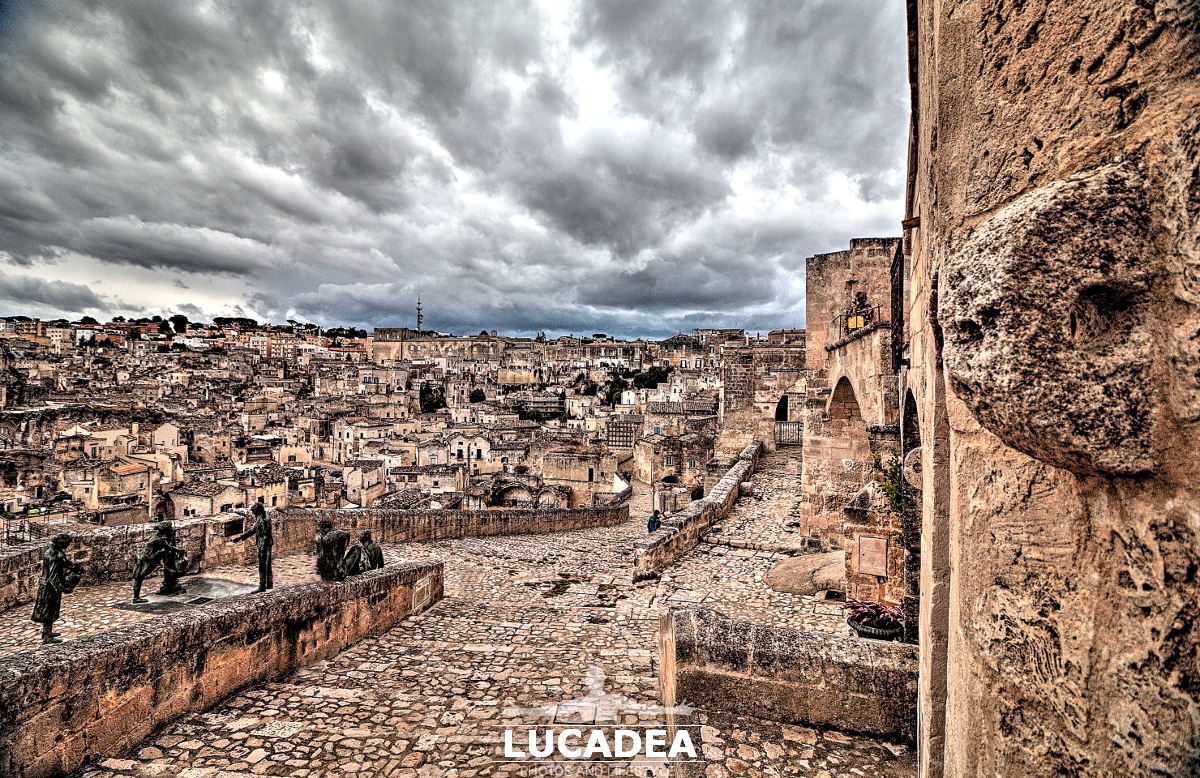
A glimpse of Matera’s Sasso Caveoso

Uno scorcio di Matera in Basilicata

A glimpse of Matera’s Sasso Caveoso.
Walking through the narrow streets of Matera’s Sassi in Basilicata, Italy, I found this view of Sasso Caveoso, one of the areas that best represents the history of the city. Among the places to see in Matera, exploring the stone alleys without a fixed destination is one of the best ways to discover authentic corners where the houses seem to continue naturally from the surrounding rock.
During my visit, I photographed many different parts of the city, but these small passages between the houses were some of the details that attracted me the most. I wanted to capture this scene with my camera because it shows a quieter side of the Sassi, away from the most famous panoramic views and the better-known landmarks.
Sasso Caveoso, together with Sasso Barisano, forms the historic core of Matera’s ancient cave settlement. Walking through these neighborhoods, you can still feel the strong connection between the buildings and the landscape: stairs, homes, arches, and rocky walls seem to belong to the same environment, shaped and transformed over centuries.
The recent history of the Sassi is complex. Until the middle of the 20th century, these districts faced very difficult living conditions, far from the standards considered acceptable at the time. In the 1950s, a major relocation process moved many residents to new neighborhoods, while the following decades brought a long restoration project that transformed the Sassi into a cultural heritage site known around the world.
A small curiosity concerns the word “Sasso” itself: it does not simply refer to a stone, but is connected to the idea of an area carved or shaped into the rock. This perfectly describes the relationship between Matera and its landscape, where many homes were created directly from the natural limestone formations.
Today Matera is one of the most famous destinations in Basilicata, and tourism has brought new life to many spaces that were once abandoned. Despite these changes, walking through the Sassi still allows visitors to experience the layers of history, from ancient cave dwellings to modern cultural and hospitality spaces.
This photograph continues the story of my visit to Matera, together with the images dedicated to the viewpoints, Santa Maria di Idris, and the hidden streets among the stone houses. Each photograph shows a different perspective of the same city, but all share the same feeling of discovering a place built in a completely unique way.

Have you ever walked through the streets of Sasso Caveoso, and which detail of Matera’s Sassi impressed you the most? Add a comment or go to the bottom of the site to read what other visitors have written.

View of Matera’s Sasso Caveoso with stone alleys and ancient houses in the Basilicata landscape

Photo taken with a Canon EOS M100 camera and Canon EF-S 10-18 lens.

I took many photos in the town’s streets, click here to see them all:
photo gallery

The Sasso Caveoso, which faces south towards Montescaglioso, resembles the shape of a theater’s auditorium, with the houses arranged in steps. Inside there are various neighborhoods, districts and areas named as follows: u lammòrde, u paravèse, u pendàfeche, u mòlve, u chianèdde, u casalnàve.
Continue and learn more on Wikipedia

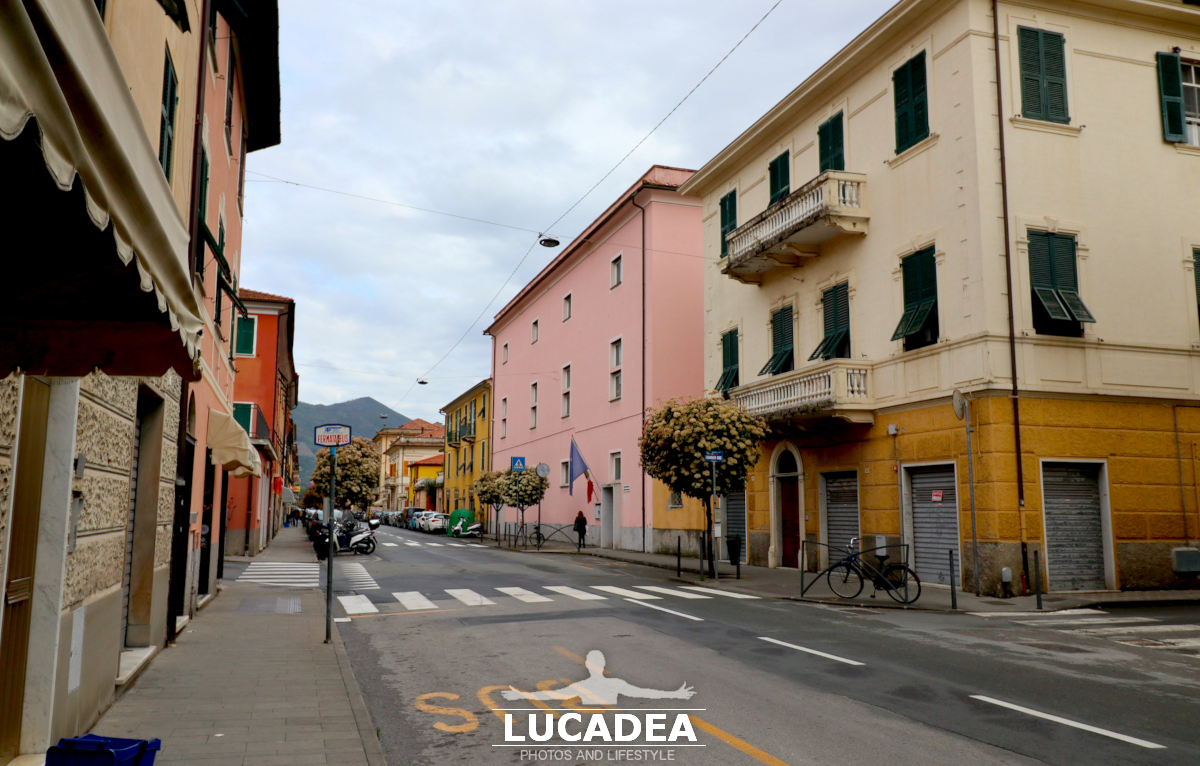
A quiet view of Nazionale Street in Sestri

Un angolo di via Nazionale a Sestri Levante

A quiet view of Nazionale Street in Sestri.
This photograph of Nazionale Street in Sestri Levante shows an unusual moment in one of the town’s everyday streets, a place that is normally full of movement, people and local activities. The quiet atmosphere of this image comes from a very particular period, when the streets were still almost empty after the lockdown.
I took this photograph at the end of the lockdown period, when daily life was slowly returning to normal but many streets still had a different feeling. Seeing Nazionale Street in Sestri Levante without its usual traffic and activity was something rare, and I wanted to capture this unusual view with my camera.
The pink building in the centre of the photograph is the Tomaso Bertollo nursery school, a familiar landmark in this part of town. Looking at the image today, it is easy to focus only on the empty street, but behind this view there is also the story of a neighbourhood that has changed over the years.
For visitors looking for places to see in Sestri Levante, the attention often goes to the Bay of Silence, the seafront and the historic centre. However, streets like Nazionale Street also represent an important part of the town because they show everyday life, local traditions and the memories of the people who have lived here.
This photograph is connected to my personal memories of Sestri Levante. When I was a child, many shops and activities around this area were different. Next to the school there was the 2A stationery shop, where the I Due Gabbiani pizzeria is today, and before that there was Mrs Nasi’s shop. On the other side there was Tommasino, a small store selling seeds and products for farmers.
Across Nazionale Street there were other familiar places that have now disappeared or changed: the flower shop, the Thea laundry, the newspaper shop, a small tailor shop and the Parchi bakery. A little further along there was the Il Genuino rotisserie run by Maria, while nearby there was also Mario’s dairy shop.
A simple street photograph can preserve something more than a place. It can keep alive memories, faces and small details of everyday life that slowly fade with time. This is why I like photographing not only famous landmarks, but also ordinary corners of towns, just as I have done in other images dedicated to Sestri Levante and its changing streets.
If you are visiting Sestri Levante and want to discover a different side of the town, walking through its streets can reveal many stories hidden behind the most famous views.

Do you have any memories connected with Nazionale Street or the old shops of Sestri Levante? Add a comment or go to the bottom of the site to read what other visitors have written.

Nazionale Street in Sestri Levante with Tomaso Bertollo school and an empty street after lockdown

Photo taken with Canon EOS M100 and lens Canon EF-S 10-18.

The town of Zoagli seen from above

Zoagli vista dall'alto

The town of Zoagli seen from above.
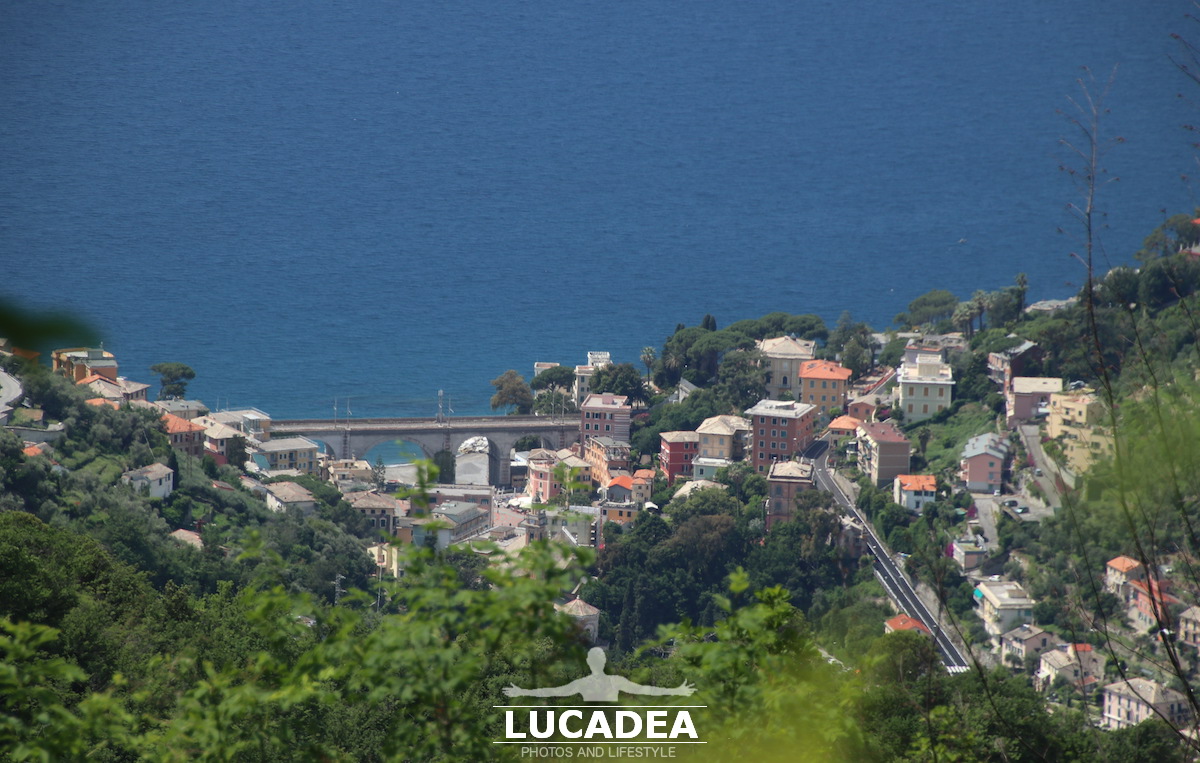
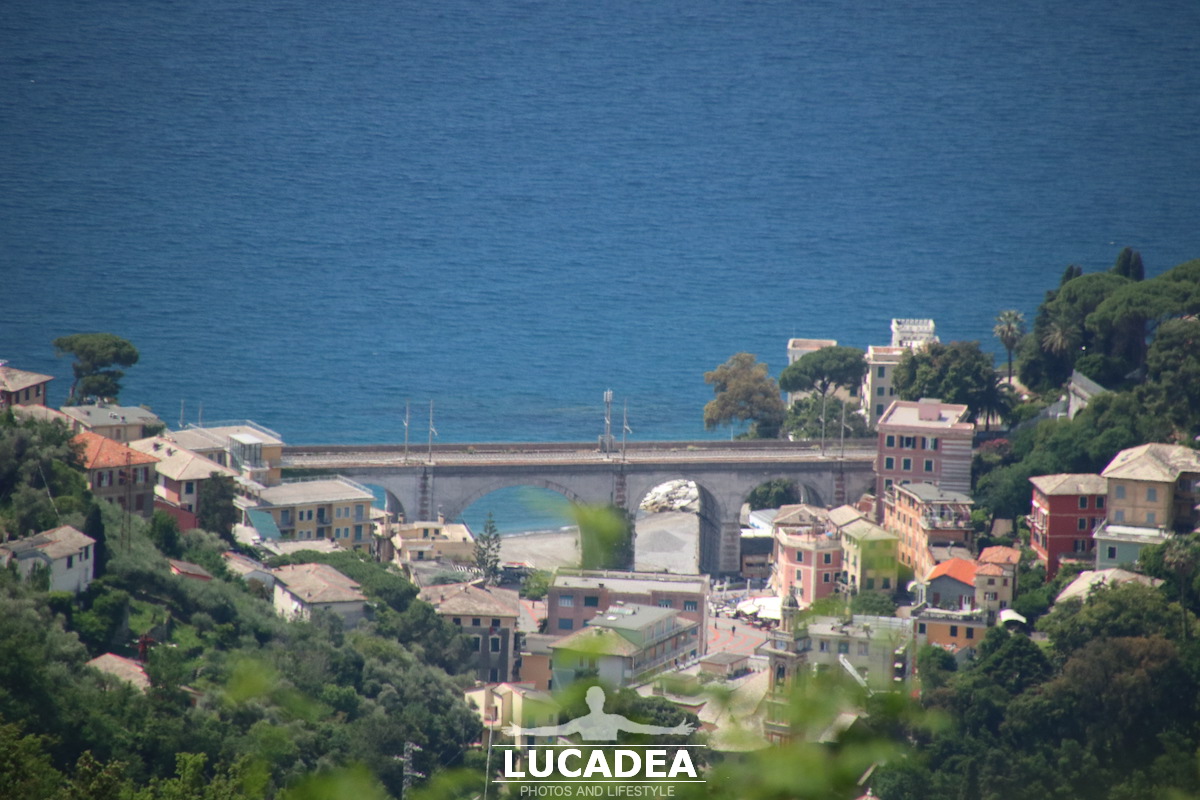
Some time ago, walking along the path from Chiavari to the Sanctuary of Montallegro, I took a couple of photos of the small village of Zoagli and the railway bridge that crosses it.
If you look closely, you can even see the beach.

Have you ever been to Zoagli?
Add a comment or go to the bottom of the site to read what other visitors have written.

Zoagli vista dall'alto

Zoagli vista dall'alto

Photos taken with Canon EOS M100 camera and Tamron 16-300 lens.

I’ll also leave you with a couple of videos I recorded in the village on a subsequent visit:

Videos recorded with GoPro Hero5.

A well-known and popular seaside resort, it is famous for its pedestrian-only cliff overlooking the sea, built in the 1930s with the financial support of its residents. Zoagli also boasts several natural woodland trails, the characteristic Ligurian crêuze, and mule tracks that connect the town center to the hamlets and villages within the municipality.
Continue and learn more at Wikipedia

The seaside village of Zoagli, in Liguria, seen from above – Le village balnéaire de Zoagli, en Ligurie, vu d’en haut – El pueblo costero de Zoagli, en Liguria, visto desde arriba – A vila costeira de Zoagli, na Ligúria, vista de cima – Das Küstendorf Zoagli in Ligurien, von oben gesehen – Ngôi làng bên bờ biển Zoagli, ở Liguria, nhìn từ trên cao – 从上面看,利古里亚的 Zoagli 海滨村庄 – 上空から見たリグーリア州の海辺の村ゾアグリ

Hoi An, the lantern town in Vietnam

Scorcio delle vie di Hoi An in Vietnam con case colorate e piante fiorite nel centro storico

Hoi An, the lantern town in Vietnam.
Located south of Da Nang, Hoi An is a small town that immediately stood out to me for its unique atmosphere. Known worldwide for its colorful lanterns and the lights reflecting on the river in the evening, it is also a UNESCO World Heritage Site.
Walking through its narrow alleys, you are surrounded by a lively and detail-rich environment. This time, what slowed me down was not the typical flow of motorbikes you find in many parts of Vietnam, but the large number of tourists, especially from Korea and China, all drawn by the charm of this destination.
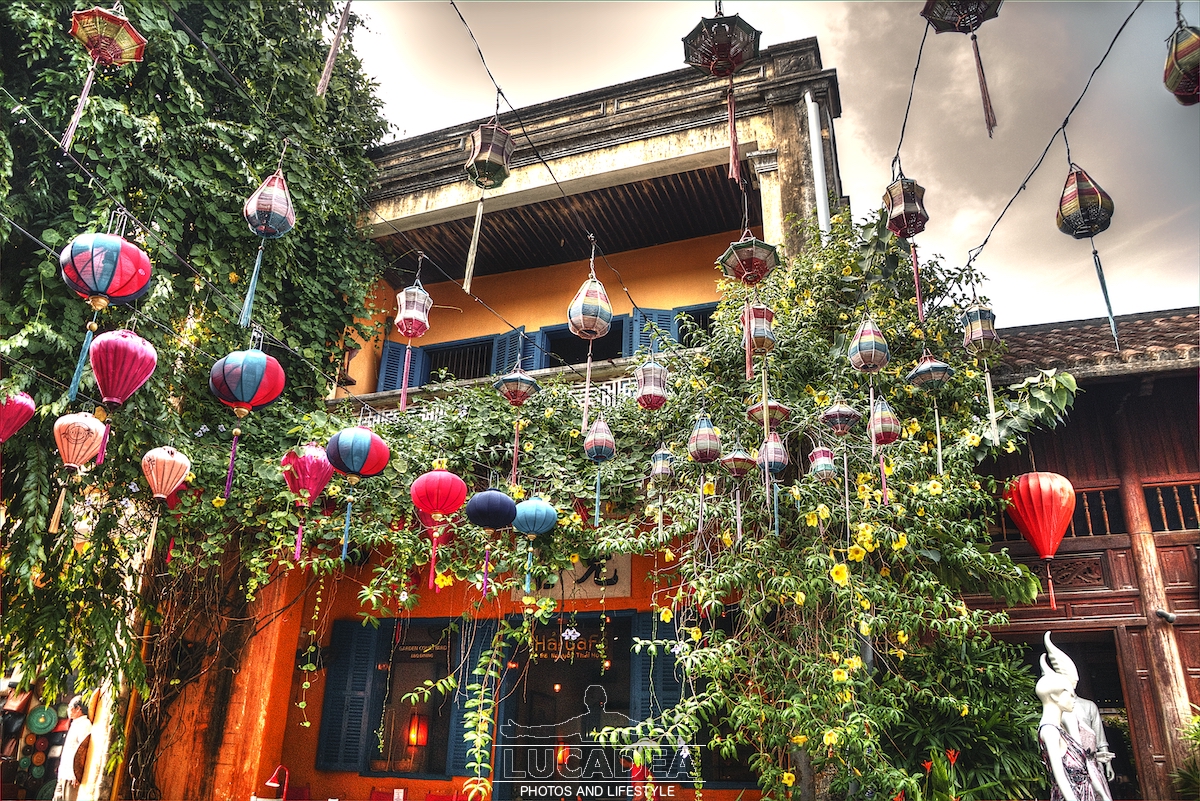
The streets of Hoi An are full of picturesque views: small houses, often painted in warm tones, are decorated with climbing plants and flowers cascading down their facades. Wandering without a specific destination, almost every corner offers a new scene worth observing and photographing.
I took this photo during one of these walks, trying to capture a simple but representative moment of the town’s atmosphere. There is no need to look for a specific landmark here; it is the combination of colors, textures and everyday details that makes each view interesting.
As the day goes on, however, Hoi An slowly transforms. When the sun begins to set, the town prepares to reveal its most iconic side. Lanterns are lit one by one, spreading a warm and soft light along the streets and by the river.
In the evening, Hoi An becomes even more fascinating. The reflections on the water, the glowing lanterns and the relaxed pace create a scene that almost feels unreal. Even with many visitors around, there is still a certain sense of calm and atmosphere that makes the experience memorable.
This contrast between day and night is one of the aspects that impressed me the most. During the day the town feels lively and sometimes crowded; at night it becomes more intimate while still remaining vibrant. The lanterns are not just decorative elements, but an essential part of the town’s identity.
Hoi An is also a well-preserved historic town. Its architecture reflects a mix of influences, including Vietnamese traditions, Chinese elements and traces of its colonial past. This combination contributes to a visually rich and distinctive environment.
During my visit, I often found myself stopping without a particular reason, simply to observe what was around me. It is a place where there is no need to rush. Walking slowly and letting the streets guide you is probably the best way to experience it.
This photograph represents one of those quiet moments, focusing on a small detail of the town. Even without showing the lanterns at night, it still conveys something about the character and structure of Hoi An.
Of course, it is impossible not to think about the evening when talking about this place. The lanterns have become its symbol and attract visitors from all over the world. But even during the day, among colorful houses and flowering plants, there are plenty of scenes worth noticing.
Hoi An remains one of those destinations that manages to balance tourism and local identity in an interesting way. Despite the crowds, it still offers authentic corners and quieter moments, especially if you move slightly away from the busiest streets.
When I think back to this town, I remember above all the contrasts: daylight and evening light, calm and crowds, simple details and scenic views. All these elements come together to make Hoi An a memorable stop in Vietnam.

Have you ever visited Hoi An, or would you like to see its lanterns glowing at night? Add a comment or go to the bottom of the site to read what other visitors have written.

Street view in Hoi An, Vietnam, with colorful houses and flowering plants in the historic center

Photo taken with Canon EOS M100 and Tamron 16-300 lens.

Click here to see all the photos of the town:
foto gallery

Here’s where the town is located:

The former Champa port city, located on the Thu Bon estuary, was an important center of Vietnamese trade during the 16th and 17th centuries, when Japanese and Chinese from various provinces, as well as Dutch and Indians, settled there. During this period of trade with China, the city was called Hai Pho (City on the Sea) in Vietnamese.
Continue and learn more at Wikipedia

My Photos of Lavagna in Liguria

My Photos of Lavagna in Liguria.
For some time I had been meaning to devote more space to the towns and cities close to home, and Lavagna became one of the first places I decided to explore again with my camera. Here, in Liguria’s Tigullio area, I found plenty of street views worth capturing, from the caruggio and historic houses to the roads leading towards the sea.
My website contains photographs taken in many places around the world, but for quite a long time I realized that I had surprisingly few images from my own area. Sestri Levante and the Cinque Terre were already well represented, while other towns in the Tigullio had received much less attention. It seemed like the right time to change that.
The first photographs in this small personal project were taken in Varese Ligure. After that I continued with Lavagna, trying to look at it with the same attention I would normally give to a place I had never visited before. This particular photograph is one of the images I like most from that series.
Lavagna is in Liguria, in the Metropolitan City of Genoa, overlooking the Gulf of Tigullio. I already knew the town, but photographing it more deliberately made me notice details that I might normally have walked past without stopping.
The historic center is probably the best place to begin if you want to understand the character of Lavagna. Its caruggi, façades, old doorways and historic buildings create interesting perspectives, especially when you walk without having a specific photograph in mind. At certain points, the street naturally guides your view towards a square or one of the town’s most recognizable buildings.
I particularly enjoy looking for these relationships between streets and architecture. The main subject does not always have to be a famous landmark photographed on its own. Sometimes an image becomes more interesting when it shows how a building belongs to the surrounding urban landscape.
One small historical detail connected with Lavagna is its long tradition of slate production, a material that played an important role in the economy and identity of the surrounding area. It is not necessarily something you can recognize in a single photograph, but it helps explain how the local landscape and its resources influenced the town’s history.
With this series I mainly wanted to collect different views of Lavagna. I was not trying to create a simple sequence of photographs showing the same subject, but rather to build a visual record of the town little by little. A street, a villa, a façade, an architectural detail or an unexpected view can all become part of the same photographic walk.
Among the pictures I took, this one is still perhaps my favorite. Not necessarily because it shows Lavagna’s most famous sight, but because I think it captures the way I like to observe a town: through the views that appear naturally while walking.
That is also why I am enjoying this project of photographing places close to home. When you travel somewhere far away, you tend to photograph everything because everything is new. Photographing your own surroundings requires a different kind of attention. You have to learn how to look again at places you may have seen countless times.
After Lavagna, I would like to continue photographing other towns and villages around the Tigullio. There are many places I know only superficially and which may reveal completely different details when I explore them with a camera.
If you are looking for photos of Lavagna, this series is therefore less about producing a conventional collection of landmarks and more about recording the town as I encounter it. The images are personal observations made while walking, looking around and occasionally stopping when something catches my eye.
These photographs also join the other Lavagna images already published on the blog, including views of the historic center, the caruggio and the Basilica of Saint Stephen. Seen together, they offer different perspectives of the same town and, above all, a record of the way I experience it through photography.

Do you also have a place close to home that you know well but only started photographing seriously after many years? Add a comment or go to the bottom of the site to read what other visitors have written.

A view of Lavagna in Liguria from my series of photos exploring the town's historic center and streets

🏠
  • Italiano