A narrow alley in Moneglia’s old town

Stretto vicolo del centro storico di Moneglia in Liguria, con case affacciate sul piccolo caruggio del borgo

A narrow alley in Moneglia’s old town.
While walking through the old town of Moneglia in Liguria, Italy, I came across this small side passage and immediately found it worth photographing. It is the kind of narrow alley that seems to appear almost unexpectedly from the main street, inviting you to stop for a moment and look more closely.
Moneglia lies along the Ligurian coast east of Genoa, not far from Sestri Levante, and it is one of those villages where moving just a few meters away from the main streets can completely change the view. Some time ago, while walking through the old town, I noticed this particular corner and decided to capture it with my camera.
What interested me most was the way these small side alleys are actually used. They are not simply narrow passages between buildings. They are part of everyday life in the village and, in some places, they are compact enough to become small outdoor seating areas for cafés and restaurants. The result feels natural, as if the old architecture and contemporary life have simply found a way to share the same limited space.
This is exactly the kind of detail I enjoy photographing in Ligurian villages. I am not always looking for a sea view or the most famous square. Sometimes a narrow passage, a doorway, a window or a small section of a wall can tell me more about a place than a postcard panorama.
If you are wondering what to see in Moneglia, there is naturally much more than this single alley. But I think these secondary corners are an important part of the village’s character. The old town is compact and easy to explore on foot, and wandering without a precise destination often leads to the most interesting views.
The main alley provides the obvious route through the village, but stepping into one of its side passages immediately changes the perspective. The buildings seem closer together, the street becomes more intimate and ordinary details become much more noticeable.
A small historical curiosity about Ligurian villages is the role played by their narrow alleys. These passages were not designed with modern tourism or photography in mind. They developed as a practical response to the limited space available between the coast and the surrounding hills. Their narrow proportions are still one of the features that give many Ligurian old towns their distinctive character.
There was nothing staged about this photograph. I simply encountered the alley while walking and liked the way it looked. The fact that such a small space can also function as an outdoor seating area is, to me, a good example of how villages like Moneglia make use of every available corner without losing their identity.
Moneglia also has a different scale from some of the larger coastal towns of Liguria. It is small enough to explore at a relaxed pace, yet there are plenty of details for someone who enjoys walking and photography. That is one of the reasons I find myself returning to places like this.
Its proximity to Sestri Levante makes Moneglia particularly familiar to me. From my area, it takes roughly twenty minutes by car to reach it, so visiting does not necessarily require a long trip or elaborate planning. Sometimes a few free hours are enough to walk through the village again and see what catches my attention.
Looking at this photograph, I particularly like the fact that it is not one of the obvious postcard views of Moneglia. It could almost be any one of the many narrow passages found while walking through the old town. That is precisely why it fits the way I like to photograph. My blog is also a collection of these small fragments of familiar places, rather than only their most famous images.
This photograph connects naturally with another story on my blog about Ligurian villages, the steep alley in Vernazza. There too, the subject was not a monument but a passage through the village. In both photographs, it was the shape of the street and the way it fitted into the surrounding buildings that caught my attention.
These are simple details, but they are often the ones I remember most clearly. A narrow street, a few tables in a small corner, the buildings close together: ordinary elements of village life that can become a good photographic subject when you take the time to notice them.
Perhaps that simplicity is what I like most about Moneglia. There is no need to search constantly for something spectacular. Walk through the old town, take a side street and let curiosity decide where to go next.

When you visit a Ligurian village, do you also end up wandering into the side alleys, or do you prefer to stay on the main streets? Add a comment or go to the bottom of the site to read what other visitors have written.
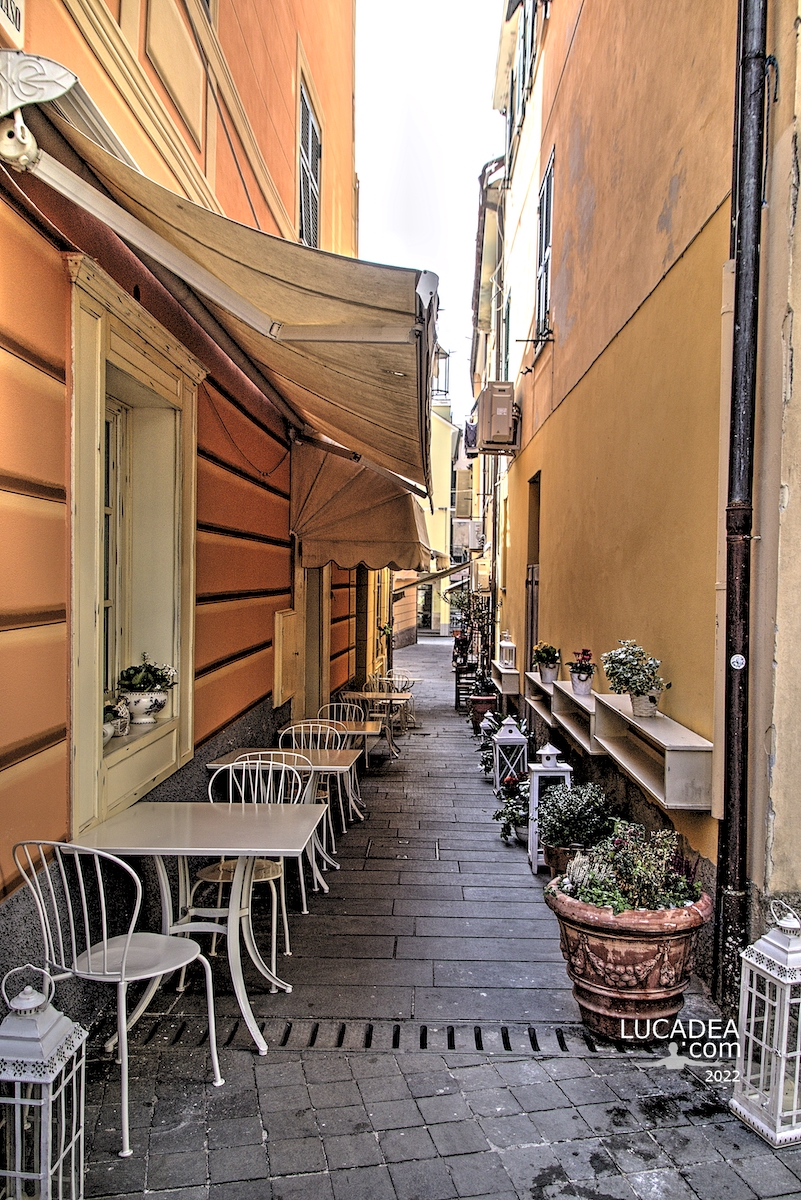
Narrow alley in Moneglia's old town in Liguria, with traditional houses lining the small village passage

Photo taken with Canon EOS M100 and lens Tamron 16-300.

This is a video of the alley of the village:

Video recorded with a GoPro Hero 10 Black.

I took several photos in the village, and if you’d like to see them all, click here:

Add one  comment to this article or read  here what other visitors have written.
 
Adv
 
Disclamer

The rights on images, videos, choruses, text and all other material on the LUCADEA.com website are governed as per  Copyright page.

This page has been viewed 0 times today.
This month it has been viewed 0 times.
In total it has been viewed 0 times.
 

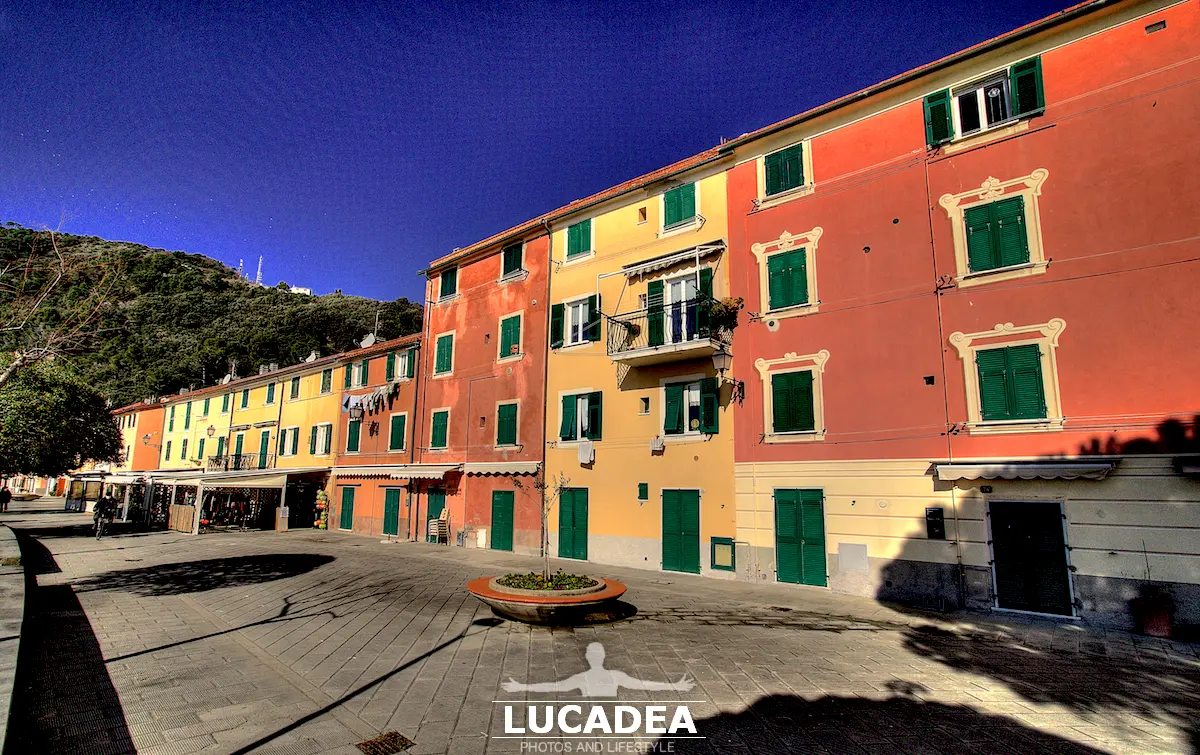
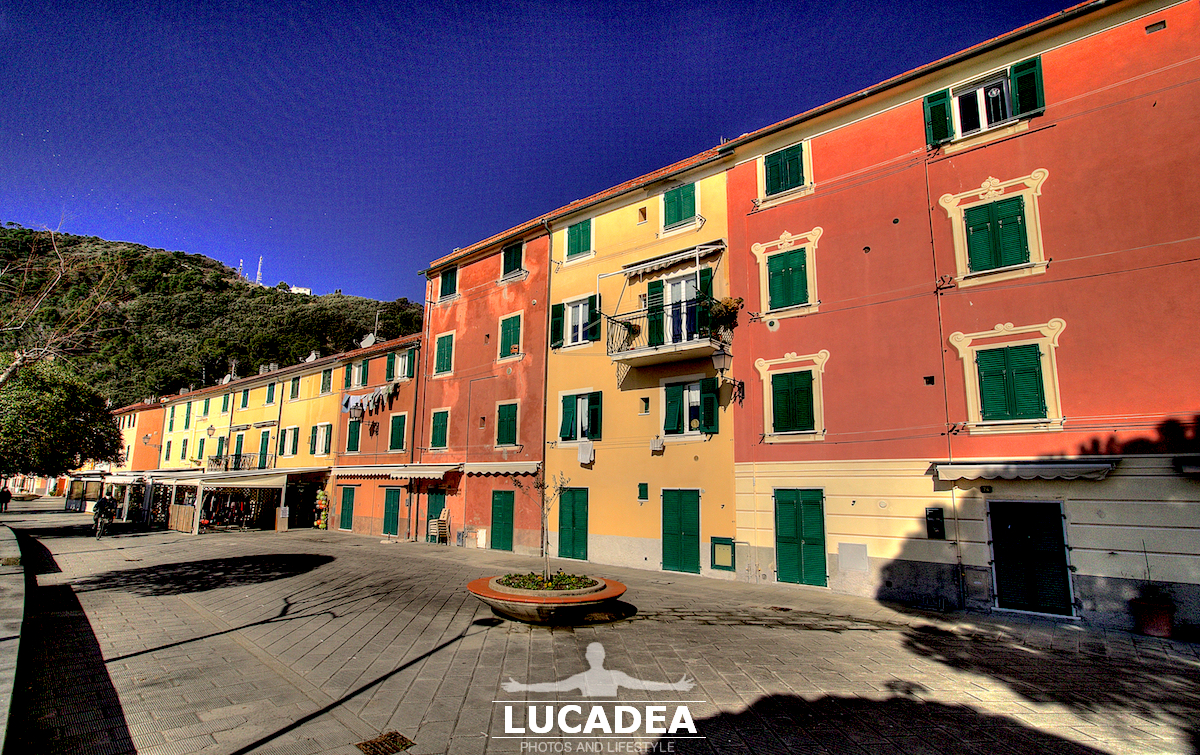
A Promenade Along Via Brin in Riva Trigoso

Passeggiata di via Brin a Riva Trigoso, con le case affacciate sul mare della Liguria di Levante

A Promenade Along Via Brin in Riva Trigoso.
Walking along this promenade, with the houses facing the sea, is one of those moments when I naturally slow down and look around. The Riva Trigoso promenade in the municipality of Sestri Levante is one of the corners of eastern Liguria that I enjoy photographing, especially when I find it quiet and there are only a few people around.
This photograph was taken along Via Brin, on the western side of Riva Trigoso, where the houses follow the promenade and look directly towards the sea. It is a simple, everyday view, but I think it captures something important about this small seaside village.
When I think about what to see in Riva Trigoso, the first thing that comes to mind is the close relationship between the houses and the sea. There is no need to look for a particular monument here. Walking along the promenade, noticing the façades, following the line of the buildings and looking towards the water is enough to understand something of the character of the place.
A spring morning is when I particularly enjoy this part of the promenade. There is no need to invent a special atmosphere: what I like is the ordinary character of the place when there are still relatively few people around and the walk can be taken slowly. The houses seem to accompany the promenade while the sea remains constantly present just beyond them.
I wanted to capture this scene with my camera because it belongs to the eastern Liguria that I know well and have been photographing for years. Places like this can look completely different depending on the season, the time of day and, above all, how busy they are. The same promenade that can be crowded with beachgoers and visitors in summer feels much more intimate on a quiet spring morning.
Riva Trigoso is part of the municipality of Sestri Levante, in Liguria, Italy, in the Province of Genoa. The village is traditionally divided by the Petronio River into two areas, and the western part develops towards Moneglia. Here the connection with the sea and the local maritime tradition is particularly evident.
There is also a small detail about the name itself that I find interesting. Riva Trigoso grew from two historically distinct settlements, Riva and Trigoso, which gradually became one inhabited area. Knowing this makes the village easier to understand, especially because different parts of it have their own character while still belonging to the same municipality.
For me, however, the visual side remains the most important part of the photograph. There is no dramatic viewpoint here and no famous panoramic terrace. There is simply a street beside the sea and a row of houses following the coastline. This is exactly the kind of ordinary scene that can sometimes tell me more about a place than the photographs everyone already knows.
If you are visiting the area and wondering what to see in Riva Trigoso, walking along the Via Brin promenade is a simple way to experience this relationship between the village and the sea. You do not need a complicated itinerary or a demanding walk. The surroundings themselves provide plenty of small details to notice as you move along the promenade.
This is something I often find in my photographs from eastern Liguria. As in other posts about small coastal villages and promenades, I was not looking for a spectacular subject created specifically for photography. I simply came across a scene that caught my attention and felt worth keeping.
Looking back at this image, what I like most is the sense of space and quietness. I know that Riva Trigoso can feel very different during the busiest months, but perhaps that is part of what makes photographing it interesting. A familiar place can reveal a completely different character depending on when you happen to arrive.

If you found yourself walking along the Via Brin promenade on a quiet spring morning, would you stop to photograph this view of Riva Trigoso too? Add a comment or go to the bottom of the site to read what other visitors have written.

Via Brin promenade in Riva Trigoso, with seaside houses overlooking the Ligurian coast

Photo taken with a Canon EOS M100 camera and Canon EF-S 10-18 lens.

Benedetto Brin (Turin, May 17, 1833 – Rome, May 24, 1898) was an Italian engineer, admiral, and politician. Having entered the service of the Sardinian Navy in 1853 as a naval engineering officer, in 1864 he published an article demonstrating the inevitability of the transition to ironclad ships, thereby aligning himself with the views of Simone Pacoret de Saint-Bon.
Read more on Wikipedia

Add one  comment to this article or read  here what other visitors have written.
 
Adv
 
Disclamer

The rights on images, videos, choruses, text and all other material on the LUCADEA.com website are governed as per  Copyright page.

This page has been viewed 0 times today.
This month it has been viewed 0 times.
In total it has been viewed 0 times.
 

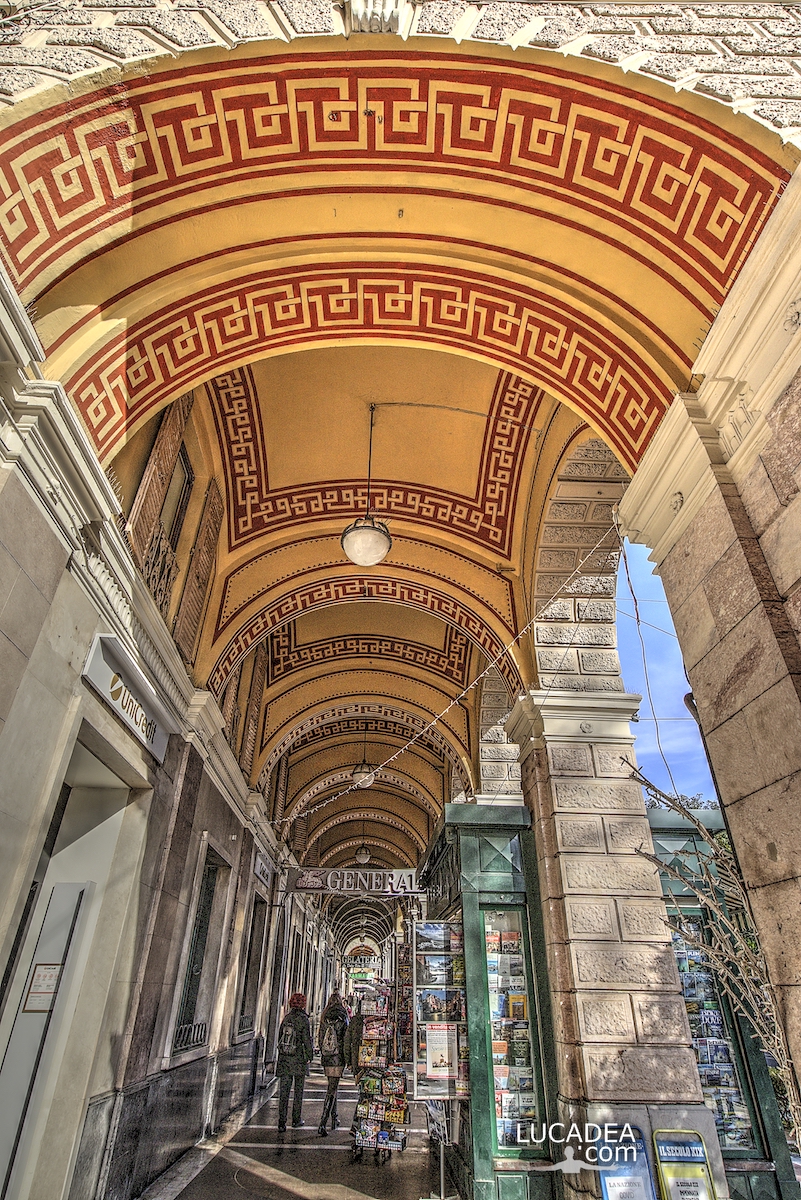
The arcades of Chiodo Street in La Spezia

Portici decorati di via Domenico Chiodo alla Spezia vicino ai giardini pubblici del centro storico

The arcades of Chiodo Street in La Spezia.
Walking through the city centre of La Spezia, I stopped to photograph this elegant sequence of arches, decorations and architectural details that gives a different character to the urban landscape. The arcades of Chiodo Street are one of the interesting places to see in La Spezia if, like me, you enjoy discovering cities through their less obvious corners.
I took this photograph during one of my walks through the town, carrying my camera and looking for details that could tell something about the place. Often, the images I like the most are not necessarily the ones showing the most famous landmarks, but those small everyday views that reveal the atmosphere of a city.
These arcades run along Chiodo Street, next to the Public Gardens of La Spezia, one of the historic green areas in the centre of the city. The covered walkways create a pleasant perspective, with the repeated rhythm of the columns and arches leading the eye along the street. The decorations on the buildings add an elegant touch and make this part of La Spezia particularly interesting to photograph.
Compared with the traditional arcades that can be found in some Ligurian seaside villages, these have a more urban and nineteenth-century appearance. La Spezia changed considerably during that period, especially after the construction of the Naval Arsenal, which transformed the city from a small coastal town into an important military and industrial centre.
A small historical curiosity is connected with the name of the street. Domenico Chiodo was an Italian military engineer and general who played a key role in the design and construction of the Naval Arsenal of La Spezia. The city dedicated this street to him in recognition of his contribution to the development of the area.
What attracted me to this scene was the balance between architecture and everyday life. The arches create a strong geometric pattern, but the street remains a normal place where people walk, meet and continue their daily activities. This contrast is what makes the photograph interesting to me.
As I have already shown in other photographs from Eastern Liguria, from villages in the countryside to historic streets, I often find the identity of a place in these simple details. They are not always the first things visitors notice, but they are often the ones that remain in memory.
If you are visiting La Spezia, this is one of those corners worth seeing while walking through the city centre, especially if you like historic architecture and urban details.

Have you ever walked along Chiodo Street in La Spezia and noticed these decorated arcades? Add a comment or go to the bottom of the site to read what other visitors have written.

Decorated arcades of Chiodo Street in La Spezia beside the Public Gardens in the city centre

Photo taken with a Canon EOS M100 camera and Canon EF-M 11-22 lens.

If you want to see all the photos I took in the city, click here:

Domenico Chiodo (Genoa, October 30, 1823 – La Spezia, March 19, 1870) was an Italian general and architect—an officer in the Military Engineers—who designed the naval arsenals at La Spezia and Taranto and oversaw the expansion of the one in Venice.
Read more and find out more on Wikipedia

The best ravioli with ragù in Eastern Liguria

Ravioli al ragù alla ligure

The best ravioli (raieu) with ragù (au tuccu) in Eastern Liguria.

For some time now, I’ve been trying to track and rank what I think are the best ravioli with ragù (the real one is called tuccu, from the Genoese tocco, a piece, after the long-cooked piece of meat we use to make the ragù) from the trattorias in my area. By “my area,” I mean the eastern part of the Province of Genoa and its hinterland (since I live in Sestri Levante).
I’ll say it right away: tocco isn’t always used as a condiment; sometimes it’s the classic but equally tasty meat ragù.
This isn’t meant to be a competition, but rather a way to let you all know where, in my opinion, the best places to eat this excellent dish are.
I hope no one is offended (de gustibus non disputandis est), especially because, wherever I’ve been, I’ve always left satisfied!

Obviously, these are the places I’ve visited, so I’m asking you to suggest new ones. I promise I’ll try them when I get home and then write a post about them.
Leave me your opinion on my ranking or tell me in a comment which are your favorites and which ones I should try.

My ranking:

(updated December 14, 2024):

  1. Place: Ü Pellegrin in Romaggi
  2. place: Marchin in Borgonovo
  3. place: La Veranda in Tavarone
  • Out of the rankings: my mother’s homemade ravioli
The others:

The following are all good but don’t make my personal top three (I have to try a couple again because they were really good, and I might change the ranking after a second taste). I’ll list them in strict alphabetical order:

  • Friends in Varese Ligur
  • Antica Locanda Luigina in Mattaran
  • Cantarana in Sesta Godano
  • La Moggia in Lavagna
  • La Luna in Santo Stefano d’Aveto
  • La Tagliola in Carpenissone
  • Ou Grumallu a Case Soprane
  • Settembrin in Carasco
No longer in the ranking:

I was at the following a long time ago and they are either closed or I can’t find information to see if they are still open:

  • Corsini in Torz
  • Bocca Moà in Borzonasca
  • Da Peirano in Borzone (closed)
  • Santuario di Velva in Velva
Out of the ranking because it’s not “in my area”:
  • Raviolhouse in Geno
Where I plan to visit (suggested in the comments:
  • O Matte in Borzonasca
  • Da Rosa in Sussisa
  • La Loggia in Camogli
  • Pagliettini in Comeglio
  • Prevetto in S. Stefano d’Aveto
  • I Nonni in Villanoce
  • Taverna nel Bosco in Rovegno
  • Paretin in Cabanne
  • A Pria de l’Orto in Ne
  • La Brinca in Ne
  • Villa Casaggiori in Sestri Levante
  • La Beppa in Graveglia
  • Toni il Profeta in Carasco

The best ravioli with meat sauce in Eastern Liguria.

The best ravioli with meat sauce in eastern Liguria – Les meilleurs raviolis avec sauce à la viande de la Ligurie orientale – Los mejores raviolis con salsa de carne en el este de Liguria – O melhor ravioli com molho de carne no leste da Ligúria – Die besten Ravioli mit Fleischsauce in Ostligurien – Bánh ravioli sốt thịt ngon nhất tại Đông Liguria – 东利古里亚最好的肉酱馄饨 – 東リグーリア州で最高のミートソースのラビオリ

The best ravioli with ragù in Eastern Liguria

Ravioli al ragù alla ligure

The best ravioli with ragù in Eastern Liguria.
For many years I have been searching for, tasting and photographing what I personally consider the best ravioli with ragù in Eastern Liguria. This is not an official ranking and it is not meant to be a competition between restaurants: it is simply my personal journey through one of the dishes that best represents the traditional cuisine of this part of Italy.
When I talk about Eastern Liguria, I mainly refer to the eastern part of the Province of Genoa and its inland valleys, the area I know best because I live in Sestri Levante. Over time I have travelled along small mountain roads, visited villages away from the main tourist routes and discovered many trattorias where traditional recipes are still prepared with care.
If you are looking for where to eat ravioli with ragù in Liguria, this page is my personal collection of places I have visited and dishes I have tried. Every restaurant listed here has a story behind it, because for me food is also a way to discover a territory, just like walking through a village or photographing a landscape.
The traditional Ligurian ravioli are often served with a sauce called tuccu (or tocco in Genoese dialect). The word comes from Genoese and means “piece”, referring to the piece of meat that is slowly cooked for many hours and then used to create the sauce. It is an old recipe connected with family lunches, Sundays and the cuisine passed down through generations.
Nowadays not every restaurant prepares the original tuccu: sometimes ravioli are served with a more classic meat ragù, which can still be excellent. For this reason, my personal ranking does not only consider the type of sauce, but the complete experience: the pasta, the filling, the preparation and above all the pleasure of sitting at the table and tasting the dish.
This article is not intended to say which are the absolute best ravioli in Liguria, because taste is always personal. As the old Latin expression says, de gustibus non disputandis est: everyone has their own preferences. Every place I visited gave me something positive and I have always left satisfied.
Over the years many readers have suggested new restaurants and small trattorias to try, helping me expand this list. Some places have already entered my ranking, while others are still waiting for my next food trip.
I will continue updating this page whenever I discover new places. If you are visiting Liguria and want to experience a traditional dish away from the usual tourist routes, this collection can help you discover some of the trattorias where I found memorable ravioli with ragù.

My ranking of the best ravioli with ragù in Eastern Liguria

(updated December 14, 2024)

  1. place: Ü Pellegrin in Romaggi -> the post
  2. place: Marchin in Borgonovo -> the post
  3. place: La Veranda in Tavarone -> the post
  • Outside the ranking: the homemade ravioli made by my mother -> the post

Other ravioli with ragù I have tried

The following restaurants are all places where I had a good experience and that I believe deserve to be mentioned. They are not currently on my personal podium, but some of them could easily change position after another visit.
They are listed in alphabetical order:

Restaurants no longer in the ranking

The following places are restaurants and trattorias that I visited many years ago. Some have closed, while for others I have not been able to find updated information to understand whether they are still open.
I decided to keep them here because they are part of the history of my personal search for the best ravioli with ragù in Eastern Liguria.

Outside my usual area

This section includes a restaurant that I visited even though it is outside the area I normally consider for this personal ranking.

Places suggested by readers that I would like to visit

One of the nicest parts of this project has been receiving suggestions from people who know Ligurian cuisine and want to share their favourite places.
These are the restaurants and trattorias that have been recommended to me and that I hope to visit in the future. When I have the chance to try them, I will add my impressions and photographs to this page.

  • O Matte in Borzonasca
  • Da Rosa in Sussisa
  • La Loggia in Camogli
  • Pagliettini in Comeglio
  • Prevetto in S. Stefano d’Aveto
  • I Nonni in Villanoce
  • Taverna nel Bosco in Rovegno
  • Paretin in Cabanne
  • A Pria de l’Orto in Ne
  • La Brinca in Ne
  • Villa Casaggiori in Sestri Levante
  • La Beppa in Graveglia
  • Toni il Profeta in Carasco

Over the years this page has become a small personal archive of flavours, restaurants and memories connected with one of the dishes I love most. Just like my photographic posts about Ligurian villages and landscapes, this collection grows little by little with every new discovery.
The same curiosity that brings me to photograph a small village in the Ligurian hinterland, such as the ones I have shared in my articles about places like Mattarana or Tavarone, is what drives me to look for traditional restaurants where old recipes are still alive.

Do you know another place in Eastern Liguria where I should try homemade ravioli with ragù or traditional Genoese tuccu? Add a comment and tell me your favourite place, or go to the bottom of the site to read what other visitors have suggested.

🏠
  • Italiano